Indonesian Energy sector

Shell and Kufpec eye Southeast Asia’s largest undeveloped gas field​

Duo tie-up to evaluate multi-trillion cubic feet Natuna D-Alpha asset offshore Indonesia

1771535213320.png
Shell chief executive Wael Sawan.
Photo: REUTERS/SCANPIX

  • Asia Bureau Chief
  • Singapore

Exploration


Published 19 February 2026, 05:40


Kuwait Foreign Petroleum Exploration Company (Kufpec) is in discussions with UK supermajor Shell to develop the multi-trillion cubic feet Natuna D-Alpha gas field offshore Indonesia, according to an official at upstream regulator SKK Migas.

 
Eni CEO Claudio Descalzi: LNG in Indonesia a New Source of Growth

Lisa Monica, Ramdhani Pratama
27 Februari 2026
1772465271222.png
Oil and gas production at Eni rose 7% in the fourth quarter of 2025, driven by expansion in Southeast Asia. [PHOTO: Eni.com]


JAKARTA — Italian energy company Eni recorded a 7% year-on-year increase in oil and gas production in the fourth quarter of 2025, driven by the start-up of six major new projects.

Quoted by Oilprice, in its latest performance report Eni stated that fourth-quarter production reached 1.84 million barrels of oil equivalent per day (boe/d), up 5% compared with the previous quarter.

Throughout 2025, average production reached 1.73 million boe/d, representing 4% organic growth and exceeding the company’s target.

The production increase mainly came from new projects in Angola, Indonesia, Norway, and Congo. The upstream segment remained the primary contributor, supported by strong cash flow.

Eni also recorded an organic reserve replacement ratio of 167% in 2025, higher than several major European energy companies, including Shell.

“Exploration and production results were outstanding, driven by profitable production growth and controlled costs. We launched six major projects, allowing production to finish above the full-year target and delivering underlying growth of 4%,” said Eni CEO Claudio Descalzi.
The company also strengthened its project portfolio by making final investment decisions (FID) on four new projects.

In addition, Eni established a new growth platform through a business combination with Petronas in Indonesia and Malaysia focused on LNG.

“We also strengthened our project pipeline by taking final investment decisions (FID) on four major projects that reinforce our medium-term outlook. In parallel, we created a new growth platform through our largest business combination with Petronas in Indonesia and Malaysia focused on LNG,” Descalzi added.
For reference, Eni and Petronas previously announced an investment plan worth US$15 billion to develop oil and gas reserves in Indonesia and Malaysia over the next five years. Both companies also aim to launch up to eight new upstream projects in the region within the next three years. (DH)


Revealed! PGN and PLN Purchase IDD Gas at 12.4% of ICP

Rio Indrawan | Kamis, 26/02/2026


To view this content we will need your consent to set third party cookies.
For more detailed information, see our cookies page.


JAKARTA — One of the long-awaited gas projects nearing completion, the deepwater oil and gas development project Indonesia Deepwater Development (IDD), is set to enter the Final Investment Decision (FID) phase. One of the most anticipated FID outcomes concerns the gas pricing.

Djoko Siswanto, Head of the Upstream Oil and Gas Regulatory Task Force (SKK Migas), revealed that the FID for the IDD project has been finalized and is now only awaiting approval from the Minister of Energy and Mineral Resources (ESDM).

A mandatory requirement for a gas project to proceed to the FID stage before construction is securing gas buyers. The two main consumers of IDD gas will be PGN and PLN.

“It is now just waiting for the Minister’s signature. The negotiations are complete, and the price has been finalized at 12.4% of ICP,” Djoko said on the sidelines of a meeting with Purbaya Yudhi Sadewa, Minister of Finance and Head of the Government Strategic Program Acceleration Task Force (Satgas P2SP), Tuesday (Feb 24).
PGN and PLN have agreed on the IDD gas price. Therefore, if the Indonesian Crude Price (ICP) in January 2026 stands at US$64.4 per barrel, the gas price would be approximately US$7.9 per MMBTU.

The IDD project itself is a deepwater gas field development expected to make a significant contribution to national gas production while strengthening supply for both domestic needs and exports.

With a project value of around US$15 billion, it represents one of the largest oil and gas developments in recent years.

The investment is projected to generate broad multiplier effects, including job creation, increased capacity for domestic supporting industries, and higher state revenues from the oil and gas sector.

The IDD South Hub will be integrated with the Jangkrik Floating Production Unit (FPU) facility, also owned by Eni. In the IDD project, Eni is partnered with Petronas, a collaboration officially announced in November 2025. (RI)


SKK Migas: ENI to Spend US$150 Million on Repairs to the Badak LNG Plant


Rio Indrawan
Kamis, 26/02/2026


To view this content we will need your consent to set third party cookies.
For more detailed information, see our cookies page.

Badak LNG Center of Excellence​


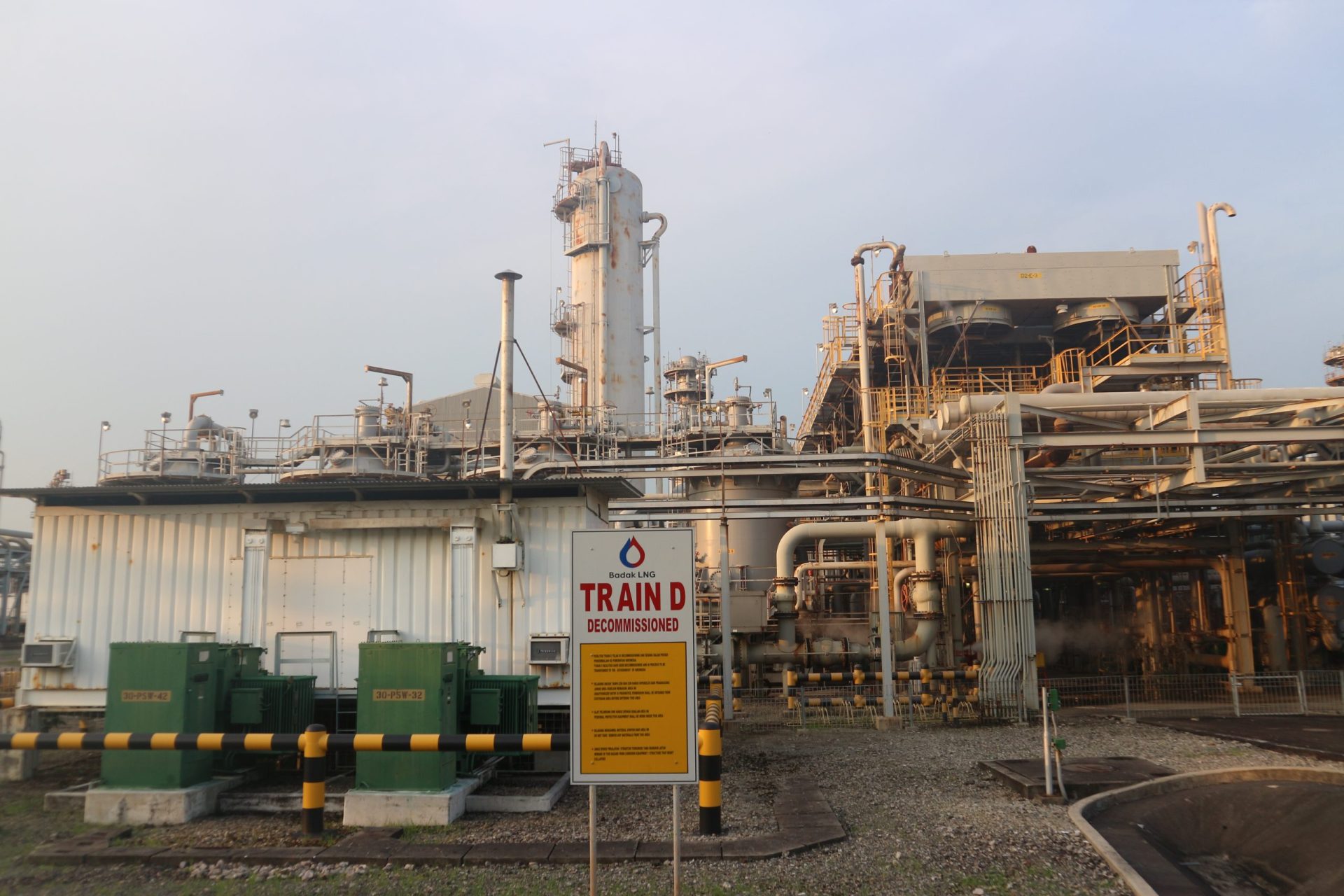
JAKARTA — Italian oil and gas contractor ENI, which is developing the Indonesia Deepwater Development (IDD) project, is prepared to invest up to US$150 million to repair the Badak LNG plant in Bontang, East Kalimantan.

The urgent need for LNG facilities has led ENI to utilize existing infrastructure rather than build a new facility, even though significant refurbishment costs are required.

Djoko Siswanto, Head of the Upstream Oil and Gas Regulatory Task Force (SKK Migas), explained that the plan to use the Badak LNG facility had already been considered when ENI took over the IDD project from Chevron several years ago. The move is viewed as highly effective in improving efficiency, especially since several ENI projects are located around the Kutai Basin, close to the Badak plant.

“ENI needs an LNG plant. One already exists but has deteriorated — previously owned by PT Badak. ENI will invest US$150 million to repair it,” Djoko said on the sidelines of a meeting with Purbaya Yudhi Sadewa, Minister of Finance and Head of the Government Strategic Program Acceleration Task Force (Satgas P2SP), Tuesday (Feb 24).
According to Djoko, the Minister of Energy and Mineral Resources has given the green light for ENI to utilize the Badak facility, taking into account plant conditions and potential state revenue from rental fees.

LMAN, as the manager of the Badak LNG facility, set a rental fee of US$0.22. However, if ENI were charged the full standard rental rate, the government would ultimately need to pay large cost recovery expenses to ENI.

Djoko stated that such an arrangement would be inefficient because the state would have to reimburse ENI for both LNG plant repairs and rental costs through the cost recovery mechanism. Therefore, a middle-ground solution was reached: ENI receives a rental discount, but the rental costs will not be included in cost recovery.

“We successfully negotiated with ENI — no cost recovery, since the asset belongs to PT Badak. But the rent is reduced by 75% to reach balance. This way we don’t have to pay cost recovery. ENI pays only 25% of the rent instead of the full amount. Otherwise, the state would gain nothing. After all, the facility had become scrap and was unused,” Djoko explained.
Gas from the IDD project will later utilize the Badak LNG facility. Preparations for the IDD South Hub Gendalo–Gandang project have now entered the final stage and are expected to soon reach a Final Investment Decision (FID).

“ENI may sign the FID as early as next week,” Djoko added. (RI)


$20 billion Asian LNG project moves forward with environmental clearance​


February 20, 2026, by Melisa Cavcic

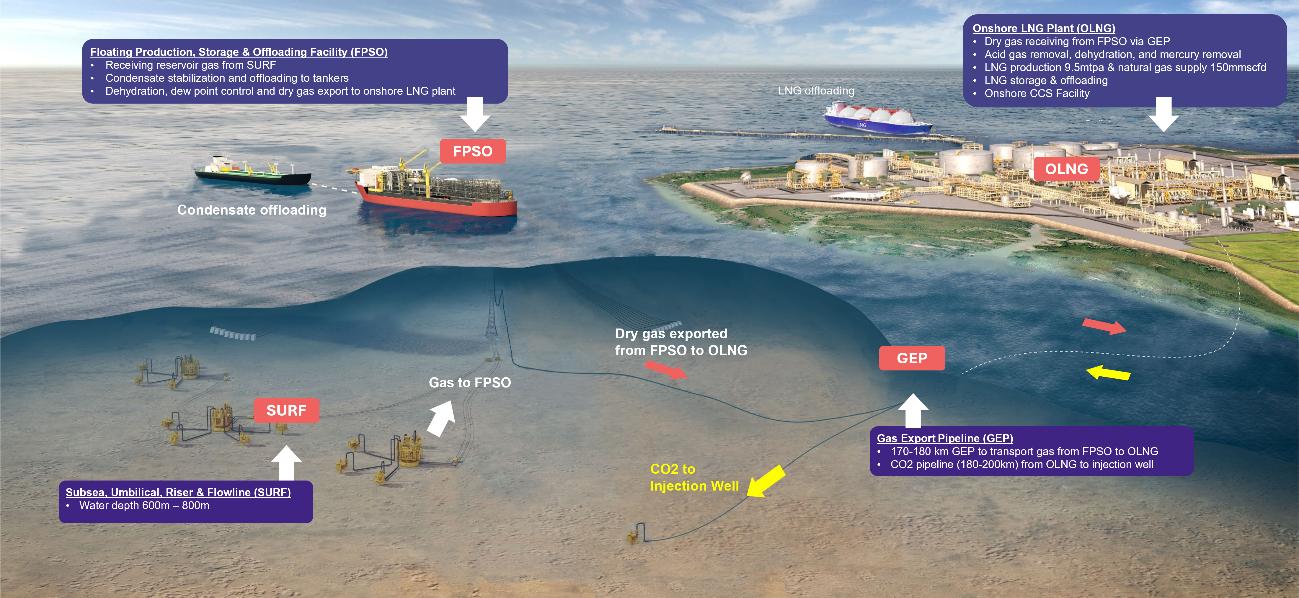
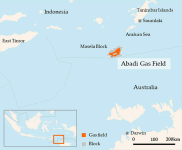
An environmental approval is paving the way for the development of a liquefied natural gas (LNG) project in Indonesia’s Masela block, which is expected to play a significant role in Asia’s energy security.

1772470190646.png
Abadi LNG; Source: Inpex


Inpex Masela, a joint venture between Inpex and the Japan Organization for Metals and Energy Security (JOGMEC), has received environmental approval for the Abadi LNG project from the government of Indonesia based on the environmental and social impact assessment.


The approval for the LNG project, which is currently in the front-end engineering and design (FEED) stage, covers the core elements of the project from drilling operations to the construction and operation of production and processing facilities, as well as the natural gas liquefaction plant, marking what is perceived to be a significant milestone in the development of the project.

With this approval in place, Inpex plans to progressively begin preparatory work at the project site, while securing the understanding and cooperation of the Indonesian government, relevant local authorities and surrounding communities. The project’s annual LNG production volume is expected to reach 9.5 million tons, equivalent to more than 10% of Japan’s annual LNG imports.

According to the operator, the project is expected to contribute to improving energy security in Indonesia, Japan and other Asian countries and generate a stable supply of low-carbon energy over the long term, based on its gas field properties and reserves enabling efficient development as well as the project’s carbon capture and storage (CCS) component.

The 20 billion project envisions an annual natural gas production capacity of 10.5 million tons of gas equivalent, with roughly 9.5 million tons of this expected to be LNG. The condensate production is estimated to reach up to 35,000 barrels per day.


Inpex Masela is the operator of the Abadi LNG project with a 65% interest. The firm’s partners are Pertamina (20%) and Petronas (15%), following Shell’s exit as the oil major opted to sell its stake in 2023. The production sharing contract (PSC) is valid until November 15, 2055.


This project is anticipated to contribute significantly to the economic development of the eastern part of Indonesia in particular and help achieve the country’s goal of reaching net zero CO2 emissions by 2060.

Inpex expects the environmental approval of the Abadi LNG project, together with the FEED work, to contribute to the expansion of its natural gas and LNG business, and reduction of its own GHG emissions.


Millions committed to bring Southeast Asian gas field to life​


March 3, 2026, by Melisa Cavcic

West Natuna Exploration Limited (WNEL), a majority-owned subsidiary of Singapore-headquartered natural gas player Conrad Asia Energy, has taken a step to secure future gas supply by greenlighting a final investment decision (FID) for a natural gas field in the West Natuna Sea off the coast of Indonesia, Southeast Asia.

1772537655961.png

West Natuna Exploration, as the operator of the Duyung production sharing contract (PSC) with a 76.5% stake, has approved the FID for the Mako gas project, which enables the firm and its partners, Empyrean Energy ( 8.5%) and Coro Energy (15%), to proceed with the commercial development of the project in the Riau Islands Province of Indonesia.


This project will be developed in cooperation with the Indonesian government, WNEL as operator, and PT Nations Natuna Barat (NNB), an entity under Arsari Group, which is expected to become the majority participating interest holder in the Duyung PSC, following a farm-out deal from November 2025.

Located approximately 100 kilometers to the north of Matak Island and 400 kilometers northeast of Batam, the Mako development is described to have a proven reservoir, infrastructure access, and a clear timeline. The FID is perceived to mark a transition to development and cash flow.

The operator anticipates a rapid ramp-up in project development activities, with first gas targeted for 4Q 2027. The overall capital expenditures to bring the field to first gas are estimated to be $320 million, with WNEL’s 25% share amounting to $80 million. The firm has committed to project contracts in excess of $110 million (100%).

The firm underlines that full funding has been secured for all budgeted project costs, including a substantial contingency allowance. The project began with the 2017 Mako South-1 gas discovery and subsequent appraisal wells drilled in 2019.


All wells were successfully flow-tested, with results supporting the development plan, the design of the gas processing facilities and the tie-in to the West Natuna Transportation System (WNTS). The project is described as having a fully contracted revenue, with long-term government-backed gas sales to 2037.


Bahlil Says Investors Ready for Indonesia’s Giant Crude Storage Project​


Antara
March 5, 2026 | 7:34 pm

1772731431066.png
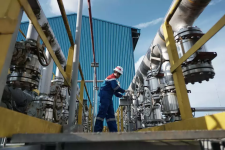
This undated photo, provided by Pertamina Exploration and Production (PEP), shows a worker inspecting the piping system at the Adera Field in South Sumatra. (Pertamina EP via Jakarta Globe)


Jakarta. Indonesia has secured domestic and international investors for a planned large-scale crude oil storage facility aimed at strengthening the country’s energy security, Energy and Mineral Resources Minister Bahlil Lahadalia said on Thursday.


The project is intended to significantly expand Indonesia’s strategic petroleum storage capacity, allowing the country to maintain oil reserves equivalent to three months of consumption.


Currently, Indonesia’s storage capacity is sufficient for only about 25 days of supply, leaving the country vulnerable to disruptions in global energy markets.


“The investors are already there. The investment will come from a mix of domestic and international sources, but not from the United States,” Bahlil said, adding that the storage facilities will be developed by private-sector operators.

The proposal for the large-scale storage facility gained urgency following recent military strikes by Israel and the United States against Iran, which pushed global oil prices above $80 per barrel as shipments through the Strait of Hormuz declined sharply due to security concerns.


Roughly 20% of the world’s daily oil consumption — about 20 million barrels per day — passes through the strategic maritime corridor.


Indonesia’s domestic oil production currently stands at around 600,000 barrels per day, meaning the country relies heavily on imports to meet its fuel demand.


With limited storage capacity, Indonesia has little ability to secure long-term supplies during global disruptions.

According to Bahlil, President Prabowo Subianto has instructed the government to accelerate the development of the new storage infrastructure.


“The president has directed us to immediately build the storage facility. We need this for survival; otherwise we will continue to depend heavily on oil imports,” Bahlil said.


He previously indicated that the new strategic storage facility is planned to be built on Sumatra, though further project details have yet to be disclosed.

 
Indonesia Expected to Become a Key Pillar of Asia-Pacific LNG Production Starting in 2030”


By Azura Yumna Ramadani Purnama

05 March 2026 15:50​


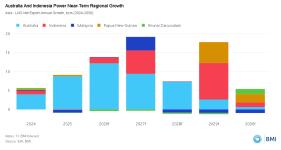
Bloomberg Technoz, JakartaBMI, the research arm of Fitch Solutions and part of the Fitch Group, predicts that after 2030, most of the growth in liquefied natural gas (LNG) production in the Asia-Pacific region will depend on Indonesia’s efforts to revitalize existing gas fields and conduct further exploration.

In the medium term, regional LNG supply growth is still expected to be driven mainly by additional exports from Australia in 2026 and 2027.

Meanwhile, additional contributions from Indonesia and Malaysia are expected to remain relatively smaller during that period.

However, starting in 2029, Indonesia is projected to contribute the majority of regional LNG supply growth. This comes amid the risk of further delays in the Papua LNG project in Papua New Guinea.

“After 2030, most of the regional growth will depend on Indonesia’s efforts to revitalize exploration and production and to develop already discovered resources,” BMI wrote in its latest research report on Thursday (March 5, 2026).

1772731833306.png


BMI forecasts that the outlook for LNG growth in the region over the next 10 years will remain positive, with cumulative growth increasing by 104 billion cubic meters (bcm).

However, globally the region will face strong competition from expanding LNG capacity in the Americas, the Middle East, and Africa.

Nevertheless, Asia still benefits from being the main driver of global LNG consumption growth. Export projects in the region are also considered advantageous due to relatively lower transportation costs and flexibility in shipping to major markets.

Reserve Potential​

BMI noted that Eni SpA has discovered 600 billion cubic feet (bcf) of gas potential at the Konta-1 exploration well in the Muara Bakau Block, Kutai Basin, located about 50 kilometers offshore East Kalimantan.

Eni also reported that the gas potential could exceed 1 trillion cubic feet (tcf) of gas initially in place (GIIP).

The well was drilled to a depth of 4,575 meters in 570 meters of water depth. Eni reported gas discoveries in four Miocene sandstone reservoirs. Testing produced gas flows of up to 31 million standard cubic feet per day (MMscfd) and about 700 barrels per day (bpd) of condensate, with multi-pool potential estimated at up to 80 MMscfd and around 1,600 bpd of condensate.

“This discovery is located close to existing facilities and nearby discoveries, and Eni is studying fast-track development options while continuing the broader Kutai Basin drilling campaign, including four wells planned for 2026,” BMI wrote.
The Konta-1 well is operated by Eni with an 88.33% stake, while Saka Energi holds 11.67%.

The Muara Bakau Block is part of the asset portfolio planned to be managed by a new joint venture between Eni and Petronas (NewCo), with a 50:50 ownership structure, targeted for completion in 2026 with an investment value of more than US$15 billion over five years.

Major Gas Development Projects​

Meanwhile, the Upstream Oil and Gas Regulatory Task Force (SKK Migas) has reportedly approved the Final Investment Decision (FID) for the Geng North and Gendalo-Gandang projects operated by Eni.

BMI noted that Eni plans to develop the Northern Hub project in East Kalimantan, which includes the Geng North and Gehem fields.

  • Geng North is estimated to contain around 5 tcf of gas and 400 million barrels of condensate.
  • Gehem holds potential reserves of about 1.6 tcf of gas.
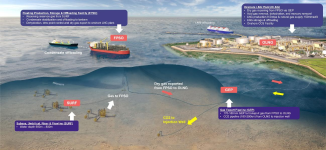
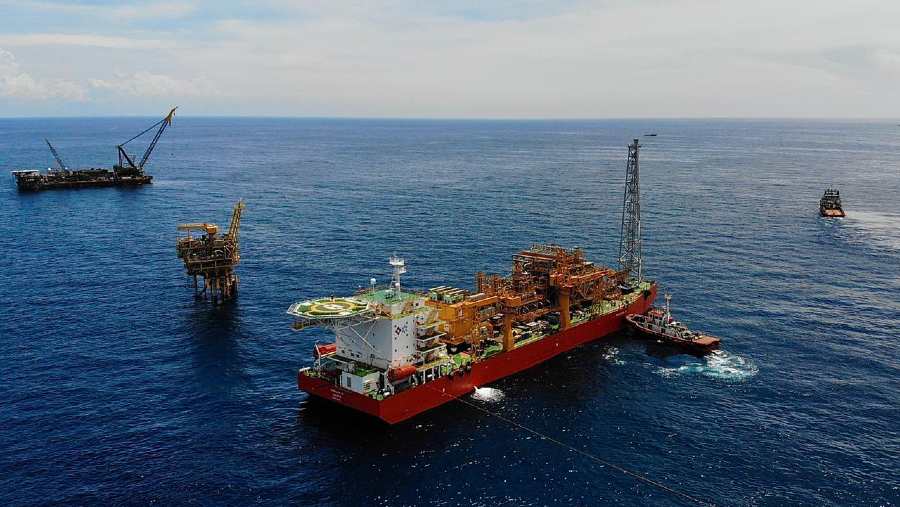
Both fields will be developed using a subsea tie-back system connected to a new floating facility, namely a Floating Production, Storage, and Offloading unit (FPSO).

In addition, the Gendalo and Gandang fields, with potential resources of around 2 tcf of gas, will be connected to the Jangkrik Floating Production Unit (FPU) to extend its peak production life by at least 15 years.

Eni has also secured 20-year license extensions for the Ganal and Rapak fields.

Exploration Plans​

On the exploration side, Eni plans a four-to-five-year drilling campaign to assess additional gas resource potential around existing fields, with estimated resources of more than 30 tcf in the Kutai Basin.

BMI predicts these projects could support gas production of around 2 billion cubic feet per day (bcf/d) and 80,000 barrels per day of condensate in East Kalimantan, utilizing existing infrastructure including the Bontang LNG plant and the Jangkrik FPU.

“These projects are expected to support production of around 2 bcf/d of gas and 80,000 b/d of condensate in East Kalimantan by utilizing existing infrastructure, including the Bontang LNG plant and the Jangkrik FPU,” BMI emphasized.
In a previous study, BMI predicted that Indonesia is ready to become a major LNG producer in Southeast Asia, supported by an additional 40 bcm of gas resources by 2030.

BMI noted that Indonesia has numerous greenfield gas projects that will boost raw gas supply for LNG production between 2024 and 2030.


Medco Energi (MEDC) Reports 2025 Production Reaches 156 MBOEPD


Yunila Wati
04 March 2026

To view this content we will need your consent to set third party cookies.
For more detailed information, see our cookies page.

Hilmi Panigoro, Medco President Director


KABARBURSA.COMPT Medco Energi Internasional Tbk (MEDC) recorded an increase in oil and gas production throughout 2025, driven by the strengthening of its asset portfolio and contributions from several new projects.

Based on a presentation by the company’s investor relations team during a closed-door meeting with Stockbit Sekuritas, MEDC’s total oil and gas production in 2025 reached 156 thousand barrels of oil equivalent per day (MBOEPD).

This realization represents an increase of about 2.7% compared with the previous year’s production of 152 MBOEPD.

The achievement falls within the company’s production target range for 2025, which was set at 155–160 MBOEPD. The production increase was driven by contributions from new projects in Block B Natuna and the increased operational ownership in the Corridor Block.

During the fourth quarter of 2025, MEDC recorded its highest production level of the year, averaging around 176 MBOEPD, with a peak of 178 MBOEPD.

Reserves Increase​

On the reserves side, MEDC also recorded an increase in proved and probable reserves (2P reserves).

By the end of 2025, the company’s 2P reserves reached 564 million barrels of oil equivalent (MMBOE), an increase of around 14.4% compared with 493 MMBOE at the end of 2024.

With this increase, the company’s reserve life index also improved to approximately 11.4 years, compared with about 10.4 years previously.

For 2026, management targets annual production growth of around 6.5%, with a projected production range of 165–170 MBOEPD. If achieved, this would represent the highest production level in MEDC’s operational history.

Key Assets and Strategic Moves​

One of the company’s key assets is the Corridor Block, which contributed around 38% of MEDC’s total production in 2024. The block has entered a mature production phase, experiencing a natural decline in output.

As part of its strategy to maintain production levels, MEDC completed the acquisition of a 45% participating interest in the Sakakemang Block in September 2025. The field is targeted to begin production in the third quarter of 2027.

The Sakakemang Block’s proximity to the Corridor Block allows the company to utilize existing infrastructure, supporting operational cost efficiency.

In July 2025, MEDC also increased its ownership in the Corridor Block from 56% to 70%. This increase added approximately 58 MMBOE of 2P reserves, representing about 11.7% of the company’s total reserves as of the end of 2024.

The increased stake also contributed an additional 25 MBOEPD of production, equivalent to about 16.4% of MEDC’s total production in 2024.

The company also raised its shareholding in PT Transportasi Gas Indonesia to 40%, aiming to strengthen integration of gas transportation infrastructure from production areas in South Sumatra and Jambi to domestic and regional markets.

Tanzania Gas Project​

Outside Indonesia, MEDC is also involved in the development of a gas project in the Tanzania Block.

The block holds 2C resources of approximately 521 MMBOE in gas, which in volume terms is larger than MEDC’s total 2P reserves at the end of 2024.

Block 1 and Block 4 in Tanzania are operated by Shell, which holds 60% ownership, while MEDC and Pavilion Energy each hold 20% stakes.

Discussions regarding the full development plan for the project are still ongoing and depend on domestic conditions following Tanzania’s election. To reach a Final Investment Decision (FID), MEDC’s estimated net capital expenditure requirement is around US$40 million.

Malaysia and Renewable Energy Projects​

In February 2026, MEDC was also appointed by Petronas to manage the Cendramas Block in Malaysia. The block has already begun producing hydrocarbons, with production dominated by oil.

However, the company has not yet disclosed detailed production volumes or participation shares because the cooperation agreement documentation is still being finalized.

In the renewable energy sector, MEDC is also developing a solar photovoltaic project on Bulan Island.

The project is designed to supply electricity to Singapore and is currently in the planning and licensing stage between the governments of Indonesia and Singapore.

The project’s capital expenditure is estimated to exceed US$1 billion and is planned to be implemented over approximately three years.

The Final Investment Decision (FID) is expected to be taken once all licensing processes are completed, which is projected to occur around 2027. (*)


Indonesia's tightening coal policy begins to reshape export flows​


6 Mar 2026

1772823466717.png

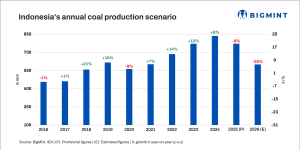
  • Indonesia's coal production and exports fall in 2025 on lower demand from China, India

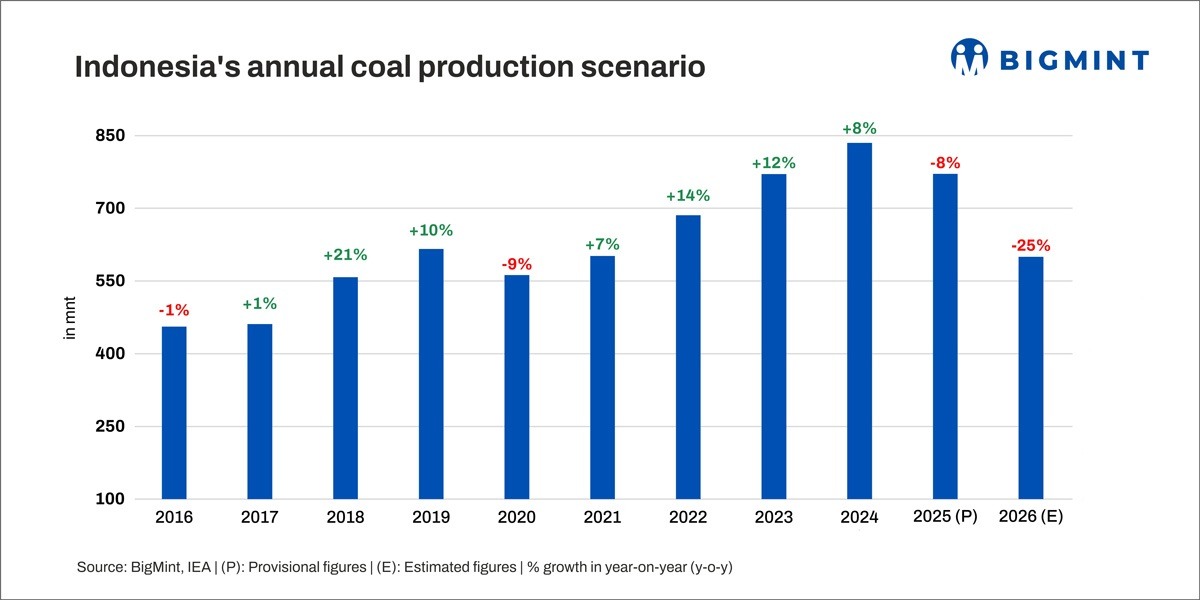
  • Indonesia considering cutting coal output to around 600 mnt, tightening export availability

  • Middle East tensions are pushing up freight costs, landed prices for Asian buyers

Morning Brief: Indonesia's coal production and exports fell in 2025 on lower demand from China and India. Indonesia is considering cutting coal output to around 600 million tonnes, tightening export availability Middle East tensions are pushing up freight costs, lifting landed coal prices for Asian buyers

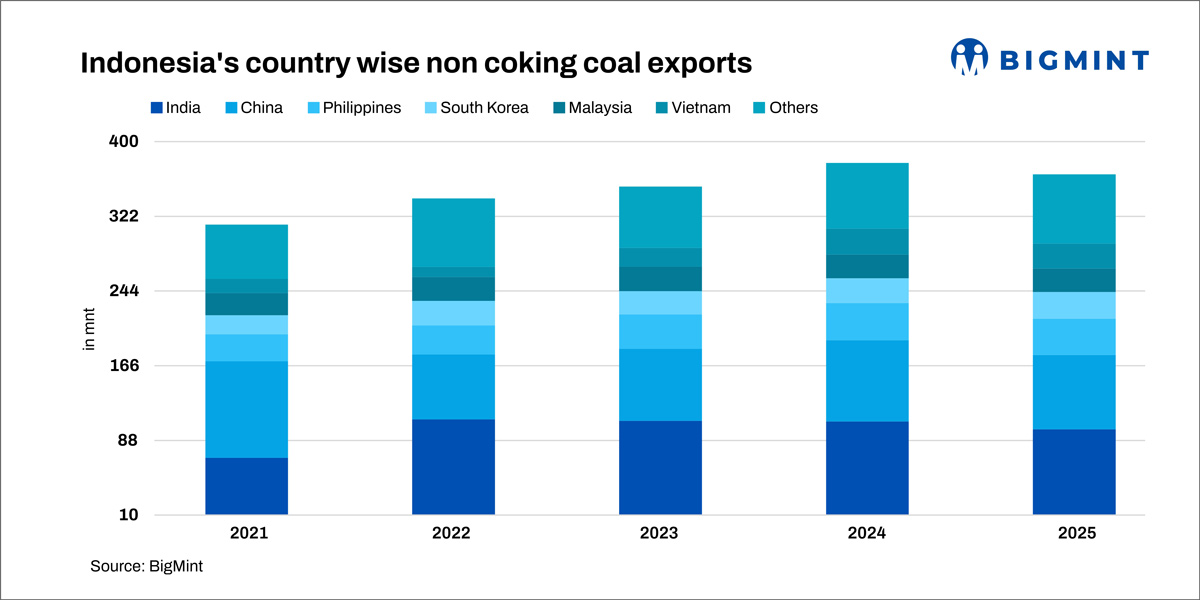
India typically imports around 160-170 million tonnes of thermal coal each year, with roughly 100 million tonnes sourced from Indonesia, making it the dominant supplier of the low-calorific coal used by Indian coastal power plants.

Indonesia is now moving toward tighter control of coal production, exports and pricing. For India, which relies heavily on Indonesian low-CV material, the shift has direct implications for supply availability and price formation.

Indonesias-country-wise-non-coking-coal-exports.jpg


Production slowdown and policy tightening

The policy recalibration follows a softer year for Indonesia's coal sector. The country's coal production stood in the range of 750-790 million tonnes in 2025, down 5.5% from a year earlier, while exports declined 6% to about 533 million tonnes. Market participants estimate that production could drop 25% during the year, reflecting adjustments by miners as demand weakened.

The drop marked the first decline in both production and exports since 2020, when the Covid-19 pandemic disrupted demand and supply chains. Weaker demand from China and India contributed to the slowdown as both countries increased domestic coal availability while renewable generation expanded, reducing import requirements.

Against this backdrop, Jakarta has begun tightening oversight of production through stricter approvals under the RKAB system, formally known as Rencana Kerja dan Anggaran Biaya. The RKAB is the annual work plan and budget that mining companies must submit to the government outlining their planned production levels, operational activities and expenditure for the coming year. Industry participants say the government is considering reducing the production envelope to around 600 million tonnes.

Ramli Syed Ahmad, president director of PT Ombilin Energi, described the potential reduction as substantial, noting that it would represent close to a 25% cut, equivalent to roughly 200 million tonnes of output.

"The move to tighten RKAB approvals appears aimed at supporting coal prices, though it may not be sustainable if demand remains weak," said Ramli Syed Ahmad, president director of PT Ombilin Energi.

The policy shift has introduced uncertainty for producers and buyers. Ahmad explained that many miners had already planned equipment purchases and capital expenditure after receiving three-year RKAB approvals covering 2024 to 2026. The governments decision to reassess the 2026 approvals forced companies to revisit their production plans.

In the early months of the year, some miners were allowed to produce only a quarter of their previously approved volumes while waiting for new approvals, temporarily constraining export availability.

Implications for Indian buyers

The tightening reflects a broader policy objective to stabilise prices, manage oversupply and prioritise domestic energy security. Indonesia requires miners to sell at least 25% of their production locally under the country's domestic market obligation (DMO) rules.

Domestic coal sales reached about 254 million tonnes in 2025, while year-end stockpiles stood at roughly 22 million tonnes. Authorities have indicated that DMO requirements will be prioritised before determining how much coal can be allocated for exports.

Indonesia has also introduced additional regulatory measures to tighten market conditions and strengthen oversight. These include reverting to annual RKAB approvals, tightening compliance rules on mine reclamation, adjusting domestic benchmark prices under the HBA system, and considering fiscal measures such as potential export duties.

For international markets, the practical effect is a more managed export pipeline. When production quotas tighten, miners typically prioritise long-term contractual deliveries, leaving fewer cargoes available in the spot market. Spot availability becomes more volatile, with prices responding quickly to changes in export supply.

India sits directly in the path of these shifts. The country sources a large share of its imported thermal coal from Indonesia, particularly the low-calorific grades used by coastal utilities and certain industrial consumers designed to operate on these specifications.

Rajat Handa, vice president for international trade at Agarwal Coal Corporation, said India's total coal imports are likely to remain around 150-160 million tonnes annually, with roughly 95100 million tonnes coming from Indonesia because it remains the most competitive supplier of low-CV coal.

However, Handa noted that India's dependence does not mean buyers lack flexibility. If Indonesian prices move beyond acceptable levels, Indian utilities and traders can shift procurement to alternative suppliers such as Russia, Australia or South Africa.

That possibility concerns some Indonesian producers. Ahmed warned that once buyers establish alternative supply relationships, it can be difficult for Indonesian exporters to win them back. New suppliers often offer attractive long-term contracts, gradually eroding Indonesias dominance in the low-CV coal trade.

Outlook

Geopolitical tensions are also beginning to influence market dynamics. Escalation of conflict in the Middle East has raised freight and energy costs across global commodity markets, increasing bunker fuel prices and shipping risks along key maritime routes. For Asian coal importers, this translates into higher landed costs even when FOB coal prices remain relatively subdued.

In the near term, Indonesias policy shift has already lent a firmer tone to the market. Indian port prices have risen modestly as buyers respond to uncertainty surrounding production approvals and export availability.

Indian portside prices for Indonesian-origin thermal coal increased sharply w-o-w on 03 March 2026, supported by tight supply and geopolitical tensions between the United States and Iran, which have injected uncertainty into global energy markets. According to BigMint's latest assessment, 5,000 GAR coal prices rose by INR 450/t w-o-w, reaching INR 8,800/t at Kandla and INR 8,700/t at Vizag. The 4,200 GAR segment also registered a similar increase of INR 600/t, with prices climbing to INR 7,100/t at Kandla and INR 7,000/t at Vizag.

Over the longer term, the outcome will depend on how consistently Indonesia manages its regulatory framework. The country remains the largest supplier in the seaborne thermal coal market. But as the government moves toward tighter production governance and stronger domestic prioritisation, the reliability of Indonesian exports may become an increasingly important consideration for import-dependent markets such as India.

 
While Indonesian state-owned enterprises (SOEs) have been expanding their international presence over the years, the country still does not use much of its hydropower.

Indonesia is seeking to reach net zero emission by 2060 or sooner. Last October, then-Energy Minister Arifin Tasrif revealed that the archipelagic Indonesia’s hydropower potential stood at 95 gigawatts, but its installed capacity had only reached 6.7 gigawatts. The government is planning to raise the installed hydropower capacity to exceed 10 gigawatts by 2030.


investment in Hydropower would be the most welcomed ....
 

B50 Requires Large CPO Supply — Will Smallholder Palm Oil Become the Key?​


Amalia Zahira – CNBC Indonesia
March 6, 2026

To view this content we will need your consent to set third party cookies.
For more detailed information, see our cookies page.

Karian Dam, Banten province, Java Island


Jakarta, CNBC Indonesia — The government’s ambition to increase the biodiesel mandate to B50 in 2026 will depend heavily on the condition of the upstream palm oil sector. The agenda, which aims to strengthen energy security while reducing carbon emissions, is estimated to require around 19–20 million tons of crude palm oil (CPO) annually.

Meanwhile, Indonesia’s CPO production in 2025 is projected to reach only about 49.5 million tons.

Amid rising demand for feedstock supply, improving the productivity of smallholder palm plantations could be the key to meeting the additional CPO production required, considering that current productivity remains far below its potential.


CPO Stocks Tend to Stagnate​

Member of the National Energy Council (DEN) for the 2026–2030 period, Mohamad Fadhil Hasan, said that CPO stock availability in recent years has tended to stagnate or even decline. This situation occurs because there has been no significant improvement in palm plantation productivity.

Fadhil made the remarks during the CNBC Indonesia Energy Forum B50 Edition 2026, themed “Indonesia Will Have a Diesel Fuel Surplus — Is B50 Still Necessary?”, on Thursday (March 5, 2026).

In addition to Fadhil, several stakeholders highlighted the importance of improving productivity in the palm oil sector.

According to him, without improvements in productivity, feedstock supply for the biodiesel program may face pressure in the future.


1772886882378.png

Smallholder Plantation Productivity Becomes Key​

Rather than opening new land, increasing palm oil production is considered more feasible through improving productivity on existing plantations. This is particularly relevant for smallholder plantations, which currently have lower productivity compared with large plantations.

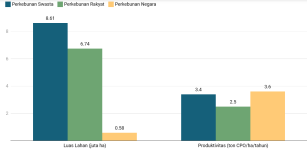
Data from the Indonesian Palm Oil Association (GAPKI) shows that smallholder palm farmers produce an average of only about 2.5 tons of CPO per hectare per year.

This is significantly lower than:

  • Private plantations: about 3.4 tons per hectare
  • State-owned plantations: about 3.6 tons per hectare
Meanwhile, the Central Statistics Agency (BPS) recorded that smallholder plantations account for 42.29% of Indonesia’s total palm plantation area, equivalent to around 6.74 million hectares.

If productivity on these lands can be optimized, national CPO production could increase significantly without expanding plantation areas.


Palm Oil Replanting Still Limited​

Mukti Sardjono, Executive Director of GAPKI, added that improving palm oil plantation productivity depends heavily on accelerating the replanting program. However, the realization of the program in the field remains limited.

The government has actually provided funding support for the Smallholder Palm Oil Replanting Program (PSR) of about Rp60 million per hectare, an increase from the previous Rp30 million per hectare.

This provision is regulated in Director General of Plantations Decree No. 55/Kpts/SR.21/01/2024, which determines replanting costs based on land type and location. The regulation has been in effect since September 1, 2024.

However, the implementation of the program still faces various obstacles on the ground.

When government financing mechanisms do not function optimally, farmers often turn to alternative financing schemes, such as loans or insurance. In practice, however, these schemes can increase farmers’ financial vulnerability.

The cost of replanting palm plantations ranges between Rp50 million and Rp70 million per hectare. Although the government provides Rp60 million per hectare in assistance, many smallholder farmers still consider the cost relatively high.

In addition, farmers face challenges during the immature plant period (TBM). After replanting, palm trees generally begin producing only in the fourth year, meaning farmers may lose their income source for around three years.


Position of Smallholder Farmers in the B50 Agenda​

These conditions indicate that the position of smallholder palm farmers within Indonesia’s palm oil supply chain still faces several challenges.

Under financial pressure, some smallholders may eventually sell their land to companies or other parties.

If this trend becomes widespread, smallholder land ownership could decline, while land concentration in the palm oil sector could increase.

In the context of implementing B50 biodiesel, improving productivity through accelerating the replanting program will be crucial to ensuring the sustainability of Indonesia’s CPO supply.

On the other hand, the agenda of energy security and the transition toward a green economy must also ensure greater inclusion of smallholder farmers within Indonesia’s palm oil industry supply chain.


Plan of Development for Tangkulo-1 Exploration Well in South Andaman Block Targeted for Completion in June​


Azura Yumna Ramadani Purnama
Bloomberg Technoz – Energy

11 February 2026​

1772966923361.png

Bloomberg Technoz, Jakarta — The Special Task Force for Upstream Oil and Gas Business Activities (SKK Migas) announced that approval of the Plan of Development (PoD) for the South Andaman Block is targeted for completion in June 2026.

Head of SKK Migas Djoko Siswanto revealed that the Tangkulo-1 exploration field is estimated to hold around 1 trillion cubic feet (TCF) of gas, out of the total potential gas resources of about 11 TCF in the South Andaman area.

“For Mubadala, the plan is to first develop one field, namely Tangkulo. That field holds about 1 TCF, although total discoveries around Andaman reach 11 TCF. It will be included in the PoD, God willing, by June this year. In parallel, tenders are currently being carried out, and the project will use a gross split PSC scheme,” Djoko said during a hearing with Commission XII of the Indonesian House of Representatives (DPR) on Wednesday (Feb. 11, 2026).
As previously reported, Mubadala Energy identified more than 2 TCF of gas in place at Tangkulo-1, which is part of the South Andaman working area.

This discovery marks the second exploration success after the Layaran-1 well, identified by the UAE-based oil and gas company in December 2023, with 6 TCF of gas in place.

The Tangkulo-1 exploration well was drilled to a depth of 3,400 meters in 1,200 meters of water depth, several months after the major discovery at Layaran-1.

Drilling encountered an 80-meter gas column in a high-quality Oligocene sandstone reservoir.

Using a new Drill Stem Test (DST) design, the well successfully flowed 47 million standard cubic feet of gas per day (MMscfd) and 1,300 barrels of condensate.

Although testing was limited by available facilities, the well’s potential capacity is estimated at 80–100 MMscfd and more than 2,000 barrels of condensate.

With an 80% participating interest in the South Andaman Block, Mubadala Energy holds the largest exploration stake in the area.

The Tangkulo-1 well is expected to open access to larger potential in the southern part of the block and indicates the possibility of additional multi-TCF prospective gas resources in surrounding structures.

1772967128029.png


Development of National Strategic Oil and Gas Projects​

Besides the South Andaman Block, several other oil and gas blocks are prioritized for development and have been designated as National Strategic Projects (PSN).

These include:

  • Asap Kido Merah (AKM) in the Kasuri Block
  • Indonesia Deepwater Development (IDD)
  • Geng North
  • Masela Block
  • Tangguh Ubadari, CCUS, and Compression (UCC)
Djoko explained that the total investment value of all these PSN projects reaches US$45.8 billion (around Rp756 trillion).

These projects are expected to add:

  • 105,000 barrels per day of oil production
  • 4,369 MMscfd of gas production

Major Gas Projects​

Asap Kido Merah (AKM) Project​

The AKM project, operated by Genting Oil Kasuri, is targeted to produce:

  • 330 MMSCFD of gas
  • around 10,000 barrels of condensate per day (BCPD)
The project, with an investment value of US$3.37 billion, is expected to complete its floating LNG (FLNG) facility by 2027.

Ubadari, CCUS, and Compression (UCC) Project​

The UCC project, developed by BP Tangguh, is valued at around US$4.5 billion and is targeted to become operational in 2028.

SKK Migas stated that development progress has reached around 35% on average.

Eni Projects (IDD and Geng North)​

Another PSN is being developed by Eni, including the Geng North gas field and the Indonesia Deepwater Development (IDD) project.

The IDD project holds:

  • 2.67 TCF of gas reserves
  • 66 million barrels of oil potential
SKK Migas targets IDD to begin production in 2027.

The total investment for IDD is US$14.8 billion, consisting of:

  • US$3.7 billion for the Southern Hub
  • US$11.1 billion for the Northern Hub
Meanwhile, Geng North is being developed as a separate project integrated with the IDD Northern Hub, with gas reserves estimated at 5.3 TCF.


Abadi Gas Field – Masela Block​

For the Abadi Gas Field in the Masela Block, developed by Inpex Masela Ltd., initial construction is targeted to begin at the end of March 2026.

The Abadi Masela project is expected to produce:

  • 9.5 million tons of LNG per year
This volume is equivalent to more than 10% of Japan’s annual LNG imports.

In addition, the project is estimated to supply:

  • 150 MMSCFD of pipeline gas
  • 35,000 barrels of condensate per day


Assessing the global economic impact of the Middle East war​


The Middle East war remains highly unpredictable, with even seasoned analysts unable to gauge how it might end. Here, we outline what the conflict could mean for the global economy

5 March 2026​

1773078973454.png

Asia: Inflation and trade balances could come under strain​


For now, Asia seems to be able to absorb the jump in oil prices, thanks to the low starting points, with inflation broadly in control in most of Asia. However, the severity and persistence of higher prices will ultimately determine the impact.

If sustained, Asia is particularly vulnerable to oil price volatility because it relies so heavily on imports; except for Australia, Malaysia and Indonesia, all other economies run deficits in oil and gas trade, leaving them exposed when energy costs rise. If higher prices persist, three factors will shape the impact:

  1. Heavy dependence on Middle Eastern oil: A significant share of Asia’s crude supply comes from the Persian Gulf. Japan and the Philippines rely on the region for almost 90% of their oil needs, while China and India import roughly 38% and 46%, respectively. Any disruption in the Strait of Hormuz – a critical shipping lane – would restrict supply, potentially causing shortages that slow business activity and put pressure on manufacturing across Asia.
  2. Trade balances under strain: Even without a physical supply disruption, higher global oil prices worsen trade balances and add to inflation pressures. Thailand, Korea, Vietnam, Taiwan, and the Philippines are the most exposed. A mere 10% rise in oil prices can deteriorate current account balances by 40-60 basis points. Prolonged increases would only deepen these deficits.

  3. Strong inflation pass‑through: Because many emerging Asian economies have a relatively high weight of energy in their consumer inflation baskets, rising oil prices feed quickly into headline inflation. On average, a 10% increase in oil prices raises CPI inflation by about 0.2 percentage points.
 

Users who are viewing this thread

Pakistan Defence Latest

Country Watch Latest

Latest Posts

Back
Top