lightning f57
Trusted Member

Hope the flanker news is true very much needed with decent air to air armaments and radar systems.
Follow along with the video below to see how to install our site as a web app on your home screen.
Note: This feature may not be available in some browsers.

latest rumours suggest 12 Yak and 2 SU-35 have been deliveredA direct delivery of 24 fly-away SU-35's would at this stage give the IRIAF a well deserved confidence boost.
SU-35S or SU-30SM
| There are actually a quite a few radars in Iran such as Ghadir etc which can detect (tracking /locking on is the difficult part )the F-35 which would allow SAMs with active seekers to be used. I will not go into more details here regarding this, please visit the Iranian air defence thread. |
Russian manufacturing capacity per Iranian sources. This also fit exceptionally in the assembly startup. I understand the first operational craft will be available around February. Sounds unrealistically fast to me.Given the distances involved - any reason why there were delivered disassembled, not just flown over for delivery ?




Question is if the production line has already been adapted at HESA or wherever these are to be assembled.Not Just Su-35 Aircraft, russia Also Gave iran the License to Manufacture Them Locally
Defense Express
[email protected]
October 25, 2024
2545 0
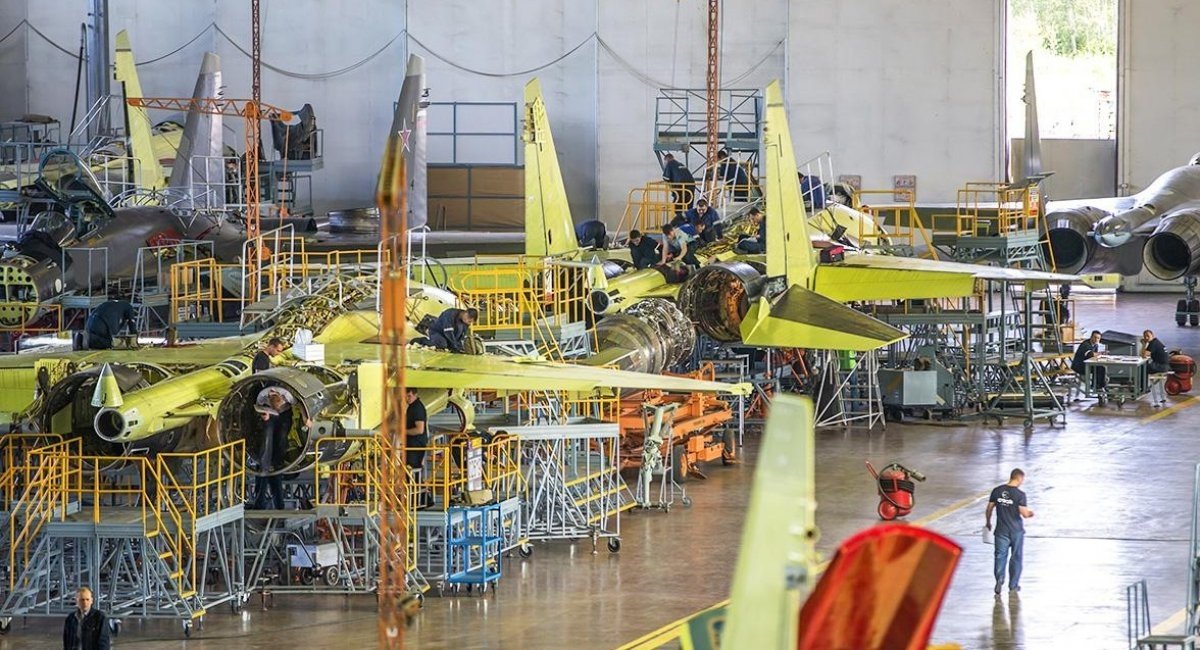
Su-35 production in russia / Open-source archive photo
Tehran will be able to assemble this fighter domestically out of pre-made parts, with the potential to grow its Su-35 fleet to a hundred units within a short term
Many experts believe that the main form of payment for the continuous flow of drones and ammunition from iran into russia is the 24 Su-35 fighter jets that the Kremlin began delivering in April 2023. However, this was not enough, or iran’s aid has grown to the extent that Tehran has now also received a license to manufacture this type of aircraft.
Reporting on the new agreement between the two partner countries, media outlets in russia and iran note that this form of cooperation opens the door for production of 48 to 72 fighters on iranian territory. This includes not only the Su-35 but the simpler two-seater Su-30 as well, both derived from the Soviet Su-27.
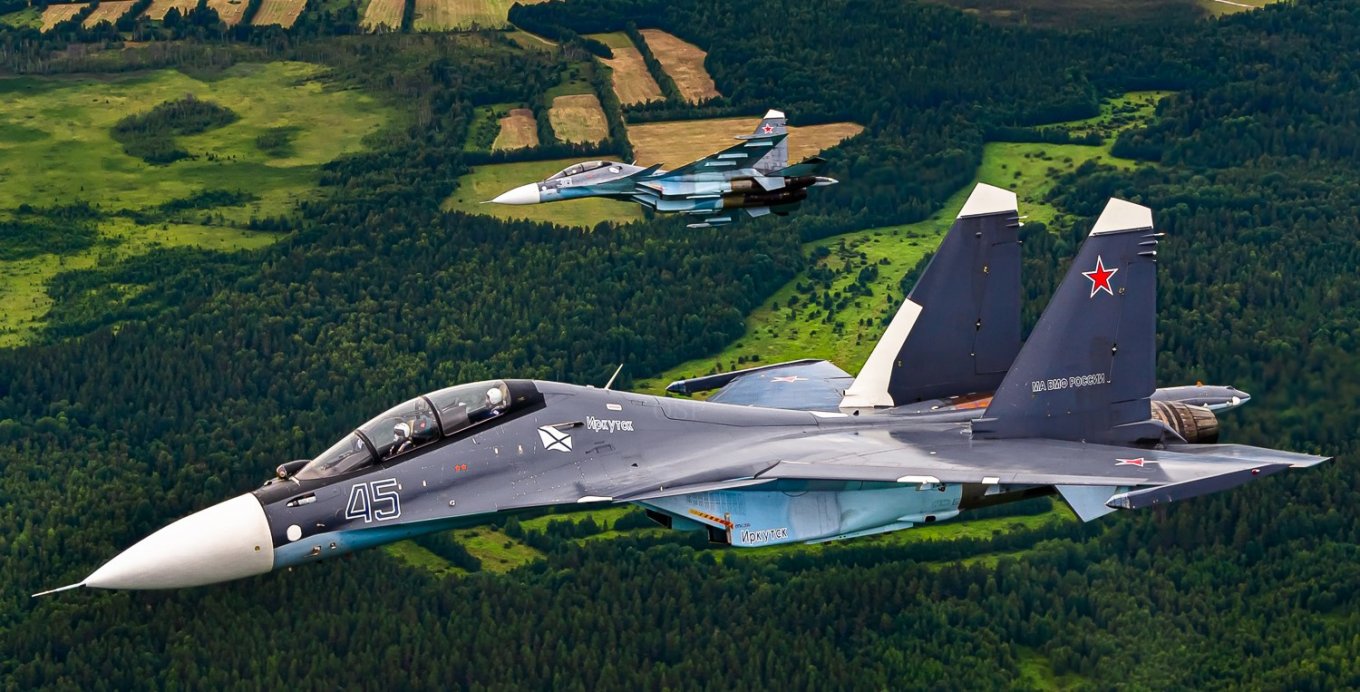
Su-30 in versions with forewings and without them / Open-source illustrative photo
Based on russia’s previous practices for licensing Su-30 production, this likely means local assembly of aircraft from pre-made subsystems and parts. In practical terms, this will allow iran to not just update its current air force but also quickly raise its air capabilities to a whole new level.
Even the initial 24 ready-to-go Su-35s have already altered the balance in iran’s favor. Especially so because these aircraft were transferred on such short notice, as they had already been manufactured by the time of the agreement, just gathering dust in storage. Originally intended for Egypt, the aircraft remained unsold after Cairo backed out of a $2 billion deal with Moscow, wary of U.S. sanctions for purchasing russian weapons.
Metaphorically, iran’s current air force is something between an antique shop and a zoo. Many different aircraft blend in there: remnants of American supplies before the Islamic Revolution, Chinese imports, and Soviet planes that Iraqi pilots brought in 1991.
How many of the declaratively available 68 F-4 Phantoms, 43 F-14 Tomcats, 24 Chengdu J-7s (Chinese copy of MiG-21), 35 MiG-29s and other aircraft are de facto still capable of taking part in combat missions is a huge question.
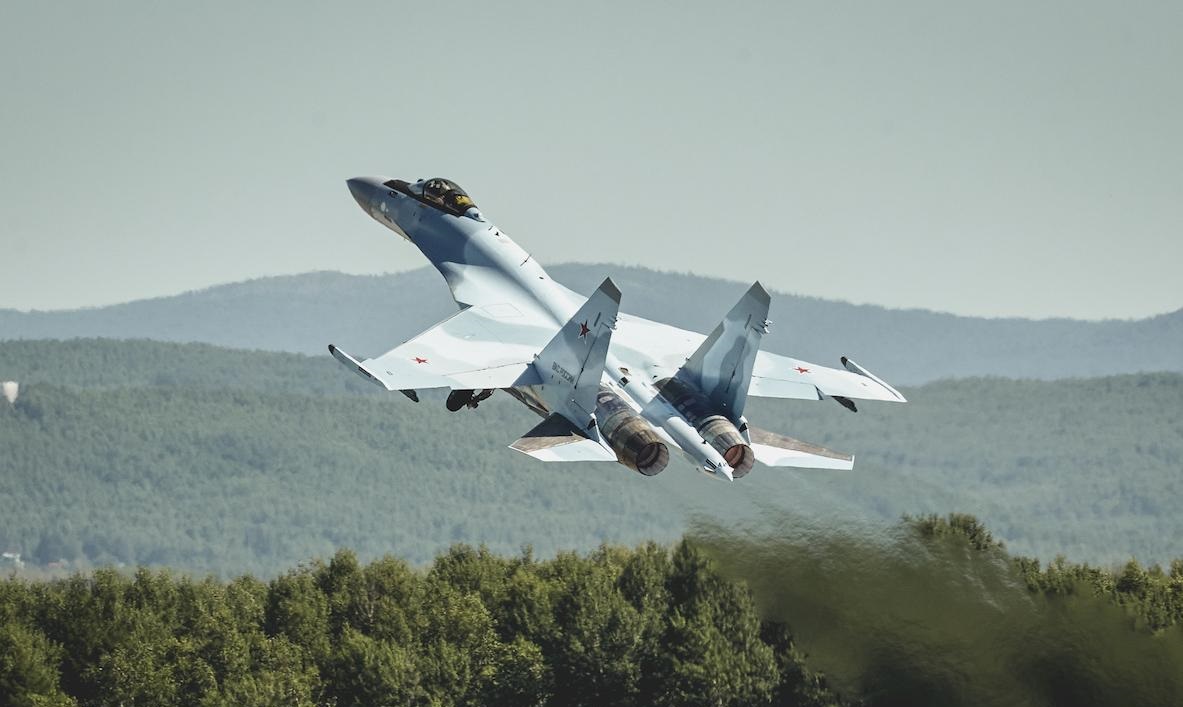
Su-35 fighter jet / Open-source illustrative photo
The agreement with russia offers Tehran the potential to acquire nearly 100 Su-35s, effectively doubling its fleet with combat-ready and uniform aircraft, which in turn simplifies maintenance in the long term. This could substantially shift the regional balance of power.
Not to mention, russia has committed to enhancing iran’s ground-based air defense. In August 2024, media reports indicated that Moscow delivered S-400 air defense missile systems to protect iranian nuclear sites. Furthermore, iran has also confirmed receiving Mi-28 attack helicopters and Yak-130 light combat/trainer aircraft from russia.
Right now all on different military forums. But, doubt they will setup one or two plants, Will be many small units scattered around the country.Question is if the production line has already been adapted at HESA or wherever these are to be assembled.

Mostly electronic parts. Russia has solved that problem. Now they have a complete local supply chain for their aircraft industry and some parts imported from China.There was reports before that the Russians were finding it difficult to make their SU57 due to some needed foreign components, I wonder if they have any dependency with the SU30/35 as well.

This is definitely a historic moment. Through Israel's attack, I personally believe that the air force is Iran's most indispensable and weak link that urgently needs to be strengthenedNot Just Su-35 Aircraft, russia Also Gave iran the License to Manufacture Them Locally
Defense Express
[email protected]
October 25, 2024
2545 0
Su-35 production in russia / Open-source archive photo
Tehran will be able to assemble this fighter domestically out of pre-made parts, with the potential to grow its Su-35 fleet to a hundred units within a short term
Many experts believe that the main form of payment for the continuous flow of drones and ammunition from iran into russia is the 24 Su-35 fighter jets that the Kremlin began delivering in April 2023. However, this was not enough, or iran’s aid has grown to the extent that Tehran has now also received a license to manufacture this type of aircraft.
Reporting on the new agreement between the two partner countries, media outlets in russia and iran note that this form of cooperation opens the door for production of 48 to 72 fighters on iranian territory. This includes not only the Su-35 but the simpler two-seater Su-30 as well, both derived from the Soviet Su-27.
Su-30 in versions with forewings and without them / Open-source illustrative photo
Based on russia’s previous practices for licensing Su-30 production, this likely means local assembly of aircraft from pre-made subsystems and parts. In practical terms, this will allow iran to not just update its current air force but also quickly raise its air capabilities to a whole new level.
Even the initial 24 ready-to-go Su-35s have already altered the balance in iran’s favor. Especially so because these aircraft were transferred on such short notice, as they had already been manufactured by the time of the agreement, just gathering dust in storage. Originally intended for Egypt, the aircraft remained unsold after Cairo backed out of a $2 billion deal with Moscow, wary of U.S. sanctions for purchasing russian weapons.
Metaphorically, iran’s current air force is something between an antique shop and a zoo. Many different aircraft blend in there: remnants of American supplies before the Islamic Revolution, Chinese imports, and Soviet planes that Iraqi pilots brought in 1991.
How many of the declaratively available 68 F-4 Phantoms, 43 F-14 Tomcats, 24 Chengdu J-7s (Chinese copy of MiG-21), 35 MiG-29s and other aircraft are de facto still capable of taking part in combat missions is a huge question.
Su-35 fighter jet / Open-source illustrative photo
The agreement with russia offers Tehran the potential to acquire nearly 100 Su-35s, effectively doubling its fleet with combat-ready and uniform aircraft, which in turn simplifies maintenance in the long term. This could substantially shift the regional balance of power.
Not to mention, russia has committed to enhancing iran’s ground-based air defense. In August 2024, media reports indicated that Moscow delivered S-400 air defense missile systems to protect iranian nuclear sites. Furthermore, iran has also confirmed receiving Mi-28 attack helicopters and Yak-130 light combat/trainer aircraft from russia.
This is definitely a historic moment. Through Israel's attack, I personally believe that the air force is Iran's most indispensable and weak link that urgently needs to be strengthened


