

this would inflate the cost to obscene levels. The rd93 is already quite expensive at 3m/unit, anything like this would push it to levels above the eurojetIs it an offer for just a sale or ToT for most of the engine? Pakistan, IMHO, should be seeking to do a ToT, such that the engine could be built in Pakistan.
A re-design of the current JF-17 Block 3 to accommodate this engine would be a practical application. Giving the plane enough power to maximize its TWR and maneuverability.
Navigation
Install the app
How to install the app on iOS
Follow along with the video below to see how to install our site as a web app on your home screen.
Note: This feature may not be available in some browsers.
More options
Style variation
You are using an out of date browser. It may not display this or other websites correctly.
You should upgrade or use an alternative browser.
You should upgrade or use an alternative browser.
JF-17 PFX program
- Thread starter Zarvan
- Start date
More options
Who Replied?
Michael
VIP Member

The Russian military industry, now, is on the verge of collapse.View attachment 87222
Russian offers for upgraded versions of RD-33 engine to India The engine will deliver a maximum thrust of 110 kN, perfectly aligning with the specifications outlined by DRDO’s Gas Turbine Research Establishment (GTRE) for the AMCA. It will feature a gas generator derived from the AL-41F1S, used in Russia’s Su-35, and incorporate some elements from the AL-51 engine. Essentially, it is a compact version of the Izdeliye 177S engine
Of course, the Russians are offering the engine to India and Pakistan, especially if India refuses to cooperate, it will be offered to Pakistan’s JF-17 PFX project
It may have originally been offered to Pakistan as part of the Russian offer for technical cooperation, which supports Pakistani development and encourages China to offer a lower offer than the Russians as long as the matter is in the competition phase for Pakistan to achieve what it desires from the success of its national project
https://idrw.org/russia-keen-to-offer-rd-33-successor-engine-technology-for-indias-amca-program/
The Russians in the past years were more flexible in technical cooperation, and after the development in China, they are trying to maintain their markets. For example, with the Egyptian side, Egypt financed the development of the OLS for the MIG-29M/M2 and other systems in it, and the Egyptians did not want to finance the development of the AESA radar because they were not convinced of the Russians’ ability to complete the development on time. The current situation of the Russians makes them more flexible in transferring technology, especially since the Indians are not interested in Russian engines and are favoring the Americans over them, despite the Americans manipulating the Indians to make them unable to compete with them in exporting Indian fighters in the international market.
After the collapse of the Soviet Union, Russia inherited the vast majority of the Soviet Union's military forces and military industry. However, in these decades, Russia's military power has seriously declined and its military industry is struggling. In the early days, due to the close cooperation between China's and Russia's military industries, Russia's military industry could still barely function. However, with the rapid development of China's military industry, China no longer relies on Russia's military technology cooperation, Russia's military industry is more difficult.
Let's look at Russia's performance in the Russo-Ukrainian war. Their weaponry on the battlefield is seriously behind the times. They need North Korea to provide even the simplest artillery shells. The Kuznetsov aircraft carrier has been sitting in the shipyard for many years, with repairs nowhere in sight. Their aircraft manufacturing plants can only produce a pathetic number of fighters per year ......
The Russian military industry is in desperate need of life-saving funds right now. Based on national strategy, China is certainly not willing to help Russia revive its military industry. The Russians can only target India. ------ Remember the $1 aircraft carrier?
So this program you mentioned came up. As for the final product? That doesn't matter. As long as Russia says to India that this is a very powerful engine and it will be much more powerful than what China has now. That would be enough and India would be more than happy to pay for it.
Let's analyze it.Is it an offer for just a sale or ToT for most of the engine? Pakistan, IMHO, should be seeking to do a ToT, such that the engine could be built in Pakistan.
A re-design of the current JF-17 Block 3 to accommodate this engine would be a practical application. Giving the plane enough power to maximize its TWR and maneuverability.
There are no more than two factors in seeking to build engines in-house:
1, national security factors. When war comes, there is no dependence on foreign countries at all. Ensuring that one can stay ahead of the curve in a continuing war.
2, procurement cost factors. The cost of manufacturing your own is lower than the cost of purchasing finished products, which can save a large amount of money.
Self-manufactured engines are divided into two modes:
Mode A, procurement of some parts + their own production of some parts = final assembled products.
Mode B, from raw materials to implement all the independent manufacturing.
Obviously, Mode B cannot be used in Pakistan's present situation.
If Pakistan adopts Mode A for engine production, neither of the previous two factors can be implemented.
Modern turbofan engine core components and materials, are strategic materials, only a very few countries have and master the relevant production technology. They are allowed to export them to friendly countries in peacetime, but their relevant production technology will never be exported. Pakistan can only master these technologies by relying on the development of its own basic industrial technology until it has established a strong basic industrial and reverse engineering capability.
In the meantime, the cost of products produced through Model A is much higher than the cost of direct procurement of finished products.
Why is the U.S. simultaneously delaying deliveries of fighter jet engines to India, Turkey, South Korea and other countries? You can scrutinize the reasons behind them.
I can give you an example:

This is a very common disposable lighter that we use all the time. It consists of dozens of tiny parts. Its retail price in China is 1 CNY (about 0.14 USD).
1. If you don't import any raw materials and make it entirely from natural materials (you can import the equipment to make them), then, congratulations you have become an industrial powerhouse.
2, If you can make it and the manufacturing cost is lower than China's manufacturing cost, then, congratulations you have become the world's first industrial power.
=====================================
Special note: I fully support Pakistan's in-depth study of the engine. This includes reverse engineering, material science research, process technology research, etc. But there is no real point in ToT producing engines at this stage.

FuturePAF
THINK TANK: CONSULTANT

At this stage, sure. But at some point, because as you said, the Russian industry is on the decline and reliable parts may not be available.The Russian military industry, now, is on the verge of collapse.
After the collapse of the Soviet Union, Russia inherited the vast majority of the Soviet Union's military forces and military industry. However, in these decades, Russia's military power has seriously declined and its military industry is struggling. In the early days, due to the close cooperation between China's and Russia's military industries, Russia's military industry could still barely function. However, with the rapid development of China's military industry, China no longer relies on Russia's military technology cooperation, Russia's military industry is more difficult.
Let's look at Russia's performance in the Russo-Ukrainian war. Their weaponry on the battlefield is seriously behind the times. They need North Korea to provide even the simplest artillery shells. The Kuznetsov aircraft carrier has been sitting in the shipyard for many years, with repairs nowhere in sight. Their aircraft manufacturing plants can only produce a pathetic number of fighters per year ......
The Russian military industry is in desperate need of life-saving funds right now. Based on national strategy, China is certainly not willing to help Russia revive its military industry. The Russians can only target India. ------ Remember the $1 aircraft carrier?
So this program you mentioned came up. As for the final product? That doesn't matter. As long as Russia says to India that this is a very powerful engine and it will be much more powerful than what China has now. That would be enough and India would be more than happy to pay for it.
Let's analyze it.
There are no more than two factors in seeking to build engines in-house:
1, national security factors. When war comes, there is no dependence on foreign countries at all. Ensuring that one can stay ahead of the curve in a continuing war.
2, procurement cost factors. The cost of manufacturing your own is lower than the cost of purchasing finished products, which can save a large amount of money.
Self-manufactured engines are divided into two modes:
Mode A, procurement of some parts + their own production of some parts = final assembled products.
Mode B, from raw materials to implement all the independent manufacturing.
Obviously, Mode B cannot be used in Pakistan's present situation.
If Pakistan adopts Mode A for engine production, neither of the previous two factors can be implemented.
Modern turbofan engine core components and materials, are strategic materials, only a very few countries have and master the relevant production technology. They are allowed to export them to friendly countries in peacetime, but their relevant production technology will never be exported. Pakistan can only master these technologies by relying on the development of its own basic industrial technology until it has established a strong basic industrial and reverse engineering capability.
In the meantime, the cost of products produced through Model A is much higher than the cost of direct procurement of finished products.
Why is the U.S. simultaneously delaying deliveries of fighter jet engines to India, Turkey, South Korea and other countries? You can scrutinize the reasons behind them.
I can give you an example:
View attachment 87435
This is a very common disposable lighter that we use all the time. It consists of dozens of tiny parts. Its retail price in China is 1 CNY (about 0.14 USD).
1. If you don't import any raw materials and make it entirely from natural materials (you can import the equipment to make them), then, congratulations you have become an industrial powerhouse.
2, If you can make it and the manufacturing cost is lower than China's manufacturing cost, then, congratulations you have become the world's first industrial power.
=====================================
Special note: I fully support Pakistan's in-depth study of the engine. This includes reverse engineering, material science research, process technology research, etc. But there is no real point in ToT producing engines at this stage.
I guess that is where the WS-13E/WS-21/WS-19 could come in, should that become a concern.
Michael
VIP Member
First. We need to solve the security problem of Chinese engineers in Pakistan. If this issue is not resolved, all cooperation between China and Pakistan will be seriously affected. For China, certain technologies are not particularly important and they are perfectly transferable to Pakistan (e.g. WS-21). However, the engineers of the Chinese military industry are fully accustomed to living in a safe Chinese society, and at the same time, they are the ones who are China's treasures. The Chinese government will not put these treasures in an environment where their lives are in danger at all times.At this stage, sure. But at some point, because as you said, the Russian industry is on the decline and reliable parts may not be available.
I guess that is where the WS-13E/WS-21/WS-19 could come in, should that become a concern.
Secondly. Friends of Pakistan should develop gradually based on the realities of Pakistan. We should pick a suitable project to implement an autonomous development program based on the current situation rather than trying to develop everything completely autonomously. Pakistan has limited capacity at present and must concentrate all its efforts to make a breakthrough in one direction first.
For example
Tanks, Fighter Jets, Warships, Missiles etc. It is not appropriate for Pakistan to pursue indigenization in all directions at the same time, Pakistan does not have enough capacity to develop them all at the same time. The status quo as we see it is that Pakistan has some capability in each of these areas, but none of them are strong enough for full indigenization.
We need to pick one direction and do our best to achieve full indigenization. In this way, we can promote the building of a complete industrial system. ------ The military industry and the civilian industry are, for the most part, connected. The development of military industry can also completely drive the development of civilian industry. This is China's “Civil-Military Integration Strategy”.
When Pakistan has achieved complete indigenization in one direction, it will seek indigenization in the next.

Quwa
Research Partner

Russia will likely prefer whatever hazy situation they've got with India than to give Pakistan anything of big value.Is it an offer for just a sale or ToT for most of the engine? Pakistan, IMHO, should be seeking to do a ToT, such that the engine could be built in Pakistan.
A re-design of the current JF-17 Block 3 to accommodate this engine would be a practical application. Giving the plane enough power to maximize its TWR and maneuverability.
IMO, we should look at designing an engine with Ukraine, especially as their post-war economy will look to take up FDI (including funding for their defence programs) Pakistan doesn't even need to go it alone as Turkiye, UAE, Brazil, and/or heck, even South Korea, would also have the incentive to back such a program for their respective needs.
We can have a Centrist engine consortium (counterbalancing both the West and the China/Russia East). Obviously, no one would consider Pak very seriously to lead such a thing, but Turkiye perhaps? One just needs to offer a real vision and back it up with drive.
I'm generally not cool with us expecting Russia to sell us good wares as the Su-35, S-400, etc., talk never went anywhere. Meanwhile, Moscow is lapping it up with India and arming them with stuff that could beat us, especially when used right. All the while we let genuinely promising (if raw and in need of serious work) opportunities elsewhere slip.


View attachment 87222
Russian offers for upgraded versions of RD-33 engine to India The engine will deliver a maximum thrust of 110 kN, perfectly aligning with the specifications outlined by DRDO’s Gas Turbine Research Establishment (GTRE) for the AMCA. It will feature a gas generator derived from the AL-41F1S, used in Russia’s Su-35, and incorporate some elements from the AL-51 engine. Essentially, it is a compact version of the Izdeliye 177S engine
Of course, the Russians are offering the engine to India and Pakistan, especially if India refuses to cooperate, it will be offered to Pakistan’s JF-17 PFX project
It may have originally been offered to Pakistan as part of the Russian offer for technical cooperation, which supports Pakistani development and encourages China to offer a lower offer than the Russians as long as the matter is in the competition phase for Pakistan to achieve what it desires from the success of its national project
https://idrw.org/russia-keen-to-offer-rd-33-successor-engine-technology-for-indias-amca-program/
The Russians in the past years were more flexible in technical cooperation, and after the development in China, they are trying to maintain their markets. For example, with the Egyptian side, Egypt financed the development of the OLS for the MIG-29M/M2 and other systems in it, and the Egyptians did not want to finance the development of the AESA radar because they were not convinced of the Russians’ ability to complete the development on time. The current situation of the Russians makes them more flexible in transferring technology, especially since the Indians are not interested in Russian engines and are favoring the Americans over them, despite the Americans manipulating the Indians to make them unable to compete with them in exporting Indian fighters in the international market.
Sorry, but this is total nonsense for several reasons!
1. this site - IDRW is nothing but crap. According to this Indian click-bait site the IAF is up to whatever and always the best.
2. The Russians are struggling since years in developing a decent engine for the Su-57, the promised AL-51F (Izd. 30) is contrary to official reports from TASS, RT and other such sites far from ready and even more the Russian AF has NO interest at all in a medium sized engine since they have no fighter for it.
As such you are correct, "The Russians in the past years were more flexible in technical cooperation" since it is their final hope to squeeze a bit of money to survive from a potential customer - especially India - but they clearly know, this "train has long left the station", their engines are in no way up-to date today and India is on the verge to go the Western way with either Safran or GE. Therefore to think they would develop this "thing" successfully and for Pakistan without substantial investment from a customer is plain ridiculous.

MirageBlue
Registered Member

IMO PFX will be similar to LCA MK2
A more powerful engine.
Better Range
Better Payload
More HP
Better Sensors.
Airframe will be modified but not redesigned..
But can they can do it without chinese OEM ?
Nope. No airframe enlargement for sure. That would require having the Chinese do it since the Pakistanis lack the technical knowhow and infrastructure to do it on their own. Anyone who has followed the Hornet to Super Hornet transition would know what the scale of work for an "enlargement" entails. It is no small task. And PAF officers (as per Janes) have claimed that PFX will be ready by 2030. That definitely rules out any airframe enlargement unless it is the Chinese doing it.
A more powerful engine means a higher specific fuel consumption. Which means even if you add an internal fuel tank it may only partially offset the thirstier engine and you end up with very marginal range improvement.
Payload improvement requires airframe and wing strengthening. A lot of design and testing is involved in that plus the empty weight goes up which will mean reduced range if other things are kept constant.
My guess is that this is a program for avionics replacement where possible with Pakistani/Turkish equivalents and integration of a bigger BVRAAM like the PL-15E.

Zarvan
Elite Member
- Thread starter
- #1,343
Your habbit of underestimating us is hilarious but please continue. No we are just using name of JF-17. PFX by all mean would be a totally different beast. Can't be compared to current JF-17. As for technology I see more help coming from Turkey in this one than from China.Nope. No airframe enlargement for sure. That would require having the Chinese do it since the Pakistanis lack the technical knowhow and infrastructure to do it on their own. Anyone who has followed the Hornet to Super Hornet transition would know what the scale of work for an "enlargement" entails. It is no small task. And PAF officers (as per Janes) have claimed that PFX will be ready by 2030. That definitely rules out any airframe enlargement unless it is the Chinese doing it.
A more powerful engine means a higher specific fuel consumption. Which means even if you add an internal fuel tank it may only partially offset the thirstier engine and you end up with very marginal range improvement.
Payload improvement requires airframe and wing strengthening. A lot of design and testing is involved in that plus the empty weight goes up which will mean reduced range if other things are kept constant.
My guess is that this is a program for avionics replacement where possible with Pakistani/Turkish equivalents and integration of a bigger BVRAAM like the PL-15E.

onlinpunit
Trusted Member
Turkey is struggling to make it's own..!Your habbit of underestimating us is hilarious but please continue. No we are just using name of JF-17. PFX by all mean would be a totally different beast. Can't be compared to current JF-17. As for technology I see more help coming from Turkey in this one than from China.
Sami_1
Registered Member

Sorry, but this is total nonsense for several reasons!
1. this site - IDRW is nothing but crap. According to this Indian click-bait site the IAF is up to whatever and always the best.
2. The Russians are struggling since years in developing a decent engine for the Su-57, the promised AL-51F (Izd. 30) is contrary to official reports from TASS, RT and other such sites far from ready and even more the Russian AF has NO interest at all in a medium sized engine since they have no fighter for it.
As such you are correct, "The Russians in the past years were more flexible in technical cooperation" since it is their final hope to squeeze a bit of money to survive from a potential customer - especially India - but they clearly know, this "train has long left the station", their engines are in no way up-to date today and India is on the verge to go the Western way with either Safran or GE. Therefore to think they would develop this "thing" successfully and for Pakistan without substantia
It's simpler than you think.Sorry, but this is total nonsense for several reasons!
1. this site - IDRW is nothing but crap. According to this Indian click-bait site the IAF is up to whatever and always the best.
2. The Russians are struggling since years in developing a decent engine for the Su-57, the promised AL-51F (Izd. 30) is contrary to official reports from TASS, RT and other such sites far from ready and even more the Russian AF has NO interest at all in a medium sized engine since they have no fighter for it.
As such you are correct, "The Russians in the past years were more flexible in technical cooperation" since it is their final hope to squeeze a bit of money to survive from a potential customer - especially India - but they clearly know, this "train has long left the station", their engines are in no way up-to date today and India is on the verge to go the Western way with either Safran or GE. Therefore to think they would develop this "thing" successfully and for Pakistan without substantial investment from a customer is plain ridiculous.
First, the Russians have the technical ability to produce a more advanced version of the engine and they already have plans to reach an engine with a capacity of up to 120KN.
Second, Pakistan is already a customer for the RD-93 engines, which is a derivative of the RD-33 engine.
Third, the Russians had a plan for the RD-43 / RD-133 / RD-233 engines several years ago.
They stopped in the past. Now they are using what was developed for the AL-177 engine and their modernization of the Russian engines is putting it into effect on the smaller engine.
We are only talking about things that are done and can be implemented.
Regarding cooperation, I think we have all heard that there is a proposal for cooperation and the Russians need markets and money. Pakistan is a major customer for the RD-93 engine. The production volume of the JF-17 will range between 240-300.
In terms of exports, the engine market is growing for the JF-17 fighter.
We return to what concerns you, which is what China might offer to Pakistan, whether it is an engine WS-13/21/19 If it is the best offer for Pakistan, no one objects to having competition in any aspect that is beneficial to Pakistan and does not harm anyone.
l investment from a customer is plain ridiculous.
Sorry, but this is total nonsense for several reasons!
1. this site - IDRW is nothing but crap. According to this Indian click-bait site the IAF is up to whatever and always the best.
2. The Russians are struggling since years in developing a decent engine for the Su-57, the promised AL-51F (Izd. 30) is contrary to official reports from TASS, RT and other such sites far from ready and even more the Russian AF has NO interest at all in a medium sized engine since they have no fighter for it.
As such you are correct, "The Russians in the past years were more flexible in technical cooperation" since it is their final hope to squeeze a bit of money to survive from a potential customer - especially India - but they clearly know, this "train has long left the station", their engines are in no way up-to date today and India is on the verge to go the Western way with either Safran or GE. Therefore to think they would develop this "thing" successfully and for Pakistan without substantial investment from a customer is plain ridiculous.
It's simpler than you think.
First, the Russians have the technical ability to produce a more advanced version of the engine and they already have plans to reach an engine with a capacity of up to 120KN.
Second, Pakistan is already a customer for the RD-93 engines, which is a derivative of the RD-33 engine.
Third, the Russians had a plan for the RD-43 / RD-133 / RD-233 engines several years ago.
They stopped in the past. Now they are using what was developed for the AL-177 engine and their modernization of the Russian engines is putting it into effect on the smaller engine.
We are only talking about things that are done and can be implemented.
Regarding cooperation, I think we have all heard that there is a proposal for cooperation and the Russians need markets and money. Pakistan is a major customer for the RD-93 engine. The production volume of the JF-17 will range between 240-300.
In terms of exports, the engine market is growing for the JF-17 fighter.
We return to what concerns you, which is what China might offer to Pakistan, whether it is an engine WS-13/21/19 If it is the best offer for Pakistan, no one objects to having competition in any aspect that is beneficial to Pakistan and does not harm anyone.

Fatman17
THINK TANK: CONSULTANT
Skip to contentSkip to footer

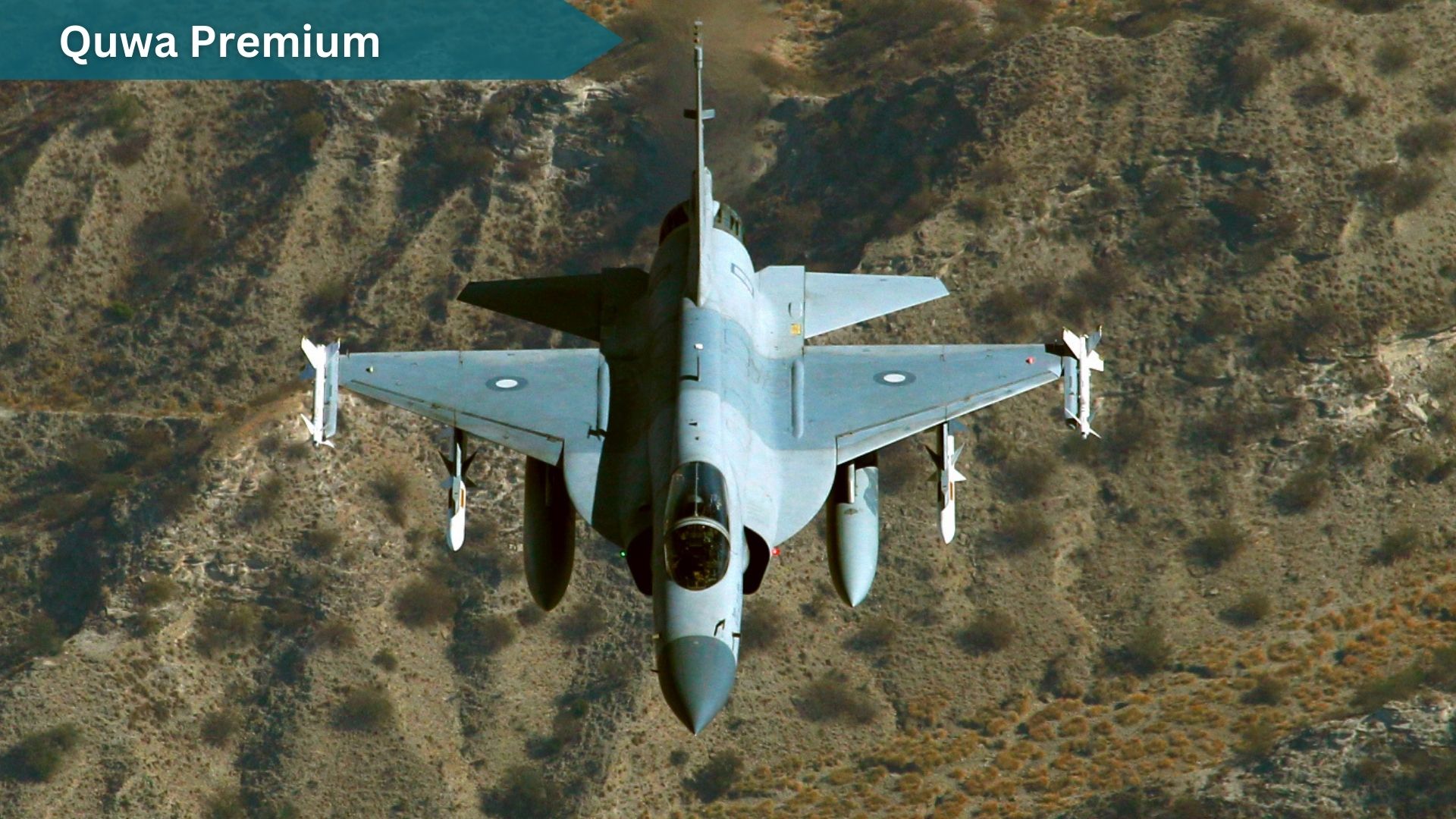
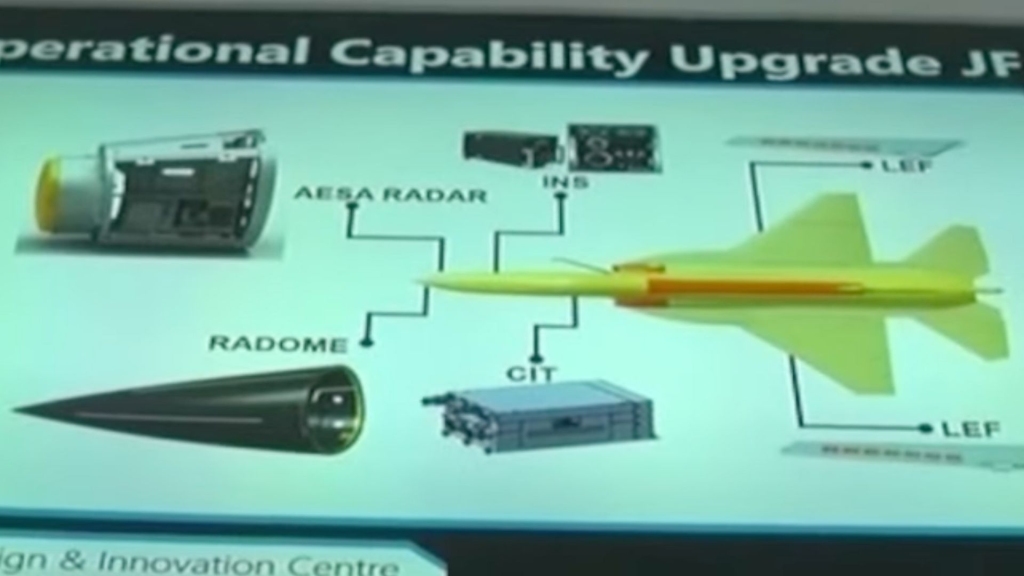
During the 2024 International Defence Exhibition and Seminar (IDEAS 2024), the Pakistan Air Force’s (PAF) National Aerospace Science and Technology Park (NASTP) revealed that the JF-17 Thunder will undergo an ‘Operational Capability Upgrade’ (OCU). NASTP is also designating this JF-17 OCU project as ‘PFX Alpha’, indicating that it is the first sequential step towards the future PFX fighter program.
Currently, it seems that the primary task of the JF-17 OCU (or PFX Alpha) is to upgrade the Thunder’s radar and avionics suite and, potentially, integrate the fighter with additional air-to-air and air-to-surface munitions, especially homegrown solutions like the Rasoob 250 and AZB-81LR, among many others.
However, while the task of the OCU is to upgrade the fighter with new subsystems, the goal is deeper: it might be the PAF’s first major step towards independently managing the Thunder platform.
Click Here
This gap may have come to a head when the PAF was evaluating its options for an active electronically scanned array (AESA) radar for use on the JF-17 Block-3. Reportedly, a major reason why the PAF was not able to select the Leonardo Grifo-E was because neither the Aviation Industry Corporation of China (AVIC) nor Leonardo would agree to share their respective source-codes.
Though far from a guarantee, the PAF could not view the Leonardo Grifo-E as a serious option, despite it leveraging newer gallium nitride (GaN) technology for its transmit/receive modules (TRM), for example. It was categorically discounted due to a technical ‘string’. However, even if the PAF could source munitions from Europe, it lacked the technical capacity to carry out the integration work without AVIC’s help. Hence, the PAF was not necessarily emerging out of that situation in line with its best interests.
In 2020, the PAF began taking steps to close this gap by establishing a new integration facility to manage subsystem and weapon system integration onto the JF-17. Since then, the PAF integrated several original munitions to the Thunder, including air-launched cruise missiles (ALCM) like the Ra’ad–series, AZB-series of precision-guided bombs (PGB), and the Aselsan ASELPOD advanced targeting pod.
Now, with the JF-17 OCU / PFX Alpha, the PAF is aiming to take control of electronics stack – i.e., radar, electronic warfare (EW), avionics, and possibly even electro-optical (EO) systems – to design and build a package that shapes the JF-17 into the no-compromise solution Air Headquarters (AHQ) envisioned.
PAF’s NASTP Sets Upgrade Path for JF-17 (or ‘PFX Alpha’)
Pakistan Air Force News by Bilal KhanBilal Khan
Linkedin TwitterDuring the 2024 International Defence Exhibition and Seminar (IDEAS 2024), the Pakistan Air Force’s (PAF) National Aerospace Science and Technology Park (NASTP) revealed that the JF-17 Thunder will undergo an ‘Operational Capability Upgrade’ (OCU). NASTP is also designating this JF-17 OCU project as ‘PFX Alpha’, indicating that it is the first sequential step towards the future PFX fighter program.
Currently, it seems that the primary task of the JF-17 OCU (or PFX Alpha) is to upgrade the Thunder’s radar and avionics suite and, potentially, integrate the fighter with additional air-to-air and air-to-surface munitions, especially homegrown solutions like the Rasoob 250 and AZB-81LR, among many others.
However, while the task of the OCU is to upgrade the fighter with new subsystems, the goal is deeper: it might be the PAF’s first major step towards independently managing the Thunder platform.
Timely Defence News with Verified Insights
Stay up to date with the latest Pakistani defence news with reliable research and accurate forecastingClick Here
The JF-17 Vision Coming to Life
Since the JF-17’s introduction to the PAF combat aircraft fleet, there had been an underlying gap in the imagined goals of the fighter and the reality of Pakistan’s aerospace capacity. Basically, while the JF-17 was supposed to be a fighter free of political and technical strings, the reality was that Pakistan was still reliant on China in critical areas, such as subsystems and munitions integration.This gap may have come to a head when the PAF was evaluating its options for an active electronically scanned array (AESA) radar for use on the JF-17 Block-3. Reportedly, a major reason why the PAF was not able to select the Leonardo Grifo-E was because neither the Aviation Industry Corporation of China (AVIC) nor Leonardo would agree to share their respective source-codes.
Though far from a guarantee, the PAF could not view the Leonardo Grifo-E as a serious option, despite it leveraging newer gallium nitride (GaN) technology for its transmit/receive modules (TRM), for example. It was categorically discounted due to a technical ‘string’. However, even if the PAF could source munitions from Europe, it lacked the technical capacity to carry out the integration work without AVIC’s help. Hence, the PAF was not necessarily emerging out of that situation in line with its best interests.
In 2020, the PAF began taking steps to close this gap by establishing a new integration facility to manage subsystem and weapon system integration onto the JF-17. Since then, the PAF integrated several original munitions to the Thunder, including air-launched cruise missiles (ALCM) like the Ra’ad–series, AZB-series of precision-guided bombs (PGB), and the Aselsan ASELPOD advanced targeting pod.
Now, with the JF-17 OCU / PFX Alpha, the PAF is aiming to take control of electronics stack – i.e., radar, electronic warfare (EW), avionics, and possibly even electro-optical (EO) systems – to design and build a package that shapes the JF-17 into the no-compromise solution Air Headquarters (AHQ) envisioned.
A Greater Focus on Localization
One of the goals the PAF set with Project PFX is to establish “total technological control” of the platform. In other words, the PAF should be able to freely decide upon, integrate, and deploy the inputs or subsystems of its choosing onto the platform…
Bentley777
Registered Member
Glad some one talked about it airforce is sorted focus should be on the navy and missile program.No what has changed is that with strong Air Force and it seems now it would be Navy also we can achieve a lot. Navy is still pretty much a defensive force but Air Force moment came after 2019. When we shot down Indian jets
It's simpler than you think.
First, the Russians have the technical ability to produce a more advanced version of the engine and they already have plans to reach an engine with a capacity of up to 120KN.
Second, Pakistan is already a customer for the RD-93 engines, which is a derivative of the RD-33 engine.
Third, the Russians had a plan for the RD-43 / RD-133 / RD-233 engines several years ago.
They stopped in the past. Now they are using what was developed for the AL-177 engine and their modernization of the Russian engines is putting it into effect on the smaller engine.
We are only talking about things that are done and can be implemented.
Regarding cooperation, I think we have all heard that there is a proposal for cooperation and the Russians need markets and money. Pakistan is a major customer for the RD-93 engine. The production volume of the JF-17 will range between 240-300.
In terms of exports, the engine market is growing for the JF-17 fighter.
We return to what concerns you, which is what China might offer to Pakistan, whether it is an engine WS-13/21/19 If it is the best offer for Pakistan, no one objects to having competition in any aspect that is beneficial to Pakistan and does not harm anyone.
No it is not that simple! They are talking since years about the AL-51F especially after one was flown in a T-50 prototype but contrary to official reports, it is still not ready for production nor the number built is anything beyond homeopathic doses!
Don't get me wrong! These plans - exactly as you said like "RD-43 / RD-133 / RD-233 engines several years ago" went to nothing and since the Russian AF has NO intention for a medium weight fighter in the future, this is a dead end. As such to think while they don't get a high priority project running they could swiftly develop another smaller engine without an internal use only for export even faster is just is just ridiculous!
Therefore even a potential sale of 200+ such engines to Pakistan is not a given thing and Pakistan would be wise to purchase this engine only after it has proven itself, which as explained above is highly unlikely. ... and really "the engine market is growing for the JF-17 fighter"?? Do you really believe this?
And finally in no way I'm concerned that China would be sidestepped! This in fact is totally irrelevant and as @arslank01 more than once explained, it makes indeed sense to see China's relation to Pakistan critical, but that Russian paper-project is at least from my understanding an even worse option if it ever will be one.
Sami_1
Registered Member
No it is not that simple! They are talking since years about the AL-51F especially after one was flown in a T-50 prototype but contrary to official reports, it is still not ready for production nor the number built is anything beyond homeopathic doses!
Don't get me wrong! These plans - exactly as you said like "RD-43 / RD-133 / RD-233 engines several years ago" went to nothing and since the Russian AF has NO intention for a medium weight fighter in the future, this is a dead end. As such to think while they don't get a high priority project running they could swiftly develop another smaller engine without an internal use only for export even faster is just is just ridiculous!
Therefore even a potential sale of 200+ such engines to Pakistan is not a given thing and Pakistan would be wise to purchase this engine only after it has proven itself, which as explained above is highly unlikely. ... and really "the engine market is growing for the JF-17 fighter"?? Do you really believe this?
And finally in no way I'm concerned that China would be sidestepped! This in fact is totally irrelevant and as @arslank01 more than once explained, it makes indeed sense to see China's relation to Pakistan critical, but that Russian paper-project is at least from my understanding an even worse option if it ever will be one.
Don't get too fanatical about things in the discussion phase. I know very well that you are afraid that Pakistan will remain a prisoner of Chinese weapons and the Chinese arms market. We cannot force countries not to try to develop their industry or look for better and less costly ways to protect their national security. In other words, your responses are simply related to Chinese interests and not objective criticism. You are forgetting many things. China has been around for a very short period of time. Many of its products are originally Russian products, starting with the design or basic components. That is, the matter is related to Chinese theft of technology from the Russians and Americans, then subsequent Chinese developments on them. Secondly, do not forget that the Chinese product has remained from the fifties to the last ten years very poor and extremely bad. Egypt has lost many pilots due to the poor performance of the Chinese F-6 aircraft engines, and Egypt has replaced the poor Chinese engines with other engines. The K-8E aircraft is an imitation of the British HAWK aircraft, and despite the Chinese making 33 developments to the aircraft with an American engine, Egypt has continued to redevelop it and replace the Chinese components with Western components. So that the aircraft can remain in service until Now, here is the reason for Egypt's refusal in 2010 to produce the Chinese L-15 aircraft so far: the poor experience of Chinese aircraft.
Despite the age of the MIG-21 aircraft, Egypt developed it and preferred it over the Chinese F-7, whether in terms of engine or structure.
Pakistan itself preferred the RD-93 engine over the Chinese version WS-13, which is a copy of the Russian RD-93 engine. The Chinese superiority is beyond doubt, and countries still prefer the Russian over the Chinese. The modesty of the Russian developments in AESA radars is what opens the way for exporting fighters, and the matter is not related to the Chinese engines, but there are criticisms of the Chinese WS-10 engine.
Up until this moment, China is still benefiting from Russian developments for its old weapons and engines, because the Russians' ability to develop, innovate and create is still unique from the Chinese mentality that relies on the idea of imitation. Russian solutions are cheaper and more effective, even if they are not stronger with lower performance, better than solutions at a higher cost with economically unfeasible performance, unlike the reliability of the Russian product over the Chinese.
What is the latest Chinese aircraft? J-20 is built on the Russian MIG-142 technical frame
The Z-10 aircraft was originally designed by Kamov
The J-10 aircraft is from the Israeli Lavi project
You have to see things more objectively, your trust in Chinese products is not recognized by countries much, but it is still a matter of doubt for them. The Chinese difficulties in exporting fourth-generation fighters are known to everyone, and fifth-generation fighters are studied by countries for a long time due to the poor experiences of Chinese fighters. We are happy that China has produced fifth-generation fighters because it is an area of pressure on other suppliers to obtain better offers from all parties, not because the Chinese are the best. Simply put, China sells the Chinese product at a cheap price due to its modest level. If it were better, its price would be high, and the matter is not only for large-scale and dense production, but also for the low cost of manufacturing.
Therefore, your lack of conviction in the Russians and their development of their engines is your opinion, and I cannot object to it. As for your opinion, you are not convinced, most countries are still not convinced by either Chinese engines or Chinese fighters, but rather consider them like any cheap Chinese product that does not enjoy Completely reliable or completely or primarily relied upon
So your claims of China's complete superiority over the Russians or the Russians' inability make us smile at someone who is deceived by the good shape and colors of the good products, but rather by the actual performance, as fighters are not Chinese children's toys that we ignore breaking after a short period.
One of the reasons countries turn to Chinese products is the transfer of technology, so the new Chinese trend to reject the transfer of technology and technical cooperation will turn them like any other supplier, but will make many people move away from the lower quality Chinese products that they used to give local production licenses. Do you understand this point? Because I notice a Chinese tone and arrogance, China has not become a major industrial country except because countries have moved away from American and European products in the economic field, because they and the Russians have refused to transfer technology, and China's trend to imitate the West in the same policy will simply lead to a rapid move away from the Chinese product, as China is moving to become like the West in the points of restricting the transfer of technology or cooperation. Why do countries cooperate with it in the first place? I would like to give you an idea. African countries have begun to move away from China in infrastructure projects and are choosing countries Another is due to poor implementation and high corruption in it and the West declared an economic war on China
China needs a partner and not a superior Chinese view
Pakistan is a market for China despite its economic awareness, but it gave the Chinese product a reputation and an export outlet to convince other countries of its products and China's cooperation with Pakistan is beneficial to both parties and not just to Pakistan, meaning that you as a Chinese country must offer Pakistan better offers than the Russians

Hakikat ve Hikmet
VIP Member

Why not to cooperate directly with the TEI? Use their "module library" to design your engine and get it fabricated there. Without single crystal blades no 4.5 gen jet is perfect. By 2028, almost all the modules will get individually fabricated and qualified....Russia will likely prefer whatever hazy situation they've got with India than to give Pakistan anything of big value.
IMO, we should look at designing an engine with Ukraine, especially as their post-war economy will look to take up FDI (including funding for their defence programs) Pakistan doesn't even need to go it alone as Turkiye, UAE, Brazil, and/or heck, even South Korea, would also have the incentive to back such a program for their respective needs.
We can have a Centrist engine consortium (counterbalancing both the West and the China/Russia East). Obviously, no one would consider Pak very seriously to lead such a thing, but Turkiye perhaps? One just needs to offer a real vision and back it up with drive.
I'm generally not cool with us expecting Russia to sell us good wares as the Su-35, S-400, etc., talk never went anywhere. Meanwhile, Moscow is lapping it up with India and arming them with stuff that could beat us, especially when used right. All the while we let genuinely promising (if raw and in need of serious work) opportunities elsewhere slip.
Users who are viewing this thread
Total: 2 (members: 0, guests: 2)
Pakistan Defence Latest
-

-
-
-
-
 Federal cabinet gives nod to imposition of emergency in KP; summary sent to president (7 Viewers)
- Latest: Goenitz
Country Watch Latest

Latest Posts
-
-
-

-
Saudi Arabia Executes Two Bangladeshi Nationals Over 'Having Sex' Inside Mecca Mosque (34 Viewers)
- Latest: mythbuster
-
