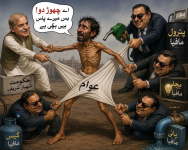
We keep going in circles because every time we discuss Pakistan’s problems, we stop halfway, we name the issues but avoid the real solutions. After nearly eight decades, it’s clear that simply creating more provinces is not a solution on its own. Without deep structural reforms, administrative reshuffling becomes cosmetic. In the short term, introducing federal‑level administrative units through constitutional amendments could help, but even that is only a bridge, not the destination.
Pakistan’s core challenge is not geography, it’s the entrenched elite structure. A small group of powerful families controls an enormous share of agricultural land, often estimated between 40% and 50%. They influence politics, law enforcement, markets, and even local governance. Laws exist, but implementation collapses because those who benefit from the current system have the power to block change. This isn’t just a political issue; it’s a mindset issue.
What’s even more frustrating is the negativity that comes from many Pakistanis living abroad. They enjoy systems that give them opportunities, stability, and fairness, things they would never have received back home. Yet when you talk to them about reforming Pakistan, they dismiss it as impossible. Why? If other nations can transform themselves, why can’t we?
China did it through long‑term planning.
Bangladesh is quietly becoming a manufacturing powerhouse.
Singapore is decades ahead because it built institutions that actually work.
The UAE and Saudi Arabia are reinventing themselves through bold economic reforms.
Vietnam, Malaysia, and Indonesia have surged past Pakistan in growth and governance.
Even Ethiopia, despite its challenges, is outperforming Pakistan economically.
So the question isn’t whether Pakistan can become an economic hub. It absolutely can. The country has strategic geography, a young population, natural resources, and massive untapped potential. The real question is whether Pakistan is willing to confront the structural barriers that keep it stuck.
To move forward, Pakistan needs long‑term vision, not five‑year political cycles. The government should be working with 200‑year development plans, broken down into clear milestones: institutional reform, land reform, industrialization, education modernization, and governance restructuring. Without this kind of long‑term commitment, we’ll keep repeating the same debates for another 79 years.
What I have shared from governance to tax collection, and from land reform to universal education & Healthcare programs under 34 EZ model. Pakistani establishment with all its power & top economists, will never ever be able to match that. Take another 25 years discussing it, even Nepal & Bhutan will be ahead of Pakistan.