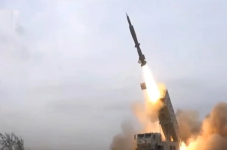
It is a Mach 2+ system capable of 5-10m attitudes at terminal attack but in general will do around 5-10k for cruise or a Hi-Hi-lo or Hi-Lo-lo at reduced range and speed because at those speeds it has to undergo a lot of dynamic pressure to change altitudes.
Also why it is a heavy system with the air launched at 2 tons(removing JF-17 entirely out of the mix as a launch platform) and ground launched versions are even heavier.
Lets do a comparison to Brahmos at risk of Bhaktora fanboys flooding the thread.
So it is less sophisticated but that does not mean Brahmos is automatically unreliable because that system is based off a long lineage in the proven Oniks versus the HD-1 is still not "battle tested" so to speak from a repeated launch aspect.
There are also differrences in propulsion - Brahmos is liquid fuel for which India had to set up a facility to produce and also storage that suits those requirements. This gives it a longer range due to efficiency from liquid fuel and better control but then you are also getting a complex missile with more pipes, valves and so on.
The HD-1 is solid fuel so you get less range from a similar mass but then it is easier(and cheaper) to produce along with much simpler storage systems which still getting 70-80% of the efficiency and control that Brahmos has.
However, that also means that likely from a cost perspective it provides Pakistan an immediate "simile" the missing capability it had in that specific vector and cheaper to procure considering the impact of cost has ten times more impact to Pakistan than India.
No side is "wrong" in their choice - India has its operational needs which go beyond land to multi domain common architecture which rewards them at their scale.
Pakistan gets a faster scaling system without deep infrastructure investment but has more limits to the system's overall performance.