PAF Very Own A2A Missiles [WVR, BVR & ALCM Stand off] News, Updates & Discussions

Pakistani ammunition only started appearing after 14 months since war started, and Pakistani estb doesn't need clearance from any ministry ,
LOLOLOLOLOLOLOLOLOL.
Pakistan Establishment is at the end of the day Pakistani Bureaucracy, and Pakistani bureaucracy doesn't do anything without three attested copies, NOC from all departments and the PM's grandmother, bio metric verification and a note in the register.
 
This could explain the relatively massive investment in SAMs. The PAF traditionally relied on its fighters for air defence, but now, the area-denial role will be split between MR/LR-SAMs and the fighter wings. In addition, you'll have an influx of drones to take on COIN/CT, high-risk strike, and other missions the PAF had assigned to crewed fighters.
No. Its just that the enemy, ie Army Air Defence has started expanding and added lots of systems, so PAF is countering.
GBAD with the AF makes no sense execpt for point defence to protect airfields.
 
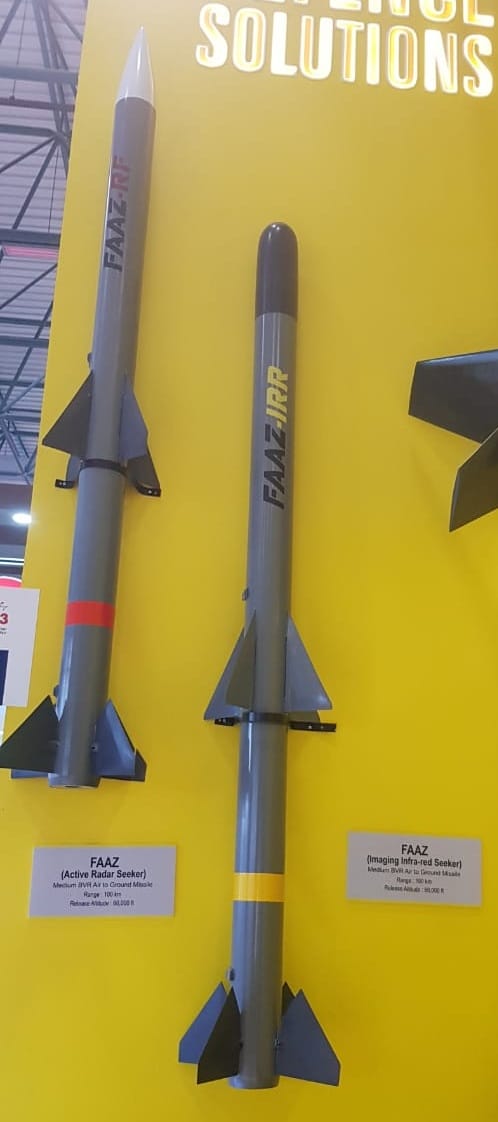
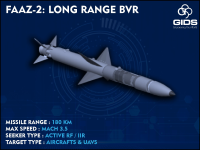
FAAZ-2 LR-BVR AAM R&D Project finally disclosed by GIDS. Earlier they integrated and
tested its earlier version FAAZ-I on JF-17 which never went into production,
as it was not compatible with modern missiles like PL-15 & Meteor.

View attachment 438

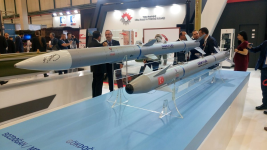
PAKISTAN's GIDS displays FAAZ BVR air to air missiles at #IDEF2023.Major thing will be FAAZ-2 with 180km range and dual pulse rocket motor engine.But here we've two versions oof FAAZ-1 with 100km range. Looks like GIDS may follow the pattern of MICA missile.FAAZ BVR Missile will have two guidance oriented versions:- Radar Guided FAAZ BVR missile- FAAZ BVR missile with Infrared Imaging seeker
Image


To view this content we will need your consent to set third party cookies.
For more detailed information, see our cookies page.


View attachment 439


To view this content we will need your consent to set third party cookies.
For more detailed information, see our cookies page.


View attachment 440


To view this content we will need your consent to set third party cookies.
For more detailed information, see our cookies page.


View attachment 441


Something interesting, true or not, darogh ber gardan e ravi:
To view this content we will need your consent to set third party cookies.
For more detailed information, see our cookies page.
 
Win win for both simply because of production size and cost..turkey and pakistan are both two top 10 military spenders in the world

But question is will both turkey and Pakistani establishment get some common sense 😂

Don't think Pakistanis can do any more JV with China..China would rather sell its stuff to Pakistan and doesn't need Pakistan as it has enough of demand on its own
 
what i seriously wonder now is why FC-31 then, the PAF is clearly throwing its weight behind the Turks, yes, i get being risk averse, but the FC-31 is hardly a completed product anyway and from what i can see, seems nothing more than an aircraft for those really low budget forces who cant afford to keep up but also cant afford to fall behind. The FC-31 literally seems like an airframe populated with a mish mash of readily available components. I would be seriously concerned about starting an arms race based around the FC-31, its a product that doesn't seem ready or suited to the needs of the force- radar derived from the KLJ-7A, Engines derived from the RD-33, alot of the kit being off the shelf readily available stuff- sure, it makes sense in the context of commonality and whatnot, but surely commonality with the JF-17 should not be a priority of your top of the line, highest end asset designed to do the bulk of the offensive work?

I get it is late to contribute much of value to the TFX, but there is still so many opportunities in relation to that project- let the Turks do airframe development, we can work out an agreement where we are able to develop munitions, or supporting equipment under their guidance and leadership, ive never been a super huge believer in the TFX, im sure you remember my sceptical article about it @Quwa , but day by day, it gets more and more impressive, even on paper you sit there and think, this thing will genuinely be serious kit, you dont get that with the FC-31.

The engines are a major hurdle yes, but the Turks have such a good opportunity to pitch this as the 'islamic fighter', gather funding from the Gulf and accelerate engine development, allowing them to literally pour money and burn it on those engines, a true ITAR free high end solution could possibly push Turkey into having the second largest sales of FGFA's after the US, while allowing the per unit cost to drop significantly. I am skeptical of the FC-31 induction, for what its worth, i dont actually think it will happen, but i do fear that we are missing on a big opportunity here- @Quwa any idea as to the logic here

All good points, as usual. I never understood why PAF didn’t adopt the TFX but instead of waiting for Turkish engines, develop its version around the Chinese WS-15/WS-19. The PAF is usually a forward looking air force, so I am not sure why it hasn’t pursued this route.
 
For this,PAF should have taken NESCOM in confidence to abandone their already slow SAM&BVR project to fully focus on getting tot from Turkey regarding this tech.

Otherwise,It will become another MALE UAV type parallel program where NESCOM somewhat succeeded but PAF's PAC utterly failed.
How come we never hear any news or anything about these actual powerhouse R&D institutes like NESCOM and AWC?
 
How come we never hear any news or anything about these actual powerhouse R&D institutes like NESCOM and AWC?
The former is by design a blackhole so be it successes, failures and any mismanagement or misappropriation is all kept hidden.
 
Very interesting developments. Probably with Chinese/South African/Turkish and Italian cooperation.
 

PAKISTAN CALLS FOR JOINT AAM DEVELOPMENT WITH TURKIYE - QUWA​


On 15 February, the Pakistan Air Force’s (PAF) Chief of Air Staff (CAS), Air Chief Marshal (ACM) Zaheer Ahmed Baber Sidhu, met with the Deputy Chief of General Staff of the Turkish Armed Forces, General İrfan Özsert, at Air Headquarters (AHQ) in Islamabad.
1708920864684.png

1708922307891.png

According to an official PAF press release, the two leaders focused on “mutual training initiatives and endeavours of technology collaboration” between the armed forces of Pakistan and Turkiye.

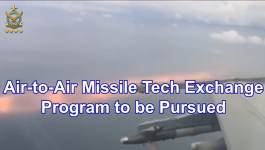
The two leaders “agreed to elevate the existing partnership through Joint Working Groups focused on technology enhancement and core capability exchanges.” They also discussed undertaking an “Air-to-Air Missile technology exchange program to accrue maximum benefits for both Air Forces.”

It is currently unclear what this air-to-air missile (AAM) “technology exchange” program would entail.

For example, the PAF could be interested in leveraging Turkish expertise in supporting the domestic AAM program, i.e., the FAAZ by the National Engineering and Scientific Commission (NESCOM).

GIDS ESHORAD.jpg

Alternatively, the PAF could be looking at pursuing an alternative AAM program in collaboration with Turkiye, potentially at the National Aerospace Science and Technology Park (NASTP).

Overall, it should be noted that the current PAF leadership is focused on expanding NASTP activities, especially through joint-ventures and partnerships with foreign defence vendors. The PAF’s ongoing engagement with Baykar Group, for example, is resulting in the development of new munitions, such as loitering munitions and miniature air-launched cruise missiles (ALCM), at NASTP.
1708921524336.png

Policy of Indigenizing Munitions​

This announcement makes one aspect of the PAF’s development priorities certain – i.e., it is pursuing the indigenous production of key munitions. Thus far, the bulk of this activity involved the production of air-to-surface munitions, such as the Ra’ad/Taimur-series of ALCMs, the Takbir/Indigenous Range Extension Kit (IREK) precision-guided bomb (PGB) kit, and others.
1708922371773.png

However, the future product roadmap disclosed by Global Industrial and Defence Solutions (GIDS) features an in-house AAM program by the designation of “FAAZ.” Thus, it appears that at some point, the PAF identified the domestic production of AAMs a priority.

That said, the PAF is not the only Tri-Services arm aiming to indigenize munitions production; rather, this policy also seems to be a priority for the Pakistan Army (PA) and the Pakistan Navy (PN). Just like many other countries, Pakistan likely recognized the operational challenges Ukraine was facing due to its weaker munitions supply channels Thus, each of the Pakistani military’s Tri-Services tabled the production of munitions – especially guided weapons – as a goal.
1708921236964.png

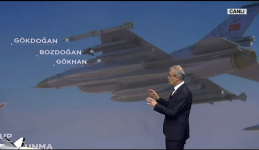
For the PAF, however, the question is whether it wants to rely on solely the NESCOM FAAZ program or complement it with a NASTP initiative. This call to Turkiye for AAM collaboration is likely a push to give NASTP an AAM project, either through original designs or, potentially, co-produce the TÜBİTAK-SAGE Bozdoğan within-visual-range (WVR) AAM and Gökdoğan beyond-visual-range (BVR) AAM in Pakistan. With NASTP, either scenario is plausible as, thus far, the entity has undertaken both original projects (e.g., KaGeM V3) and co-production (e.g., Bayraktar TB2) with foreign partners.

To view this content we will need your consent to set third party cookies.
For more detailed information, see our cookies page.


Correcting Missed Opportunities​

In 2016, an earlier piece from Quwa had projected that Pakistan would eventually require a domestic AAM program. In fact, the fundamental technology for AAMs – such as rocket motors – could also be re-leveraged to develop surface-to-air missiles (SAM), which each of the Tri-Services are now buying at scale, but through costly imports from China and Europe…

End of Excerpt (549/1,216 Words)
 
Last edited:
Excellent input. However lets understand one fact Pakistan is technically not in the best of its fiscal position. CAAM-ER deal required alot of push from our side. Europeans are not interested in any off set deal with Pakistan. As far as Ukraine is concerned we sold a huge lot for a very low price to a third party because all the items you export(defence related from SOE) have a rate list devised by concerned ministry in this case small arms ammo rate had not been revised in almost a decade. Revision takes a lot of time which goes through multiple ministries and departments and then is finally revised. Therefore POF ammo is technically the cheapest there was even in a timeframe of high demand and large market requirement and customers willing to even pay a huge premium. But we couldn't cash this opportunity due to the red tape with in our systems. Pakistan would have made almost 5-10% when countries and entities worldwide were making almost 80-100 % on every consignment.

What happen to SMASH Supersonic Missile? In the previous forum in 2019/2020 you said that development is proceeding smoothly. What's the update in 2024? Is SMASH and P-282 are the same missiles or different?
 
Excellent input. However lets understand one fact Pakistan is technically not in the best of its fiscal position. CAAM-ER deal required alot of push from our side. Europeans are not interested in any off set deal with Pakistan. As far as Ukraine is concerned we sold a huge lot for a very low price to a third party because all the items you export(defence related from SOE) have a rate list devised by concerned ministry in this case small arms ammo rate had not been revised in almost a decade. Revision takes a lot of time which goes through multiple ministries and departments and then is finally revised. Therefore POF ammo is technically the cheapest there was even in a timeframe of high demand and large market requirement and customers willing to even pay a huge premium. But we couldn't cash this opportunity due to the red tape with in our systems. Pakistan would have made almost 5-10% when countries and entities worldwide were making almost 80-100 % on every consignment.
My dude if you think that the Pakistani Aid to Ukraine is limited to sales of only various ammo than you have no idea on what's actually been going on.
 
My dude if you think that the Pakistani Aid to Ukraine is limited to sales of only various ammo than you have no idea on what's actually been going on.
I would argue regardless of what Pakistan has or has not been doing - due to mismanagement and unqualified people at every level…they gain little from it or squander what good people do.

Some who contributed to tactics in Azeri conflict are currently under “attack” because of their family making a political statement.

So at the end its all sycophantic mediocrity that survives which means the net result is negative.
 
What happen to SMASH Supersonic Missile? In the previous forum in 2019/2020 you said that development is proceeding smoothly. What's the update in 2024? Is SMASH and P-282 are the same missiles or different?
Then CNS Adm. Abbasi called P-282 a hypersonic ballistic missile, but I'm not sure if the PN is still using the P-282 designation for the ASBM. Rather, P-282 refers to some type of cruising missile, likely supersonic-cruising.

My thoughts on why:

ASFAT's illustrations of the Jinnah-class FFG show it armed with the P-282 in a 2x4 configuration. While the idea of loading ASBMs from ships is neat, I don't think the PN would configure it on all workhorse ships. I think the default solution for frigates, corvettes, and OPVs would be a cruising missile, either subsonic or supersonic.

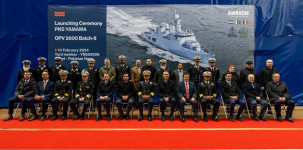
One other variable. The Damen Batch-II OPVs (i.e., PNS Hunain and PNS Yamama) are shown armed with a 2x2 system similar to the Tughril-class' CM-302. It'd be pretty random to load CM-302 onto the OPVs.

Hence, I think the P-282 is a supersonic-cruising ASCM (i.e., merged with SMASH), while the ASBM now has some other name (maybe Fatah-2?).

1708972570798.png

I would argue regardless of what Pakistan has or has not been doing - due to mismanagement and unqualified people at every level…we gain little from it or squander what good people do.
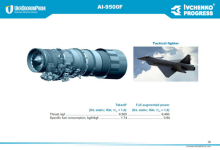
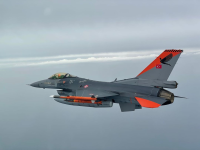
I wish we leveraged things like F-16 training, guided munitions, etc, to get Ukrainian help on turbofan engine development. Ivchenko Progress even has a concept for a fighter-grade engine that could pair well with a push to locally produce the J-31.

To be clear, I was a strong proponent of working with Ukraine many years before this conflict and wished we had gone that route instead of the detour to Russia. Working with middle-tier countries like Ukraine, Brazil, South Africa, Turkiye (back in 2015), Czechia, etc, could've been a good pathway to developing our own capabilities.

1708973282289.png
 
Then CNS Adm. Abbasi called P-282 a hypersonic ballistic missile, but I'm not sure if the PN is still using the P-282 designation for the ASBM. Rather, P-282 refers to some type of cruising missile, likely supersonic-cruising.

My thoughts on why:

ASFAT's illustrations of the Jinnah-class FFG show it armed with the P-282 in a 2x4 configuration. While the idea of loading ASBMs from ships is neat, I don't think the PN would configure it on all workhorse ships. I think the default solution for frigates, corvettes, and OPVs would be a cruising missile, either subsonic or supersonic.

One other variable. The Damen Batch-II OPVs (i.e., PNS Hunain and PNS Yamama) are shown armed with a 2x2 system similar to the Tughril-class' CM-302. It'd be pretty random to load CM-302 onto the OPVs.

Hence, I think the P-282 is a supersonic-cruising ASCM (i.e., merged with SMASH), while the ASBM now has some other name (maybe Fatah-2?).

View attachment 22151


I wish we leveraged things like F-16 training, guided munitions, etc, to get Ukrainian help on turbofan engine development. Ivchenko Progress even has a concept for a fighter-grade engine that could pair well with a push to locally produce the J-31.

To be clear, I was a strong proponent of working with Ukraine many years before this conflict and wished we had gone that route instead of the detour to Russia. Working with middle-tier countries like Ukraine, Brazil, South Africa, Turkiye (back in 2015), Czechia, etc, could've been a good pathway to developing our own capabilities.

View attachment 22153
Definitely a better pathway but the middle tier countries had limitations on their tech being beholden in certain cases to components from major powers. Case in point was Brazil and Turkey(with the ATAK fiasco).

Ukraine was an interesting middle choice and there was a deep working relationship but some of their knowledge prior to the conflict was lost to brain drain and corruption.

In a way, despite all the hardship - this conflict has revitalized the Ukrainian R&D sector and brought a lot of smart young blood back.
 
My dude if you think that the Pakistani Aid to Ukraine is limited to sales of only various ammo than you have no idea on what's actually been going on.
Bro if he is the same Ark Angel from the last PDF then he is deep “in the know” club. I forgot to archive his posts though :(
 

Users who are viewing this thread

Latest Posts

Back
Top