Pakistan Space Related News & Discussions

To view this content we will need your consent to set third party cookies.
For more detailed information, see our cookies page.
 
Pakistan's upcoming major space related programs.

Scheduled
Goal
Summary
2026​
First Manned MissionFirst Pakistani in space, to visit Chinese Tiangong Space Station.
2028​
First Lunar RoverPart of the Chinese Chang'e-8 lunar mission. (Originally scheduled for 2025).
202?​
Imaging Intelligence (IMINT) Constellation.Construction of an integrated satellite system for global real-time communication and remote sensing. (With China's PIESAT).
20??​
Space?
20??​
Satellite Launch Vehicles (SLVs)ongoing work by PAF-NASTP.
 
Pakistan's upcoming major space related programs.

Scheduled
Goal
Summary
2026​
First Manned MissionFirst Pakistani in space, to visit Chinese Tiangong Space Station.
2028​
First Lunar RoverPart of the Chinese Chang'e-8 lunar mission. (Originally scheduled for 2025).
202?​
Imaging Intelligence (IMINT) Constellation.Construction of an integrated satellite system for global real-time communication and remote sensing. (With China's PIESAT).
20??​
Space?
20??​
Satellite Launch Vehicles (SLVs)ongoing work by PAF-NASTP.
The first point is uncertain. The probability of a Pakistani astronaut boarding the Tiangong space station in 2026 is low.

According to publicly available information, the selection process will first take place in Pakistan in three stages. Ultimately, a team of Chinese experts will select two prospective astronauts. The process is currently at this stage, and confirmation of this news is expected soon.

Following this, these two Pakistani prospective astronauts will undergo a year of systematic training at the China Astronaut Training Center.

Based on the current mission schedule for the Tiangong space station, the earliest possible time for a Pakistani astronaut to board the Tiangong space station is likely in the first half of 2027, as part of the SZ-25 mission.

But, since the Pakistani astronauts will be undertaking a short-term (6 or 7-day) stay on the Tiangong space station, their training may not need to be as comprehensive. If this is the case, they might be able to join the SZ-24 mission (scheduled for launch in the second half of 2026) to the Tiangong space station.

Both the second half of 2026 and the first half of 2027 are speculative timeframes. The final schedule will be subject to the announcement from the China Manned Space Agency (CMSA).
 
SUPARCO to launch new satellite to replace Paksat-1R on Dec 25
New earth observation mission expected to boost geospatial services, digital connectivity and national monitoring capabilities​

Published: 10:49 AM, 26 Nov, 2025
Topics, Science & Tech,
Featured News

View attachment 166293

Pakistan’s national space agency, the Space and Upper Atmosphere Research Commission (SUPARCO), is set to launch a new Earth Observation satellite on 25 December 2025, in what officials describe as a significant advancement for the country’s space-based imaging and geospatial capabilities.

The 24NewsHD TV channel reported on Wednesday that the launch comes as Pakistan moves to replace the ageing Paksat-1R, a communications satellite placed in orbit in August 2011 with a design life of 15 years.

According to the report, the new satellite will strengthen geospatial services and satellite imagery while enhancing the country’s Earth-observation capacity.

Preparations for the launch are underway, and reports say the system will also contribute indirectly to improved high-speed communications.

The mission is being viewed as an important milestone for Pakistan’s space programme, with expectations that it will improve broadband access and digital connectivity across the country.

While Paksat-1R’s role in communications has already been succeeded by the PakSat-MM1 satellite, successfully launched in May 2024, SUPARCO has been expanding its presence in Earth observation as well.

The agency launched two new remote-sensing satellites, EO-1 and KS-1, in July 2025. The upcoming satellite is part of this new generation of systems.

It is noteworthy that SUPARCO has already entered the hyperspectral domain with its first hyperspectral satellite, HS-1, launched on 19 October 2025 from the Jiuquan Satellite Launch Centre in China.

HS-1 employs advanced imaging technology capable of capturing data across hundreds of spectral bands, enabling highly detailed monitoring for agriculture, disaster response, urban planning and environmental assessment.

Reporter: Bilal Niazi

Official announcement:
The rocket's expected launch time is the afternoon of December 26th. (This is Beijing time; please convert to Pakistan time yourself.)
Launch location: Offshore waters near Yangjiang, Guangdong Province
1766388245708.png
 
To view this content we will need your consent to set third party cookies.
For more detailed information, see our cookies page.
 
To view this content we will need your consent to set third party cookies.
For more detailed information, see our cookies page.
 
1767218913859.png

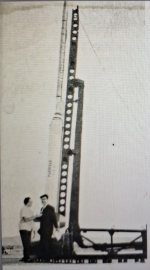
Pakistan's Space and Upper Atmosphere Research Organization is known as SPARCO. It was established in 1961 and within a year of its establishment, it achieved one of the greatest scientific achievements in its history when on June 7, 1962, a rocket named Rahbar-I was successfully launched into space from the Pakistani coastline. This rocket was a solid-fueled two-stage.
 
To view this content we will need your consent to set third party cookies.
For more detailed information, see our cookies page.
 

@Pakistan Space Agency

Here's the latest news:

Previously, analysts speculated that due to a Pakistani astronaut's short-term stay at the Chinese Tiangong space station (during the handover period between two batches of Chinese astronauts), one Chinese astronaut would have to remain on the space station for two consecutive work cycles, meaning a stay of over a year.

Today, CCTV's aerospace program released the news that:
In 2026, a Chinese astronaut will stay on the Tiangong space station for more than a year.

This means that the plan for a Pakistani astronaut to board the Tiangong space station has been added to the schedule. He is expected to board the Tiangong space station sometime in 2026/2027.


@Pakistan Space Agency

Here's the latest news:

Previously, analysts speculated that due to a Pakistani astronaut's short-term stay at the Chinese Tiangong space station (during the handover period between two batches of Chinese astronauts), one Chinese astronaut would have to remain on the space station for two consecutive work cycles, meaning a stay of over a year.

Today, CCTV's aerospace program released the news that:
In 2026, a Chinese astronaut will stay on the Tiangong space station for more than a year.

This means that the plan for a Pakistani astronaut to board the Tiangong space station has been added to the schedule. He is expected to board the Tiangong space station sometime in 2026/2027.

Superb. Thanks for the update.
 

Users who are viewing this thread

Back
Top