Pakistan Weather News / Updates

Goodbye Flood 2025. 👋 See you in 2026, since you know NDMA Pakistan doesn't have a clue on how to manage flood risk management.
 

Food and Agriculture Organisation warns floods in Punjab, KP will affect Rabi cultivation


Amin Ahmed | Imran Gabol
September 30, 2025

1759233276251.png

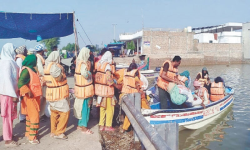
Rescue officials moving flood-hit people to safety near Multan.—PPI

• Punjab worst hit with 1.3m hectares, including mostly cropland, inundated
• Fodder shortages and rising disease risks reported
• PDMA orders surveys to prioritise public complaints; displaced people told to vacate schools in Jalalpur Pirwala as classes resume
• Met Office forecasts rain, wind, thunderstorms in southeast Sindh till Oct 2


ISLAMABAD/LAHORE: The Food and Agriculture Organisation (FAO) has warned that flood damages in Punjab and Khyber-Pakhtunkhwa will affect upcoming Rabi cultivation, as the Punjab Provincial Disaster Management Authority directed survey teams to prioritise public complaints while assessing losses in affected areas.

Meanwhile, the Pakistan Meteorological Department (PMD) has predicted rain, wind, and thundershowers in south-eastern Sindh till October 2, with occasional gaps.

The recent floods have damaged farmland, standing crops, and agricultural infrastructure in both Punjab and Khyber-Pakhtunkhwa.

In its preliminary assessment report on the impact of floods, released on Monday, the FAO warned that seed availability for Rabi 2025-26 and Kharif 2026 is under threat.

Floods inundated 1.3m hectares, including 0.93m hectares of cropland, with Punjab worst hit.

FAO said half of wheat seed comes from saved grain, much of which was lost in flooded homesteads.

Within the formal sector, 80 to 90 per cent of wheat seed is available, but market pressures may affect this supply. Rising demand and prices may push farmers to sell seed as grain, cutting availability across provinces.

The report said flooding cut fodder supplies, raising costs and limiting access in remote areas.

Many livestock owners are resorting to distress sales, and only 45 per cent of fodder seed is available in the formal market, heightening risks for livestock nutrition. Overcrowded shelters and stagnant water are heightening stress and disease risks for livestock.
 
The FAO warned that conditions are favourable for outbreaks of lumpy skin disease (LSD), foot-and-mouth disease, peste des petits ruminants (PPR) and other zoonotic infections. LSD outbreaks have already been reported in southern Punjab bordering Sindh and Balochistan and are spreading northwards, with new cases in Pakpattan, Lodhran and Khanewal.

Quantifying crop-wise damage in Punjab, the FAO report said: Rice: 188,837 hectares damaged (7.3pc of total rice area), mainly in the northeast. The worst-hit districts were Sialkot (37,944 ha, 24.67pc), Narowal (20,008 ha, 15.88pc), Gujranwala (10,765 ha, 4.72pc), Bahawalnagar (9,594 ha, 8.60pc) and Sheikhupura (9,364 ha, 4.25pc).

Cotton: 84,182 hectares damaged (5.1pc of total cotton area). The worst-hit districts were Bahawalpur (19,503 ha, 6.10pc), Rajanpur (8,688 ha, 6.75pc), Khanewal (7,724 ha, 8.21pc), Multan (6,917 ha, 7.57pc) and Muzaffargarh (6,477 ha, 7.03pc).

Sugarcane: 23,413 hectares damaged (2.8pc of total sugarcane area). The most affected districts were Faisalabad (2,466 ha, 4.01pc), Jhang (2,254 ha, 4.05pc), Bhakkar (2,201 ha, 6.28pc), Rajanpur (1,512 ha, 2.87pc) and Layyah (1,504 ha, 5.45pc).

In KP, 62,080 hectares of land were flooded, including 50,821 hectares of cropland (2.7pc of total cropland). In Sindh, 74,542 hectares of land were flooded (0.5pc of total land), including 43,140 hectares of cropland (0.8pc of total cropland).
 
The PMD has predicted rain, wind, and thundershowers in south-eastern Sindh till October 2, with occasional gaps.
 
5249.jpg

Crowded camps, stagnant water and not enough doctors: first the floods, now disease stalks millions in Pakistan​

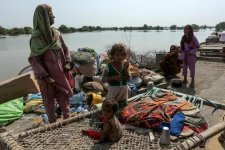
As the waters recede, a surge in cases of cholera, diarrhoea, malaria and dengue has compounded the misery of people who have already seen their homes and crops disappear
 
Goodbye Flood 2025. 👋 See you in 2026, since you know NDMA Pakistan doesn't have a clue on how to manage flood risk management.

When you have not built any Dams since 1970s .

This is the result

I am hearing about Kala bagh dam since early 2000s , and their is no progress
 
When you have not built any Dams since 1970s .

This is the result

I am hearing about Kala bagh dam since early 2000s , and their is no progress

We don't need DAMS. Our politicians (ALL OF THEM) are stupid. The foreign companies tell them to build expensive dams and that's what they ALL know and can think of.

Pakistan needs a lake / reservoir and canal system. Within one large DAM's cost, you could probably build enough of these lakes and canals that could avoid floods in Punjab. The floods that came this time in Punjab, could not be stopped by Dams up north.

This lake and canal system exists in many nations. I've actually visited a few of these sites way back when built by US Marine Core engineers. The US built this system back in 1950's to control the water flow coming from Canada down, then rain water and all kind of flooding. Does it still cause floods? Yes, when it rains enough in a day compared to 6 months it will cause floods. But those are rare. One can also see Hurricane's hitting parts of that country dumping 6 months worth of rain in a few hours and literally within 6-8 hours, the roads look dry as if it never rained at all. How is this possible?

Water reservoirs or lakes, are build ever 50 to 100 kilometers. They don't produce electricity and don't require sophisticated structured. Ideally, you dig the surface after testing and make a big bowl in the surface. Where nature supports as a structure, that's great. You link a few of these lakes with large canals. During water release, nearest lakes are emptied out by pushing water further away from the impact zone. When water is released say from India, the empty canals take additional water from early on and take that water on a journey to lake one ideally 20-30 KM away. It gets to a near empty lake, fill it up, excess water send to the next lake and stored there. The last lake on this chain at this time, releases first lakes water into some 400-500 kilometers away in the exiting Indus river eventually into the ocean. This "rerouting" of water and storage points along the way, don't allow the rivers to flood. If there is flood, it's 10-20% of what we just saw.

I've requested a few journalists to talk about this and put this concept out. But they all did one show on Floods and moved over to Trump and Pak-Saudia pact instead!

These lakes help the economy with tourism, hotel industry expansion, water sports, fish / prawns / marine life for exports, etc, etc, while avoiding floods.
 

Flood displaced donkeys, horses, mules face illegal slaughter in Lahore​

Monsoon rains, floods affect nearly 1.58 million animals in Punjab, Sindh, K-P

Asif Mehmood
October 01, 2025


untitled-design-141759299754-0.png


Meanwhile, Syed Naeem Abbas, Advocacy Manager at Brooke Pakistan, warned that alongside flood-related losses, illegal donkey slaughtering poses a grave risk to the country’s donkey population.

According to the Pakistan Bureau of Statistics, there are currently 6.047 million donkeys in the country, with over 2.4 million in Punjab alone.

Although official figures suggest an increase of 109,000 in the donkey population last year, the prevalence of illegal abattoirs continues to undermine these gains.
 

Flood displaced donkeys, horses, mules face illegal slaughter in Lahore​


Monsoon rains, floods affect nearly 1.58 million animals in Punjab, Sindh, K-P

Asif Mehmood
October 01, 2025


tribune


Pakistan’s recent devastating floods have not only displaced millions of people but also severely affected working animals, particularly donkeys, horses, and mules, which remain vital to rural livelihoods. In addition to the natural calamities, these animals face another growing threat: illegal slaughtering, which is shrinking their population and compounding economic and social challenges.

According to Javed Gondal, Country Director of Brooke Pakistan, the recent monsoon rains and cloudbursts across Punjab, Sindh, and Khyber Pakhtunkhwa have affected nearly 1.58 million animals.

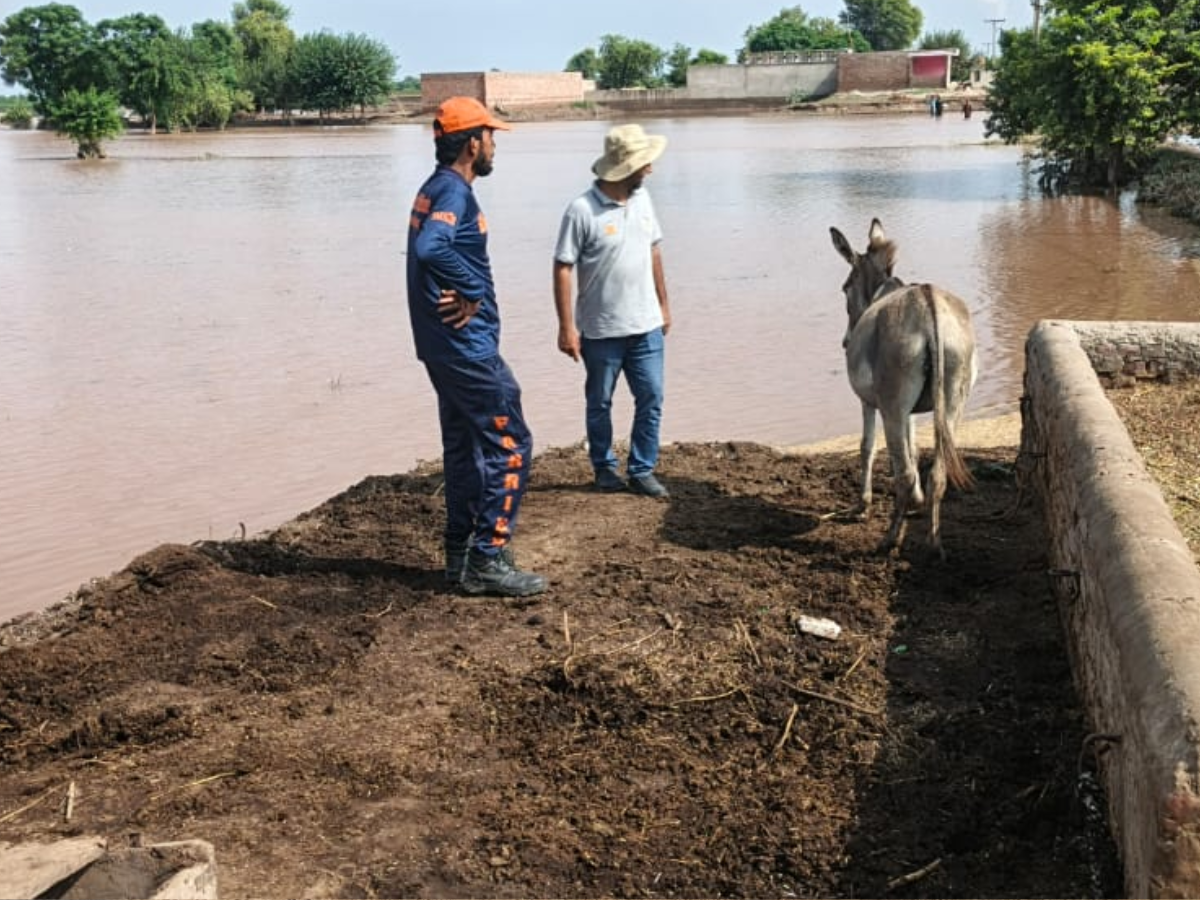
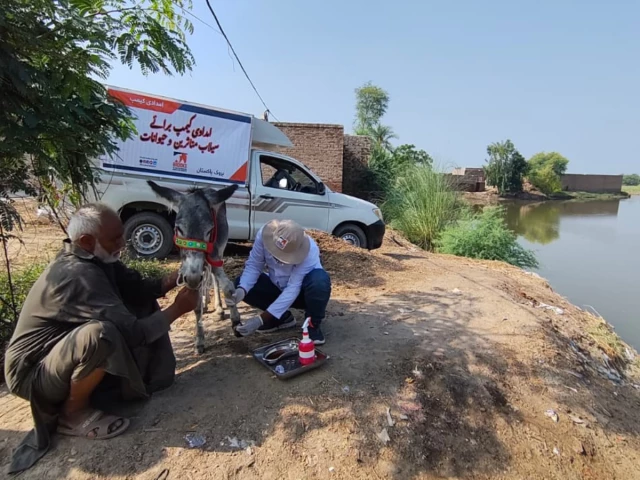
In response, Brooke Pakistan deployed emergency teams in 29 districts. These teams have so far treated 7,190 horses, donkeys, and mules, while providing medical assistance to another 9,846 livestock. A total of 7,998 animals were vaccinated, and 6,754 were treated with anti-parasitic medication. To address feed shortages, 2,042 feed bags were also distributed.

untitled-design-141759299754-0.png


Gondal noted that the organization extended support not just to animals but also to their owners. So far, 9,076 families have been provided with awareness sessions and guidance, alongside the distribution of 636 ration bags and first aid kits. In total, more than 8,500 working equines, over 51,000 families, and thousands of other livestock have benefitted from these relief activities.

Meanwhile, Syed Naeem Abbas, Advocacy Manager at Brooke Pakistan, warned that alongside flood-related losses, illegal donkey slaughtering poses a grave risk to the country’s donkey population. According to the Pakistan Bureau of Statistics, there are currently 6.047 million donkeys in the country, with over 2.4 million in Punjab alone. Although official figures suggest an increase of 109,000 in the donkey population last year, the prevalence of illegal abattoirs continues to undermine these gains.

Abbas explained that donkey skins and bones are in high demand in Chinese markets for use in food items and traditional products. He noted that while several African countries have already imposed bans on donkey slaughtering, India too is witnessing a decline in its donkey population due to this growing trend.

Highlighting the cruelty involved, Abbas said that animals are often mishandled during transport, leaving many injured or dead. He stressed that this practice also poses a public health threat, as nearly 70 percent of infectious diseases are zoonotic in nature.

Although the Pakistani government has signed agreements with a few Chinese companies permitting donkey slaughter, these contracts include a condition that companies must first invest in donkey breeding before being allowed to process them.
 
ISLAMABAD:
Pakistan has informed the International Monetary Fund (IMF) that its external sector will benefit from the floods due to an expected upsurge in remittances that may now hit $43 billion, enough to offset any dip in exports and keep the current account deficit under check.


The Pakistani authorities shared their macroeconomic assessment of the post-flood scenario with the IMF, which did not depict any element of concern, according to government sources. The assessment suggests a stable inflation rate around 7% and the economy still growing close to 4%.

The conservative official assessment was that workers' remittances may reach nearly $41 billion compared to the pre-flood target of $39.4 billion, said the government sources. The higher figure is linked to a better economic outlook in countries where Pakistanis live and are likely to send more money to help their families.

Almost half of Pakistanis living abroad are from flood-hit districts in Punjab, and authorities believe there is a chance they could send an additional $2 billion this year.

Other factors contributing to higher remittances are exchange rate stability, the seasonal factor of Eids, lower global inflation, and government incentives to use formal channels.

Sources have said that so far, remittances have grown 7% - which, because of floods, can go up to at least 12%, enough to increase remittances to $43 billion. Authorities noted that after the 2010 floods, remittances rose exceptionally for at least one year. It is not yet clear whether the IMF has accepted Pakistan's position. An affirmative response could lower external financing requirements by the same amount, which otherwise remain high.

Due to stronger remittance flows, the government now projects a current account deficit of less than $1 billion against the original $2.1 billion target and the IMF's estimate of $3.6 billion, said sources. Some believe the current account may even post a surplus if the $43 billion in remittances materialise.

Earlier, there were concerns that the floods, which have impacted 3.3 million acres of land in Punjab, would create external pressures due to higher imports and lower rice exports.

The government's assessment shared with the IMF was that exports may dip by $1 billion to $34.2 billion this fiscal year because of flood damage to agriculture and industry.


Imports are still projected on the higher side at $65 billion due to rising cotton requirements and the effect of reduced regulatory duties.

A day earlier, IMF Mission Chief Iva Petrova also said the floods would not significantly hurt economic growth or FBR's tax collection target.

The finance ministry's assessment is that economic growth may still remain 3.7%, compared to the 4.2% target, reflecting losses in agriculture and spillover effects on industry and services. The Planning Commission's estimate, however, was slightly higher at around 4%.

The recent floods are a significant downside risk to Pakistan's macroeconomic stability. But the finance ministry said the economy was in a much stronger position to absorb the impact compared to the 2022 floods.

With low inflation, moderate domestic demand, and stable global commodity prices, the excessive inflation and external pressures seen after past floods are expected to remain contained.

According to the official assessment, although crop outcomes are below targets, some still exceed last year's levels. For rice, the sown area reached 3.2 million hectares against a 3.1 million target. Sugarcane was sown on 1.2 million hectares, slightly above target, while cotton sowing remained below target.

Rice production is still estimated at 8.8 million tonnes, about 400,000 tonnes short of target but not enough to significantly affect supplies. Sugarcane production is projected at 81 million tonnes, still better than target.

Cotton output is expected at 7.2 million bales, below target but higher than last year. Maize production is forecast at 9.2 million tonnes, one million more than last year. Wheat production is anticipated to meet the 29.6 million-tonne target, though actual results will depend on sowing conditions. The IMF was told the target for industrial growth was set at 4.3% and largely remains intact.

The government is also not expecting inflation to rise despite floods. It informed the IMF that inflation may remain around 7%, supported by exchange rate stability in the medium term and the expected increase in remittances.

The Ministry of Finance also released its monthly economic outlook on Tuesday, which said Pakistan's economy maintained its trajectory of stabilisation and growth during the first two months of FY2026.

The stability was due to moderating inflation, strengthening large-scale manufacturing, and controlled fiscal imbalances despite floods, said the ministry. The LSM sector posted growth led by textiles, automobiles, and cement, while CPI inflation eased in August 2025. The finance ministry said flood-related disruptions may pressure food supply chains, raising prices in the short term. Inflation is therefore expected to rise temporarily but remain contained within the 3.5% to 4.5% range in September 2025.
 
Almost half of Pakistanis living abroad are from flood-hit districts in Punjab, and authorities believe there is a chance they could send an additional $2 billion this year.

Exports growth slow but don't worry IMF, Pakistanis will send more remittances. lol
 
Exports growth slow but don't worry IMF, Pakistanis will send more remittances. lol
Yup what can overseas Pakistanis do?

I mean everyone is doing TikTok and asking for money..help thrm you are damned dont help them you are damned

They have cracked the mystery of life..i.e enjoy without any work without any worry

Its called extreme tawakul on Allah
 

Users who are viewing this thread

Pakistan Defence Latest

Country Watch Latest

Latest Posts

Back
Top