Pakistan Weather News / Updates

Snowfall, rain bring relief to K-P after prolonged dry spell​


Precipitation across K-P's highlands drops temperatures, lifts farmers' hopes

Our Correspondents
December 31, 2025


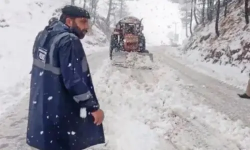
the first snowfall and rain of the winter season were recorded on tuesday across various mountainous areas of khyber pakhtunkhwa


The first snowfall and rain of the winter season were recorded on Tuesday across various mountainous areas of Khyber-Pakhtunkhwa.


PESHAWAR: The first snowfall and rain of the winter season were recorded on Tuesday across various mountainous areas of Khyber-Pakhtunkhwa, bringing a sharp drop in temperatures and much-needed relief after a prolonged dry spell.

The change in weather has sparked joy among local residents and farmers, who see the precipitation as a blessing for agriculture and water resources.

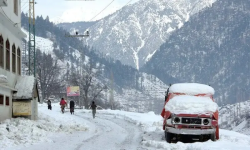
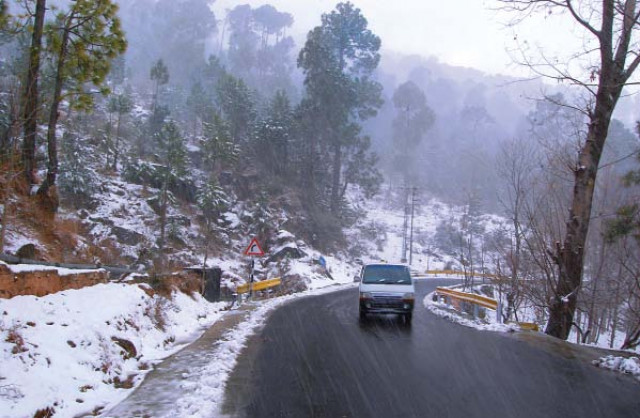
According to local sources, light to moderate snowfall was reported in high-altitude areas in North and South Waziristan including Razmak, Angoor Adda, Shawal, Khamrang, Raghzai, Kaniguram, Badr, Ladha and surrounding regions, while intermittent rainfall continued in lower areas. Following the snowfall, mountain ranges were blanketed in white, significantly enhancing the natural beauty of the region.
 
Snowfall in upper areas has led to a marked decline in temperatures, and slippery conditions have partially affected movement in some remote regions.

Similar weather conditions were reported from Upper and Lower Dir, where rain lashed urban areas while snowfall continued on surrounding mountains, including Kumrat Valley, Jahaz Banda, Badgoi, Lowari Tunnel, Kalpani and Shahai. Cold winds further intensified the chill, prompting tourists to head towards scenic spots to enjoy the winter weather.

In Chitral, rain and snowfall were reported in Kalash valleys, Lowari Tunnel Road, Madak Lasht, Garam Chashma, Yarkhun, Broghil, Shandur, upper Torkhow and Terich areas.

Residents of water-scarce localities expressed happiness over the rainfall, though rising cold and scarcity of firewood have led to a sharp increase in fuel prices, particularly in Lower Chitral.

According to the weather forecast for the next 24 hours, rain with strong winds and thunderstorms is expected across much of Khyber-Pakhtunkhwa, with snowfall likely in upper mountainous areas. Fog may also develop in the plains. Authorities have warned of possible road blockages, landslides and avalanches in hilly regions, urging travelers and tourists to exercise extreme caution.
 

Mansehra schools, colleges sealed for holding classes in winter vacation


Nisar Ahmad Khan
January 4, 2026

1767528032198.png

MANSEHRA: The district administration has sealed around a dozen private schools and colleges for holding classes despite the issuance of the winter vacation notification by the government due to the current cold wave across Hazara division.

“We cannot allow private educational institutions to play with the health of students in such harsh winter conditions, so several of them have been sealed for violating winter break orders,” Assistant Commissioner (Central) Sana Fatima told reporters on Saturday.

A joint team of the district administration and police, led by Ms Fatima, conducted surprise visits to private schools and colleges and sealed around a dozen for holding regular classes during the winter vacation.

The provincial government had notified the closure of both public and private educational institutions across the province in both summer and winter zones in view of the intense cold wave that has swept across the province.
 

Freezing weather, fog paralyse life in Larkana, surrounding areas


Dawn Report
January 9, 2026

1767965080456.png

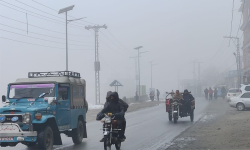
VISIBILITY dropped significantly following a severe cold wave on Thursday in Larkana.—Dawn

LARKANA/SUKKUR: In Larkana city and the surrounding small and large towns and villages, people braved a sharp decline in temperature and dense fog on Thursday, which affected normal life.

It was due to the severe cold and fog, visibility was reduced to a great extent, forcing and most of the citizens to remain confined to homes. On the other hand, attendance in government and private schools as well as offices remained thin.

The Sepco sources said that fog was recorded almost in its entire jurisdiction. Kashmore, Shahdadkot, Jacobabad, Ubauro, Ghotki, Shikarpur, Sukkur, Larkana, Kandiaro and Dadu falling in Sepco’s administrative control were reported to have affected by low visibility.

Passengers travelling between different cities faced serious difficulties. Suspension of electricity in most areas of the city added to the hardships of the residents.

The local Met office said that maximum temperature was recorded at 14.5 Celsius while the relative humidity was 83 per cent. The office predicted that the cold wave would continue till Jan 15 and might grip the adjoining parts of the district.

People rushed to buy second hand coats, sweaters, jackets etc., to help keep themselves safe from the freezing cold.

Interestingly, the cold wave started increasing after the winter vacation in schools were over, therefore the attendance in schools remained very thin.

Parents have urged the education department to announce the winter vacation in the light of expected cold days, considering the issue of climate change.

A sense fog has enveloped Kandhkot city and its surrounding areas for several days, disrupting domestic life and business activities while hours of power outages left citizens in deep distress.
 

Sub-zero cold leaves Shangla freezing​


Our Correspondent
January 13, 2026


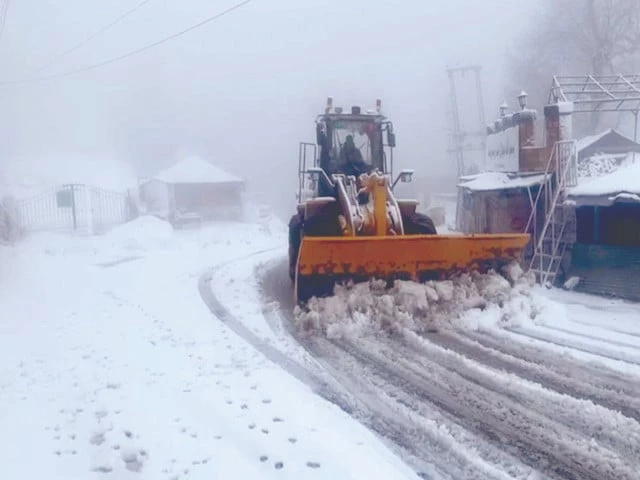
heavy machinery is being used to clear snow from a road in the galiyat region of abbottabad ensuring smooth passage for vehicular traffic as temperatures drop below freezing point photo ppi


Heavy machinery is being used to clear snow from a road in the Galiyat region of Abbottabad, ensuring smooth passage for vehicular traffic as temperatures drop below freezing point. PHOTO: PPI

SHANGLA: Shangla district has been gripped by an intense cold wave, with temperatures in most areas dropping below the freezing point, bringing daily life to a virtual standstill.

In upper and mountainous regions, sub-zero temperatures combined with icy winds sweeping across the valley have significantly intensified the cold. As a result, markets and bazaars wear a deserted look during morning and evening hours, while routine activities have been badly disrupted.

The harsh weather has caused water supply lines to freeze in several upper areas, while natural springs have turned into blocks of ice, triggering an acute shortage of drinking water. In many villages, residents are being forced to fetch water from distant locations.

The weather remained cloudy for a second consecutive day in the upper regions, prolonging the severity of the cold spell.

Meanwhile, the absence of rainfall has led to critically low water levels in springs, local rivers and streams, affecting not only domestic needs but also agriculture and livestock. Several local hydropower plants have shut down due to reduced water flow, resulting in severe disruption of local electricity supply in many areas.

Local residents warned that if rains do not occur soon, the water crisis could worsen further.
 

NDMA issues cold wave alert for northern areas, AJK

News Desk
January 15, 2026

1768478820204.png

Undated image shows people walk on a snow-covered road in Kalam, Swat. — Dawn photo

The National Disaster Management Authority (NDMA) on Thursday issued a cold wave alert for the upper and northern regions of the country.

The authority, in a statement issued by the National Emergencies Operations Centre (NEOC), forecast a strong cold wave expected to affect Gilgit-Baltistan, upper Khyber Pakhtunkhwa, and Azad Jammu and Kashmir over the coming days, resulting in heavy snowfall over high-altitude and hilly areas.

“Very cold to extremely cold conditions are likely to prevail, particularly during nighttime and early morning hours, while daytime temperatures are expected to remain below normal,” the statement read.

The forecast indicated “moderate to heavy snowfall over high-altitude and hilly areas”, which may lead to disruptions in road connectivity, transportation, and power supply in mountainous regions.

“Adjoining plains are expected to experience cold and dry weather, with frost formation in isolated pockets,” the forecast added.

The prevailing conditions may “increase the risk of snow slides and avalanches at vulnerable locations” in hilly areas, posing threats to human safety, infrastructure, and livestock.

“Prolonged exposure to extreme cold and snowfall may also heighten health risks, especially for children, the elderly, and those with pre-existing medical conditions, while frost may cause damage to standing crops and orchards in nearby plain areas,” the statement said further.
 
In view of the expected weather conditions, the NDMA advised the public to “avoid non-essential travel to high-altitude and snowfall-prone areas and to ensure the use of snow chains where travel is unavoidable”.

It also urged citizens to “make adequate arrangements for heating, warm clothing, and shelter”, with particular attention to protecting vulnerable populations, with advice for local communities to “remain vigilant and strictly follow advisories” issued by relevant local authorities.

The NDMA directed all provincial and district authorities concerned to remain on high alert and ensure preparedness for snow clearance operations, emergency response, and timely restoration of essential services, including electricity and communications.

The statement further said the NDMA, through its NEOC, would continue to monitor the situation closely and issue further updates as required.

It also advised the public to “obtain authentic and official information through television and radio broadcasts, verified social media platforms, and Pak NDMA Disaster Alert” mobile application, to stay informed and take necessary precautionary measures.”
 

34pc less rainfall in December: PMD

Aamir Yasin

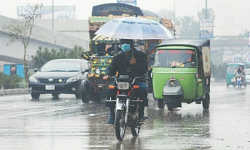
A biker holds an umbrella during rain in Peshawar in this undated file photo. — File/APP

1768479004894.png

RAWALPINDI: The Pakistan Meteorological Department (PMD) stated that the country received 34 per cent less rainfall in December last year.

According to data shared by the PMD, Pakistan received 10.3 millimetres of rain in December 2025, which was 34 per cent lower than the 15.8mm of rain the winter month normally experiences.

Azad Jammu Kashmir recorded 28.2mm, Balochistan 11.8mm, Gilgit-Baltistan 8.1mm, Khyber Pakhtunkhwa 15.5mm, Punjab 3.7mm, and Sindh 7.9mm. The mean temperature across the country was recorded at 13.8 Celsius.

It was 11.6 Celsius in Azad Jammu and Kashmir, 15 Celsius in Balochistan, 5.9 Celsius in Gilgit-Baltistan, 11.5 Celsius in Khyber Pakhtunkhwa, 14.4 Celsius in Punjab and 18.5 Celsius in Sindh.

On Monday, a PMD official said prolonged dry and chilly conditions, along with dense fog in some areas, will prevail until February without any predictions of rain or snowfall.

Pakistan Meteorological Department (PMD) dismissed reports claiming an “extreme cold wave” expected from January 16 to 25 and maintained the temperatures in the coming days would stay within the “normal winter range”, according to the latest numerical analysis of weather data.
 

Rainwater harvesting systems look ‘promising’


The Newspaper's Staff Correspondent
January 15, 2026
1768481071265.png

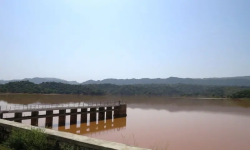
A file photo of a water harvesting dam. — Photo courtesy Rizwan Safdar/File

QUETTA: Rainwater harvesting and groundwater recharge systems installed at two major educational institutions in Quetta have shown promising results amid one of Balochistan’s worst droughts in recent years, officials said.

The province received nearly 52 per cent less rain than average in 2025, according to the Pakistan Meteorological Department, intensifying pressure on groundwater resources that meet most of the provincial capital’s water needs.

In response to the growing water crisis, the International Water Management Institute (IWMI), under the European Union-funded Revival of Balochistan Water Resources Programme (RBWRP), installed rainwater harvesting and recharge infrastructure at the Balochistan University of Information Technology, Engineering and Management Sciences (BUITEMS) and the Balochistan Agriculture College (BAC).

The systems were tested during rains in December 2025. On December 20, Quetta received about 5 millimetres of rain, allowing storage tanks at BUITEMS to fill close to capacity without triggering groundwater recharge.

Initiatives aim to capture rainwater for institutional, horticultural use

A heavier rainfall of 13mm on Dec 30-31 fully filled the storage tanks and initiated the recharge process. Monitoring data showed that four cubic metres of water were recharged into the groundwater aquifer.

Water quality tests recorded Total Dissolved Solids (TDS) at 155 parts per million, meeting standards for safe recharge.

At the Balochistan Agriculture College, rains during the same period filled a 286,500-litre storage pond, while overflow contributed around 1.5 cubic metres to groundwater recharge, highlighting the benefits of larger storage systems.

Apart from rain water, the site at BUITEMS also utilises the overhead tank overflow for storage which is regularly used for horticultural purposes.

The IWMI’s Deputy Country Representative Dr Muhammad Arshad, project officials Shamsher Shah and Mueez Shehzad said the initiatives aim to capture rainwater for institutional and horticultural use while replenishing depleted aquifers, offering a sustainable approach to water management in arid regions.

They said that the December rains confirmed the operational effectiveness of the systems, which could be replicated across other drought-prone areas of Balochistan.
 

Low snowfall leaves Gilgit-Baltistan mountains bare


Jamil Nagri
January 18, 2026

1768738238690.png

TRAFFIC moves through dense fog after snowfall near the Police Lines in Skardu on Saturday.—Photo by the writer

GILGIT: Climate change impacts are becoming increasingly visible in Gilgit-Baltistan, where below-normal snowfall has left much of the region unusually dry this winter.

Light snowfall was recorded in parts of Skardu, Kharmang, Shigar, Ghanche, Astore and Ghizer on Friday and Saturday. The Pakistan Meteorological Department (PMD) has forecast further rain and snowfall in several areas until Jan 23.

Officials said Skardu received about two to three inches of snow on Saturday, while parts of Ghizer saw intermittent snowfall over the past two days.

Light snow was also reported in Hunza, Nagar and other areas last week, but residents said most valleys remained dry, with mountains largely bare and rocky.

Experts warn ‘snow drought’ could worsen flood risk downstream
 

Winter holiday business marred by low snowfall​

Traders at tourist hotspots suffer losses as season ends with minimal snowfall

Qaiser Shirazi
January 18, 2026


tribune


RAWALPINDI: Due to extremely low and almost negligible snowfall this year in Murree and other hill stations, the business community, hotels and dry fruit traders have suffered complete devastation, resulting in losses of billions of rupees invested for the snowfall season.

The Murree snowfall season has officially been declared over from February 15. With Ramadan expected to begin in the third week of February, investors from other cities will leave Murree about 10 days before Ramazan.

The reopening of schools, colleges and universities across Punjab on Monday, January 19, has also started negatively affecting the snowfall season.

High transport fares to, expensive food items and high hotel rents have played a central role in destroying the snowfall season. Hotels, restaurants and guest houses in Murree are almost empty.

Traditionally, the snowfall season i begins on December 20 and peaks between December 20 and January 15.

During winter vacations, families from Gujrat, Gujranwala, Faisalabad, Sialkot, Lahore, Sargodha and Multan would flood Murree. However, this year snowfall started 10 to 12 days late and remained very light.
 

Two killed, three injured as rain, snow lash Khyber Pakhtunkhwa


Dawn Report
January 23, 2026

1769170501619.png

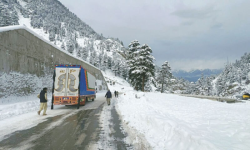
Vehicular traffic moves on Lowari tunnel approach road, Chitral, after heavy snowfall. — Dawn

PESHAWAR: Two displaced children from Tirah were killed and three persons received injuries in road accident when three vehicles skidded of slippery road in Khyber district as heavy rain and snowfall lashed several parts of Khyber Pakhtunkhwa on Thursday.

Sources said that in Khyber tribal district at least two children lost their lives while three persons were injured when three vehicles skidded off the road due to slippery conditions. The vehicles were on their way to Bara from Tirah.

Meteorological department said that large parts of province received rain on Thursday. In provincial capital, the rain started in the morning and continued till filing of this report; however, no casualties were reported.
 
Parachinar received 88 millimeter of rain over the past 24 hours. Bannu received 14 millimeter rain, Dera Ismail Khan 13mm, Peshawar 09mm, Chitral 08mm, Kalam 06mm, Takht Bai 03mm and Upper Dir 1mm. Met department also predicted rain and snowfall for several areas of province on Thursday night and Friday.


Pesco says 25 of 53 feeders restored after tripping

Peshawar Electric Supply Company (Pesco) in a statement said that 53 of its feeders tripped due to heavy rain, suspending supply of electricity to consumers.

It said that 21 of the affected feeders were located in Peshawar, 15 in Khyber, 12 in Bannu and five in Dera Ismail Khan. It said that 25 of the affected feeders were restored while work was under way to restore the remaining ones.

Snowfall and rainfall started late on Wednesday night and continued on Thursday in various plain and mountainous areas of South Waziristan Lower and South Waziristan Upper.
 
Light to moderate snowfall was reported in several high-altitude regions including Angoor Adda, Shakai, Khamrang, Raghzai, Kaniguram, Badar, Makeen, Laddha, and adjacent hilly areas.

Snowfall continued in border and mountainous areas of Mohmand district. The mountains of Elazai, Karwanda, Matai and Sheikh Baba have been covered with snow while intermittent rainfall has also been reported in lower areas.

The rain and snowfall disrupted normal life, with residents facing difficulties in carrying out daily activities due to severe cold. In remote areas, movement and transportation have also been adversely affected.
 
The residents of Ghalanai and its surrounding areas have been facing power outage for the past one week. The non-availability of electricity has caused serious inconvenience to people.

Rainfall accompanied by snowfall in the mountainous areas also made the weather further colder in Bajaur. The moderate rain, which started in the morning, continued throughout the day till Thursday evening.

Heavy snowfall was also reported in mountainous areas of the region including Mamund, Salarzai, Nawagai and Chmarkand.
 

Users who are viewing this thread

Pakistan Defence Latest

Latest Posts

Back
Top