Pakistan Weather News / Updates

Global temperatures likely to remain at record levels in 2026-2030: UN

AFP
May 28, 2026

Global average temperatures are likely to continue at or near record levels this year and for the next four years afterwards, the United Nations warned on Thursday.

The 11 hottest individual years ever recorded all happened from 2015 onwards and the UN’s weather and climate agency said the trend was set to continue, with a new hottest-ever year “likely” before 2031.

There is a 75 per cent chance that the 2026-2030 five-year mean temperature will surpass the key threshold of 1.5 degrees Celsius above the 1850-1900 pre-industrial average, the World Meteorological Organisation (WMO) said.
 

El Nino effect on 2027​

“There is an El Nino predicted for the end of 2026, which increases the chances of the following year, 2027, being the next record-breaking year,” said Leon Hermanson, lead author of the WMO’s Global Annual-to-Decadal Update.

The last El Nino contributed to making 2023 the second-hottest year on record and 2024 the all-time high at around 1.55 degrees Celsius above the pre-industrial average.

El Nino is a natural climate phenomenon that warms surface temperatures in the central and eastern equatorial Pacific Ocean, bringing worldwide changes in winds, pressure and rainfall patterns.

It typically takes place every two to seven years and lasts around nine to 12 months.
 

1.3 to 1.9 degrees Celsius range​

The 2015 Paris climate accords aimed to limit global warming to well below 2 degrees Celsius above pre-industrial levels — and preferably below 1.5 degrees Celsius.

The targets are calculated relative to the 1850-1900 average, before humanity widely began industrially burning coal, oil and gas, which emit carbon dioxide — the greenhouse gas largely responsible for climate change.

“Annual global mean near-surface temperatures during 2026-2030 are predicted to range between 1.3 and 1.9 degrees Celsius above the 1850-1900 average,” the WMO update said.

The WMO said there was a 91pc chance that global average temperatures will temporarily exceed 1.5 degrees Celsius above the pre-industrial baseline for at least one year between 2026 and 2030.

Furthermore, there is a 75pc chance that the entire 2026-2030 five-year mean will exceed 1.5 degrees Celsius above the 1850-1900 average.

However, it is considered exceptionally unlikely — less than 1pc — that any single year will exceed 2 degrees Celsius above the pre-industrial baseline in the next five years.
 

Arctic heat warning​

The 1.5 degrees Celsius barrier is expected to be broken with increasing frequency.

The 1.5 and 2 degrees Celsius limits in the Paris accords refer to sustained long-term warming — typically over 20 years — so temporary breaches do not necessarily mean the long-term goal is out of reach.

Last year was one of the three warmest years on record, with the globally averaged near-surface temperature estimated at more than 1.43 degrees Celsius above the 1850-1900 baseline.

The report was produced by Britain’s Met Office national weather service and the WMO’s lead centre for annual to decadal climate prediction. It compiles forecasts from 13 different institutes.

The report said Arctic temperatures over the next five northern hemisphere winters (November to March) were predicted to be 2.8 degrees Celsius above average temperatures for 1991-2020 — more than triple the global temperature anomaly for the same period.

Predicted precipitation patterns for May to September from 2026 to 2030 forecast wet anomalies in the Sahel, northern Europe, Alaska and Siberia, as well as dry anomalies over the Amazon.
 

Mercury to stay around 7 degrees above normal during Eid days in Punjab

Imran Gabol
May 27, 2026

LAHORE: The Provincial Disaster Management Authority (PDMA) warned of a severe heatwave across Punjab during the Eidul Azha holidays, with temperatures expected to remain up to seven degrees Celsius above normal in several districts and touch as high as 50°C in southern parts of the province.

According to authority’s advisory available with Dawn, the heatwave is likely to persist from May 25 to May 31 under the influence of a high-pressure weather system forecast by the Pakistan Meteorological Department (PMD).

The advisory stated that temperatures in Lahore, Rawalpindi, Gujranwala, Faisalabad, Sialkot and other central and northern districts may rise between 42°C and 45°C, while southern districts, including Multan, Dera Ghazi Khan, Bahawalpur, Rahim Yar Khan, Rajanpur and Sargodha, could experience temperatures ranging from 47°C to 50°C.

The authority also warned that night-time temperatures were likely to remain unusually high during the forecast period, increasing health risks for vulnerable groups, particularly children, elderly citizens and outdoor workers.
 

Here is how you can protect yourself from extreme heat

News Desk

1779968017483.png


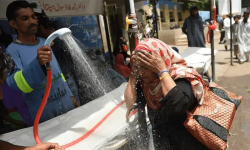
This image shows a volunteer showering a woman with water during a heatwave in Karachi. — AFP

On Monday, citizens in Sindh’s provincial capital, Karachi, experienced sweltering temperatures as the mercury touched 44°C.

The Pakistan Meteorological Department (PMD), in its daily advisory on Monday, said that very hot and dry weather is expected to persist in the southern parts of the country over the week.

As of 4pm, the temperature in Karachi stood at 44°C with a relative humidity of 8 per cent and a feel-like temperature of 40°C.

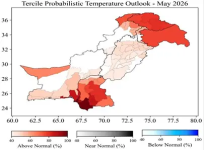
Meanwhile, according to PMD’s May outlook, mean temperatures are expected to remain above normal nationwide, which could “increase the potential for heat spikes and heatwave conditions, especially over the plain areas of Punjab, Sindh and Balochistan”.

1779968079123.png


Probabilistic temperature outlook for May 2026. — Infographic via PMD


Heat extremes can worsen health risks from chronic conditions (cardiovascular, mental, respiratory and diabetes related conditions) and cause acute kidney injury, according to the World Health Organisation (WHO).

As per WHO estimates, the frequency of extreme heat and heat waves is expected to rise in the coming years due to climate change, increasing the risk of heat exposure and illness.
 
Here is how you can protect yourself and your loved ones from the rising temperatures, according to the guidelines issued by the WHO.

  • Avoid going outside and doing strenuous activity during the hottest time of day.
  • Stay in the shade when going out and avoid direct exposure to the sun.
  • Make sure to spend at least two to three hours in a cool place throughout the day.
  • Open windows after dark to use the night air to cool down your home, and cover them with blinds to block direct sunlight during the day.
  • Keep your body cool and hydrated, taking cool showers or baths or wet your skin using a damp cloth, spray or wet clothing.
  • Use light and loose-fitting clothing and bed linens.
  • Make sure to stay hydrated. Drink at least two to three litres of water per day.
  • Wear wide-brimmed hats, sunglasses, and sunscreen to protect your skin from the sun’s rays.
 

What to do in case of heatstroke​

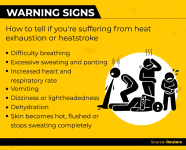
In case of heatstroke, the WHO advises that one should immediately call for emergency medical help, use any available means to cool the person down and keep a close eye on their condition.

Signs of heatstroke can include feeling faint, dizzy or nauseous, stopping sweating, or losing consciousness.

1779968206010.png
 

Travellers visiting Babusar Top urged to exercise caution due to snowfall

APP
May 31, 2026

1780226826844.png

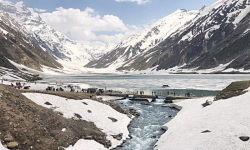
An eye-catching view of Saiful Muluk Lake, Naran. — Dawn

The district authorities in Khyber Pakhtunkhwa’s Naran have issued a travel advisory for Babusar Top, urging tourists, travellers, and transport operators to exercise caution and avoid unnecessary travel due to persistent snowfall and hazardous road conditions.

The district administration, with a special travel advisory on media platforms, stated that ongoing snowfall across the region is expected to create severe difficulties for travellers. It urged all visitors to verify weather updates before planning any movement towards the mountain pass.

According to the advisory, traffic on the Babusar Top route and adjoining areas has been significantly disrupted by continuous snow accumulation, with certain stretches currently restricted to one-way passage only.

Officials cautioned that travel along the route becomes extremely hazardous after 6pm due to rapidly worsening snowfall intensity and sharply reduced visibility conditions.
 

The heat ahead

Editorial
May 31, 2026

HEAT is becoming a defining feature of life in many parts of the world.

It influences how cities are built, how much electricity they consume, when people can work outdoors and, increasingly, how governments prepare for emergencies. The latest warning from the World Meteorological Organisation suggests that these pressures are likely to intensify.

Global temperatures are expected to remain at or near record levels over the next five years, with a strong possibility that the world will experience its hottest year on record before the decade is out.

Scientists estimate that average temperatures between 2026 and 2030 will exceed 1.5°C above pre-industrial levels. Although this does not mean the Paris Agreement target has been permanently breached, it points to a future in which unusually hot years become increasingly common.

The prospect of an El Niño event towards the end of 2026 may add further momentum, raising the likelihood of another exceptionally warm year in 2027.

Pakistan is hardly a bystander to these trends. Summers have become longer and heatwaves more frequent. This year, Dadu recorded 51.5°C, while large parts of Sindh and Balochistan endured temperatures close to 50°C. Such conditions place enormous strain on electricity networks, reduce labour productivity and expose vulnerable groups to serious health risks.

For those whose livelihoods depend on working outdoors, heat is not simply an inconvenience. It can determine how much work gets done and how much income reaches home.
 

Tourists advised to avoid Babusar Top​


Traffic restricted on parts of route due to continuous snow accumulation

Our Correspondent
June 01, 2026

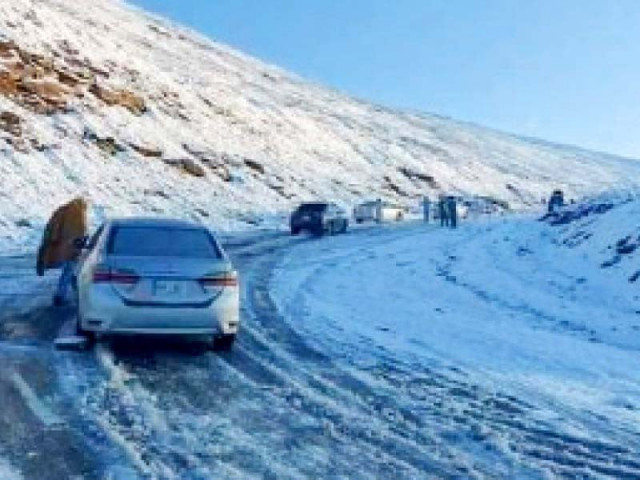
motorists travel on babusar top which saw the first snowfall of the winter photo express


Motorists travel on Babusar Top which saw the first snowfall of the winter. PHOTO: EXPRESS

ISLAMABAD: The district administration in Khyber Pakhtunkhwa's Naran has issued a travel advisory for Babusar Top, urging tourists, travellers and transport operators to avoid unnecessary travel as persistent snowfall continues to create hazardous road conditions and disrupt traffic along the mountain route.

The advisory, issued through official media platforms, warned that ongoing snowfall across the region is expected to cause serious difficulties for travellers.

Authorities advised all visitors to check the latest weather conditions before planning any journey towards Babusar Top, stressing that conditions can deteriorate rapidly.

According to the administration, continuous snow accumulation has significantly affected traffic flow on the Babusar Top route and adjoining areas, with some stretches currently limited to one-way movement only.

Officials cautioned that travelling on the route after 6pm becomes particularly dangerous due to intensified snowfall and sharply reduced visibility.

The advisory further highlighted multiple risks facing motorists, including icy road surfaces, possible mechanical brake failures, glacial activity, rockfalls and potential landslides, all of which pose serious threats to life and property.

The district administration appealed to tourists, transport operators and the general public to refrain from non-essential travel until further notice and to strictly follow instructions issued by local authorities and law enforcement agencies.
 
Why can't Pakistan build European style drainage system in major cities?

To view this content we will need your consent to set third party cookies.
For more detailed information, see our cookies page.
 

PMD forecasts below-normal rainfall, above-normal temperatures across country through August​


Warns intensified heatwaves, water shortages, and agricultural challenges likely during three-month period

Asif Mehmood
June 03, 2026

tribune


LAHORE: Below-normal rainfall and above-normal temperatures have been forecasted across most parts of the country during June and the upcoming three-month period, according to the Pakistan Meteorological Department (PMD).

According to the Met Department, the El Nino phase has reemerged in the Pacific Ocean and is expected to persist in the coming months while the Indian Ocean Dipole remains neutral. These climatic conditions may result in the uneven spatial distribution of rainfall across Pakistan.

As per the outlook reports and the Director of Meteorology Lahore Aleemul Hassan, intensified heatwaves, water shortages, and increased challenges for agriculture may arise during the three-month period.

The country received an average of 22.4 millimetres of rainfall in May 2026, around 10% below normal levels. Meanwhile, the mean temperature for the month stood at 29.2 degrees Celsius, which was 0.8 degrees above the long-term average.
 

Users who are viewing this thread

Pakistan Defence Latest

Country Watch Latest

Latest Posts

Back
Top