Pakistan Weather News / Updates


NDMA warns of Glof, landslides in GB, KP areas from April 1-10

Jamil Nagri
March 31, 2026

1774958590636.png

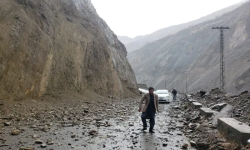
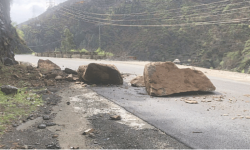
The Karakoram Highway is pictured after rainfall on March 31, 2026. — via author

GILGIT: The National Disaster Management Authority (NDMA) has warned about a risk of glacial lake outburst floods (Glof), flash floods, and landslides in areas of Gilgit-Baltistan (GB) and Khyber Pakhtunkhwa from April 1-10.

According to an alert issued by the NDMA, there was an “increased risk” of Glof, flash floods, mudslides and landslides in the vulnerable areas of GB and KP and the surrounding regions, particularly near the glacier terminus, due to the “expected widespread weather spell, especially from April 1 to 10”.

“Over the past few days, temperatures over the northern mountainous regions remained above normal,” it pointed out.

The NDMA advised local communities to remain vigilant, while the relevant authorities were requested to take precautionary measures to safeguard lives and infrastructure.

In light of the prevailing situation, it urged all federal ministers and departments, provincial governments and their departments, as well as district and municipal administrations, to proactively monitor and surveil vulnerable Glof sites to ensure “timely early warning, evacuation and response”.

 

At least 50 dead, 111 injured in Khyber Pakhtunkhwa rains: PDMA

  • Affected districts include Bannu, Abbottabad, Mardan, Waziristan, Peshawar, Mansehra,
BR Web Desk
April 5, 2026

The Provincial Disaster Management Authority (PDMA) of Khyber Pakhtunkhwa on Sunday released a comprehensive casualty and damage report following a relentless spell of monsoon rains that began on 25 March.

According to the PDMA, 50 people have lost their lives and 111 others have been injured in rain-related incidents across the province, primarily due to roof and wall collapses. The deceased include 26 children, 17 men, and seven women, while the injured comprise 45 men, 19 women, and 47 children.

The report highlights significant property damage, with a total of 470 houses affected across the province. Of these, 409 homes were partially damaged, while 61 houses were completely demolished.

Affected districts include Bannu, Abbottabad, Mardan, Bajaur, Hangu, Mohmand, Kohat, North Waziristan, Peshawar, Khyber, Nowshera, Dera Ismail Khan, Kurram, Lakki Marwat, Shangla, Battagram, Lower Kohistan, Mansehra, Torghar, Swat, Upper Dir, Charsadda, Buner, Malakand, Lower Dir, Orakzai, South Waziristan, and Tank.

The PDMA director general stated that emergency relief supplies have been dispatched to the affected districts. “District administrations and Rescue 1122 remain in close coordination to accelerate relief activities and provide immediate assistance to victims,” the DG added.

The PDMA has issued a fresh alert for a new rain system expected to hit the province between April 6 and 9. Citizens are strongly advised to avoid unnecessary travel and stay away from vulnerable tourist sites during this period.
 
In Kyber Pakhtunkhwa, the PMD forecast that widespread rain and thunderstorm (snowfall over mountains) is expected in Chitral, Dir, Swat, Kalam, Shangla, Buner, Kohistan, Malakand, Battagram, Mansehra, Abbottabad, Balakot, Haripur, Mardan, Nowshera, Peshawar, Kurram, Bajaur, Mohmand, Khyber, Orakzai, Swabi, Charsadda, Kohat, Hangu, Karak, Bannu, Lakki Marwat, Tank, Dera Ismail Khan and Waziristan from April 6 to 9 with occasional gaps. “Heavy falls/Hailstorm is also likely at scattered places on April 7 and 8.

Widespread rain and thunderstorm (with isolated heavyfalls/hailstorm) is expected Islamabad and Punjab’s various areas including Murree, Galliyat, Rawalpindi, Attock, Chakwal, Jhelum, Sargodha, Mianwali, Faisalabad, Jhang, Toba Tek Singh, Khushab, Jhang, Noorpurthal, Gujrat, Gujranwala, Hafizabad, Mandi Bahauddin, Sialkot, Narowal, Lahore, Pakpattan, Okara, Kasur, Sahiwal from April 6 (evening/night) to April 9 with occasional gaps.

Rain and thunderstorm (with isolated hailstorm) is expected in Dera Ghazi Khan, Rajanpur, Kot Addu, Bahawalpur, Bahawalnagar, Rahim Yar Khan, Bhakkar, Layyah, Multan and Khanewal on April 6 and 7. Heavy falls/hailstorm is also likely in Islamabad, Pothohar region and upper districts on April 7 and 8.
 

Heavy rains in K-P swell rivers, trigger power outages, disrupt daily life​

NHMP urges motorists to drive cautiously, reduce speed, keep safe distance, check lights, wipers

Ali Murad/Ahtesham Khan
April 07, 2026

heavy rainfall has continued across khyber pakhtunkhwa since monday night causing widespread disruption and flooding photo express


Heavy rainfall has continued across Khyber Pakhtunkhwa since Monday night, causing widespread disruption and flooding. PHOTO: EXPRESS


PESHAWAR: Peshawar and surrounding areas have been experiencing continuous rainfall since Monday night, ranging from light showers to heavy downpours, which is likely to continue in Khyber-Pakhtunkhwa (K-P) until April 9. By Tuesday morning, the rain intensified, bringing cooler temperatures and causing water to accumulate along roadsides and in low-lying areas.

In Dera Lower, heavy rainfall accompanied by thunder has swollen streams and raised water levels in the Panjkora River. The downpour has intensified the chill in the region and caused widespread power outages, with multiple electricity feeders tripping. Local markets have seen limited activity as residents stay indoors due to severe weather.

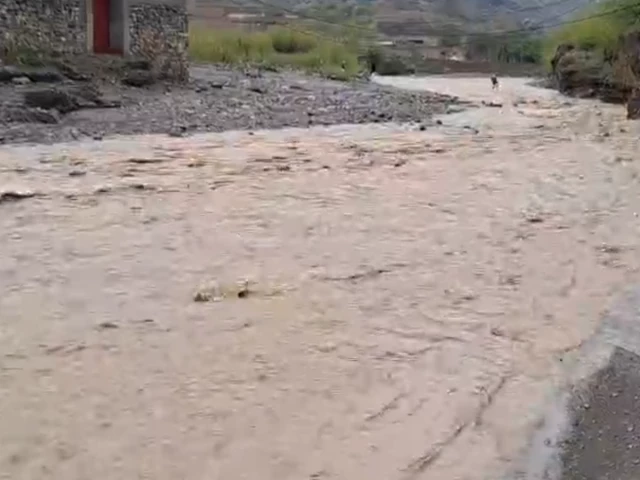
In Khyber District, continuous heavy overnight rainfall has triggered flash floods in rain-fed streams, disrupting traffic at several points along the Pakistan–Afghanistan Highway.
 
At least 25 people have died, and 77 others have been injured in rain-related incidents in several districts of K-P since March 25, according to the Provincial Disaster Management Authority (PDMA).

According to the data shared by the authority, casualties included 18 children, two men, and five women, while the injured comprised 33 men, nine women, and 35 children.

The PDMA reported that a total of 88 houses had been damaged since March 25, including 71 that were partially damaged and 17 that were destroyed. The incidents were reported in multiple districts, including Bannu, Abbottabad, Kohat, Peshawar, Nowshera, Bajaur, Lakki Marwat, Kurram, Hangu, Shangla, Buner, Malakand, Upper Dir, Battagram, North Waziristan, and Tank.
 

Pindi, Islamabad receive 16 hours of continuous rain

Aamir Yasin Published April 8, 2026

1775645750390.png

Vehicles pass through rainwater at Rehmanabad in Rawalpindi during rain on Tuesday. — White Star

RAWALPINDI: Sixteen hours of continuous rain lashed the twin cities, bringing down temperature to 14 degree Celsius. In Murree, rain triggered land sliding on Kashmir Road, Aliot and along Murree Improvement Trust where five feet land caved in, leading to traffic blockage.

Murree Deputy Commissioner Agha Zaheer Shirazi told Dawn that land sliding occurred at two points in Murree, but no casualty was reported. He said the district administration had been fully mobilised to deal with this situation.

About Jhika Gali land sliding a day ago, he said rehabilitation work was going on rapidly in the affected areas while emergency work was being carried out to restore roads, remove debris and eliminate dangers faced by the public.
 

Heavy rains kill 3, injure 17 across Punjab

Imran Gabol Published April 8, 2026

1775645866928.png

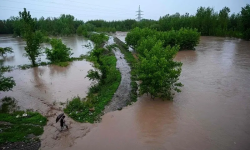
A man walks along a flooded path as torrential rains cause water channels to overflow, inundating nearby areas of Peshawar on April 7, 2026. — AFP

LAHORE: Heavy rains and storms in Punjab over the past 24 hours have left three people dead and 17 others injured, rescue officials said on Wednesday.

In Bhakkar, two separate roof-collapse incidents left one person dead and four others injured, a Rescue 1122 spokesperson said.

In a separate incident, two people were injured when a house roof caved in due to rainfall in Khanewal, while in Muzaffargarh, two individuals sustained injuries in separate incidents —one from a roof collapse and another from slipping in the rain.

In Sargodha, the wall of a house collapsed, injuring one person and killing a livestock animal, a rescue official said.

In the district of Taunsa, five people were injured when a hotel shed collapsed. In two other incidents in the same area, roof collapses left one person dead and two others injured.
 

While recovering from the economic impacts of the global war, Pakistan should also focus on flood management

Floods are totally natural and even helpful, but have reached a disastrous intensity due to climate change and unplanned settlements.
https://whatsapp.com/channel/0029VaMc238IiRov8okfYy3n
As we focus our attention on the Iran–US-Israel escalating conflicts, rising oil prices have shaken the global markets. Pakistan stands at the edge of a different but equally devastating crisis, one that flows not from geopolitics but from its rivers and skies.

Weather forecasts are pointing to a high probability of abnormal rainfall — 22 to 26 per cent above normal — in the coming monsoon season, which is just a few weeks away.

This means we are potentially going to face heavy floods in 2026 once again. This highlights the spectre of a double crisis in the country this year: economic stress from war and devastation from extreme weather events in July-August. Consequently, while planning to recover from the economic impacts of the global war, Pakistan should also focus on flood management. The question is how fast and how wisely this can be done?

Despite having a proper plan — the National Flood Protection Plan-IV — initiated after the 2010 super flood, finalised in 2017, and updated in 2024 as a policy response to the 2022 mega floods.

This plan consists of 375 proposed projects with an estimated cost of Rs825 billion. Despite the effort, Pakistan was once again at the mercy of floods in 2025.

This recurring crisis continues to devastate lives, displacing millions of affected people, damaging infrastructure, washing away the crops, livestock, and vegetables, and putting food security at risk. Flooding has also severely impacted the economy, costing it over $3bn.

Floods are part of the hydrological cycle, and are totally natural and even helpful, but have reached a disastrous intensity due to climate change and unplanned settlements

Floods are often presented as inherent disasters, while they are not. They become a disaster due to long-term environmental neglect and development that occurs without consideration of the natural ecosystem’s needs.

Historically, floods have enriched agricultural lands by replenishing soil fertility through nutrient-rich silt deposits, boosting agricultural productivity, replenishing groundwater, and sustaining ecosystems.

Floods have shaped large riverine civilisations, such as those along the Nile, Indus, and Ganges, among many others, where periodic floods sustained their food security for centuries. Floods have also played an important role in Pakistan by recharging its groundwater aquifers.
 

UNDP, Japan partner to boost climate resilience

Amin Ahmed
April 21, 2026

• $400,000 initiative targets flood-hit communities in south Punjab
• Year-long project to build readiness, focusing on women, youth

ISLAMABAD: The United Nations Development Programme (UNDP) and the Japanese government are launching a project to strengthen community resilience and disaster preparedness in Pakistan with a $400,000 contribution from Japan.

The initiative will be implemented as part of the UNDP’s broader support to recovery and resilience efforts in Pakistan, in collaboration with national and provincial partners, the Japanese embassy announced on Monday.

The 12-month project will focus on strengthening community-based disaster preparedness in flood-affected areas of southern Punjab.
 
To view this content we will need your consent to set third party cookies.
For more detailed information, see our cookies page.
 

NDMA warns of 'intense heatwave' until May 5 in parts of country​


Advises citizens avoid unnecessary exposure to direct sunlight, drink water and take precautionary measures

APP
April 23, 2026

men ride on a motorbike as they cover their heads with a wet cloth to cool off and to avoid sunlight during a hot summer day as the heatwave continues in jacobabad pakistan may 26 photo reuters


Men ride on a motorbike as they cover their heads with a wet cloth to cool off and to avoid sunlight, during a hot summer day, as the heatwave continues in Jacobabad, Pakistan May 26. Photo: REUTERS

The National Disaster Management Authority (NDMA) on Thursday issued a nationwide alert warning of an intense heatwave in several regions until May 5.

According to the advisory from the National Emergencies Operation Centre (NEOC), Sindh, southern Punjab and parts of Balochistan were expected to face severe heatwave conditions. Major cities, including Karachi, Hyderabad, Sukkur, Larkana, Jacobabad, Bahawalpur, Rahim Yar Khan, Multan and Turbat, were likely to remain under extreme heat.

Along with this, central Punjab and parts of Khyber-Pakhtunkhwa (K-P) may also see a sharp rise in temperatures.

The NDMA warned that the heatwave could increase the risk of heatstroke, dehydration and other health issues. Citizens were advised to avoid unnecessary exposure to direct sunlight, drink plenty of water and take precautionary measures.
 

PMD issues Glof alert due to westerly wave, rainfall across GB and KP

News Desk
May 2, 2026

The Pakistan Meteorological Department (PMD) on Saturday issued an alert for glacial lake outburst floods (Glof) in the upper regions of the country, including Gilgit-Baltistan and Khyber Pakhtunkhwa, as a result of an expected westerly wave this weekend.

A Glof refers to the sudden release of water and debris from a glacial lake, leading to the loss of lives, property, and livelihoods in mountain communities. Over 7.1 million people in GB and KP are vulnerable to the phenomenon, according to the Ministry of Climate Change.

In its statement, issued on Saturday, the Met Office said that a moderate westerly wave is expected to enter the upper regions of Pakistan from Sunday.

“During this period, widespread rain, wind thunderstorms, and isolated heavy falls, are anticipated across Gilgit-Baltistan and Khyber Pakhtunkhwa,” the alert said.

According to the PMD, the sudden increase in temperatures followed by widespread precipitation “significantly elevates” the risk of Glofs, flow of debris, and flash flooding in vulnerable areas, particularly in Hoper, Ghulkin, Shishper, Yasin, Phander, Badswat, lower Hunza, Nagar, Ghanche, Shigar, Swat, upper Chitral, Dir and Astore.

Residents in glaciated valleys are advised to avoid proximity to riverbanks and stream beds during rainfall and secure livestock and essentials in higher safe grounds. They were also asked to disseminate the alert via SMS and social media.

The PMD alert also advised residents to monitor local nullahs for sudden changes in water colour, indicating muddiness, or unusual sounds that could indicate grinding rocks.
 

Users who are viewing this thread

Back
Top