Saudi Arabia strategic Projects: news, discussions & updates

Saudi Arabia’s Chip Design Ambitions Take Shape With New Hub

Kingdom wants to draw 50 companies to the country by 2030​

1717728678905.jpeg

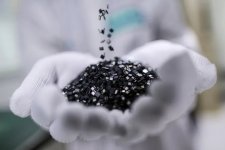
SAUDI Arabia launched a new strategy aimed at making itself a hub for semiconductor design as the country looks to develop the industry as a means to diversify its economy away from crude oil.

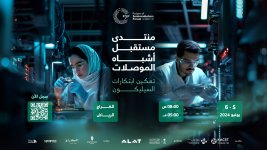
The kingdom announced the National Semiconductor Hub on Wednesday (Jun 5) to develop so-called fabless chip companies that design new semiconductors.

The goal is to draw 50 firms to the kingdom by 2030 and the focus will be on simple chips – rather than cutting-edge and politically-sensitive technologies – and manufacturing will be done internationally, at least in the medium-term, according to Naveed Sherwani, head of the new hub.


“We’re not trying to replace Nvidia or challenge Intel,” said Sherwani, who spoke to Bloomberg on the sidelines of the Future of Semiconductors Forum in Riyadh.

“We want to do humble beginnings. Once we have built a base, then we can talk.”

The initiative underscores the increasing importance of semiconductors for Saudi Arabia as Crown Prince Mohammed bin Salman seeks to tap into new industries that will help the country draw in more revenue from non-oil activities.


https://www.businesstimes.com.sg/in...bias-chip-design-ambitions-take-shape-new-hub


love the initiatives of Mohammed Bin Salam for the Kingdom with Tech, Education, science, sports and entertainment. Ibn Saud and his son Faisel Al Saud will be smiling their graves at the work their lineage is doing to get its people out of a dependence on crude oil for growth.

@dogzigee


Saudi Arabia can build 50 companies to manufacture electronic chips at prices that compete with major global semiconductor companies

To view this content we will need your consent to set third party cookies.
For more detailed information, see our cookies page.
 
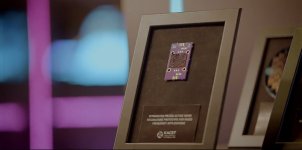
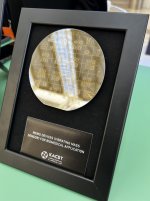
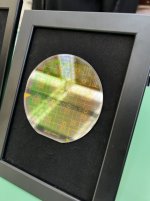
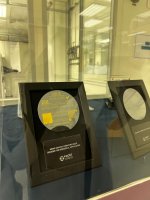
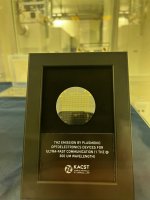
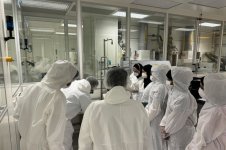
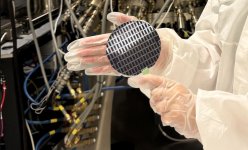
Training 500 students on semiconductor manufacturing at King Abdulaziz City for Science and Technology (KACST)

1717729178713.jpeg

1717729193105.jpeg
 
“The initiative of King Abdulaziz City for Science and Technology, King Abdullah University of Science and Technology, and #Al-Alat, under the supervision of the #Ministry of Communications and Information Technology to establish a cluster of semiconductor companies in Riyadh, is an essential step to open new horizons for progress in this sector.

– Ross Gatto, Head of Semiconductor Sector

To view this content we will need your consent to set third party cookies.
For more detailed information, see our cookies page.
 
Semiconductor Forum..
To explore opportunities to localize the electronic chip design industry and develop future communications

1717729492088.jpeg

 
Bloomberg Agency:

Saudi Arabia's Public Investment Fund plans to make major investments in the semiconductor and aerospace industries this year as the kingdom accelerates efforts to diversify its economy away from oil.

To view this content we will need your consent to set third party cookies.
For more detailed information, see our cookies page.
 
Today we are launching a conference in Riyadh #LEAP24 in its third edition, which is the largest technical conference and exhibition

The first day witnessed the announcement of investments worth $11.9 billion with major technology companies in the world

1717729808329.jpeg
 
In 2021, the Saudi Semiconductor Program was announced and the first electronic chip was manufactured in Saudi Arabia, and soon great progress will be announced in this field with the announcement of the first Saudi company specialized in the semiconductor industry.

1717730305570.jpeg
 

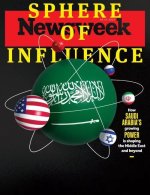
US, Saudi Arabia close to finalizing draft security treaty, WSJ reports​


The draft treaty is modeled loosely on Washington's mutual security pact with Japan, the newspaper cited U.S. and Saudi officials as saying.

https://www.reuters.com/world/us-sa...draft-security-treaty-wsj-reports-2024-06-09/


Wall Street Journal: America offers a historic defense treaty to Saudi Arabia

To view this content we will need your consent to set third party cookies.
For more detailed information, see our cookies page.


*** On June 9, 2024, the agreement to link Saudi oil pricing to the dollar, concluded for a period of fifty years from June 9, 1974, will expire. Therefore, the United States of America is rushing to conclude agreements with Saudi Arabia at all levels and fields in order to preserve the global value of the dollar..
 
Kingdom of Saudi Arabia
The deadline for submitting bids for the nuclear plant is set for July

1717978697646.jpeg

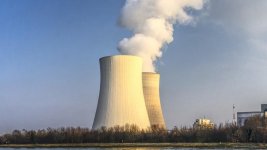
Four nuclear technology providers are expected to submit their bids by July 1 for a contract to build the Duwayhin nuclear power plant in Saudi Arabia, according to an industry source.

Saudi Arabia submitted the contract in 2022 with an initial deadline of December 31 of the same year. The tender closing date has since been postponed several times, with the previous deadline set for April 30.

A source in the sector said that four bidders submitted bid bonds for the contract.

These companies are understood to be:

China National Nuclear Corporation (China).
EDF (France).
Korean Electric Power Company (KEPCO, South Korea).
Rosatom (Russia).

The Duwaihin Nuclear Power Plant will be purchased using a conventional design and construction model. The power station's electricity generation capacity has not been disclosed, although a previous study indicated that a capacity of 2.8 gigawatts was being considered.

“The concept is that the tender process requires a level of [political] stability in the region. This seems like an automatic postponement of the project tender process,” one source told MEED in early May.

Saudi Arabia plans to build a large-scale nuclear power plant facility as part of its energy diversification agenda.

It is understood that Riyadh is using the nuclear power plant project, along with its plan to enrich uranium sources..

Consultants

Al Duwaiheen Nuclear Energy Company received three bids for a project management consulting package for the nuclear plant project last year.

MEED understands that the following companies have submitted proposals for the contract:

Atkins(UK/Canada)
Worley (Australia).
Assystems (France).

Two of the three bidders had previous involvement in the Saudi nuclear energy project.

In March 2022, Saudi Arabia announced the creation of a holding company – Al-Duwayhin Nuclear Energy Company – to develop nuclear energy projects in the country to produce electricity, desalinate seawater, and support thermal energy applications.
 
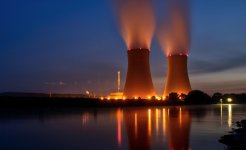
Nuclear energy ☢️ is the next destination to enhance education for Saudi youth 🇸🇦 and promote a sustainable high-tech industry.

What are the most important points of the report:

⁃Saudi Arabia is embarking on an ambitious program to develop peaceful nuclear energy that will have profound positive impacts on the energy industry and the broader economy.

⁃The program will lead to the construction of the first nuclear power plants in the Kingdom, which will diversify the energy mix with a clean energy source.

⁃The initiative aims to promote growth in the Kingdom of Saudi Arabia and provide educational opportunities for Saudi youth.

⁃The nuclear energy program in the Kingdom of Saudi Arabia represents an opportunity to build human capital through education, especially in the fields of science, technology, engineering, and mathematics.

⁃Saudi women significantly excel in the fields of science, technology, engineering, and mathematics, with high participation rates in technical professions.

⁃The Saudi Nuclear Program aims to integrate nuclear technology into educational curricula and vocational training, ensuring sustainable industrial expertise.

⁃International technology partners will be encouraged to provide training and educational support to the Kingdom’s youth, including the Kingdom’s partner, the United States 🇺🇸

⁃The nuclear energy program can also build on Aramco’s legacy in the field of international cooperation and educational development.
⁃The long-term success of the Saudi nuclear program will depend on a solid educational foundation that will inspire future generations.

1717979176280.jpeg

To view this content we will need your consent to set third party cookies.
For more detailed information, see our cookies page.
 
What is the state of the mineral sector in Saudi Arabia? Talk about a few trillions of USD in wealth potentially.. Staggering number.

To view this content we will need your consent to set third party cookies.
For more detailed information, see our cookies page.


To view this content we will need your consent to set third party cookies.
For more detailed information, see our cookies page.
 

Industrial production in Saudi Arabia increased by a record 26.7% year-on-year in April of 2022, as mining and quarrying grew by 28.3% as the country increased its oil production to its highest level by more than 10 million barrels per day. Manufacturing activity also increased by 25.1% as international trade recovered. On the other hand, electricity and gas supplies decreased 2%. Compared to the previous month, industrial production was up by 0.5%.


From desert to oasis: Saudi Arabia and the global revolution in water treatment​


Turning seawater into drinking water was once seen as an expensive last resort for rich countries. Experts say that is no longer the case

Every year, Saudi Arabia's farmers use 21 cubic kilometres of water, pumped to the surface from the country’s fossil aquifers, a non-renewable resource found deep underground.

This may sound like a lot, by comparison the country's households use up 3.5 cubic kilometres a year. Ethiopia's Gerd dam, currently under construction, could hold 74 cubic kilometres of water if fully filled, which will mainly be used for hydroelectric power generation.

So, just how much water does a growing arid nation need?

Under Saudi Arabia's plans to diversify its economy, the country will need vast quantities: the Red Sea tourism project, the most ambitious of its kind in the world, will need an estimated 50,000 cubic metres of water a day at least.

This is a critical challenge, so it is no surprise the government has blazed a trail investing in new technology to desalinate seawater.

The desalination revolution​

Saudi Arabia, the UAE and Israel now receive more than half their water through this technology and invest significant resources in trying to make it more efficient.
Prior to this, the situation for water-stressed countries was looking bleak, but desalination offers a chance for more arid countries to address water shortages, at least partially, now that the cost of the technology is falling.

Seawater desalination was once too expensive to be viable – in the 1960s it cost $10 per cubic metre - but that cost has come down to as low as 50 cents per cubic metre, or even less.

This means it is no longer the preserve of wealthy countries.

“Ten years ago, the view of desalination was that it was a rich Arab state solution," says Nizar Kammourie, chief executive of Sawaco, one of the leading desalination companies in Saudi Arabia.

“But this exclusive club has grown and you now have Spain, Australia and many US states involved. But even the largest plant in the US, the Carlsbad desalination plant in San Diego, which produces about 220,000 cubic metres a day, qualifies as medium-size in the Gulf. Everyone thought it was unsustainable but now it is seen as the only viable solution,” he says.

Saudi Arabia is now a global leader in this technology, which is good news for everyone, especially millions of people worldwide who live in arid, coastal areas: as with most technology, more investment eventually leads to lower cost.

Saudi Arabia now has the largest plants anywhere in operation: the Al Jubeil plant produces 1.4 million cubic metres per day.

Advances in desalination mean that in arid coastal cities such as Basra, Iraq, seawater desalination is now within reach, although Hartha, a major project in Iraq, is behind schedule amid a series of corruption allegations.

Even as recently as 10 years ago, amid war and uncertain oil revenue, the idea of a desalination plant in Iraq was unthinkable due to cost.

Green desalination​

Until recently, the technology has presented an environmental challenge for oil-rich countries.

Previously, the most common method of desalinating water involved burning hundreds of thousands of barrels of oil a day in thermal power stations and using excess heat to separate freshwater from salty brine.

The other common method involves membranes with microscopic holes to separate water from salt using reverse osmosis.

Both methods are costly, although membrane technology is advancing, with some firms planning to use advanced materials such as graphene.

Both methods also come with an environmental cost such as the disposing of extremely saline brine, which can affect maritime life, and a large carbon footprint.


But innovations, for example, using solar power and more efficient membranes, create less brine and use less energy.

“A lot of this came down to energy cost. It used to typically require 7-8 kwh per cubic metre in thermal desalination. But now that is 3 kwh in megaplants or even 2.5 kwh. If you couple this with solar it’s a real sustainable solution,” Mr Kammourie says.

“We’ve been doing desalination with renewable energy, partial solar solutions. Real life experiments using all reverse osmosis tech. The biggest advancements are with membranes that can deal with higher salinity. But so far that’s been incremental progress, not disruption.”

The solar domes of Neom​

Through 2019, Solar Water chief executive David Reavley took no less than 18 flights to the Middle East, firming up a project to install revolutionary new technology in a completely new city: Saudi Arabia’s vision for a futuristic desert metropolis, known as Neom.

His company’s Solar Dome invention uses concentrated solar power - technology which already exists – to evaporate seawater inside a giant dome, separating fresh, drinkable water from extremely saline brine.

“We’ve taken this concept to an industrial scale and will be able to produce millions of cubic metres per year,” he says.

“From concept it took about two and a half years to develop into a situation where there was a sufficient volume of water that could be produced,” says Mr Reavley.

Work to treat water on an industrial scale was undertaken with a team from the UK’s Cranfield University.

“And that water from the dome will be drinking water quality, meeting [World Health Organization] guidelines, although for domestic use it would be remineralised,” he says.

With any desalination process, minerals that naturally occur in freshwater - from rain or rivers - have to be added later. This is because desalinated water is slightly acidic and can accelerate corrosion without adding minerals such as calcium, which washes into freshwater from rocks.

“It’s not giving off pollution, it’s aesthetically pleasing to look at, it’s not ruining the horizon like a massive conventional power plant,” he says.

Mr Reavley says the technology can be adapted to multiple settings, from providing water to a coastal hotel to water for heavy industry, such as a project they are looking at in Jordan for the country’s fertiliser industry.

Future plans​

Sustainability has become a central theme of the Neom city concept.

“Work has started, a site has been designated and construction will be starting shortly,” Mr Reavley says, adding that the pandemic may impact the timeline.

"Components are being manufactured, the designs and blueprints are fully completed for the site.”

Perhaps the most striking thing about the idea – if fully realised – is the apparent cost: just $0.34 cents per cubic metre.

“We’re now getting inquiries from all over the world, most recently in California. There’s no shortage of interest, it’s just a question of being able to get on a plane.”

“Through 2020 we were able to negotiate contracts in Jordan for work at phosphate mine sites. And we are talking about projects in Egypt. It has been slower than we would have liked,” he says.

Despite facing similar delays, Mr Kammourie of Sawaco is also optimistic about the future.

“We’re seeing huge investment," he says.

As evidence, he points to Sawaco's partnership with Saudi Arabia's water and energy firm Acwa Power on the desalination plant Rabigh 3, expected to come online by the end of 2021.

It also partnered with Gradient, a US company, in 2014 to work on new technology that puts less brine into the sea, a challenge the company has been trying to tackle since 2008.

"You have to innovate. Costs and margins are falling and that comes from innovation," says Mr Kammourie.

But is the idea of sustainably turning seawater into drinking water a dream?

“It’s smart and disruptive,” he says.


https://www.thenationalnews.com/gul...lobal-revolution-in-water-treatment-1.1205210
 

Users who are viewing this thread

Pakistan Defence Latest

Back
Top