Navigation
Install the app
How to install the app on iOS
Follow along with the video below to see how to install our site as a web app on your home screen.
Note: This feature may not be available in some browsers.
More options
Style variation
You are using an out of date browser. It may not display this or other websites correctly.
You should upgrade or use an alternative browser.
You should upgrade or use an alternative browser.
Saudi Arabia strategic Projects: news, discussions & updates
- Thread starter The SC
- Start date
More options
Who Replied?


The SC
INT'L MOD
- Thread starter
- #902
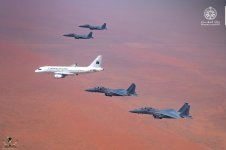
The “Joint Strategic Defense Agreement” aims to develop aspects of defense cooperation between the Kingdom and the Islamic Republic of Pakistan, and to enhance joint deterrence against any aggression. It also stipulates that any attack on either country is an attack on both.
The SC
INT'L MOD
- Thread starter
- #905
Wars are not won by missiles alone, they require sustained logistics, fuel, and liquidity to keep the war economy running under pressure. In the past, external shocks, sanctions, oil price spikes, or financial cut-offs, created a ceiling on Pakistan’s war endurance. With Riyadh’s oil wealth and financial backing formally locked in, that ceiling has been removed.
Pakistan now enjoys an unprecedented warfighting depth: Chinese arms and ammunition on one side, Saudi oil and money on the other. It is an industrial-scale supply chain that neutralizes the constraints India has historically counted on.
For Saudi Arabia, the pact is equally revealing. Riyadh has watched the limitations of U.S. security guarantees with growing unease. The recent incident in which Israeli missiles crossed Saudi airspace to strike Qatar without interception exposed the cracks in U.S. air defense systems stationed in the region.
For a kingdom sitting at the intersection of Gulf trade, oil infrastructure, and potential escalation regionally, this vulnerability is existential. By binding its defense to Pakistan, a nuclear-armed state with hardened conventional and unconventional warfare experience, Saudi Arabia acquires an ally that does not depend on Washington’s permission slips. The pact is a hedge against both Israeli encroachment and the unreliability of the American shield.
The political signaling is just as important as the military calculus. For India, this pact closes the book on any illusions of exhausting Pakistan through drawn-out confrontation. The endurance gap has been plugged. For Washington, it is a clear rebuke: Gulf monarchies no longer see U.S. guarantees as sufficient on their own and are diversifying their security anchors. And for China, it is an indirect but significant win: Beijing now operates in a security triangle where its strongest regional partner, Pakistan, has been structurally linked to Riyadh’s defense.
This pact is a structural reconfiguration of deterrence in South Asia and the Gulf, and it signals the emergence of a new strategic corridor, where China supplies the arms, Saudi Arabia supplies the lifeline, and Pakistan acts as the pivot capable of converting both into real warfighting capability.
Pakistan now enjoys an unprecedented warfighting depth: Chinese arms and ammunition on one side, Saudi oil and money on the other. It is an industrial-scale supply chain that neutralizes the constraints India has historically counted on.
For Saudi Arabia, the pact is equally revealing. Riyadh has watched the limitations of U.S. security guarantees with growing unease. The recent incident in which Israeli missiles crossed Saudi airspace to strike Qatar without interception exposed the cracks in U.S. air defense systems stationed in the region.
For a kingdom sitting at the intersection of Gulf trade, oil infrastructure, and potential escalation regionally, this vulnerability is existential. By binding its defense to Pakistan, a nuclear-armed state with hardened conventional and unconventional warfare experience, Saudi Arabia acquires an ally that does not depend on Washington’s permission slips. The pact is a hedge against both Israeli encroachment and the unreliability of the American shield.
The political signaling is just as important as the military calculus. For India, this pact closes the book on any illusions of exhausting Pakistan through drawn-out confrontation. The endurance gap has been plugged. For Washington, it is a clear rebuke: Gulf monarchies no longer see U.S. guarantees as sufficient on their own and are diversifying their security anchors. And for China, it is an indirect but significant win: Beijing now operates in a security triangle where its strongest regional partner, Pakistan, has been structurally linked to Riyadh’s defense.
This pact is a structural reconfiguration of deterrence in South Asia and the Gulf, and it signals the emergence of a new strategic corridor, where China supplies the arms, Saudi Arabia supplies the lifeline, and Pakistan acts as the pivot capable of converting both into real warfighting capability.

_Arabia_
Trusted Member

A very good and welcome development. Since the inception of Pakistan, KSA has always been a close partner bound by a religious, cultural, geographic and ancient historical bond (the first recorded civilizations/cultures in what is today Pakistan, (IVC), were close partners of contemporary civilizations in Arabia (Sumer, Dilmun, Magan etc.) and in fact it where our forefathers who first described the IVC to the outside world during that long bygone era.
A lot of people to people relations in the modern era, almost exclusively Pakistani workforce in KSA.
I would like to see this new development result in something truly tangible for both parties in terms of the military sector but not only. Expand this cooperation economically, in terms of agriculture, mining, AI, technology, STEM, culture, transportation and what not.
Hopefully this will benefit the ordinary man and woman in both KSA and Pakistan.
A lot of people to people relations in the modern era, almost exclusively Pakistani workforce in KSA.
I would like to see this new development result in something truly tangible for both parties in terms of the military sector but not only. Expand this cooperation economically, in terms of agriculture, mining, AI, technology, STEM, culture, transportation and what not.
Hopefully this will benefit the ordinary man and woman in both KSA and Pakistan.
_Arabia_
Trusted Member
#Crown_Prince Prince Mohammed bin Salman:
The localization rate in the military industries exceeds 19%.
#Royal_Speech_in_Shura
The Kingdom will be in the coming years a global center for artificial intelligence.
Our economy proceeds to diversify its paths and confirm its ability to reduce its dependence on oil, and for the first time in the history of the Kingdom, non -oil activities achieved 56% of GDP.
The selection of 660 global companies to establish their regional headquarters in the Kingdom embodies what has been achieved in infrastructure and the level of technological services and confirms the strength of the Saudi economy
Saudi Crown Prince: GDP exceeded 4.5 trillion riyals
That is 1.2 trillions USD approximately. Not bad. Most importantly the economy appears to be moving in the right direction on almost every front.
In particularly the non-oil growth which is very encouraging.
Even more importantly the underlining changes in the Saudi Arabian economy, more precisely the rapid industrialization across the board, in particular in key sectors such as mining, technology, AI, infrastructure, military, renewables, petrochemicals, healthcare, construction, ICT, logistics, agriculture etc. All key sectors where KSA has made massive progress.
Look at key data such as those:
)

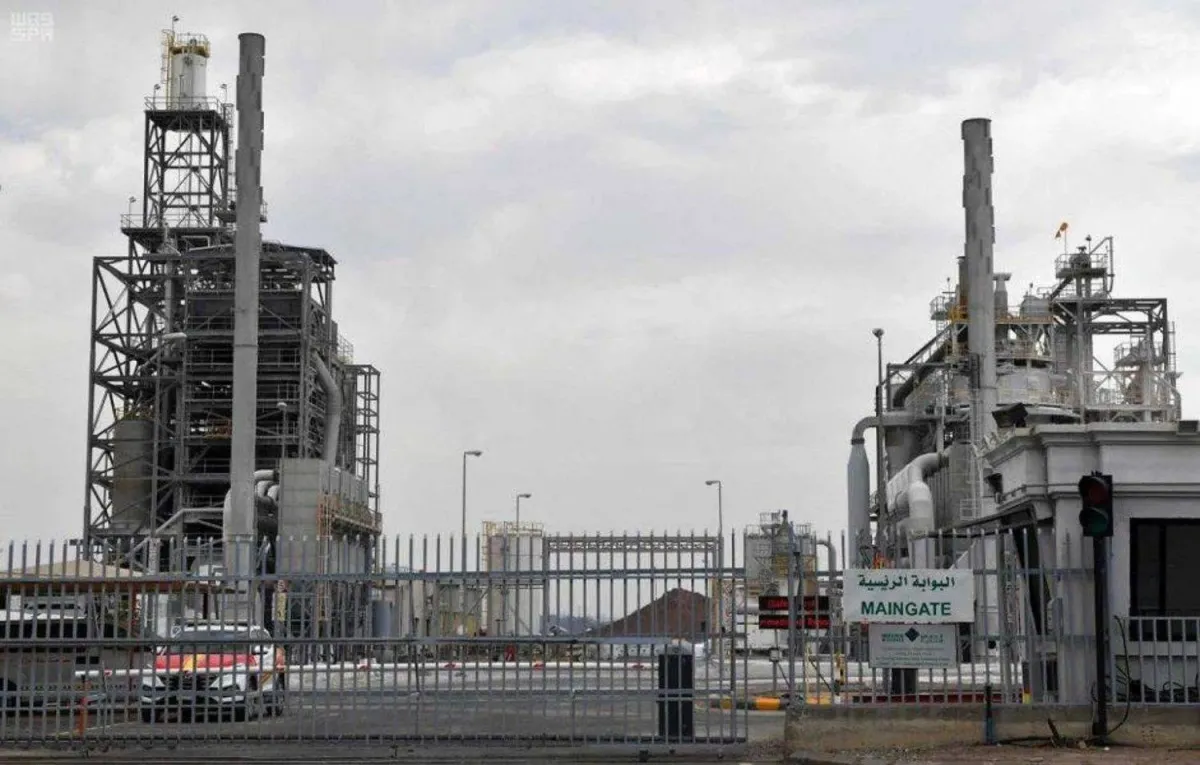
Saudi Arabia issues over 1,300 new industrial licenses in 2024: Ministry report
Saudi Arabia issues over 1,300 new industrial licenses in 2024: Ministry report
 www.arabnews.com
From April 2025:
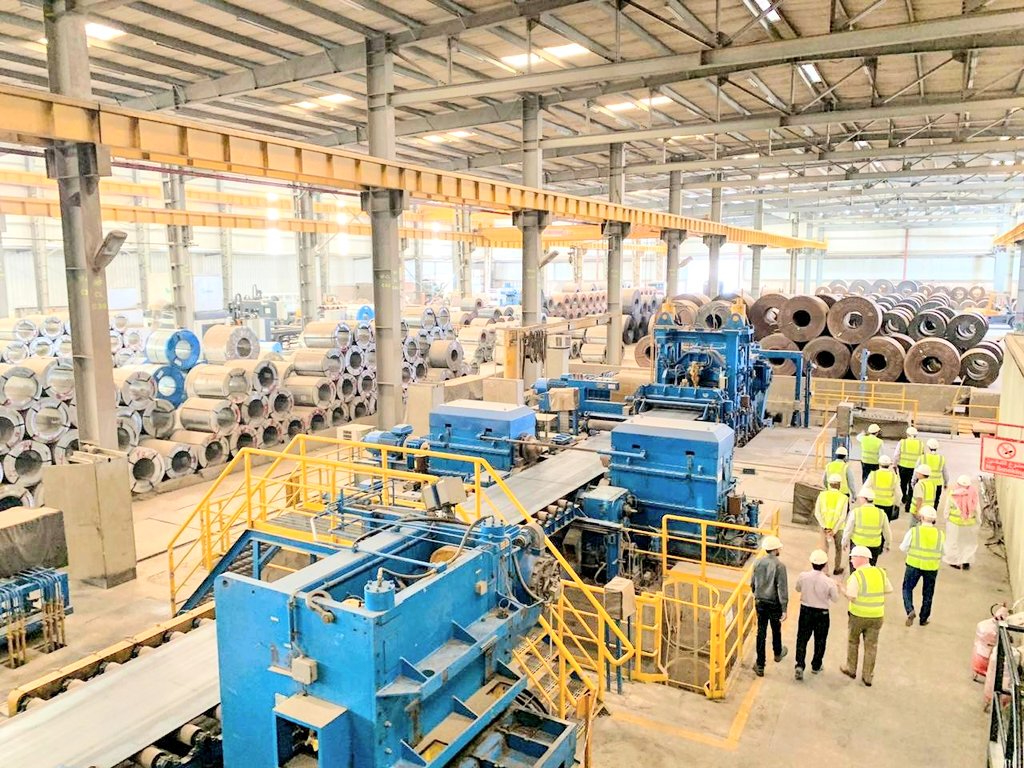
Saudi Arabia boosts industrial output with 103 new factories
Saudi Arabia boosts industrial output with 103 new factories
www.arabnews.com
It clearly shows a country that is undergoing rapid and fundamental change (in a very good way) aiming for self-sufficiency and long overdue fulfillment of potential.
How many here have any clue of this? Not many hence the same boring and ignorant stories repeated of KSA that might have been relevant in the 1950's and 1960's, keep being repeated from people who live/are from countries, that are way below KSA on most fronts.
You have Westerners visiting KSA/GCC and marvelling at the technology, order, progress, industrialization and in general positive vibe and being shocked (because they were expecting to see Afghanistan or what not based on the propaganda that is floating around on the internet). I travel across much of the world and I am based in Western Europe a part of the year, and quite frankly, KSA/GCC is way ahead on most fronts outside of military sector and obviously key technologies (due to their head starts). But almost everything else? Give me KSA/GCC every day of the week. Even technology is much more aplicated in every day life in KSA than in the West.
I say work much harder and keep improving on all fronts and ignore the noise from ignorants and people who wish you only harm.
Much more to do yet of course and it will require hard work and clever politics from leadership. The human capital is there and now with women (half of the population) actively participating in all sectors and actually taking the lead on many fronts, there is reason to be optimistic for the future.
Most importantly it appears that MbS has practically removed all the old dinosaurs from decision making proceses, public offices, governors, private sectors even, clergy etc. and given power/influence to youth and people that are actually well-versed in global affairs and know what is needed in order to advance as a country in 2025 and which sectors to focus on. Of course improvements can still be made but the difference between the past 10 years or so (in particularly since 2017) and before? GIGANTIC. Cannot be put into words for people not familiar with KSA. It is like two different eras even though we are talking about a span of barely 10 years.
Sure, some of the projects were/are unrealistic, I believe much of it was to generate hype/attention (worked rather well), mostly exemplified by NEOM or more precisely "The Line", which I have been critical of myself but even that they have scaled down to a realistic project. Any way, all in all, things are looking promising and it is very hard to deny that.
Last edited:
_Arabia_
Trusted Member
Geographical size, population size, natural resources, infrastructure etc. all is important but IMO the most important element is human capital and in this regard KSA is also taking huge strides as confirmed by international scientific rankings and personal achievements.
All news from this week alone:
All news from this week alone:
_Arabia_
Trusted Member
Also I need to address one of my favourite topics close to my heart. The agricultural sector keeps increasing and expanding and KSA is aiming for/reaching self-sufficiency on numerous fronts in this regard. The contribution of the agricultural sector in 2024 was an estimated 31.4 billion USD.
On most rankings KSA is now largely self-sufficient in terms of meat, fruits, vegetables, seafood, dairy, eggs etc.
 saudifoodtech.sa
That and obviously the ambitious "Green Arabia/Saudi project" and goal of planting 100's of millions of trees if not billions. I think that I covered this particular topic earlier in this thread back in either January, February or March when I was last active on this forum.

Also a pressing topic given the global climate challenges. Restoring much of the lost forests and greenery is also an admirable and great goal by itself. Much has been restored already and in fact much of the degradation is caused by overgrazing (throughout centuries) and human stupidity (cutting trees for firewood) and in general past ineffective practices.
For this very reason animals such as lions (that roamed KSA for millennia and have an enormous symbolic meaning for Arabs and in Arabic language), cheetahs and other wild animals died out in the past 200-50 years.
If nature is rehabilitated and restored the reintroduction of those animals could occur much like how the Arabian Oryx and Arabian Leopard was saved and given that KSA has enormous areas of territory that are/have been made into national parks/protected areas and in general the wilderness in KSA which is everywhere outside of populated areas, such goals could be reached and would help the ecosystem overall, tourism, local as well as foreign, the climate, decrease temperature and in general be a benefit.
Positive news, apparently 4 cheetahs were born in KSA in the wild (national park), I was not aware of this but this is great news.
40 years ago they became extinct in the wild in KSA apparently.
There is also the funny sand cat:
We must and should respect nature as per Islam and Arabian traditions. Prevent clowns from destroying and disrespecting it whenever possible and always contact authorities if people do not learn through dialogue.
On most rankings KSA is now largely self-sufficient in terms of meat, fruits, vegetables, seafood, dairy, eggs etc.
Food and Agriculture Sector in the Saudi Vision 2030 Annual Report 2024 - Saudi FoodTech
Saudi Arabia – April 2025 As part of Saudi FoodTech’s commitment to tracking major developments in the food and agriculture sectors, this report highlights the most significant achievements in 2024 along the journey toward realizing Saudi Vision 2030. It also sheds light on key milestones...
saudifoodtech.sa
That and obviously the ambitious "Green Arabia/Saudi project" and goal of planting 100's of millions of trees if not billions. I think that I covered this particular topic earlier in this thread back in either January, February or March when I was last active on this forum.

Also a pressing topic given the global climate challenges. Restoring much of the lost forests and greenery is also an admirable and great goal by itself. Much has been restored already and in fact much of the degradation is caused by overgrazing (throughout centuries) and human stupidity (cutting trees for firewood) and in general past ineffective practices.
For this very reason animals such as lions (that roamed KSA for millennia and have an enormous symbolic meaning for Arabs and in Arabic language), cheetahs and other wild animals died out in the past 200-50 years.
If nature is rehabilitated and restored the reintroduction of those animals could occur much like how the Arabian Oryx and Arabian Leopard was saved and given that KSA has enormous areas of territory that are/have been made into national parks/protected areas and in general the wilderness in KSA which is everywhere outside of populated areas, such goals could be reached and would help the ecosystem overall, tourism, local as well as foreign, the climate, decrease temperature and in general be a benefit.
Positive news, apparently 4 cheetahs were born in KSA in the wild (national park), I was not aware of this but this is great news.
40 years ago they became extinct in the wild in KSA apparently.
There is also the funny sand cat:
We must and should respect nature as per Islam and Arabian traditions. Prevent clowns from destroying and disrespecting it whenever possible and always contact authorities if people do not learn through dialogue.
Users who are viewing this thread
Total: 2 (members: 0, guests: 2)
Pakistan Defence Latest


Country Watch Latest
-
-
-

-
-
 B-21 manufacturing ramping as operational capability expected in 2027 (3 Viewers)
- Latest: SolarWarden