Timeline of Pakistan's Nuclear Programme

Tactical nuclear weapons,

Of all the countries in the world, just nine are believed to have developed nuclear weapons. One member of this exclusive club is Pakistan, a country that occupies a unique strategic position on the Indian subcontinent. An ally of the United States and China and archenemy of India, Pakistan has developed a nuclear arsenal to suit its own particular needs. Unusually among the smaller powers, Islamabad has developed an arsenal of tactical nuclear weapons designed to destroy enemy forces on the battlefield.

Pakistan began developing nuclear weapons in the 1950s, but the country’s nuclear program accelerated in the mid-1970s after the detonation of “Smiling Buddha”, India’s first nuclear weapons test. Enemies since the end of the British Raj in 1947, India and Pakistan fought again in 1965 and 1971. In Pakistan’s view as long as India was the sole owner of nukes it could engage in nuclear saber-rattling and had the ultimate advantage.

Experts believe that Pakistan has between 150 and 180 nuclear bombs. It’s not clear when the country first had an operational, deployable weapon, but by the mid-1990s it had weapons to spare. On May 28, 1998, in response to a series of Indian nuclear tests, Pakistan detonated five devices in a single day, with a sixth device two days later. Four of the devices detonated on the 28th were tactical nuclear weapons, with explosive yields in the subkiloton (less than 1,000 tons of TNT) to 2-3 kiloton range.

Tactical nuclear weapons, also called nonstrategic nuclear weapons, are low-yield (ten kilotons or less) nuclear weapons designed for use on the battlefield. Unlike larger, more powerful strategic nuclear weapons, tactical nuclear weapons are meant to destroy military targets on the battlefield. Tactical nuclear weapons are meant to be used against troop formations, headquarters units, supply dumps, and other high-value targets.
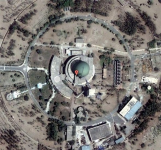
 
Establishing a Nuclear Program:

1956 to 1974

Pakistan asserts the origin of its nuclear weapons program lies in its adversarial relationship with India; the two countries have engaged in several conflicts, centered mainly on the state of Jammu and Kashmir. Pakistan began working on a nuclear program in the late 1950s and the Pakistan Atomic Energy Commission (PAEC) was established in 1956. President Z.A. Bhutto forcefully advocated the nuclear option and famously said in 1965 that "if India builds the bomb, we will eat grass or leaves, even go hungry, but we will get one of our own." After Pakistan’s defeat in the December 1971 conflict with India, Bhutto issued a directive instructing the country's nuclear establishment to build a nuclear device within three years. Although the PAEC had already created a taskforce to work on a nuclear weapon in March 1974, India’s first test of a nuclear bomb in May 1974 played a significant role in motivating Pakistan to build its own.


A.Q. Khan's Contribution:
1975 to 1998

The Pakistan Atomic Energy Commission, headed by Munir Ahmad Khan, focused on the plutonium route to nuclear weapons development using material from the safeguarded Karachi Nuclear Power Plant (KANUPP), but its progress was inefficient due to the constraints of nuclear export controls applied in the wake of India's nuclear test.

Around 1975, A.Q. Khan, a metallurgist working at a subsidiary of the URENCO enrichment corporation in the Netherlands, returned to Pakistan to help his country develop a uranium enrichment program. Having brought centrifuge designs and business contacts back with him to Pakistan, Khan used various tactics, such as buying individual components rather than complete units, to evade export controls and acquire the necessary equipment.

By the early 1980s, Pakistan had a clandestine uranium enrichment facility, and A.Q. Khan would later assert that the country had acquired the capability to assemble a first-generation nuclear device as early as 1984.

Pakistan also received assistance from other states, especially China. Beginning in the late 1970s China provided Pakistan with various levels of nuclear and missile-related assistance, including centrifuge equipment, warhead designs, HEU, components of various missile systems, and technical expertise.

Eventually, from the 1980s onwards, the Khan network diversified its activities and illicitly transferred nuclear technology and expertise to Iran, North Korea, and Libya. The Khan network was officially dismantled in 2004, although questions remain concerning the extent of the Pakistani political and military establishment's involvement in the network's activities.
 
Pakistan After Nuclear Tests:

1998 to 2007

On 11 and 13 May 1998, India conducted a total of five nuclear explosions, after which Pakistan felt pressured to respond to in kind. Prime Minister Nawaz Sharif decided to test, and Pakistan detonated five explosions on 28 May and a sixth on 30 May 1998. With these tests Pakistan abandoned its nuclear ambiguity and stated that it would maintain a "credible minimum deterrent" against India.

In 1998, Pakistan commissioned its first plutonium production reactor at Khushab, which was capable of producing approximately 11 kg of weapons-grade plutonium annually.

Pakistan does not have a formally declared nuclear doctrine, so it remains unclear under what conditions Pakistan might use nuclear weapons. In 2002, President Pervez Musharraf stated that, "nuclear weapons are aimed solely at India," and would only be used if "the very existence of Pakistan as a state" was at stake.

Lieutenant General Khalid Kidwai, the Director General of Pakistan’s Strategic Plans Division that acts as a secretariat for the Nuclear Command Authority of Pakistan further elaborated that this could include Indian conquest of Pakistan's territory or military, "economic strangling," or "domestic destabilization."

Historically, the security of Pakistan's nuclear weapons has been of significant concern to the international community. Taliban-linked groups have successfully attacked tightly guarded government and military targets in the country. Militants carried out small-scale attacks outside the Minhas (Kamra) Air Force Base in 2007, 2008, and 2009 but Pakistani officials repeatedly deny that the base is used to store nuclear weapons.

Al-Qaeda’s Abu Yahya al-Libi had also called for attacks on Pakistani nuclear facilities. Such developments increased the likelihood of scenarios in which Pakistan's nuclear security could be put at risk.

Nevertheless, Pakistan has consistently asserted that it had control over its nuclear weapons, and that it was impossible for groups such as the Taliban or proliferation networks to gain access to the country's nuclear facilities or weapons. Consequently, Pakistan took measures to strengthen the security of its nuclear weapons and installations and to improve its nuclear command and control system.

The National Command Authority (NCA), composed of key civilian and military leaders, is the main supervisory and policy-making body controlling Pakistan's nuclear weapons, and maintains ultimate authority on their use. In November 2009, then-Pakistani President Asif Ali Zardari transferred his role as head of the National Command Authority to the Prime Minister, Yusuf Gilani.
 
Pakistan and the Nuclear Nonproliferation Community:
After 2008

Pakistan was critical of the U.S.-India nuclear cooperation agreement that was signed in 2008, but has also periodically sought a similar arrangement for itself. In 2008, Pakistan pushed for a criteria-based exemption to the rules of the Nuclear Suppliers Group (NSG), which unlike the country-based exception benefiting only India could have made Pakistan eligible for nuclear cooperation with NSG members. Despite its reservations about the India special exception, Pakistan joined other members of the Board of Governors in approving India's safeguards agreement with the International Atomic Energy Agency (IAEA) in August 2008.

In response to the U.S.-India deal, Pakistan sought to increase its civilian nuclear cooperation with China. Under a previous cooperation framework, China supplied Pakistan with two pressurized water reactors (PWR), CHASNUPP-1 and CHASNUPP-2, that entered into commercial operations in 2000 and 2011 respectively.

In 2009, China National Nuclear Corporation (CNNC) agreed to supply two additional 340-MW power reactors to Pakistan, CHASNUPP-3 and CHASNUPP-4. The United States voiced concerns regarding Chinese construction of these nuclear reactors at Chashma, arguing that China was violating its commitments as a Nuclear Suppliers Group (NSG) member by constructing these additional nuclear reactors.

According to a report by Arms Control Association, China should have asked for an exemption from the NSG to build additional reactors because Pakistan is neither a member of the NPT nor under full-scope IAEA safeguards. However, China has argued that it has no obligation to do so because the reactor transfer was based on a contract negotiated in 2003 and grandfathered in when China joined the NSG in 2004.

Pakistan has also strengthened its personnel reliability program (PRP) to prevent radicalized individuals from infiltrating the nuclear program, although various experts believe that potential gaps still exist. Satellite imagery also shows increased security features around Khushab-4. The United States has provided various levels of assistance to Pakistan to strengthen the security of its nuclear program.
 
Here are confirmed nuclear (and cold tests) tests done by Pakistan.

Kirana-1

  • Kirana-1 was a cold nuclear test, supposedly conducted between 1983–90.
  • Without going into much detail, it is claimed, that Pakistan conducted this test for:
    • Beryllium-Tritium trigger testing
    • High explosives and shape charge testing
    • Light Pipe testing
    • Safety mechanisms
  • A key factor also was, till this time PAEC failed to enrich weapons grade Uranium till 1998.
  • While at the same time, KRL was able to produce HEU in 1978, but for some reason, did not shared it with PAEC. Multiple theories exist, as to why AQ Khan did what he did.
  • Initially PAEC and KRL worked together, but in 1976, Bhutto separated both.
Chagai-1/2

  • AQ Khan himself admitted (right after the tests, on national TV):
    • Chagai-1 used U235 designs.
    • Chagai-2 used Boosted-Fission devices.
  • Pakistan’s Boosted-Fission device, which does have Fusion aspect, but not to achieve high yield, it is to bypass Beryllium-Tritium/Deuterium requirements.
  • Furthermore, Boosted-Fission devices rely on Lithium 6 isotope, which is quite easy to produce (in great scheme of nuclear program), and Pakistan has sizable reserves of Lithium.
So where did Pakistan get Uranium-235 for its devices?

  • AQ Khan openly admitted, in interview air publicly on GEO TV (around 2004–5), that initially 10 tonnes+ of Uranium Ore was delivered by China (I am not 100% sure on the figure, but CIA reports indicated 100 tonnes+, in 2006.).
  • Baghalchur, Uranium Ore was of very poor quality and as such it is currently used as a nuclear dump.
  • Pakistan is mining Uranium in Bannu Basin and Suleman Range.
So where did Pakistan get Plutonium for its devices?

  • KANUPP-1, IAEA has been monitoring it very closely, since it was constructed in 1971, So no chance of Uranium/Plutonium coming from KANUPP-1.
  • Before 1998, there were no other reactors, that could produce enough Plutonium for nuclear weapons.
  • So where did Pakistan get Plutonium from? I leave this for speculation.
  • Or maybe Chagai-2 was just another U-235 device, I again leave this for speculation.
As for designs and technology, So far, what is known is.

  • AQ Khan stole Uranium enrichment centrifuge designs from Netherlands (who in turn got it from US, under "Atoms for peace" initiative).
  • AQ Khan was able to get designs for nuclear warhead from China. CIA confirmed it, with actual recordings of Khan’s meetings.
  • AQ Khan sold, not only the designs, but KRL manufactured centrifuges, for following, this is confirmed, not only by spies but multiple independent sources:
    • Iran - When Iran opened up its nuclear program for inspection.
    • Libya - Gaddafi gave up his nuclear program and openly admitted to Pakistan's assistance, in hopes of lifting sanctions.
    • NK - Pakistan gave nuclear weapon designs to NK and received missile technology from NK, as per defected scientists.
    • After Iraq invasion, copies of Pakistan/Chinese designs were found, Saddam’s scientists confirmed, Saddam was offered to not only buy centrifuges, but also turn key solutions, Saddam hesitated and considered it a CIA trap (Afterall CIA and ISI were good friends).
  • AQ Khan further supplied above nations with:
    • Highly enriched Uranium
    • Uranium hexafluoride
This is what has been confirmed, by multiple sources. But there is one man, who can confirm every single part, his name is AQ Khan, and he is under house arrest, and Pakistan has been keeping him shielded.

Ref: https://www.quora.com/How-did-Pakistan-get-nuclear-weapons
 
Pakistan didn't test Hydrogen bomb after Indian failure

8 June 1998

LAHORE: Pakistani nuclear scientists believe that the Indian thermonuclear test was a failure, because its yield was too low to be credible, but warn that India has probably accumulated enough data from that and accompanying tests for their thermonuclear capability to be accepted at the same level as Pakistan's.

The Indian failure was the deciding factor for Pakistan not conducting a thermonuclear test, even though there was immense political pressure to do so, and though research and design readiness has advanced to the stage where such a test could have been conducted. The scientific establishment resisted the pressure for a test, and counselled that any thermonuclear test should be conducted only when the chances of success were as certain as those of the fission tests.

After the recent series of tests, according to Pakistani scientists, both countries should be able to test thermonuclear devices with almost guaranteed success by the end of the year, when the test results are integrated into the computer simulations and preferably after cold tests are conducted.

"We feel that the Indians' 43 kiloton TNT-equivalent yield is much too small for a successful thermonuclear device," said one scientist speaking on condition of anonymity. "The yield should have been at least several megatons, and as much as 20 megatons, which is about 400 times more than the Indian result announced. If they tested a thermonuclear device, and we think they did, then the fusion reaction was not successfully ignited."

However, Pakistani scientists do not belittle the Indians' abilities. They believe that the main reason for the Indian thermonuclear failure was the lack of previous test data. "They only had one fission test, and even that was 24 years ago. There have been so many technical advances since then, there must have been many problems of interfacing results obtained on old equipment with newly designed equipment," said a scientist. There have been major advances in accuracy of measuring equipment since 1974, so the results from Pokhran I were not as accurate as from Pokhran II and III.

Though they consider Pokhran II to have been a failure, the Pakistanis believe that the Indians will be able to use the test data from it to carry out a successful thermonuclear test with a multi-megatonne yield. They said that Pakistan was now in the same position after the Chaghai tests, and though they could carry out a thermonuclear test now, there was no guarantee of success. However, they said, once the Chaghai results were incorporated, they could guarantee "99.9 percent" success.

They explained that a fission device could be 'cold-tested' in the laboratory to a level where success was virtually guaranteed, but that a fission device explosion was in itself an essential 'cold test' for a fusion device. "Until you have almost total predictability in the fission reaction, you cannot be sure that the fusion reaction will take place to the extent that you want it to," explained a scientist.

They emphasised that, from a military point of view, both Pakistan and India should be assumed to be thermonuclear powers. "The Pakistani cold-testing was successful for the fission device, as was the Indian. Now that both we and they have conducted 'hot tests' for the fission device, it should be assumed that the cold-testing for the thermonuclear device has reached the same level of capability."

The general opinion was that Pakistan and India had achieved military nuclear potential at the fission level through cold testing, Pakistan entirely so and India with only one test 24 years ago.

The exact yield of a fission device was of importance only as a component of a fusion device, for in a military situation, "five or 10 kilotonnes either way don't matter that much," according to one scientist. "In the same way, once we know that our thermonuclear device will work, we needn't test it, because if, God forbid, it has to be used, it won't really matter whether the yield is 20 megatonnes or 21. Tests would be preferable, but aren't essential, for either side. That would be a political decision."

The scientist said that, at the moment, given a relatively brief notice period, both Pakistan and India could launch thermonuclear attacks on each other, but there was a 'statistically significant' chance that at least some of the devices might not work. However, in a few months, the chances of failure would be remote, even if no further testing took place.

One defence expert said that the main reason for the Pakistani thermonuclear programme being at such an advanced stage, where it was possible to move from demonstrated nuclear to demonstrated thermonuclear status in the same calendar year, was the PAEC and NDC teams had soon moved on to the next stage after completing their work on the fission device several years ago, after the government learnt that the Indians' fusion device programme had entered an advanced stage.

Since achieving fission capability, research was concentrated not just on perfecting it as far as possible through cold testing, but also going as far as possible in fusion capability. Such a long time intervened between fission completion and the actual test, that the PAEC and NDC people had sufficient time to reach the final stages possible without actual testing on the thermonuclear device as well.
 
Pakistan Conducts 6th Nuclear Test

30 May 1998

Pakistan conducted one more nuclear test Saturday, completing a series of tests, Pakistan's Foreign Secretary said. But the Pakistani government did not say whether it plans another series of tests.

The explosion in Pakistan's remote southwest came two days after the government said it detonated five other devices in the same area.

"Pakistan completed the current series by another nuclear test today. Let me clarify that there was only one test conducted," Foreign Secretary Shamshad Ahmed Khan said during a televised news conference.

Khan stated that the tests were fully contained, and that no radioactivity had been released.

Pakistani defense experts stated that the government had now gathered all the data it needed from the six nuclear tests.

"The devices tested corresponded to weapons configuration compatible with delivery system," Khan said Saturday.

"The fact of our existence as the neighbour of an expansionist and a hegemonistic power taught us the inevitable lesson that we must search for security. Contemporary history held only one lesson for us. The answer lay in credible deterrence," he said.

Meanwhile, the scientist Khan, father of Pakistan's nuclear weapons program, continued Sunday to tout Pakistan's nuclear capabilities as being superior to India's.

Khan told reporters in Islamabad that Pakistan could deploy nuclear warheads within days, and that the nation had begun mass production of its medium-range Ghauri missile, which can carry nuclear warheads.

He also said Pakistan's nuclear technology was superior to that tested by India on May 11 and 13.

When asked how Pakistan's technology was superior, Khan said: "In efficiency, in reliability and the very fact that we used a very high-tech enriched uranium technology which very few countries in the world have."

He disputed India's claim that India had tested a thermonuclear device, and said that India's program was based on plutonium technology, which was "very dangerous and cumbersome."

"No, I don't think it was thermonuclear," he said of India's device. "I think ... it was a boosted bomb. Thermonuclear bombs haven't got that low yield. They are usually in hundreds of kilotons. According to all the available data, Indians conducted hardly 35 kilotons, so it could be a boosted device."

He said Pakistan had not tested a thermonuclear device, but could if the government requested it. He also said Pakistan's devices are "more compact, more advanced, more reliable than the Indians'," adding that "they are quite powerful weapon systems."
 
PIADS recommends Pakistan should conduct a nuclear test and weaponize its nuclear capability

19 May 1998

The Pakistan Institute for Air Defence Studies has recommended that Pakistan should reject any "peanuts" from the US such as the release of 28 obsolete Block 15 F-16 A/Bs and should should 'go nuclear' - i.e. detonate a nuclear device and weaponize its nuclear capability.

This is due to the dangerous geo-political and strategic situation that has developed in light of India's nuclear tests and weaponization of her nuclear capability. The muted international response to India's tests and the belligerent attitude of India, in particular the threats over Kashmir, have left Pakistan with no alternative but to detonate a nuclear device and weaponize its nuclear capability to match that of India's.

PIADS believes that a nuclear Pakistan will be the best deterrent to any Indian misadventure in South Asia and that Pakistan's nuclear weapons and nuclear delivery systems will provide the best possible guarantee of Pakistan's security.

Sanctions notwithstanding, it is in the best interests of Pakistan to declare itself a nuclear power and a nuclear weapons state.
 
Pakistan successfully tests Ghauri-II nuclear missile

14 April 1999

ISLAMABAD: Pakistan succesfully test fired its Ghauri-II ballistic nuclear missile on Wednesday morning, 14 April 1999.

The missile launch took place at 10:35 PST (05:35 GMT) from Tilla Jogian (near Dina) in the district of Jhelum. The new Ghauri-II missile has a longer range than its earlier version which had a reach of 1,500 kilometers (937 miles) and was successfully tested on 6 April 1998.

The Ghauri-II missile reached its intended target near Jiwani, Makran District on the Arabian Sea in southwestern Balochistan covering approximately 1,350 km in 12 minutes.

The Ghauri-II tested had a range of 2,000 km capable of carrying a 1,000 kg warhead. The Ghauri-II missile's range could be extended to 2,300 km (1,440 miles) by reducing its payload from the tested 1,000 kg (2,200 lbs) to 700 kg.

The range of the modified weapon put all major cities in India within range of Pakistan's nuclear weapons.

While the test was conducted, Pakistan's Civil Aviation Authority had been asked to suspend all types of air traffic in the area for a specific time period.

The Ghauri-II, an advanced version of the previously tested Ghauri-I ballistic missile, has a range of 1,200 miles, making it the longest-range missile in Pakistan's nuclear missile arsenal.

India was notified Tuesday, 13 April 1999 of Pakistan's plans to test fire the missile, in line with an agreement the Prime Ministers of the two countries signed in February 1999.
 
Where Mountains Move: The Story of Chagai
By Rai Muhammad Saleh Azam


"Great deeds are done when men and mountains meet; this is not done by jostling in the street." (William Blake)

Pakistan crossed the nuclear threshold to become a declared nuclear weapons state on 28 May 1998 after it detonated five nuclear devices in the Ras Koh Hills in Chagai, Balochistan.

Chagai’s nexus with Pakistan’s nuclear weapons programme first became known to the Pakistani public and the world back in 1994 when a book, Critical Mass, written by William E. Burrows and Robert Windrem was first published. (1)

However, the story goes further than that.

CHAGAI: THE BACKGROUND

The story of Chagai began in Quetta, Balochistan in 1976 when Brig. Muhammad Sarfaraz, Chief of Staff at 5 Corps Headquarters received a transmission from the Pakistan Army General Headquarters (GHQ), Rawalpindi. The message directed the Corps Commander to make available an Army helicopter to a forthcoming team of scientists from the Pakistan Atomic Energy Commission (PAEC) for operational reconnaissance of some areas in Balochistan.

The PAEC team comprising of Dr. Ishfaq Ahmed, Member (Technical) and Dr. Ahsan Mubarak landed at Quetta and were provided the helicopter as per the GHQ instructions. Over a span of three days, the PAEC scientists reconnoitred, several times, the area between Turbat, Awaran and Khusdar to the south, Naukundi to the east and Kharan to the west.

Their objective was to find a suitable location for an underground nuclear test, preferably a mountain.

After a hectic and careful search they found a mountain which matched their specifications. This was a 185-metre base-to-summit high granite mountain in the Ras Koh Hills in the Chagai Division of Balochistan which, at their highest point, rise to a height of 9,367 feet (3,009 metres) above sea level.

The Ras Koh Hills are independent of and should not be confused with the Chagai Hills further north on the Pak-Afghan border, in which, to date, no nuclear test activity has taken place.

The PAEC requirement was that the mountain should be "bone dry" and capable of withstanding a 20 kilotonne nuclear explosion from the inside. Tests were conducted to measure the water content of the mountains and the surrounding area and to measure the capability of the mountain’s rock to withstand a nuclear test.

Once this was confirmed, Dr. Ishfaq Ahmed commenced work on a three-dimensional survey of the area with the help of the Geological Survey of Pakistan (GSP).

This survey took one year to conduct and, in 1977, it was decided that the proposed tunnel to be bored in the mountain should have an overburden of a 700 metre high mountain over it, thus sufficient to withstand 20-40 kilotonnes of nuclear force. In the same year, Brig. Muhammad Sarfaraz, who, in the interim, had been posted to GHQ Rawalpindi, was summoned by President Zia-ul-Haq and was told that the PAEC wanted to lease him from the Army to carry out work related to the Pakistan nuclear programme.

This resulted in the creation of an organization called the Special Development Works (SDW), a subsidiary of the PAEC but directly reporting to the Chief of the Army Staff and entrusted with the task of preparing Pakistan’s nuclear test sites. Brig. Sarfaraz, for all practical purposes, headed the SDW, a nuclear variant of the Pakistan Army’s famous Frontier Works Organization (FWO) which, along with the Chinese, built the Karakorum Highway in the 1966-78 period.

The primary task of SDW was to prepare underground test sites (both horizontal and vertical shaft tunnels) for 20-kilotonne nuclear devices, along with all the allied infrastructure and facilities. The sites had to be designed in such a way that they could be utilized at short notice (in less than a week) and were to be completed by 31 December 1979 at the latest.

After a series of meetings between SDW and PAEC officials and the President of Pakistan, it was decided that SDW should prepare 2-3 separate sites. Therefore, a second site for a vertical shaft tunnel was prepared in the Kharan Desert, at a barren location approximately 150 kilometres west of the Ras Koh test site, located in a rolling sandy desert valley lined with sand ridges between the Ras Koh Hills to the north and the Siahan Range to the south.

RAS KOH HILLS: THE TOPOGRAPHY

Ras Koh literally means, "Gateway to the Mountains" in Urdu, Arabic and Farsi. The Balochistan Plateau in western Pakistan lies east of the Sulaiman and Kirthar Ranges, with an average elevation of about 600 meters. Mountains spread in various directions, attaining elevations of 2,000-3,000 meters, though plateaus and basins predominate the scene.

The Toba Kakar Range and Chagai Hills in the north form the border of Pakistan with Afghanistan. The mountains and hills are carved by innumerable channels which contain water only after rains, though little water reaches the low-lying basins.

Numerous alluvial fans are found in the Balochistan Desert. A structural depression separates the Chagai Hills and the Ras Koh Range to the south, consisting of flood plains and areas covered with thin layers of salt.

Outside the monsoon zone, Balochistan receives scanty and irregular rainfall (4 inches annually); the temperature is very high in summer and very low in winter. Apart from the Toba Kakar Range, which has scattered juniper, tamarisk and pistachio trees, the other ranges are largely devoid of vegetation.

Most of the people, therefore, lead nomadic life, raising camels, sheep and goats.

The Siahan Range is in the west-central part of Balochistan, while the coastal Makran Range which skirts the south of Pakistan contains valuable deposits of coal, iron, gas, chromite, copper and several other minerals.

Balochistan is fortunate to have considerable mineral wealth of natural gas, coal, chromite, lead, sulphur and marble.
 
KHARAN DESERT: THE TOPOGRAPHY

The Kharan Desert, also known as the “Sandy Desert” or “Balochistan Desert”, is located in north-west Balochistan. Pakistan, a mostly dry country characterized by extremes of altitude and temperature, has three main river basins: Indus, Kharan and Makran.

The Indus Plain extends principally along the eastern side of the river, and the Balochistan Plateau lies to the south-west. Four other topographic areas are the narrow coastal plain bordering the Arabian Sea; the Thar Desert on the border with India; the mountains of the north and north-west; and the Kharan Basin, to the west of the Balochistan Plateau.

The Kharan Basin is known as a closed basin because the entire basin's catchment water is used for agriculture and domestic requirements. The Kharan Desert area consists of shifting sand dunes with an underlying pebble-conglomerate floor. The moving dunes reach heights of between 15 and 30 meters. Level areas between the dunes are a hard-topped pan when dry and a treacherous, sandy-clay mush when wet.

The barren wastes that occupy almost half of Iran, with its continuation into Kharan in Pakistan, form a continuous stretch of absolute barrenness from the alluvial fans of the Alborz Mountains in the north of Iran to the edge of the plateau in Balochistan, Pakistan, more than 1,200 km to the south-east.

In altitude these central deserts slope from about 1,000 m in the north to about 250 m on in the south-west. Average annual rainfall throughout these deserts is well under 100 mm. The desert includes areas of inland drainage and dry lakes (hamuns).

The Gowd-e-Zereh (lake basin) in Iran, which occasionally receives excess drainage, is separated from Kharan in Pakistan by low hills, which, with the highlands around the extinct volcano of Koh-e-Tafta'n, cause the Mashkel River to form a lake. The surface of the Hamun-e-Mashkhel, which is some 85 kilometres long and 35 kilometres wide, is littered with sun-cracked clay, oxidized pebbles, salty marshes and crescent-shaped moving sand dunes. The area is known particularly for its constant mirages and sudden severe sandstorms.

Subsequently, the Chagai-Ras Koh-Kharan areas became restricted entry zones and were closed to the public, prompting rumours that Pakistan had given airbases to the United States. The fact that USAID had set up an office in Turbat, Balochistan only added fuel to such rumours.

A 3,325 feet long horizontal shaft tunnel was bored in the Ras Koh Hills, which was 8-9 feet in diameter and was shaped like a fishhook for it to be self-sealing. The vertical shaft tunnel at Kharan was 300 feet by 200 feet and was L-shaped. Both test sites had an array of extensive cables, sensors and monitoring stations.

In addition to the main tunnels, SDW built 24 cold test sites, 46 short tunnels and 35 underground accommodations for troops and command, control and monitoring facilities. At Ras Koh, some of these were located inside the granite mountains.

Both the nuclear test sites at Ras Koh and Kharan took 2-3 years to prepare and were completed by 1980, before Pakistan acquired the capability to develop a nuclear weapon. This showed both confidence and resolve in Pakistan’s nuclear programme as well as faith in Almighty God.​
 
THE WAH GROUP: DESIGNERS AND MANUFACTURERS OF PAKISTAN’S NUCLEAR DEVICE


In March 1974, Hafeez Qureshi, who at the time was heading the Radiation and Isotope Applications Division (RIAD) at the Pakistan Institute of Science & Technology (PINSTECH) at Nilore, 23 kilometres south-east of Islamabad, and a mechanical engineer par excellence, was summoned by the then Chairman of the PAEC, Munir Ahmad Khan in a meeting that was attended, among others, by Dr. Abdus Salam, then Adviser for Science and Technology to the Government of Pakistan and Dr. Riaz-ud-Din, Member (Technical), PAEC. Qureshi was told that he join hands on a project of national importance with another expert, Dr. Zaman Sheikh, then working with the Defence Science & Technology Organization (DESTO), located 15 kilometres east of Islamabad at the foot of the scenic Murree Hills.

The word "bomb" was never used in the meeting but Qureshi knew exactly what he was being asked to do. Their task would be to build the mechanics of Pakistan’s first atomic bomb. The project would be located at Wah, appropriately next to the main and largest complex of the Pakistan Ordnance Factories (POF), strategically close to the hills and conveniently close to the capital, Islamabad.

The work at Wah began under the code name of "Research & Development" (R&D) and Qureshi, Zaman and their team of scientists and engineers came to be known as "The Wah Group". Initial work was limited to research and development of the explosives to be used in the nuclear device.

However, the terms of reference subsequently expanded to include chemical, mechanical and precision engineering and triggering mechanisms. They procured equipment for reverse-engineering from foreign sources where they could and developed their own technology indigenously where restrictions prevented the purchase of equipment from abroad.
 
KIRANA HILLS, SARGODHA: THE COLD TESTS

Pakistan’s first cold test of its nuclear device was carried out on 11 March 1983 in the Kirana Hills near Sargodha, home of the Pakistan Air Force’s main air base and the Central Ammunition Depot (CAD). Cold Test (CT) is a means of testing the working of a nuclear device without a nuclear explosion and the resultant radiation.

This is achieved by triggering an actual bomb by initiating a chain reaction but without the radioactive fissile material needed to detonate it. The test was overseen by Dr. Ishfaq Ahmed.

The tunnels at Kirana Hills, Sargodha are reported to have been bored after those at Chagai, i.e. sometime between 1979 and 1983. As in Chagai, the tunnels at Kirana Hills had been bored and then sealed and this task was also undertaken by SDW.

Prior to the cold tests, an advance team was sent to de-seal, open and clean the tunnels and to make sure the tunnels were clear of the wild boars that are found in abundance in the Sargodha region. The damage which these wild boars could do to men and equipment could not be understated when one such intrepid wild boar later cost the Pakistan Air Force (PAF) an F-16 when a direct impact between the aircraft and the wild boar in the middle of the runway resulted in the aircraft’s front undercarriage being sheared off as it came in to land at Sargodha Air Base.

Luckily, the pilot ejected with minor injuries thanks to the aircraft's Zero-Zero ejection seat. The $20 million F-16 was, however, severely damaged and had to be written off. It is surprising that the otherwise highly trained and professional PAF did not deem it fit and appropriate to fence the Sargodha Air Base complex. This would have cost the PAF much less than $20 million, which is the eventual price it had to pay for its failure in doing so.

After clearing of the tunnels, a PAEC diagnostic team headed by Dr. Samar Mubarakmand arrived on the scene with trailers fitted with computers and diagnostic equipment. This was followed by the arrival of the Wah Group with the actual nuclear device, in sub-assembly form. The device was assembled and then placed inside the tunnel.

A monitoring system was set up with around 20 cables linking various parts of the device with oscillators in diagnostic vans parked near the Kirana Hills. The Wah Group had indigenously developed the explosive HMX (His Majesty’s Explosive) which was used to trigger the device.
 
The device was tested using the "push-button" technique as opposed to the "radio-link" technique used at Chagai fourteen years later. The first test was to see whether the triggering mechanism created the necessary neutrons which would start a fission chain reaction in the real bomb.

However, when the button was pushed, most of the wires connecting the device to the oscillators were severed due to errors committed in the preparation of the cables.

At first, it was thought that the device had malfunctioned but closer scrutiny of two of the oscillators confirmed that the neutrons had indeed come out and a chain reaction had taken place.

Pakistan’s first cold test of a nuclear device had been successful and 11 March became a red letter day in the calendar of the Pakistan nuclear programme. A second cold test was undertaken soon afterwards which was witnessed by, among others, Ghulam Ishaq Khan, Finance Minister, Lt. Gen. K.M. Arif, Chief of Staff and Munir Ahmed Khan, Chairman, PAEC.

The need to improve and perfect the design of Pakistan’s first nuclear device required constant testing. As a result, between 1983 and 1990, the Wah Group conducted more than 24 cold tests of the nuclear device at Kirana Hills with the help of mobile diagnostic equipment. These tests were carried out in 24 horizontal-shaft tunnels measuring 100-150 feet in length which were bored inside the Kirana Hills. Later due to excessive US intelligence and satellite focus on the Kirana Hills site, it was abandoned and the CT facility was shifted to the Kala-Chitta Range.

By March 1984, Kahuta Research Laboratories (KRL) had independently carried out its own cold tests of its nuclear device near Kahuta.

Also, during the 1983-1990 period, the Wah Group went on to design and develop an atomic bomb small enough to be carried on the wing of a small fighter such as the F-16.

It worked alongside the PAF to evolve and perfect delivery techniques of the nuclear bomb including ‘conventional free-fall’, ‘loft bombing’, ‘toss bombing’ and ‘low-level laydown’ attack techniques using combat aircraft. Today, the PAF has perfected all four techniques of nuclear weapons delivery using F-16 and Mirage-V combat aircraft indigenously configured to carry nuclear weapons.
 

Users who are viewing this thread

Pakistan Defence Latest

Latest Posts

Back
Top