Nuffle
Registered Member

A little opinion on Trumponomics 2.0:
The course of trade relations with China will probably follow the trend of the last 8 years, which has been a deterioration of relations: each new president has been many times worse for China than the previous one.
Washington’s strategies: the technological and scientific blockade of microchips and the sanctions policy will continue. If Rubio becomes Secretary of State, China will face a barrage of sanctions on the entire spectrum of political issues.
China faces the prospect of a reduction of perhaps 30-50% in its external trade surplus due to tariffs. In response: the depreciation of the yuan is directly proportional to the reduction in trade turnover and the positive balance between China and the United States and Europe. In other words, from 2025 to 2029, the yuan could depreciate by 30-50%. This is a negative signal for all yuan reserves.
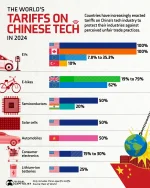
Since taking office, Trump is likely to impose 60% tariffs on Chinese exports, combined with retaliatory measures, and official trade volume will fall from $650 billion to $100 billion. China’s largest trading partner will be Japan, with Korea and Russia in second and third place. In fact, China will continue to supply another $200 billion through third countries. The EU will start to adopt a less radical policy towards Chinese goods, and part of US exports will be redirected there. The total losses from Trump’s tariffs for China will be around $300 billion in surplus – 30 to 50%.
Second measure: increasing the share of the yuan in foreign trade - a measure that contradicts the devaluation, but which will be stimulated by low prices for Chinese goods (these, in turn, by state subsidies). Now the volume of transactions in yuan in foreign trade is about 15% - it can gradually increase to 30 and even 50%. This is a critical mass for each state - for the Middle East and Africa, for example, where the choice between the yuan and the dollar will become an advantage. And it will spread to the political plane. A demarche in yuan is possible in Europe - for example, in Italy, Germany, France. Trump does not mind, even if they switch to the rupee.
In general, the devaluation is a critical break in the tacit agreements between the US and China. In general, Trump's second term - its main result is the complete withdrawal of China and the United States from the agreements of the 1990s - both in the economy and in politics.
Pros for China: Trump will not be heard in the EU, and Trump will not make new environmental demands on Beijing. Perhaps even new agreements on the fuel and energy complex (oil, LNG, nuclear) will emerge as payment for Trump's restraint: China will be able to increase purchases of American hydrocarbons.
The war for the creation of the AI industry will continue. China will probably impose export controls on the supply of almost all rare earth metals and lithium products to the United States, the technological transition will become very expensive for the United States, and it will “fight” with China for the mineral resource base in third countries.
Joint ventures between China and the United States will go to third countries, as during Trump's first term: Taiwan, South Korea, Vietnam, Indonesia, Thailand, Mexico.
If the war in Taiwan does happen, Trump will not be against expanding the overland supply of Chinese goods to Europe through Russia. The likelihood of a crisis in Central Asia is increasing.
In terms of taxation:
A tax reform as favorable or more favorable than the one he approved in 2017 would be expected, the TCJA will expire in 2025, so, with the Republican Congress in control, they can approve an even better reform than the one he carried out in 2017.
Furthermore, a profound deregulation in the economy is expected, removing obstacles to innovation, which is also an important additive to an economic boom.
The course of trade relations with China will probably follow the trend of the last 8 years, which has been a deterioration of relations: each new president has been many times worse for China than the previous one.
Washington’s strategies: the technological and scientific blockade of microchips and the sanctions policy will continue. If Rubio becomes Secretary of State, China will face a barrage of sanctions on the entire spectrum of political issues.
China faces the prospect of a reduction of perhaps 30-50% in its external trade surplus due to tariffs. In response: the depreciation of the yuan is directly proportional to the reduction in trade turnover and the positive balance between China and the United States and Europe. In other words, from 2025 to 2029, the yuan could depreciate by 30-50%. This is a negative signal for all yuan reserves.
Since taking office, Trump is likely to impose 60% tariffs on Chinese exports, combined with retaliatory measures, and official trade volume will fall from $650 billion to $100 billion. China’s largest trading partner will be Japan, with Korea and Russia in second and third place. In fact, China will continue to supply another $200 billion through third countries. The EU will start to adopt a less radical policy towards Chinese goods, and part of US exports will be redirected there. The total losses from Trump’s tariffs for China will be around $300 billion in surplus – 30 to 50%.
Second measure: increasing the share of the yuan in foreign trade - a measure that contradicts the devaluation, but which will be stimulated by low prices for Chinese goods (these, in turn, by state subsidies). Now the volume of transactions in yuan in foreign trade is about 15% - it can gradually increase to 30 and even 50%. This is a critical mass for each state - for the Middle East and Africa, for example, where the choice between the yuan and the dollar will become an advantage. And it will spread to the political plane. A demarche in yuan is possible in Europe - for example, in Italy, Germany, France. Trump does not mind, even if they switch to the rupee.
In general, the devaluation is a critical break in the tacit agreements between the US and China. In general, Trump's second term - its main result is the complete withdrawal of China and the United States from the agreements of the 1990s - both in the economy and in politics.
Pros for China: Trump will not be heard in the EU, and Trump will not make new environmental demands on Beijing. Perhaps even new agreements on the fuel and energy complex (oil, LNG, nuclear) will emerge as payment for Trump's restraint: China will be able to increase purchases of American hydrocarbons.
The war for the creation of the AI industry will continue. China will probably impose export controls on the supply of almost all rare earth metals and lithium products to the United States, the technological transition will become very expensive for the United States, and it will “fight” with China for the mineral resource base in third countries.
Joint ventures between China and the United States will go to third countries, as during Trump's first term: Taiwan, South Korea, Vietnam, Indonesia, Thailand, Mexico.
If the war in Taiwan does happen, Trump will not be against expanding the overland supply of Chinese goods to Europe through Russia. The likelihood of a crisis in Central Asia is increasing.
In terms of taxation:
A tax reform as favorable or more favorable than the one he approved in 2017 would be expected, the TCJA will expire in 2025, so, with the Republican Congress in control, they can approve an even better reform than the one he carried out in 2017.
Furthermore, a profound deregulation in the economy is expected, removing obstacles to innovation, which is also an important additive to an economic boom.