Water Management and Flood - Updates

Govt plans to build Chenab dam amid IWT row​


IMF opposes 1% water storage cess on goods

Shahbaz Rana
July 18, 2025
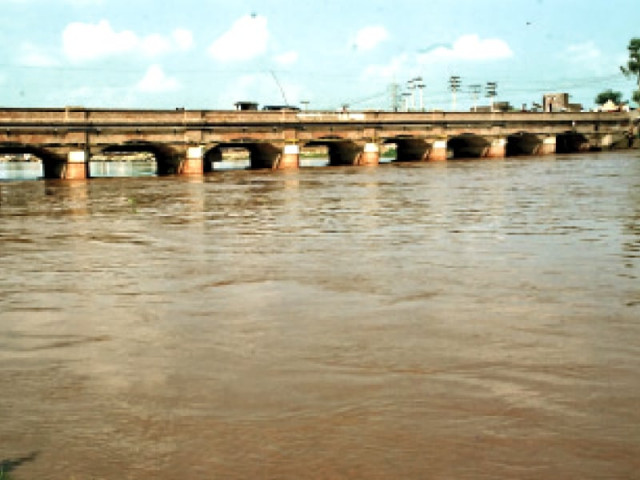
tribune


ISLAMABAD: The International Monetary Fund has rejected Pakistan's proposal to impose 1% water storage cess on goods to build mega dams and instead suggested to increase the 18% standard sales tax rate for funding any enlarged size of the federal development programme.

The development came amid an anticipated revision in the cost of the Diamer-Basha dam and needing funds to build a new Chenab dam over the Chenab river, which will require at least additional Rs800 billion, according to the government sources.

Official sources said that the global lender did not endorse the proposal to impose water storage cess, which the government wanted to introduce on every taxable product produced in the country, except electrical energy and medicines. The cess has been proposed to fund two mega water storage dams and build a new one as a solution to deal with Indian water aggression.

The development pushes the government in a tight spot, which was willing to increase the tax burden but only in a fashion that would ensure that 100% of the collection stays in the federal kitty instead of being shared with provinces.

In case of cess, the government will have the full right on the collection while sales tax would become part of the federal divisible pool.

The government had sought the IMF's permission to impose the new tax after majority of the provincial governments showed reluctance to finance the early completion of the Diamer-Bhasha dam and the Mohmand Dam. The government had proposed that the provinces should pick half of the Rs716 billion cost of the Benazir Income Support Programme and the Rs358 billion fiscal space will be used to build dams at a faster pace to deal with Indian aggression. The provinces refused.

The spokesman of Ministry of Finance Qumar Abbasi did not comment on the development.

The sources said that the IMF has many objections to the water storage cess proposal, including the legal and governance challenges. They added the Fund was of the view that any special levy reduces the flexibility in the budget and the sales tax can give such flexibility.

Moreover, the IMF was not comfortable with the idea of giving the control of the new cess to the Water and Power Development Authority (Wapda), they added.

The IMF had earlier asked the government to fund these dams from the Rs1 trillion worth Public Sector Development Programme (PSDP). But the government was not inclined to get more money from the PSDP, which this year was focusing more on the needs of the coalition partners than having mega strategic projects as national priority.

The sources said that the IMF informed Pakistan that if it wanted to get more money for development spending then it can consider increasing the rate of sales tax.

The standard sales tax rate is 18% while the government also charges 3% extra sales tax rate in case a good is sold to an unregistered person.
 
Seven years ago, the government had approved the Diamer-Bhasha dam at a cost Rs479 billion and Mohmand at Rs310 billion. The sources said that the revised estimates suggest that the Diamer Basha dam cost may skyrocket to over Rs1.1 trillion, an addition of around Rs620 billion. The exact cost will be determined when the Planning Ministry receives the revised documents.

Even against the original Rs479 billion cost, the government needed Rs365 billion more to complete the work. For this fiscal year, only Rs25 billion has been allocated for the Diamer Basha dam, which is even less than last fiscal year.

Likewise, the Mohmand dam was approved at a cost of Rs310 billion seven years ago and it still requires a minimum of Rs173 billion more at the old price. Only Rs35.7 billion has been allocated for the new fiscal year.

Likewise, the government is planning to build a dam on the Chenab river with a cost of about Rs220 billion. This requires an additional Rs800 billion for Chenab dam and Diamer-Basha dam. After adding up the remaining financing requirements, the government needs a total Rs1.35 trillion for just these three dams.

India has threatened to cut water supplies after it held the Indus Waters Treaty (IWT) in abeyance in violation of the treaty provisions and in the breach of the international law. Islamabad has plainly told India that any such act would be considered as an act of war.

For this fiscal year, the government has reduced the water sector development budget by 28% to Rs133 billion. Now it wants to offset this by introducing a new tax.

One of the options is that instead of levying a new 1% cess or increasing GST rate, the government should amend the GIDC law and divert the already collected much over Rs400 billion money towards building dams.

The Ministry of Water Resources has informed the government that it would take 15 years to complete the Mohmand dam and over 20 years to finish work on the Diamer-Bhasha dam at the current pace of the budget allocations.
 
To view this content we will need your consent to set third party cookies.
For more detailed information, see our cookies page.
 

Rawal dam spillways closed after water level drops​


Dam supplies water to Islamabad, Rawalpindi, plays a key role in managing seasonal rains

APP
July 20, 2025

a general view of rawal dam photo file


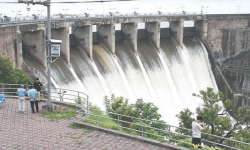
A general view of Rawal Dam.

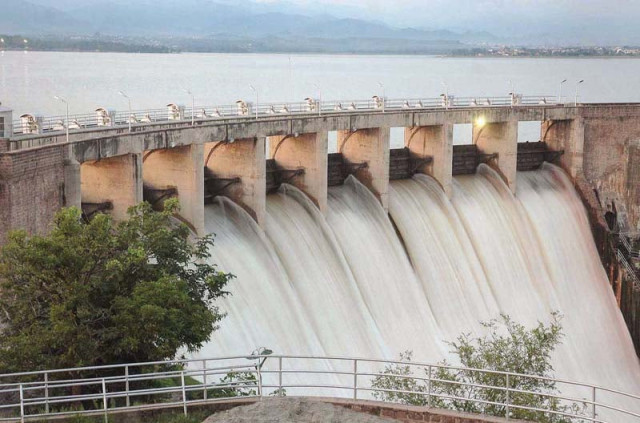
The district administration on Sunday opened the spillways of Rawal Dam after continuous rainfall raised the reservoir’s water level to 1,748 feet.

According to the spokesman of the Islamabad Capital Territory (ICT) administration, the level was only four feet below the dam’s maximum storage capacity of 1,752 feet, prompting the release of water to mitigate the risk of overflow.

Officials confirmed that after discharging water for approximately six and a half hours, the dam’s water level dropped to 1,746 feet. The spillways were subsequently closed as the situation stabilised.

The decision to open the spillways was taken in coordination with various departments, including the district administration, Rescue 1122, and the Water and Sanitation Agency (WASA).

These teams were deployed at critical locations, including bridges, streams, and vulnerable downstream points, to manage the released water flow and ensure public safety.

The Assistant Commissioner of Nilore supervised the entire water release operation, overseeing safety measures on the ground.

Magistrates, Rescue 1122 teams, ambulances, and union council staff remained stationed on different bridges and along the banks of streams throughout the discharge period.

The administration maintained contact with the Pakistan Meteorological Department (PMD) to monitor rainfall patterns and assess further risks.

According to officials, the dam’s spillways are only opened when the reservoir nears its storage limit, to manage water pressure and prevent potential damage to the dam structure.

Authorities assured that despite the heavy rains, no major flooding or emergency was reported downstream due to timely coordination and monitoring.

However, residents living near water channels were advised to remain alert for updates from the district administration in the event of further rainfall.

Rawal Dam supplies water to Islamabad and Rawalpindi and plays a key role in managing seasonal rains.
 
All the major and minor dams are full.
The main rivers are full.
The main cities are full of water.
no storage space available
 

Rawal Dam spillways opened for first time this season


Aamir Yasin
July 21, 2025

1753110141377.png

Water gushes out of Rawal Dam after its spillways were opened on Sunday. The spillways are opened when water level reaches 1,748 feet. — Photo by Mohammad Asim


RAWALPINDI: The spillways of Rawal Dam were opened on Sunday morning for the first time in the current monsoon season.

Authorities have decided to reopen the dam’s spillways early on Monday for five hours and advised residents to take necessary safety measures.

However, the Rawalpindi administration said the spillways should be opened only in case of clear weather in order to prevent excess water from entering Soan River and Leh Nullah.

The recent rains filled the water reservoirs of twin cities of Rawalpindi and Islamabad. The spillways of Rawal Dam were opened on Sunday morning after the water level touched 1748 feet.

An official of the Punjab Irrigation Department said sirens were sounded before the spillways were opened to alert people residing along the Korang Nullah.

Further release of waterfrom reservoir is expected today, subject to clear weather conditions, says DC Rawalpindi

Deputy Commissioner Dr Hassan Waqar Cheema told Dawn that the dam had filled for the first time this season and that it would ensure an adequate water supply to Rawalpindi until the winter.

“The spillways will be opened again on Monday to reduce one foot of water in the lake, but in case of rainfall in the morning the spillways will not be opened. We have asked the Small Dam Organisation to open the spillways when the weather is clear. During rain, the water level in Leh Nullah and Soan River increases.” He said the district administration was informed that the authorities will reduce one more foot of water in the dam.

On the other hand, the meteorological department predicted partly cloudy/humid weather with rain/thundershower expected in Islamabad and surrounding areas. Heavy rain is likely during night hours.

A Met official said moist currents from Arabian Sea were penetrating in southern parts of the country and likely to approach upper parts on Sunday night. “A low pressure area is also present over Sindh and adjoining areas of Balochistan. A trough of westerly wave is likely to approach upper parts from tomorrow,” he said.

He said rain-wind/thundershower was expected in Kashmir, upper Khyber Pakhtunkhwa, Islamabad, northeast Punjab, Potohar region, Gilgit-Baltistan, northeast/south Balochistan and south Sindh. Isolated heavy rain is expected in upper Khyber Pakhtunkhwa, Potohar region, Kashmir and adjoining hilly areas. Hot and humid weather is likely elsewhere in the country.
 

New Canal Completed, Karachi Water Supply.​


To view this content we will need your consent to set third party cookies.
For more detailed information, see our cookies page.
 
To view this content we will need your consent to set third party cookies.
For more detailed information, see our cookies page.
 

GDA activates 1-million-gallon tank, begins regular water supply in Gwadar​

By Tahir Ali | Gwadar Pro
Jul 27, 2025

GDA activates 1-million-gallon tank, begins regular water supply in Gwadar


A view of the pumping station at the water storage Tank in Central Park, Gwadar.

GWADAR, Jul 28 (Gwadar Pro) - The Gwadar Development Authority on Sunday activated a 1-million-gallon underground water storage tank at Central Park to provide water supply to several residential areas in the city, according to an official statement.

The project was inaugurated with special directives of GDA Director General Moin ur Rehman Khan, which includes a fully functional pumping station and electrical system to ensure uninterrupted distribution.

With the tank now operational, regular water supply has begun in Faqir Colony South, GDA Colony, Kalanchi Para, Naya Abad, and Shambay Ismail Ward. Testing and transmission for new pipelines in Faqir Colony North and Dhoor Ghati are expected to begin soon, according to GDA officials.

“This marks a significant step toward solving the persistent issue of water shortage in Gwadar,” a GDA statement reads and added, “GDA is committed to ensuring reliable and sustained water access to our citizens.”

Residents have been urged to submit applications for household water connections promptly to ensure timely access as distribution expands.

Initiated in 2022, the storage tank at Central Park is one of the three underground water tanks.
 

Water conservation with a touch of realism


Jawaid Bokhari
August 4, 2025

A number of issues are attributed to delays in construction of much needed water reservoirs that could have prevented colossal losses from floods. These include the problematic acquisition of the necessary land or the lack of capacity of executing agencies. However the main hurdle in the progress is stated to be a lack of funds.

As “the federal government bears around Rs716 billion in expenses on behalf of the provinces” Planning Minister Mr Ahsan Iqbal says, “this significantly shrinks our fiscal space. Right now, we are facing a major challenge. Projects like the Diamer-Bhasha Dam and Mohmand Dam, which are vital to our water security, cannot be completed swiftly due to insufficient development”.

Mr Iqbal has called upon the provincial governments to hammer out a formula that eases the federal government’s financial burden and enables it to complete these important projects. Unfortunately, Pakistan has also not been able to secure the required multilateral or bilateral funds for construction of big dams.

According to initial proposals the Diamer Bhasha Dam and Mohmad Dam are included in the projects being finalised to lure United Arab Emirates’ investment. In June, Prime Minister Shehbaz Sharif chaired a high-level meeting where he directed authorities to remove all obstacles hindering the timely completion of the Diamer-Bhasha Dam, calling it vital for Pakistan’s energy and agricultural security.

Small dams can be significantly more effective for managing heavy rainfall

Construction engineers say the dam, with a 6.4 million acre feet (MAF) capacity, will not be operational until 2029 or 2030, by which time water demand could increase and the dam would only be able to reduce the shortage from a projected 35 per cent to around 25pc.

They point out that Pakistan lacks the capacity to store the hundreds of thousands of cusecs of water that goes wasted during the monsoon season. No major reservoir was built in the past 40 years nor have our water usage methods improved. Over 80pc of the country’s arable land is irrigated by Indus waters. Moreover, topography and seasonal rainfall often combine to produce deadly torrents. For communities living in these areas, small dams are the bulwark in their fight against climate change and flash floods, and their best bet at water conservation to fulfil local irrigation needs.

There is also a significant though troubling view: “The government is working on water reservoirs, but not with the urgency the task demands”. In the current financial situation, it is also argued by certain experts that the focus should shift on small dams. Hydrology experts say they are more cost effective and can be constructed in a much shorter time.
 
Large dams take years to build and require financing in billions of rupees, says the Khyber Pakhtunkhwa (KP) Irrigation Department Engineer Abdul Waheed Khan. “However”, Mr Khan adds, “a network of small dams, if strategically placed, can deliver significant flood protection at a fraction of the cost. Pakistan is already blessed with several natural sites for the construction of small dams.”

‘The government is working on water reservoirs, but not with the urgency the task demands’

These small dams could easily be constructed in a short span of two to three years while big dams mostly require 10 to 15 years, says Civil Engineer Fahim Munawar, an expert in dam construction in KP. Small dams are becoming popular in developing countries due to their affordability. Pakistan may require additional 76 MAF water by 2050 which, he says, is only possible by constructing small dams.

Furthermore, experts emphasise that of the current available surface water, the amount allocated to agriculture must be reduced, noting that of 135 MAF of surface water, 102 MAF, or nearly 94pc goes to agriculture alone. China, for example, they add, has brought it down from over 90pc to 60pc. In this case, efficient irrigation methods that could improve the percentage, largely under provincial jurisdiction, have yet to be implemented.

While the World Bank has funded efforts such as concrete canal delivery systems, they point out that actual progress on the ground remains limited. Command area development activities are underway but remain unsatisfactory.

Even small dams cannot be built for want of funds in Sindh where only a few retention weirs located in Kohistan and Nagarparkar are constructed by the Sindh Irrigation Department under Small Dams Organisation (SDO), say officials of the department. SDO, they add, has carried out a number of feasibility studies of hydraulic structures and selected more than 200 potential sites for construction of small, medium and delay-action dams, and retention weirs in the Kohistan region and Nagarparkar, as well as the Ubhan Shah Hills in district Khairpur.

Beyond that, the SDO requires huge funds to implement the proposed schemes on a massive scale and complete it in the next five years to reduce poverty in arid areas. Officials expect Nai Gaj dam, another large dam project, to be completed by the Water and Power Development Authority within three years.

Published in Dawn, The Business and Finance Weekly, August 4th, 2025
 
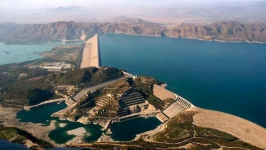
Tarbela Dam

1754932083888.png
 
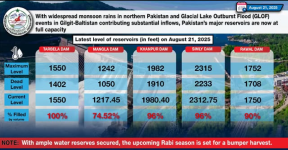
According to official figures issued on August 12, the Tarbela reservoir rose by 0.5 feet to 1,546.50 feet, just 3.5 feet below its maximum capacity of 1,550 feet.

Mangla increased by 0.3 feet to 1,206.50 feet, compared to its full capacity of 1,242 feet. Khanpur also rose 0.5 feet to 1,975.20 feet, while Simly remained stable at 2,284.85 feet.

Rawal Dam was the only reservoir to register a decline, falling 1.8 feet to 1,749.40 feet below its full capacity of 1,752 feet.
 

Users who are viewing this thread

Pakistan Defence Latest

Country Watch Latest

Back
Top