European Defence News and Discussions

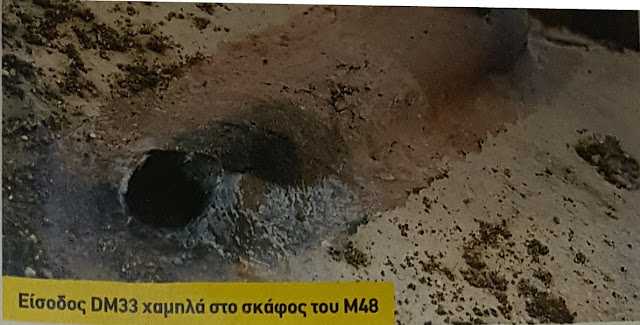
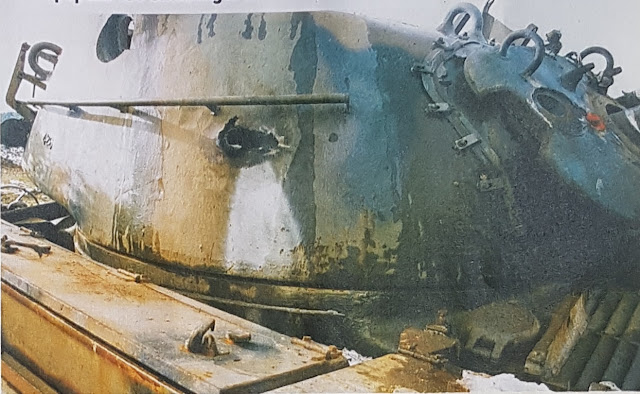
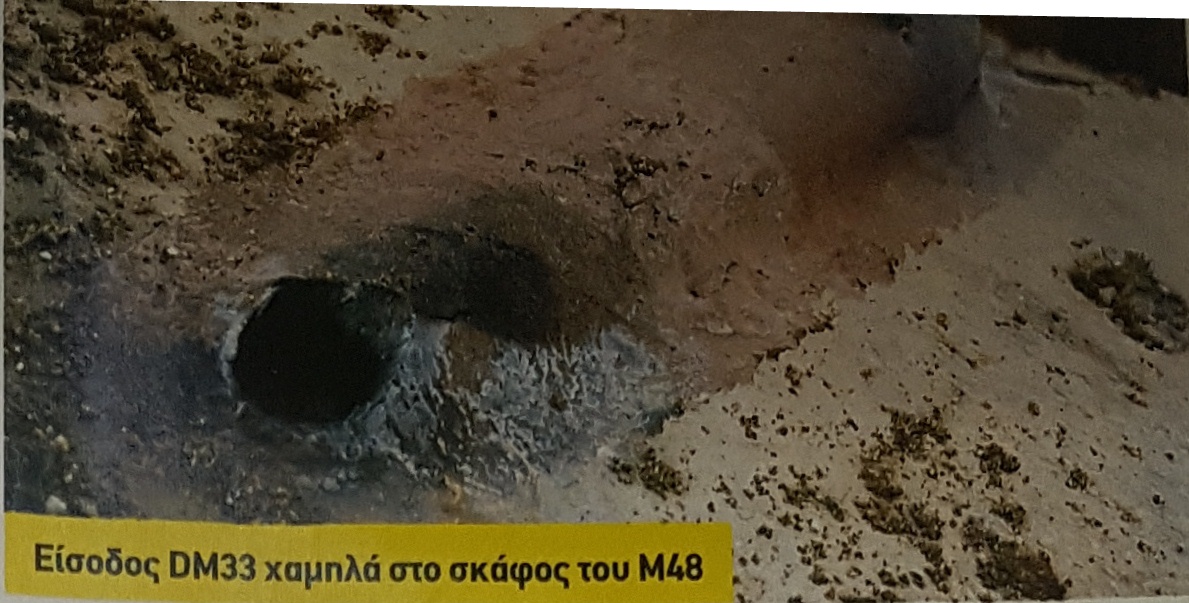
The German sub-division DM-33, which is supported by the M-48 block

20170514_190718%2B-%2BCopy%2B%25283%2529


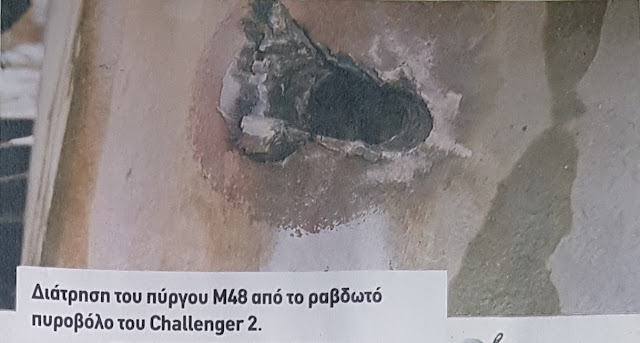
On the lower two photographs of the Challenger-2E knotted cannon on the M-48's tower

20170514_190718%2B-%2BCopy%2B%25284%2529

20170514_190718%2B-%2BCopy%2B%25285%2529


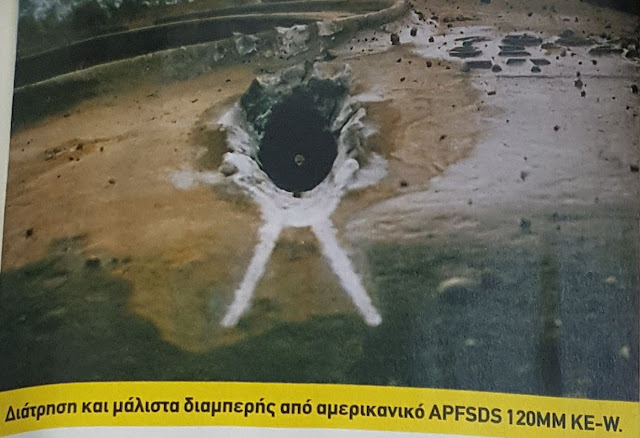
Again the M-48's tower and this time through the hamstring - American 120 mm sub-KW-KE-W

20170514_190718%2B-%2BCopy%2B%25282%2529


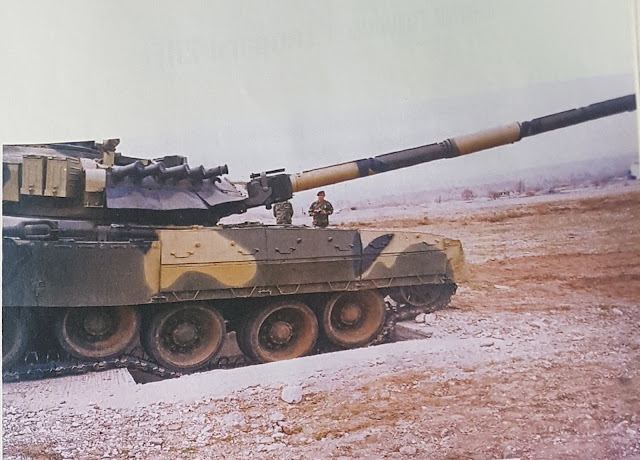
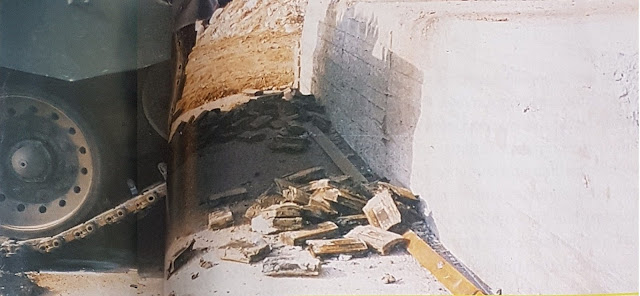
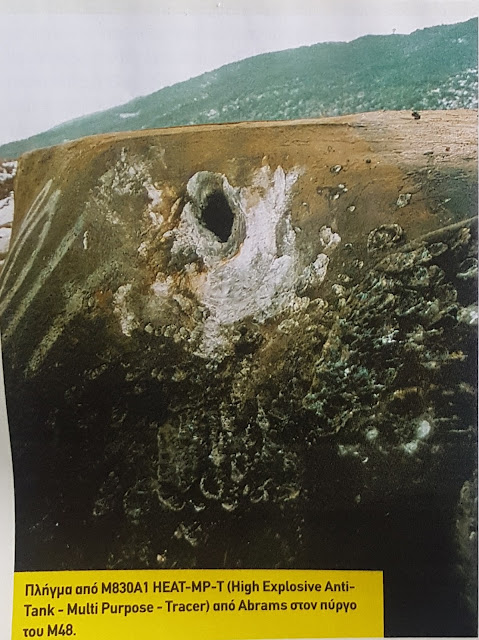
M-48's tower. M1A12 Type M830A1 HEAT-MP-T Cumulative Sheet

20170514_190651%2B-%2BCopy.jpg

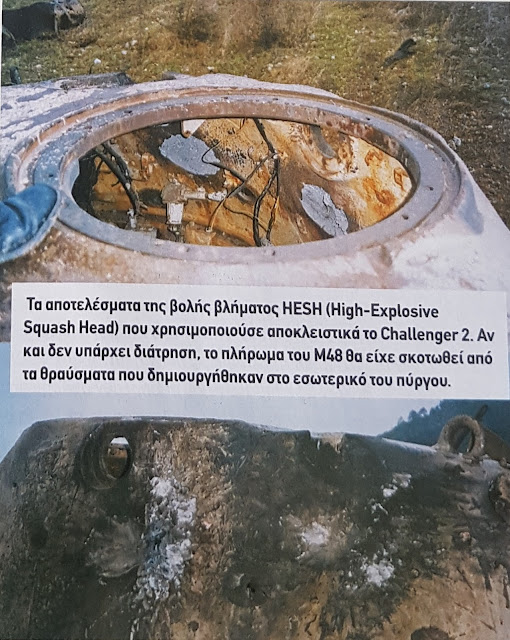
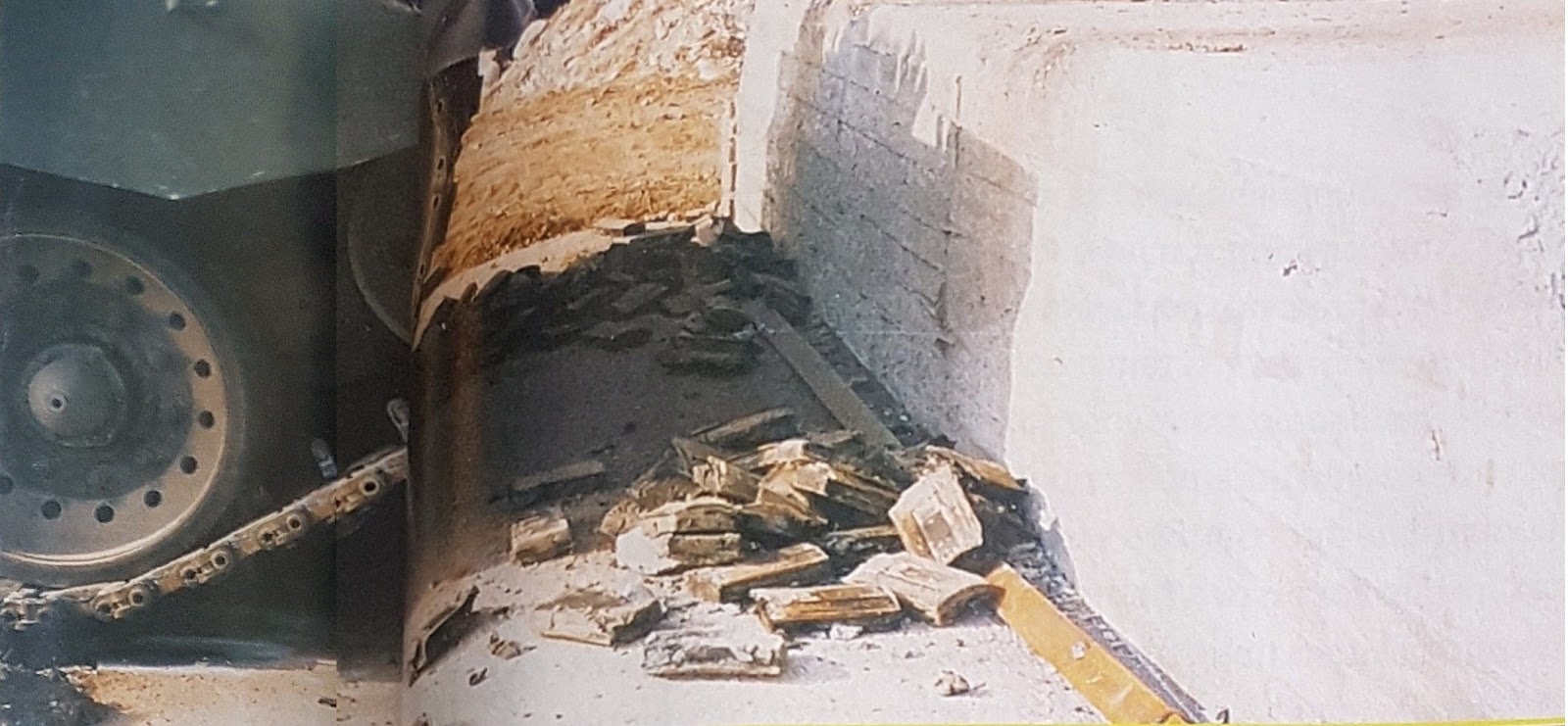
Run from Challenger-2E, the result of the HESH-type shell on the M-48 tower. But it did not break up, but inside the stainless steel "alloy" tanks, the crew had very little chances of survival (although this is the principle of HESH)

20170514_190718%2B-%2BCopy.jpg
 
Some more photos and interesting info from the site:

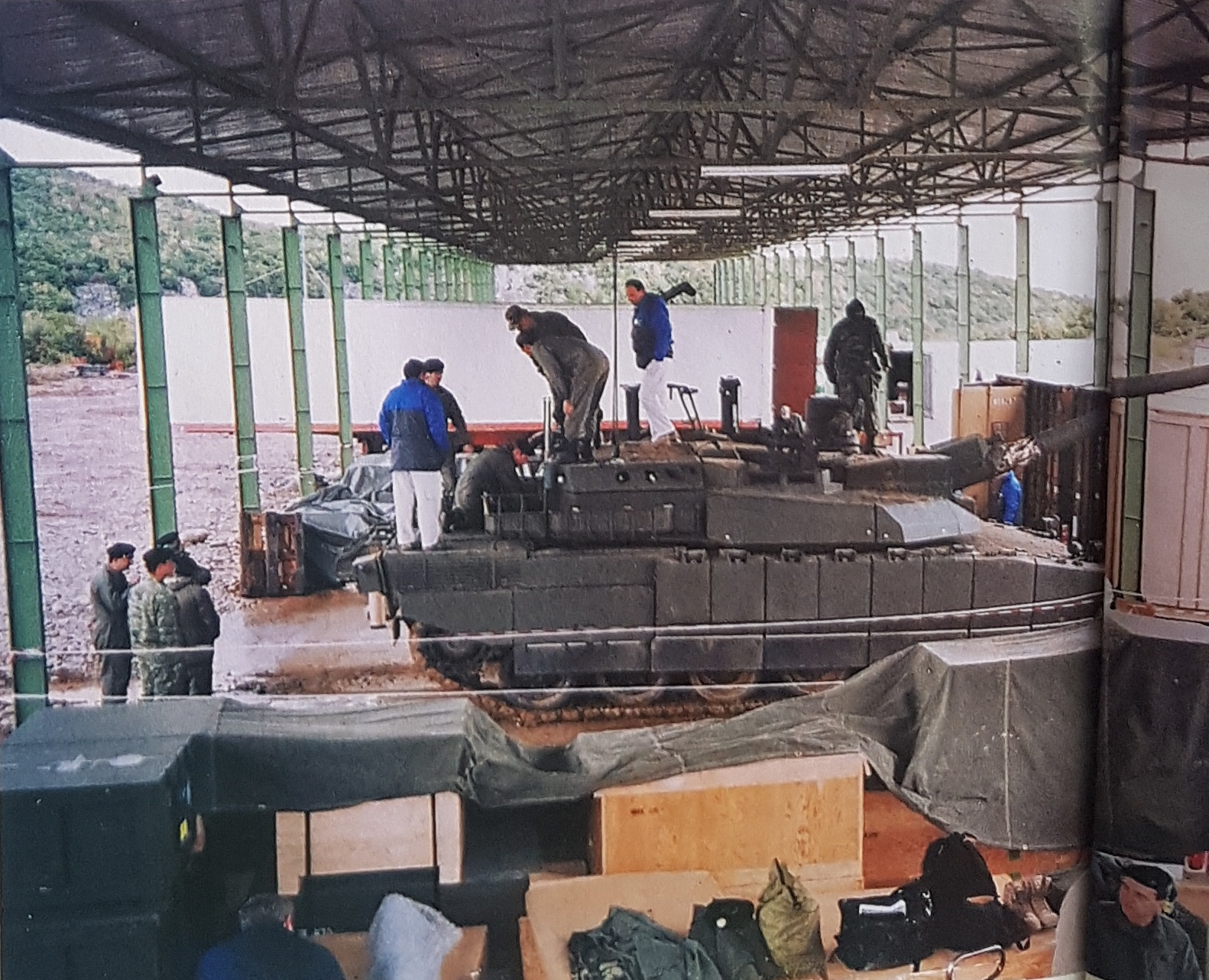
The GIAT team is preparing to enter the tanks Leclerc
20170514_185634.jpg

M1A2 M-865 Practical Shot Pallet for M1A2 and the moment of booting

20170514_185712.jpg

20170514_185712%2B-%2BCopy.jpg


Leclerc's subalbital shells and the moment of shelling load in automatic charger

20170514_185646%2B-%2BCopy.jpg

Screenshot 2026-03-18 at 16-37-32 Britons are in trouble - Page 30 - Mechanized Warfare - Stur...png
 
Something else that's interesting is the Italian Ariette and Israeli Merkava Mk III were supposed to be in the program for Greece's new tank,but both Italians and Israelis soon bailed before the trials.
 
I decided to make this thread to share the findings of the one and only big contest that took place in the Hellenic Armed Forces post-Cold War history,the trials for the new main battle tank that was to be procured in the early 2000s. It's legendary for two reasons:

1.Because there really hasn't been anything similar in the Hellenic Armed Forces since,at least as far as I know,meaning exhausting head-to-head trials
2.Because it was a contest between some of the most modern NATO and Russian tanks at the time

And since I know Pakistanis had a similar contest in their history,I think you guys might find it interesting. Pakistani nor not,I'll bet any tank fan will find it interesting.

I found this info randomly on google,from forum which got info from an old greek blog. The information is obviously auto-translated from greek to english,so some phrases and expressions might not make sense to you. I'll try to fix some of the most incomprehensible ones or put a note


What happened in the fall of 1998 at the Lytohoro firing range

- The six best tanks in the world first compete with each other. In addition, the Eastern and Western schools of tank construction have been challenged for the first time.

The purpose of the tests was to examine the technical data in real-time conditions. Which usually does not match the manufacturer's advertisements often. It should measure the data such as acceleration, maximum speed, stroke supplies, stabilization quality and more.

Storage reserve - accessed to a large distance, from Lytohoro to Polikastro on the road and covered a mixed passage (asvalust and ground). All tanks were equipped with Greek fuel simultaneously, put in the column and paved the way. The aim was to move the tanks up to the fuel. As a result of which the tanks came up, their assessment took place. After the fuel generation, the M1A2 has been on the first track, it is clear that its gas turbine burns a lot of fuel compared to classical diesel. The distance that the tank has passed or is relatively small compared to the others, but the manufacturer has more than ever been declared. The best indicator was the French Leclerc, which "kept going". This is the smallest weight (10 tons light compared to other western tanks), and by the time of the mid-range 1500 hp diesel engine MTU MB-883, the engine is low-voltage compared to the MTU MB-873 installed on the Leo-2. The French tank's similar engine was also on the British Challenger-2E, but its heavier weight reduction in stock.


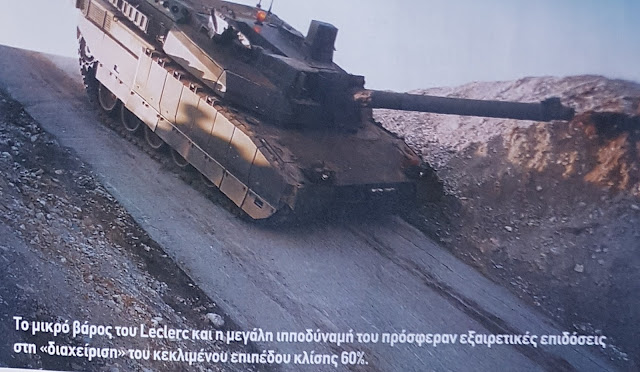
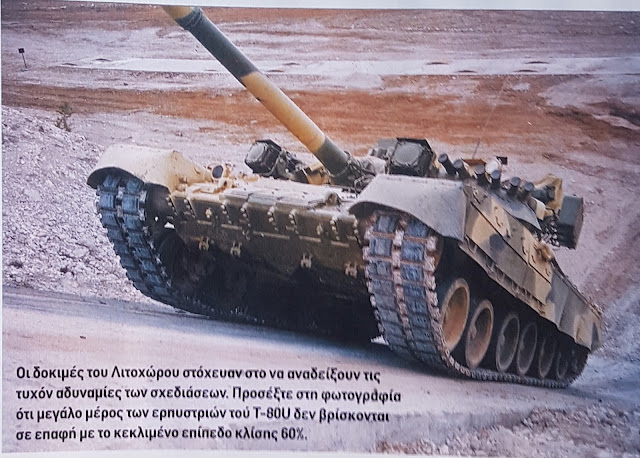
60% surprise was aterrible test for all participants(slope test). The tanks should be safe on the elevator and come down, and in addition to stop in the middle of the road, engage the engine, then lie down and drive back or forward without hitting. The resistance was ideally passed by Leclerc, with M1A2 and Leo-2A5S showing good results, while the remaining three participants had problems with overcoming resistance.


Tank Leclerc and T-80U 60% surfacing point. Observe the Russian tanks Zakrdeni most part of the surface does not touch the concrete
20170514_185259%2B-%2BCopy.jpg

20170514_185259.jpg


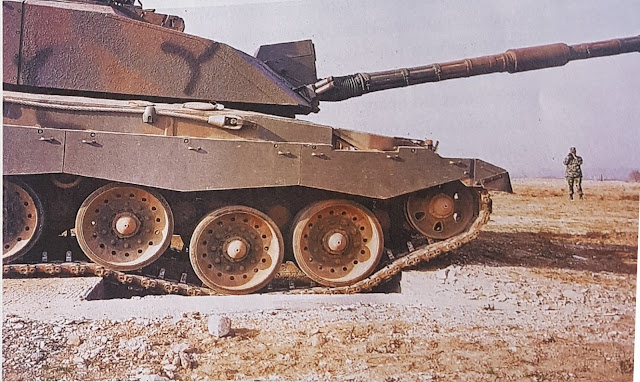
Challenger-2E and T-80U at the moment of crossing the trench
20170514_185405.jpg

20170514_185405%2B-%2BCopy%2B%25282%2529


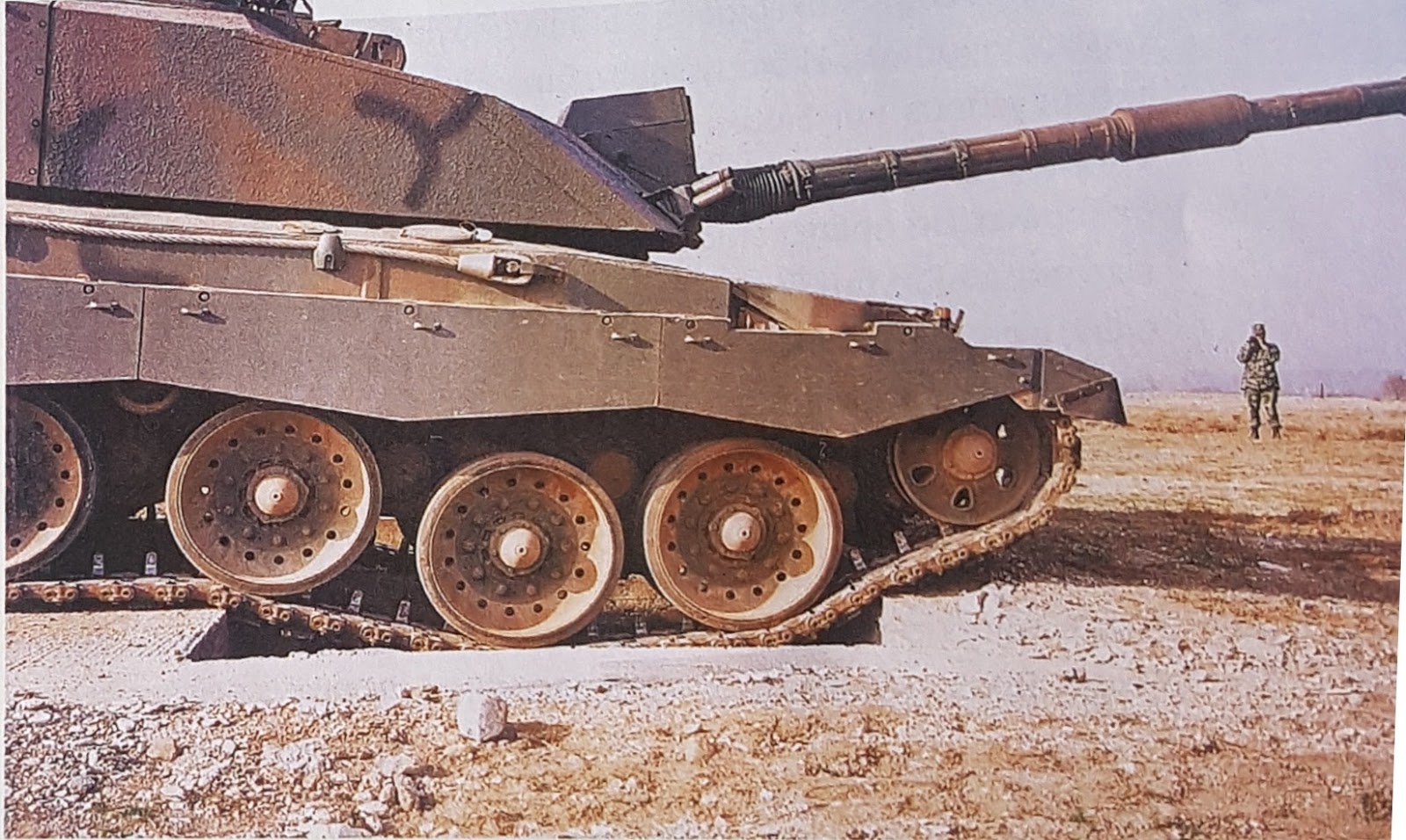
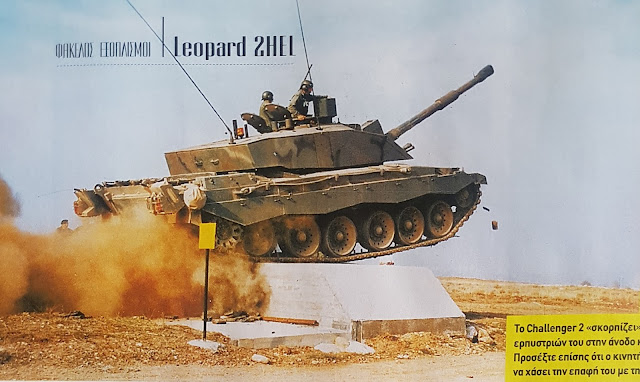
Challenger-2E has lost almost all rubber pedals at the moment of the vertical resistance
20170514_185326%2B-%2BCopy.jpg

20170514_185326.jpg


The absolute test was a day and night shoot. The uneven ground of the lycourt polygon was a great problem for the stabilizer. The tanks have to move faster than the speed allowed at motion relief. In this test, the eastern tanks showed a marked lag. The best Western one was the Leo-2A5S, which showed the ideal result in the shooting, which is the perfect work combination of stabilizer and fire management system. Leopard was very close to M1A2, third and fourth places respectively, according to Leclerc and Challenger-2E.


Inspection of the carriage was the following: - The representatives warned that the tanks were in perfect condition and prepared for the test. On the horizontal aspiration path, the tanks were to be stopped only after braking with the help of brake. These extreme braking machines should be replicated ten times. The Ukrainian and Russian tanks did not complete the test, the first, second and third places from the western tanks were respectively Leclerc, Leo-2A5S and M1A2.


Final assessment of tanks

The tanks participating in the competition were as follows:

Compared with others, Leopard-2A5S was the best-protected and was the only that the manufacturer thought of and was serious about protecting the upper side of the tower. Excellent results in firing tests showed that it was quite reliable and convenient and ergonomic for crew.
M1A2 Abrams was the second best armor. The Americans offered the Greeks the tank without the "Depleted Uranium" armor (DU reservation is still prohibited). The tank was superb enough and was especially ergonomic for the crew. The tank was reliable and there was only one major disadvantage on the tests - it was a gas turbine engine that flattened the fuel(consumed too much fuel).
Leclerc, which was a few years earlier by the French, differed from the variant offered for the United Arab Emirates, dual impression: the ideal building and the power machine (ie German firms, RENK and MTU, the last generation diesel engine and speed gear, Called Europack), an excellent hydro-pneumatic suspension and weight of participants The best ratio of A-power. All of this made it particularly fast and flexible, and with all of this, the fuel consumption was low. In terms of armor, compared to the previous two western tanks, Leo-2A5S and M1A2 have always been distinguished in this regard, although its protection was probably too high. The tower, with a fully automated charger, offered a lot of innovation to the customers, but in practice the automatic expectation did not justify the expectation and was constantly crippled and spoiled. On the other hand, the tank was not distinguished by the creativity of the crew (mainly due to the lack of existing space), for the same reason was the use of armaments, for example, pulverized(badly-maintained) machine guns. On the other hand precision was good, but not the best.
Challenger-2E was one of the disadvantages. Despite the fact that the version presented in the competition was equipped with a similar type of Europack-type machine with the French tanks, it was often spoiled when switching to high speeds, which was the fault of the passing of the motorway on the motorway. The 1200-horsepower engine at Challenger-2 was replaced with a 1500 horsepower engine and did not adapt to the kinetic scheme and adjusted to the engine that caused frequent outflow of the carriageway. It was also a negative surprise with its annexed armor. The car was distinguished by a relatively weak armor compared to Leo-2A5S and M1A2, even with 10 tons of light Leclerc, almost never behind British tank protection.
The tank was not very precise, it was the only one that was equipped with a 120 millimeter rifled and used three shots (shells, sparkle and insulating capsules), while Ukrainians and Russians used both the shells and the rifles, and the British Doing this with automatic charging). However, the car had a positive side: it served in the army with long military experience and was the only one who had a toilet in the tower and traditional British tea makers.
The Russian T-80U was the classical representative of the Soviet tank construction. Its main problem was the semiconductor speed of the prototype at the moment, which was often out of order. The machine showed the lowest results in accuracy, as well as the crew's ergonomics. In addition, the two systems, which the manufacturer claims, compared with Western counterparts, the electric-optical flaw system and a 6-kilometer-long laser-guided tank missile in practice failed to demonstrate and did not show any possible results.
The Ukrainian T-84 was characterized by the Russian tank as a whole, but with another important minus, it was a two-ton diesel engine that was literally burned with oil and mechanical speed booths, and unlike the steering wheel of the Russian tank. That's why the Greeks were saying jokingly "I need three hands for its control" (to turn the driver-mechanic into a curve, let alone the third hand). It is also worth mentioning that the car crew suffered the Greek crew was replaced by Ukrainian crew due to fatigue.
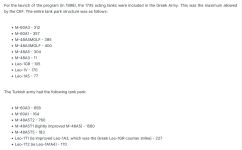
In January 1999, the General Staff of the Greek Army presented the results of the competition, according to points according to the following scores:

  1. Leopard-2A5S - 78.3
  2. M1A2 Abrams - 72.95
  3. Leclerc - 71,92
  4. Challenger-2E - 69,89
  5. Т-80У - 59,2
  6. Т-84 - 56,3
No source
 
No source
Look at the source on the bottom,I linked it. The photo scans are from a greek magazine article about the trials. Unfortunately,now you can only find this info on forums and old blogs,as the whole contest was back in 1998.
 
Poland considers turning M28 cargo plane into gunship to replace F-16 jets in drone interception

Poland is evaluating the conversion of its domestically produced PZL M28 Skytruck transport aircraft into a dedicated gunship interceptor to counter low-speed unmanned aerial threats, as proposed by PZL Mielec.


The initiative aims to equip existing M28 aircraft operated by the Polish Armed Forces with machine guns, sensors, and guided rockets to create a layered counter-drone defense. This approach enhances operational endurance and interception capacity while preserving F-16 and F-35 fleets for higher-priority missions, strengthening overall air defense readiness and resource allocation.

Read also: France might arm the A400M Atlas transport aircraft with missiles to fully exploit its capacities


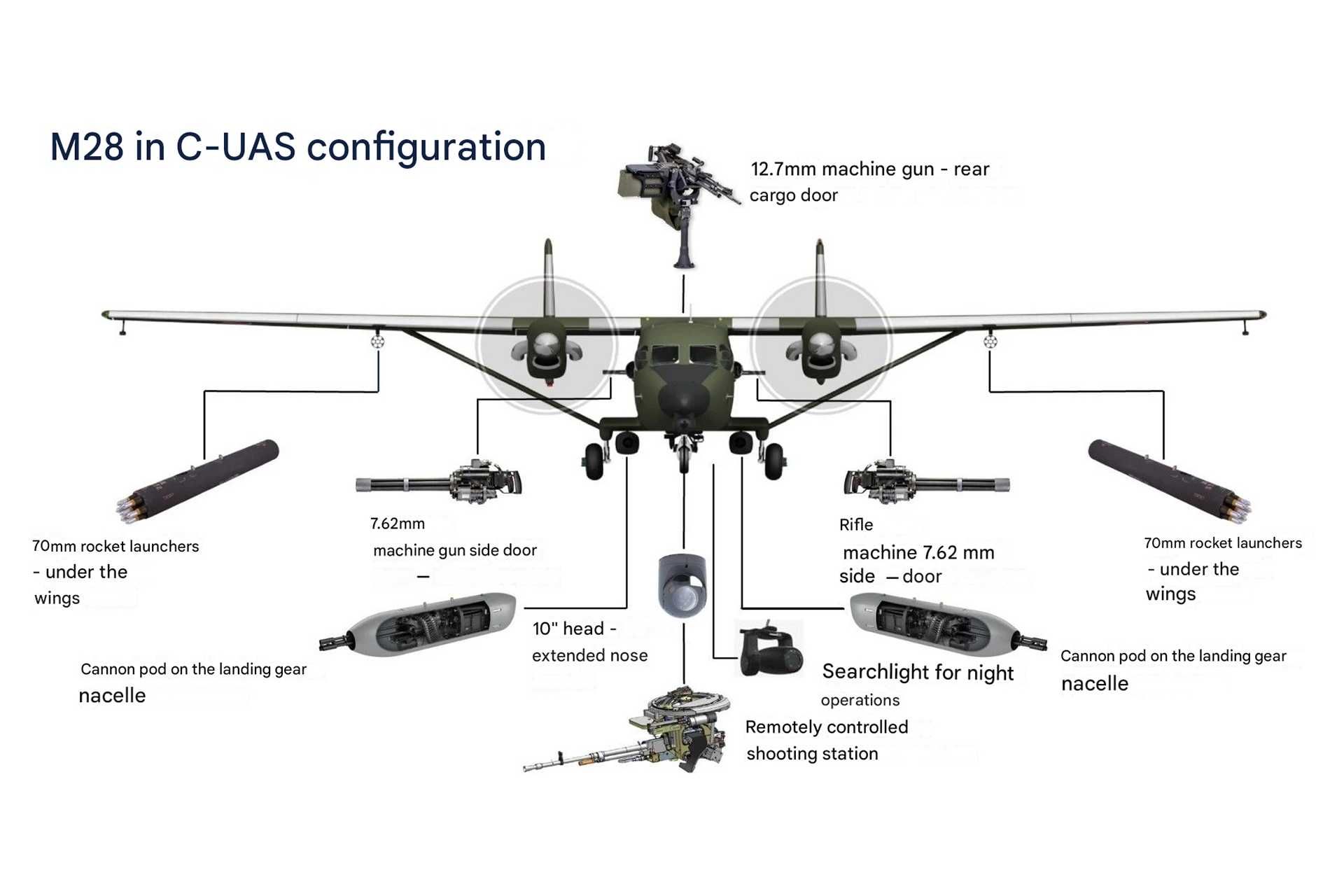
PZL Mielec's concept focuses on equipping existing M28 cargo aircraft operated by the Polish Armed Forces with machine guns, sensors, and guided rockets to create a layered counter-drone defense. (Picture source: PZL Mielec/translated by Army Recognition)

PZL Mielec's concept focuses on equipping existing M28 cargo aircraft operated by the Polish Armed Forces with machine guns, sensors, and guided rockets to create a layered counter-drone defense. (Picture source: PZL Mielec/translated by Army Recognition)

As reported by Defence 24 on March 19, 2026, Poland’s armed forces are studying the acquisition of a dedicated counter-drone aircraft, with PZL Mielec proposing the conversion of the M28 transport aircraft into a gunship interceptor to address the rapid expansion of unmanned threats. PZL targets loitering munitions and reconnaissance UAVs that operate at relatively low speeds and altitudes, two conditions deemed unsuitable for efficient interception by supersonic fighters. It also aligns with observed operational patterns where hundreds of drones can be launched in coordinated waves, requiring sustained endurance, low operating cost, and the ability to engage multiple targets per sortie. The development relies on adapting an existing aircraft fleet to reduce timelines from years to weeks for initial operational capability.


The operational requirement identified by Polish command structures focuses on relieving multirole fighters from counter-drone missions that consume flight hours, fuel, and limited missile inventories. Fighters such as the F-16 or F-35 are optimized for air superiority and strike missions, yet are currently used in some cases against slow-moving aerial targets traveling near 100 to 200 km/h. This creates a mismatch between capability and task, while also limiting availability for higher-priority missions such as suppression of enemy air defenses or deep strike. The M28 gunship concept introduces a dedicated layer capable of continuous patrol over defined sectors, reducing reliance on rapid reaction scrambling. The proposal was formalized through an industry response presented at a Polish military conference, indicating that the aircraft would function as a persistent interceptor positioned between ground-based defenses and high-end aviation assets. This layered approach aims to distribute workload across systems rather than concentrating it on a limited number of platforms, while anticipating future increases in drone density that may require a more scalable interception capacity.

The proposed armament configuration relies on M134 7.62 mm miniguns installed in side doors, each capable of firing 3,000 to 6,000 rounds per minute, creating a dense projectile stream to compensate for the small size of UAV targets. A 12.7 mm heavy machine gun mounted in the rear fuselage extends effective range and penetration, allowing engagement of larger or more resilient drones. This setup requires onboard gunners operating in coordination with the pilot, maintaining visual contact with the target and adjusting fire in real time. Engagement distances are typically within a few hundred meters, where hit probability increases significantly due to the volume of fire. The concept directly mirrors combat practices observed in Ukraine, where adapted An-28 and Yak-52 aircraft have conducted patrols and reportedly achieved cumulative drone kill counts exceeding one hundred units.

The fire capacity of the M28 gunship concept is also expanded through the integration of a stabilized, remotely controlled 12.7 mm turret, reducing dependence on manual aiming and allowing engagement independent of aircraft orientation. An electro-optical sensor mounted in the forward fuselage provides target detection, tracking, and fire control support, enabling operations in both day and night conditions. This combination allows continuous engagement across a 360° field, including targets located below or behind the aircraft. Additional armament options include 70 mm guided rockets such as APKWS or Telson, which provide limited stand-off capability against larger or grouped targets. The installation of 20 mm gun pods enables forward-directed fire, allowing the M28 to engage targets during pursuit or head-on interception. These extend engagement range beyond that of door-mounted weapons while maintaining a lower cost compared to missile-based interceptions.

The engagement model is based on intercepting drones traveling at relatively low speeds, often between 100 and 200 km/h, and at altitudes accessible to turboprop aircraft. The aircraft closes the distance using visual cues or sensor data, then engages using sustained bursts of fire to maximize hit probability against small targets with limited radar signatures. This allows multiple engagement attempts within a single sortie, unlike missile-based interception, where each shot consumes a high-value asset. The cost-per-engagement is therefore significantly reduced, enabling sustained operations against large drone formations. However, the method requires close proximity, increasing exposure to the potential explosion of said drones, as recently seen with the death of an AH-64 Apache crew in the UAE. Combat data from Ukraine indicates that such methods can account for a measurable share of intercepted drones within a broader air defense network.

The PZL M28 Skytruck, which provides the basis for this gunship concept, is a twin-engine turboprop with short takeoff and landing capability, enabling operations from runways as short as 500 meters. The aircraft is already in service within the Polish Armed Forces in multiple roles, including transport, maritime patrol, and reconnaissance, with more than 25 units currently operational. Its cruising speed and endurance allow extended patrols over designated areas, while its high-wing configuration ensures clear firing arcs for side-mounted weapons. The aircraft’s maintenance requirements and fuel consumption are significantly lower than those of jet fighters, supporting higher sortie generation rates. Its design allows rapid reconfiguration between roles, enabling dual-use within existing fleets. Production and modification capacity within Poland allows for relatively fast integration of new systems while reducing both acquisition and lifecycle costs.


However, the integration into a wider air defense system is central to the M28 gunship's success, potentially with a radar capable of detecting small aerial targets and providing early warning within its patrol area. Communication systems such as V/UHF radios, satellite links, and Link-16 enable real-time data exchange with ground-based air defense units and command centers. The inclusion of IFF M5 ensures identification of friendly aircraft, while INS/GPS systems resistant to jamming support navigation in contested environments. Deployment concepts include positioning aircraft in eastern and northeastern Poland, as well as along key geographic corridors, to create overlapping coverage zones. Maritime variants could extend this coverage over the Baltic Sea, filling gaps in coverage and responding to threats that penetrate initial defenses. This layered deployment increases redundancy and allocation of resources based on threat direction and intensity.

Written by Jérôme Brahy

Jérôme Brahy is a defense analyst and documentalist at Army Recognition. He specializes in naval modernization, aviation, drones, armored vehicles, and artillery, with a focus on strategic developments in the United States, China, Ukraine, Russia, Türkiye, and Belgium. His analyses go beyond the facts, providing context, identifying key actors, and explaining why defense news matters on a global scale.
 
Poland considers turning M28 cargo plane into gunship to replace F-16 jets in drone interception

Poland is evaluating the conversion of its domestically produced PZL M28 Skytruck transport aircraft into a dedicated gunship interceptor to counter low-speed unmanned aerial threats, as proposed by PZL Mielec.


The initiative aims to equip existing M28 aircraft operated by the Polish Armed Forces with machine guns, sensors, and guided rockets to create a layered counter-drone defense. This approach enhances operational endurance and interception capacity while preserving F-16 and F-35 fleets for higher-priority missions, strengthening overall air defense readiness and resource allocation.

Read also: France might arm the A400M Atlas transport aircraft with missiles to fully exploit its capacities


PZL Mielec's concept focuses on equipping existing M28 cargo aircraft operated by the Polish Armed Forces with machine guns, sensors, and guided rockets to create a layered counter-drone defense. (Picture source: PZL Mielec/translated by Army Recognition)'s concept focuses on equipping existing M28 cargo aircraft operated by the Polish Armed Forces with machine guns, sensors, and guided rockets to create a layered counter-drone defense. (Picture source: PZL Mielec/translated by Army Recognition)

PZL Mielec's concept focuses on equipping existing M28 cargo aircraft operated by the Polish Armed Forces with machine guns, sensors, and guided rockets to create a layered counter-drone defense. (Picture source: PZL Mielec/translated by Army Recognition)

As reported by Defence 24 on March 19, 2026, Poland’s armed forces are studying the acquisition of a dedicated counter-drone aircraft, with PZL Mielec proposing the conversion of the M28 transport aircraft into a gunship interceptor to address the rapid expansion of unmanned threats. PZL targets loitering munitions and reconnaissance UAVs that operate at relatively low speeds and altitudes, two conditions deemed unsuitable for efficient interception by supersonic fighters. It also aligns with observed operational patterns where hundreds of drones can be launched in coordinated waves, requiring sustained endurance, low operating cost, and the ability to engage multiple targets per sortie. The development relies on adapting an existing aircraft fleet to reduce timelines from years to weeks for initial operational capability.


The operational requirement identified by Polish command structures focuses on relieving multirole fighters from counter-drone missions that consume flight hours, fuel, and limited missile inventories. Fighters such as the F-16 or F-35 are optimized for air superiority and strike missions, yet are currently used in some cases against slow-moving aerial targets traveling near 100 to 200 km/h. This creates a mismatch between capability and task, while also limiting availability for higher-priority missions such as suppression of enemy air defenses or deep strike. The M28 gunship concept introduces a dedicated layer capable of continuous patrol over defined sectors, reducing reliance on rapid reaction scrambling. The proposal was formalized through an industry response presented at a Polish military conference, indicating that the aircraft would function as a persistent interceptor positioned between ground-based defenses and high-end aviation assets. This layered approach aims to distribute workload across systems rather than concentrating it on a limited number of platforms, while anticipating future increases in drone density that may require a more scalable interception capacity.

The proposed armament configuration relies on M134 7.62 mm miniguns installed in side doors, each capable of firing 3,000 to 6,000 rounds per minute, creating a dense projectile stream to compensate for the small size of UAV targets. A 12.7 mm heavy machine gun mounted in the rear fuselage extends effective range and penetration, allowing engagement of larger or more resilient drones. This setup requires onboard gunners operating in coordination with the pilot, maintaining visual contact with the target and adjusting fire in real time. Engagement distances are typically within a few hundred meters, where hit probability increases significantly due to the volume of fire. The concept directly mirrors combat practices observed in Ukraine, where adapted An-28 and Yak-52 aircraft have conducted patrols and reportedly achieved cumulative drone kill counts exceeding one hundred units.

The fire capacity of the M28 gunship concept is also expanded through the integration of a stabilized, remotely controlled 12.7 mm turret, reducing dependence on manual aiming and allowing engagement independent of aircraft orientation. An electro-optical sensor mounted in the forward fuselage provides target detection, tracking, and fire control support, enabling operations in both day and night conditions. This combination allows continuous engagement across a 360° field, including targets located below or behind the aircraft. Additional armament options include 70 mm guided rockets such as APKWS or Telson, which provide limited stand-off capability against larger or grouped targets. The installation of 20 mm gun pods enables forward-directed fire, allowing the M28 to engage targets during pursuit or head-on interception. These extend engagement range beyond that of door-mounted weapons while maintaining a lower cost compared to missile-based interceptions.

The engagement model is based on intercepting drones traveling at relatively low speeds, often between 100 and 200 km/h, and at altitudes accessible to turboprop aircraft. The aircraft closes the distance using visual cues or sensor data, then engages using sustained bursts of fire to maximize hit probability against small targets with limited radar signatures. This allows multiple engagement attempts within a single sortie, unlike missile-based interception, where each shot consumes a high-value asset. The cost-per-engagement is therefore significantly reduced, enabling sustained operations against large drone formations. However, the method requires close proximity, increasing exposure to the potential explosion of said drones, as recently seen with the death of an AH-64 Apache crew in the UAE. Combat data from Ukraine indicates that such methods can account for a measurable share of intercepted drones within a broader air defense network.

The PZL M28 Skytruck, which provides the basis for this gunship concept, is a twin-engine turboprop with short takeoff and landing capability, enabling operations from runways as short as 500 meters. The aircraft is already in service within the Polish Armed Forces in multiple roles, including transport, maritime patrol, and reconnaissance, with more than 25 units currently operational. Its cruising speed and endurance allow extended patrols over designated areas, while its high-wing configuration ensures clear firing arcs for side-mounted weapons. The aircraft’s maintenance requirements and fuel consumption are significantly lower than those of jet fighters, supporting higher sortie generation rates. Its design allows rapid reconfiguration between roles, enabling dual-use within existing fleets. Production and modification capacity within Poland allows for relatively fast integration of new systems while reducing both acquisition and lifecycle costs.


However, the integration into a wider air defense system is central to the M28 gunship's success, potentially with a radar capable of detecting small aerial targets and providing early warning within its patrol area. Communication systems such as V/UHF radios, satellite links, and Link-16 enable real-time data exchange with ground-based air defense units and command centers. The inclusion of IFF M5 ensures identification of friendly aircraft, while INS/GPS systems resistant to jamming support navigation in contested environments. Deployment concepts include positioning aircraft in eastern and northeastern Poland, as well as along key geographic corridors, to create overlapping coverage zones. Maritime variants could extend this coverage over the Baltic Sea, filling gaps in coverage and responding to threats that penetrate initial defenses. This layered deployment increases redundancy and allocation of resources based on threat direction and intensity.

Written by Jérôme Brahy

Jérôme Brahy is a defense analyst and documentalist at Army Recognition. He specializes in naval modernization, aviation, drones, armored vehicles, and artillery, with a focus on strategic developments in the United States, China, Ukraine, Russia, Türkiye, and Belgium. His analyses go beyond the facts, providing context, identifying key actors, and explaining why defense news matters on a global scale.
Didn't read the whole article but frankly, a properly kitted slow mover would be better for that type of mission than an F-16.

Back in the day, these were excellent at drone tipping:

1774565836953.png
 
Didn't read the whole article but frankly, a properly kitted slow mover would be better for that type of mission than an F-16.

Back in the day, these were excellent at drone tipping:

View attachment 188516

Was thinking along the lines of Pakistan's Super Mushshak trainer aircraft. It's a decent plane for anti-drone operations and is cheaper to operate once modified.
 
To view this content we will need your consent to set third party cookies.
For more detailed information, see our cookies page.

Wonder what caused the Germans to wake up. They had taken most of their nuclear power plants offline to appease the Green Peacers.
 
From its Nazi origins to today, Volkswagen’s ties to genocide are under renewed scrutiny as the German automobile company’s reported plans to work with an Israeli weapons manufacturer are raising serious moral, ethical and legal questions

Source: TrT world
 
Wonder what caused the Germans to wake up. They had taken most of their nuclear power plants offline to appease the Green Peacers.
That’s fake news.
Here a real news.
To view this content we will need your consent to set third party cookies.
For more detailed information, see our cookies page.
 
That’s fake news.
Here a real news.
To view this content we will need your consent to set third party cookies.
For more detailed information, see our cookies page.


We are in the beginning moves of WWIII. The conscription changes in the USA where the conscription age has been increased, and also changes in Europe shows the unfortunate trend...
 
We are in the beginning moves of WWIII. The conscription changes in the USA where the conscription age has been increased, and also changes in Europe shows the unfortunate trend...
Yes WW3 or some sorts of
Putin runs amok. Trump runs amok. They will attack more countries to get lands, people and resources. Better be prepared for more wars. Here in Europe, in Germany just a matter of time Germany will return to military service. All men and women to the arms. The extremists are on the rise.


1776248612551.png


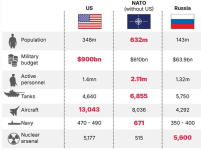
The following diagram is a good illustration of why Europe overall, does not need the USA to protect itself from Russia. As always, the Russian threat is overblown.
 

Users who are viewing this thread

Pakistan Defence Latest

Country Watch Latest

Latest Posts

Back
Top