Egyptian Armed Forces

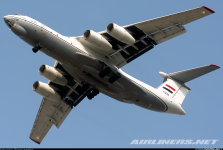
Rare bottom view of one of the two IL-76s. It looks like they painted the underwing areas over the engines in black, likely a paint similar to bottom paint on boats & ships to protect from marine growth and make it easier to clean. In this case, it would be against soot from the engine exhaust fumes. Interesting I don't think I've seen anything like that before on any cargo planes with fat, sooty engines.

1715308132826.png

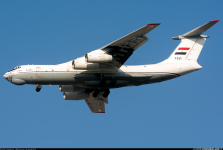
These elongated versions are clearly unique IL-76s that Jordan sold to the EAF. Like stretch limousines lol.

1715308337292.png
 
Anyone know how many of the M2s (2-seaters) there are?

View attachment 39293
View attachment 39294

Would've like to see them keep at least one squadron in this camo pattern, looks really sweet and would be the same as the Ka-52s and almost all the cargo planes. Maybe a 3rd color to break up the monotony and lighten up that pool tile belly blue lol.
There were at least 12 if not more..
 
There were at least 12 if not more..

That many? That's good. I thought there were fewer of them. And there was that one footage of either the Matruh governate or the Bernice air base opening ceremony where we saw 2 of them in that desert camo which was fascinating since we've never seen them before (except in those pictures above when they were in Russia pre-delivery) or after that in that camo.
 
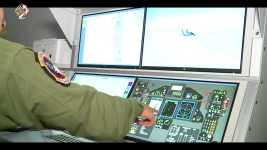
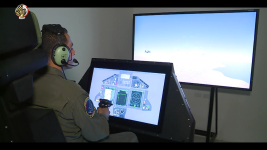
Part of the MiG-29M/M2 avionics training. Simulation for learning how to operate all the different functions on the console such as the radar and HOTAS.

1715370617131.png
1715370660278.png
 
FCYI7JcWQA445v9.jpg

The advantage of having a plane like the MIG-29M/35

Many things

The size of the contracts is as Egypt wants. Simply contracting for 100-120 is not restricted. The offset from the Russian side was presented from the beginning. The volume of ammunition provided by the Russian side is much larger than Western ammunition, and as a result of its cheap price, the Indians use Russian ammunition on Mirage-2000/RAFALE fighters.
Easy access to spare parts from sources such as India's air-to-air surface to air surface
The same applies to integrating Indian and European ammunition. France integrated AASM bombs onto the MIG-29SMT.
Integration of French targeting and reconnaissance repositories such as Talios
Ease of producing spare parts and reconstruction locally, as it replaces overhaul lines for MiG-21/F-7 fighters.
Ease of development locally with the help of international companies from third sources, without Russian restrictions, whether from Europe or China

It is used as a tanker for aircraft such as the Rafale and MIRAGE-2000 to extend their bombing range, especially for countries such as Ethiopia.
Developing it to operate as an air sovereignty aircraft by developing engines, reducing fuel consumption, and reducing the weight of the aircraft by replacing part of the structure to reach high capabilities of the operating ceiling or low-cost electronic warfare versions with a longer operating range, thus reducing the number of work tasks of a fighter such as the SU-35.
Replacing the radar, even with AESA radar, with non-Russian sources. India is working on its own radar, China, Italy, or France. All of this is achieved through a contract that international suppliers salivate over for a deal of more than 100 radars.
COST EFFECTIVE SOLUTION FOR LARAGE NUMBER ORDERS
100 FIGHTER = 4.5 BILLION EQUAL 30 RAFALE BUT ALSO WITH armament WITH GOOD QUANTITY
Giving Egypt freedom to make political decisions without American restrictions, American sanctions, or European restrictions.
We have historical precedents with the Soviets and the MIG-21, which Egypt used after 1976 until 2020. The development of the MIG-21 was not only done as equipment, but also to increase its ability to carry out missions. The components of the MIG-21 in the surface and structure were replaced with composite materials to resemble the F-plane’s fuselage. 16 In maneuvers and performance, even with a smaller payload, it was prepared to confront aircraft with higher performance and a more advanced generation than it, such as a 3 generation fighter at most.
 
View attachment 39680

The advantage of having a plane like the MIG-29M/35

Many things

The size of the contracts is as Egypt wants. Simply contracting for 100-120 is not restricted. The offset from the Russian side was presented from the beginning. The volume of ammunition provided by the Russian side is much larger than Western ammunition, and as a result of its cheap price, the Indians use Russian ammunition on Mirage-2000/RAFALE fighters.
Easy access to spare parts from sources such as India's air-to-air surface to air surface
The same applies to integrating Indian and European ammunition. France integrated AASM bombs onto the MIG-29SMT.
Integration of French targeting and reconnaissance repositories such as Talios
Ease of producing spare parts and reconstruction locally, as it replaces overhaul lines for MiG-21/F-7 fighters.
Ease of development locally with the help of international companies from third sources, without Russian restrictions, whether from Europe or China

It is used as a tanker for aircraft such as the Rafale and MIRAGE-2000 to extend their bombing range, especially for countries such as Ethiopia.
Developing it to operate as an air sovereignty aircraft by developing engines, reducing fuel consumption, and reducing the weight of the aircraft by replacing part of the structure to reach high capabilities of the operating ceiling or low-cost electronic warfare versions with a longer operating range, thus reducing the number of work tasks of a fighter such as the SU-35.
Replacing the radar, even with AESA radar, with non-Russian sources. India is working on its own radar, China, Italy, or France. All of this is achieved through a contract that international suppliers salivate over for a deal of more than 100 radars.
COST EFFECTIVE SOLUTION FOR LARAGE NUMBER ORDERS
100 FIGHTER = 4.5 BILLION EQUAL 30 RAFALE BUT ALSO WITH armament WITH GOOD QUANTITY
Giving Egypt freedom to make political decisions without American restrictions, American sanctions, or European restrictions.
We have historical precedents with the Soviets and the MIG-21, which Egypt used after 1976 until 2020. The development of the MIG-21 was not only done as equipment, but also to increase its ability to carry out missions. The components of the MIG-21 in the surface and structure were replaced with composite materials to resemble the F-plane’s fuselage. 16 In maneuvers and performance, even with a smaller payload, it was prepared to confront aircraft with higher performance and a more advanced generation than it, such as a 3 generation fighter at most.
I strongly agree that Egypt should increase its inventory of Mig-29's. However, I am not sure that the Russian side would be as open as you say they are.

Also, you bring up some interesting points about the Mig-21 upgrades (composite material, fuselage, etc) Can you further elaborate? Also, sources and actual images of the upgrades in Egyptian inventory would be apprciated.
 
I strongly agree that Egypt should increase its inventory of Mig-29's. However, I am not sure that the Russian side would be as open as you say they are.

Also, you bring up some interesting points about the Mig-21 upgrades (composite material, fuselage, etc) Can you further elaborate? Also, sources and actual images of the upgrades in Egyptian inventory would be apprciated.
Things are much simpler
Perhaps its clarification is the answer to a specific question: The Russians requested two industrial zones in Egypt, one of them more than 5 years ago and the other two years ago. How can the Russians request another industrial zone when it appears that they do not have factories?
Another matter in 2014: The Russians, after visiting Egyptian factories at the end of 2013, to learn about the capabilities of Egyptian factories and put forward joint weapons production programs.
Also, Egypt does not buy weapons, such as fighter jets, in a single deal, but rather deals over long periods of time related to ensuring that developments are made to the aircraft for each batch that is purchased, and then local and international development for them.
There is a media pause on Egypt purchasing weapons from Russia, but in reality there are more complicated matters, whether the deals that were completed and are being completed consecutively. Egypt did not request 3-4 S-300VM/V4 batteries, but rather they are successive batches, so the Russians responded to the Egyptian requests for development, as large numbers were simply not produced. Many of the SA-2 batteries will be out of service unless equivalent, newer systems arrive as replacements
The Russians consider Egypt a partner in developing the MIG-29/35 aircraft
Through large manufacturing orders from the Russians, as long as the Russians offered Bangladesh to assemble the MIG-35 plane locally.
Can you make the offer to Egypt, which it requested, greater than the requests of Bangladesh, which were not fulfilled?

There are secrets in armament that are not made public. For example, Israel obtained 200 F-15 aircraft in 50 years, of which only 105 were announced.
It received 400 F-16 aircraft, announced 362
We come to other important points. Any army in the world that seeks to achieve armament efficiency and the capabilities of the weapons it possesses, even if they are imported, must have self-development in weapons and equipment, as well as tactics of use.
For example, India requested modifications to the RAFALE aircraft
It differs from the modifications requested by Qatar, and the same applies to the Egyptian development of the RAFAL F3-R aircraft, which is currently not only standard, but will be a mixture of updates that were made to the aircraft that were supplied to various customers.

The story of the MiG-21 goes back to the fact that when pilots fled from Syria to Israel, Israel initially made modifications to the plane, such as raising the plane seat inside the cabin to allow a better view for the pilot.
Using plastic materials inside the plane instead of metal to reduce its weight. Naturally, Egypt rose as a result of the introduction of fourth generation aircraft.
MIRAGE-2000/F-16 incorporating some updates to the MIG-21
Quoting the manufacturing thinking of the previous fourth generation aircraft, and the same goes for the Ukrainian development that took place on 62 aircraft. The development programs cannot be disclosed until many years after the aircraft was released, but Egypt was volunteering the MIG-21 aircraft.
To increase its effectiveness on battlefields
In contrast to the newer aircraft that it was facing, the simplest things that show that there are developments do not announce that Egypt in the 1973 war was using tactics that did not allow the Phantom to detect the MIG-21 at a long distance so that AIM-7 missiles would not be fired at it, but rather it also used tactics to evade these missiles in Once it was launched, most of the planes survived, and the Israeli aircraft were facing Egyptian fighters in a dog fight.
 
Also, you bring up some interesting points about the Mig-21 upgrades (composite material, fuselage, etc) Can you further elaborate? Also, sources and actual images of the upgrades in Egyptian inventory would be apprciated.

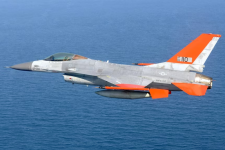
The idea was to make them unmanned, as in unmanned fighter jets. But who knows what their real intentions are since it's pretty darn expensive to turn a rocket with wings into a UCAV. But that's exactly what the US did back in the 80s with an F-4 Phantom (QF-4) and then in the late 90s with an F-16. The cost at the time for the F-16 conversion was $1 million. (QF-F-16)

1715474708509.png

Now imagine a MiG-21, but instead of an unmanned fighter jet to carry out combat operations, you pack it with 1 ton of explosives and use it as a combo ballistic/cruise missile. Fly it @ Mach 2 and essentially use is like a suicide drone. With that speed and that much TNT, you could turn cities into rubble with half a dozen of them. Destroy entire tank battalions with a pair. That's what I would do with them, and they wouldn't need to be as complicated or as expensive as UCAVs. Take off, gain 40Kft altitude and plummet to target at 2 times the speed of sound. Bada bing bada boom.

Can you make the offer to Egypt, which it requested, greater than the requests of Bangladesh, which were not fulfilled?

Speaking of Bangladesh.

To view this content we will need your consent to set third party cookies.
For more detailed information, see our cookies page.
 
Things are much simpler
Perhaps its clarification is the answer to a specific question: The Russians requested two industrial zones in Egypt, one of them more than 5 years ago and the other two years ago. How can the Russians request another industrial zone when it appears that they do not have factories?
Another matter in 2014: The Russians, after visiting Egyptian factories at the end of 2013, to learn about the capabilities of Egyptian factories and put forward joint weapons production programs.
Also, Egypt does not buy weapons, such as fighter jets, in a single deal, but rather deals over long periods of time related to ensuring that developments are made to the aircraft for each batch that is purchased, and then local and international development for them.
There is a media pause on Egypt purchasing weapons from Russia, but in reality there are more complicated matters, whether the deals that were completed and are being completed consecutively. Egypt did not request 3-4 S-300VM/V4 batteries, but rather they are successive batches, so the Russians responded to the Egyptian requests for development, as large numbers were simply not produced. Many of the SA-2 batteries will be out of service unless equivalent, newer systems arrive as replacements
The Russians consider Egypt a partner in developing the MIG-29/35 aircraft
Through large manufacturing orders from the Russians, as long as the Russians offered Bangladesh to assemble the MIG-35 plane locally.
Can you make the offer to Egypt, which it requested, greater than the requests of Bangladesh, which were not fulfilled?

There are secrets in armament that are not made public. For example, Israel obtained 200 F-15 aircraft in 50 years, of which only 105 were announced.
It received 400 F-16 aircraft, announced 362
We come to other important points. Any army in the world that seeks to achieve armament efficiency and the capabilities of the weapons it possesses, even if they are imported, must have self-development in weapons and equipment, as well as tactics of use.
For example, India requested modifications to the RAFALE aircraft
It differs from the modifications requested by Qatar, and the same applies to the Egyptian development of the RAFAL F3-R aircraft, which is currently not only standard, but will be a mixture of updates that were made to the aircraft that were supplied to various customers.

The story of the MiG-21 goes back to the fact that when pilots fled from Syria to Israel, Israel initially made modifications to the plane, such as raising the plane seat inside the cabin to allow a better view for the pilot.
Using plastic materials inside the plane instead of metal to reduce its weight. Naturally, Egypt rose as a result of the introduction of fourth generation aircraft.
MIRAGE-2000/F-16 incorporating some updates to the MIG-21
Quoting the manufacturing thinking of the previous fourth generation aircraft, and the same goes for the Ukrainian development that took place on 62 aircraft. The development programs cannot be disclosed until many years after the aircraft was released, but Egypt was volunteering the MIG-21 aircraft.
To increase its effectiveness on battlefields
In contrast to the newer aircraft that it was facing, the simplest things that show that there are developments do not announce that Egypt in the 1973 war was using tactics that did not allow the Phantom to detect the MIG-21 at a long distance so that AIM-7 missiles would not be fired at it, but rather it also used tactics to evade these missiles in Once it was launched, most of the planes survived, and the Israeli aircraft were facing Egyptian fighters in a dog fight.
Thanks for your reply! I do agree that real numbers are often understated, especially when it comes to operators of eastern-bloc equipment.

Very informative about the mig-21! However, what I'm trying to find out is how you know about these supposed specific upgrades to the mig-21 if they were secret. Can you state your sources?
 
The idea was to make them unmanned, as in unmanned fighter jets. But who knows what their real intentions are since it's pretty darn expensive to turn a rocket with wings into a UCAV. But that's exactly what the US did back in the 80s with an F-4 Phantom (QF-4) and then in the late 90s with an F-16. The cost at the time for the F-16 conversion was $1 million. (QF-F-16)

View attachment 39752

Now imagine a MiG-21, but instead of an unmanned fighter jet to carry out combat operations, you pack it with 1 ton of explosives and use it as a combo ballistic/cruise missile. Fly it @ Mach 2 and essentially use is like a suicide drone. With that speed and that much TNT, you could turn cities into rubble with half a dozen of them. Destroy entire tank battalions with a pair. That's what I would do with them, and they wouldn't need to be as complicated or as expensive as UCAVs. Take off, gain 40Kft altitude and plummet to target at 2 times the speed of sound. Bada bing bada boom.


Speaking of Bangladesh.

To view this content we will need your consent to set third party cookies.
For more detailed information, see our cookies page.

Pretty sure what Sami is talking about are the historical upgrades of the mig-21, not the proposition of turning them into UCAV.
I think you're on the right track with the idea of converting them to UCAV. However, using them as kamikaze drones would not be the most efficient use. I envision the best use would be something along the lines of removing pilot equipment and arming them with lightweight glide munitions and modified long range artillery rockets. This gives the plane additional payload and allows the operator to perform relatively potent yet cheap standoff saturation strikes. Think of a squadron composed of 18 migs with each one armed with four 250-500lbs Mk. munitions guided by al-Tariq kits in addition to 2 TRG-like missiles. No military would want to be on the business end of that.
 
Pretty sure what Sami is talking about are the historical upgrades of the mig-21, not the proposition of turning them into UCAV.

Yes, you're right about Sami's quote. What I was adding to that was that when the write-up in the papers came out about these possible conversions, that was one of the proposed ideas because of the cost vs effectiveness.

And good luck getting any sources out of Sami lol. Unless they're the Israeli ones he uses on occasion.

I think you're on the right track with the idea of converting them to UCAV. However, using them as kamikaze drones would not be the most efficient use. I envision the best use would be something along the lines of removing pilot equipment and arming them with lightweight glide munitions and modified long range artillery rockets. This gives the plane additional payload and allows the operator to perform relatively potent yet cheap standoff saturation strikes. Think of a squadron composed of 18 migs with each one armed with four 250-500lbs Mk. munitions guided by al-Tariq kits in addition to 2 TRG-like missiles. No military would want to be on the business end of that.

Definitely. I think the only problem with converting a MiG-21 into an unmanned asset that's dedicated as a launching platform for glide bombs and what not is the inherently terrible flying dynamics of the MiG-21. It's not exactly a maneuverable aircraft at slow speeds lol. It's effectiveness is at subsonic & supersonic regimes so hit & run would really be the only way to do that, especially in today SAM & EW saturated battlefields and aerial threats.

I personally would sacrifice them if the conversion costs were low enough to get maximum threat & damage out of them. But that's just me lol.
 
Regarding the development of the MIG-21 aircraft, there is not much information currently available because part of it is not published to the media, but you can find out the extent of the development of the MIG-21 aircraft.
LINK
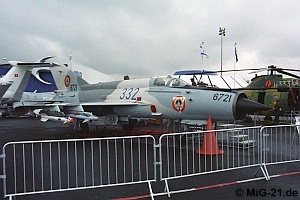
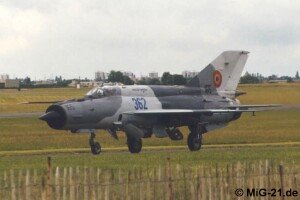
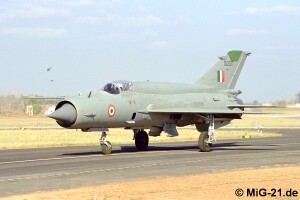
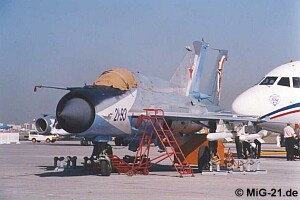
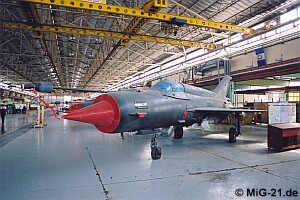
https://www.mig-21.de/english/technicaldataupgrades.htm

Home >> English >> Technical Data >> Upgrades
Notice: This page is not subject to any update. For updated information please refer to the German pages of this websiteor the publications by the author.
Upgrades
About 1000 MiG-21 are still in service all around the world. Most of MiG-21 user countries cannot afford new fighteraircraft. It is no wonder that at least three major upgrade programmes are running.
The MiG-21-93 of RAC MiG / SOKOL (Russia), the MiG-21 LanceRof Aerostar / Elbit (Romania / Israel)and the MiG-21 2000 of Israel Aircraft Industries (IAI) were on display atmany recent airshows and aviation fairs. And every upgrade programme has found at least one customer:

Elbit / Aerostar MiG-21 LanceR


mig-21de_paris97I_35.jpg
The most successful upgrade programme for the MiG-21 was presented at all major airshows - seen here at Paris Le Bourget 1997.


paris99_2.jpg
Despite its Romanian roundels this aircraft never served with the Romanian Air Force:
MiG-21bis based prototype of LanceR III programme at
Aerosalon Le Bourget 1999.

RAC MiG / SOKOL MiG-21-93


mig-21de_bangalore03_9.jpg
The Indian MiG-21bis UPG is very close to MiG-21-93 standard.


dubai99_2.jpg
Looking for customers in Arabia:
MiG-21-93 at Dubai Airshow 1999.

Israel Aircraft Industries (IAI) MiG-21 2000


telaviv04_2.jpg
Israel Aircraft Industries (IAI) uses its experience with war prizes of Soviet origin for the upgrade business. A comprehensive upgrade package for the MiG-21 is offered while it seems that the new single piece windshield was fitted only to the company demonstrator IAI-304 which is shown here.


MiG-21 equals the US F-16 in avionics complexity, a pilot says​


By Alexey Lenkov On Mar 4, 2024


Share


The first batch of seven pilots in Romania’s Air Force have completed their training at the International Training Center at the 86th Air Force Base. This is major news as it signifies their transition to flying F-16 fighter jets with confidence. Notably, before this, these pilots were handling the MiG-21 LanceR, a jet that the Romanian Air Force retired in May 2023.

Photo credit: RNAF


Eager to understand their experiences with shifting to the F-16, we asked these pilots to share their thoughts. The responses we received, as per Romanian sources, are captivatingly insightful.

Let’s look deeper. A Romanian television channel aired an interview with a pilot, code-named “Red”, who had recently transitioned to the F-16. When asked about the discernable differences between the two aircraft, Red stated that in terms of avionics, the contrast was minimal. The main differences were predominantly in the aircraft’s aerodynamic traits.

“The transition to the F-16 was rather smooth in regards to avionics. The F-16 is essentially a more versatile and efficient aircraft, boasting several onboard systems. However, what really stood out to us were the aircraft’s power dynamics and flight mechanics,” elaborated the Romanian “Red” pilot.

Upgrades​


It might seem counterintuitive to suggest that the distinction in avionics between the F-16 and MiG-21 isn’t vastly different. But let’s clarify, we’re referring here to the Romanian MiG-21 Lancer, upgraded in collaboration with Israeli Elbit Systems, which significantly improved the suite of onboard equipment.

Moreover, these aircraft have modern EL/M-2032 radars installed instead of the outdated onboard versions. These radars enable a detection range of 75 to 150 kilometers [according to several sources] and have the capability to distinguish targets against ground clutter. So yes, from the perspective of Romanian pilots, the disparity in the onboard electronics of the F-16 and MiG-21 LanceR might appear marginal.

Photo credit: Romanian AF

Do keep in mind though, that the upgrades to the Romanian MiG-21’s onboard equipment, despite its current state-of-the-art status, didn’t allow these aircraft to successfully intercept the ‘Calibers’ over Romanian airspace in February 2023. Ultimately, despite the inclusion of Israeli electronics, the physical wear and tear issues of the aging Romanian MiG-21s couldn’t be overcome, resulting in their retirement last May.


Romanian MiG-21s​


Jetting into history in 1962, Romania’s Air Force welcomed its very first MiG-21F-13 aircraft. This marked the beginning of a new era. Others followed over time, namely, the MiG-21PF [colloquially known as the MiG-21RFM), the MiG-21PFM (or MiG-21RFMM], and, of course, the MiG-21M and MiG-21MF. In an impressive display of aviation power, over 400 MiG-21s joined the air squadron. The last recruit took to the air in 1982, according to the ROAF’s records.

Photo credit: USAF

It wasn’t until 1992 that the Romanian Air Force initiated a progressive plan to upgrade the MiG-21 aircraft. The goal was to ensure seamless opportunities for NATO integration and enhance their mission capability. They wanted to be fully prepared to meet the high demands of contemporary air combat.


More recently, Romania expanded its air fleet with the purchase of 32 F-16 Fighting Falcons from Norway, for 388 million euros. This purchase is part of their strategic move towards integrating the F-35 into their fleet. As it stands, Romania proudly fields a full squadron of 17 F-16 aircraft, all procured from Portugal. Of the additional 32 F-16s from Norway, three have already been introduced and are adjusting to their new Romanian skies.

About MiG-21​


ussr-made-mig-21-fighter-jet
Photo credit: Wikipedia

Originating from the Soviet Union’s Mikoyan-Gurevich Design Bureau, the MiG-21 is a legendary supersonic jet fighter and interceptor aircraft. This exceptional offering holds the record as one of the most widely manufactured jet aircraft ever, with over 11,000 units assembled since its debut in 1959. Over 50 air forces worldwide have recognized the MiG-21’s key attributes—its simplicity, robustness, and high performance.


The MiG-21, despite its age, stands out for its remarkable specifications. The aircraft measures 15.76 meters in length, with a wingspan of 7.15 meters and a height of 4.125 meters. At takeoff, it weighs an impressive 9,400 kg. It has fantastic speed, reaching up to Mach 2.05 at high altitudes. Additionally, with drop tanks, its range extends to an impressive 1,210 km. However, that’s not all—the MiG-21 can reach an apex of 19,000 meters.

Under its metal exterior, a single Tumansky R25-300 after-burning turbojet engine powers the MiG-21. This engine provides a peak thrust of 40.21 kN [9,040 lbf] when dry and 69.62 kN [15,650 lbf] with afterburner engagement, setting the stage for the aircraft’s exceptional speed and climb rate. As a result, it ascends to its maximum altitude within mere minutes.

The MiG-21 houses a single 23mm GSh-23L autocannon with the capacity to hold 200 rounds when it comes to armaments. It is equipped with four underwing hardpoints that can accommodate up to 2,000 kg of payload, a feature that allows it to carry a broad spectrum of weapons—from air-to-air and air-to-ground missiles to bombs and rocket pods. Certain versions of the MiG-21 are even capable of carrying nuclear bombs.

***


Follow us everywhere and at any time. BulgarianMilitary.com has responsive design and you can open the page from any computer, mobile devices or web browsers. For more up-to-date news, follow our Google News, YouTube, Reddit, LinkedIn, Twitter and Facebook pages. Our standards: Manifesto &

https://bulgarianmilitary.com/2024/...-us-f-16-in-avionics-complexity-a-pilot-says/
 
Last edited:
GNB_vErakAErvNG.jpg

The most important thing that some did not understand is that the picture shows that if Egypt does not possess the SU-35, then why would Egypt be interested in the Brahmos missile that the SU-30 aircraft are equipped with?
Unlike the Brahmos-NG version that will be installed on RAFALE aircraft, the MIG-29
 
View attachment 39835

The most important thing that some did not understand is that the picture shows that if Egypt does not possess the SU-35, then why would Egypt be interested in the Brahmos missile that the SU-30 aircraft are equipped with?
Unlike the Brahmos-NG version that will be installed on RAFALE aircraft, the MIG-29
Hi, probably brahamos they want to use will be
Land or sea based version
Thank you
 
To view this content we will need your consent to set third party cookies.
For more detailed information, see our cookies page.


Looks likely we are beginning to replace TOW missiles with Korean ones. If Turkey is smart (ofc they are hahaha), they should enter the competition with KARAOK or OMTAS Fire&Forget ATGMs
 

Users who are viewing this thread

Country Watch Latest

Latest Posts

Back
Top