Egyptian Armed Forces

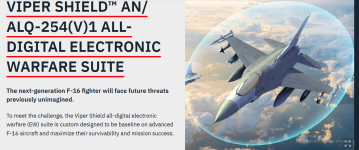
We haven't found any official statement yet, but this news itself confirms what has been rumored previously, especially given the failed F-15EX deal. Furthermore, there's not even a plan to equip Egyptian F-16s with the Viper Shield™ system.​


49c584244b88418dafaecad987bcb5c3.jpeg

Although there is a kind of understanding with America regarding Egypt not announcing its new deals in exchange for American disregard for them, this is much better than deals that taste like a challenge and increase the arms race, especially since the Egyptians have absolutely no trust in the American side.

1769960495310.png
 
then why do Egypt goverment invest them?
EDEX_TB_2_f2b2779c69.jpg

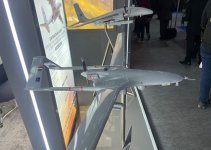
Despite Turkish propaganda claiming that Egypt had requested Turkish drones, and despite the appearance of mock-ups and Turkish assertions that Egypt wanted the TB2, AKANCI, and ANKA models, it became clear that all of this was false and propaganda aimed at associating Egypt with these types of equipment. Egypt even used the Turks to obtain production of the LUNA-NG drone and other Chinese aircraft, framing the situation as a competition. For example, AOI obtained licenses to produce the PATRIOT armored vehicle and others, but the Egyptian army did not contract for any of them. In fact, there are no local contracts; all are for export. Furthermore, some operational failures of Turkish drones will prevent the Egyptians from convincing African countries to purchase the Turkish BAHA drone.
 
I didnt say you purchased Turkish drones, i say Eygpt buys male class drones and develop its own
 
View attachment 175085


https://www.forbes.com/sites/pauliddon/2025/04/06/turkeys-best-drones-are-being-shot-down-over-middle-east-and-africi


From an aviation and armament perspective, the operational reality of modern drone warfare often contrasts sharply with official narratives. When evaluating platforms like the
Baykar Bayraktar Akıncı, technical specifications must be measured against recent performance in high-intensity conflicts such as those in Sudan and Mali.

Operational Failures & Combat Attrition
The Akıncı has faced significant challenges in active war zones, challenging the "invincibility" narrative often found in promotional material:
  • Sudanese Attrition: As of January 2026, the Rapid Support Forces (RSF) have claimed and documented the downing of multiple Akıncı units. Reports indicate a drone was recently destroyed in South Kordofan during combat operations.
  • Mali and North Africa: Crashes have been reported at Sévaré airport in Mali (January 2025) and in northwestern Libya. These incidents, combined with technical losses in Turkey and Iraq, suggest that while the platform is high-endurance, it remains vulnerable to both sophisticated air defenses and technical malfunctions in harsh environments.

The Radar & Armament "Propaganda" Gap
A critical point of professional evaluation is the actual equipment of these fleets compared to their marketing:
  • AESA Radar Integration: While the Akıncı is designed to house the Aselsan MURAD AESA radar, widespread operational integration across the Turkish Air Force (TuAF) fleet is still in progress rather than a proven standard. Most TuAF F-16s are currently undergoing indigenous upgrades (Özgür Project) to receive these radars, with mass delivery for older blocks slated between 2025 and 2027.
  • Missile Capabilities: Claims regarding long-range missile dominance are often based on test environments. In practice, these drones frequently operate with standard MAM-L precision munitions, which do not grant the standoff range needed to evade modern Short-Range Air Defense (SHORAD).

Chinese Superiority in Air Defense
Professional military assessments now highlight the success of Chinese systems in neutralizing "prestige" drones:
  • FK-2000 System: The Chinese FK-2000 SHORAD has gained a formidable reputation for its success in Sudan. Combining 12 missiles with dual 30mm Gatling cannons, it has been identified by OSINT analysts as the primary system used to establish localized "no-fly zones" against SAF drones.
  • FN-6 MANPADS: These systems continue to provide a low-cost, high-lethality counter to drones entering contested airspace like Darfur.

Market Shift: Saudi Arabia’s Pivot
Calculated military procurement often bypasses the Akıncı in favor of more cost-effective or specialized Chinese alternatives:
  • Wing Loong-3: Saudi Arabia is actively negotiating for the Chengdu Wing Loong-3, viewing it as a potential successor or superior alternative to the Akıncı due to its payload and lower cost-to-performance ratio.
  • CH-7 Stealth Drone: Reports indicate potential interest or negotiations for up to 50 CH-7 stealth drones in a deal valued near $3 billion. This shift highlights a preference for platforms that offer better survivability through stealth rather than just size.
The price of some drones now approaches that of light fighter jets, yet they lack the survivability of manned aircraft. In a professional field where results dictate value, the recent losses in Sudan and Mali prove that no amount of propaganda can shield a platform from the reality of a well-equipped air defense.
Would you like a detailed technical comparison between the AESA radar specifications of the Akıncı and the Wing Loong-3?

I can tell you that the "fog of war" no longer masks technical inadequacy. In this industry, airframes don't lie; crash sites do the talking.

The recurring losses of the Bayraktar Akıncı across disparate theaters—Sudan, Mali, Turkey, and Libya—are not isolated incidents of "pilot error." They represent a systemic failure of the platform to survive in contested electromagnetic and kinetic environments. When a high-altitude, long-endurance (HALE) asset is consistently neutralized by mobile SHORAD or suffers frequent mechanical attrition, it signals an over-engineered, under-performing product.

Professional Post-Mortem of the Akıncı Failures:
  1. Low Survivability vs. High Acquisition Cost: We are seeing drones priced like fourth-generation fighters being brought down by legacy MANPADS and systems like the Chinese FN-6. From a cost-benefit analysis, the Akıncı is becoming a strategic liability. If a platform cannot survive the very environment it was designed to dominate, its "intended purpose" is void.
  2. The "Paper Tiger" Electronics: Much has been touted about its AESA radar and long-range capabilities. However, in professional circles, we look for Initial Operational Capability (IOC) and combat-proven integration. The lack of documented success against peer-level air defenses suggests that the electronic warfare (EW) suite is insufficient.
  3. Market Realignment: Sophisticated buyers—like Saudi Arabia—are moving toward more pragmatic solutions. The shift toward the Chengdu Wing Loong-3 and the CH-7 stealth UAV is a direct result of evaluating operational experience over marketing brochures. These nations are opting for Chinese systems because they offer a better ratio of survivability to cost.
  4. Operational Truth: In Sudan, the effectiveness of the FK-2000 air defense system has effectively rendered the Akıncı obsolete in that sector. This isn't propaganda; it's the reality of the no-fly zones currently being enforced against these drones.
The Bottom Line: You can't hide a "single-flight" disaster behind press releases. The global market is currently witnessing a correction where actual combat results are exposing the gap between Turkish marketing and Chinese engineering.
Should we analyze the specific kill-chain used by the FK-2000 in the Sudanese theater to understand exactly how it exploited the Akıncı's radar cross-section?

From an aviation and armament perspective, the operational reality of modern drone warfare often contrasts sharply with official narratives. When evaluating platforms like the
Baykar Bayraktar Akıncı, technical specifications must be measured against recent performance in high-intensity conflicts such as those in Sudan and Mali.

Operational Failures & Combat Attrition
The Akıncı has faced significant challenges in active war zones, challenging the "invincibility" narrative often found in promotional material:
  • Sudanese Attrition: As of January 2026, the Rapid Support Forces (RSF) have claimed and documented the downing of multiple Akıncı units. Reports indicate a drone was recently destroyed in South Kordofan during combat operations.
  • Mali and North Africa: Crashes have been reported at Sévaré airport in Mali (January 2025) and in northwestern Libya. These incidents, combined with technical losses in Turkey and Iraq, suggest that while the platform is high-endurance, it remains vulnerable to both sophisticated air defenses and technical malfunctions in harsh environments.

The Radar & Armament "Propaganda" Gap
A critical point of professional evaluation is the actual equipment of these fleets compared to their marketing:
  • AESA Radar Integration: While the Akıncı is designed to house the Aselsan MURAD AESA radar, widespread operational integration across the Turkish Air Force (TuAF) fleet is still in progress rather than a proven standard. Most TuAF F-16s are currently undergoing indigenous upgrades (Özgür Project) to receive these radars, with mass delivery for older blocks slated between 2025 and 2027.
  • Missile Capabilities: Claims regarding long-range missile dominance are often based on test environments. In practice, these drones frequently operate with standard MAM-L precision munitions, which do not grant the standoff range needed to evade modern Short-Range Air Defense (SHORAD).

Chinese Superiority in Air Defense
Professional military assessments now highlight the success of Chinese systems in neutralizing "prestige" drones:
  • FK-2000 System: The Chinese FK-2000 SHORAD has gained a formidable reputation for its success in Sudan. Combining 12 missiles with dual 30mm Gatling cannons, it has been identified by OSINT analysts as the primary system used to establish localized "no-fly zones" against SAF drones.
  • FN-6 MANPADS: These systems continue to provide a low-cost, high-lethality counter to drones entering contested airspace like Darfur.

Market Shift: Saudi Arabia’s Pivot
Calculated military procurement often bypasses the Akıncı in favor of more cost-effective or specialized Chinese alternatives:
  • Wing Loong-3: Saudi Arabia is actively negotiating for the Chengdu Wing Loong-3, viewing it as a potential successor or superior alternative to the Akıncı due to its payload and lower cost-to-performance ratio.
  • CH-7 Stealth Drone: Reports indicate potential interest or negotiations for up to 50 CH-7 stealth drones in a deal valued near $3 billion. This shift highlights a preference for platforms that offer better survivability through stealth rather than just size.
The price of some drones now approaches that of light fighter jets, yet they lack the survivability of manned aircraft. In a professional field where results dictate value, the recent losses in Sudan and Mali prove that no amount of propaganda can shield a platform from the reality of a well-equipped air defense.
Would you like a detailed technical comparison between the AESA radar specifications of the Akıncı and the Wing Loong-3?


lol


Current victory in Sudan is showing the opposite, Akinci is doing ther work can be shotdown. What matters is wining the war, and for you can go with your bitterness to the end ahahaha. We will win the war and you can sit and find article about akinci badd boooeehoooee ahahah.

All that stupid analist of you...

In the end Turkish army is supporting the operations so this gives you extra bitternes:ROFLMAO:..

To view this content we will need your consent to set third party cookies.
For more detailed information, see our cookies page.
 
Ooooo Turks are coming to Egypt ahahah, wher is stupid so called defence analisssttttti dlvkmsdjfdkvl. The mighty Egyptian army asks MKE to build ammuniton factory why you are not smart enought and Turkish weapons are now good?:ROFLMAO: You must feel miserable...

But stil wish Egypt the best....

Our company, Machine and Chemical Industry Corporation (MKE), has signed a contract for the establishment of a 155 mm Long Range Artillery Ammunition Factory and Cartridge Production Facilities in Egypt. Our company has also exported the MKE TOLGA Short Range Air Defense System to Egypt.

To view this content we will need your consent to set third party cookies.
For more detailed information, see our cookies page.


To view this content we will need your consent to set third party cookies.
For more detailed information, see our cookies page.


Do not forget SAMI, before you sleep take your medicine.
 
Ooooo Turks are coming to Egypt ahahah, wher is stupid so called defence analisssttttti dlvkmsdjfdkvl. The mighty Egyptian army asks MKE to build ammuniton factory why you are not smart enought and Turkish weapons are now good?:روفلماو: You must feel miserable...

But stil wish Egypt the best....

Our company, Machine and Chemical Industry Corporation (MKE), has signed a contract for the establishment of a 155 mm Long Range Artillery Ammunition Factory and Cartridge Production Facilities in Egypt. Our company has also exported the MKE TOLGA Short Range Air Defense System to Egypt.

To view this content we will need your consent to set third party cookies.
For more detailed information, see our cookies page.


To view this content we will need your consent to set third party cookies.
For more detailed information, see our cookies page.


Do not forget SAMI, before you sleep take your medicine.


1770471254075.png

To clarify the presence of manufactured products in Egypt, independent of Turkish weapons, the following article will be rewritten more professionally by an experienced and qualified arms expert with years of expertise. This expert can provide sound assessments, offer alternatives, and highlight the fact that Egypt has attracted Turkish manufacturers to become a manufacturing hub.
93de7b67e0f085837e81f0ecffe08991e092ef63187fc27796a0a03efe31bd00.jpg
The main target is the Korean guided munitions, not the Turkish ones.


It's clear we are causing some discomfort to the Turkish youth, who believe they have gained something.

Clarification: Egypt's Ammunition Production
Regarding 155mm ammunition, it is already produced in Egypt in more than one factory. We also have better contracts with German and South Korean manufacturers.

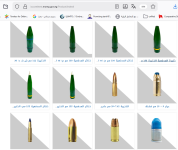
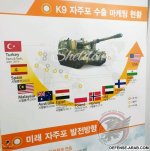
The matter is, of course, purely commercial. Egypt already produces K9 artillery ammunition locally, under a 2017 contract with South Korea, including K307 and K310 ammunition, as stated on the Egyptian Ministry of Military Production website. Egypt has been producing 155mm and 39mm ammunition for the M109/39 artillery since the 1980s. In addition to another factory, Egypt also acquired a completely new plant, built by Rheinmetall Defence, South Africa, between 2021 and 2023. The third Turkish plant is a joint venture with AOI and is dedicated entirely to export. European stocks of 155mm ammunition have been depleted, and there is high demand for this caliber. Egypt produced 73 million rounds of ammunition in previous years. It is believed that new production lines and machinery were added to the plant; according to reports published two years ago, 300 new machines were added as part of the plant's modernization and increased production capacity. Cooperation with South Korea is broader and more comprehensive, particularly in the area of long-range guided munitions (155mm and above), as well as 20mm and 40mm ammunition supplied to Egyptian naval vessels. The Turks seek to capitalize on Egypt's lower labor costs, which are around $160 per worker, compared to the minimum wage in Turkey of $800. Energy is also more readily available and less expensive in Egypt. Furthermore, Egypt manufactures Turkish-made weapons for Saudi Arabia, Sudan, Somalia, and other African countries. Egyptian military production is diverse, encompassing both Eastern and Western weaponry. In the 1980s, Egypt collaborated with the United States on the production of the M1A1 tank and, simultaneously, with Iraq, the T-72 tank. It also assembled F-6 and F-7 fighter jets with China and aspired to produce Mirage 2000 and F-20 Tiger Shark aircraft. Production of Western fighter jets, including the F-16, ceased in the 1980s, primarily due to funding shortages. For example, Turkey received $4 billion from the Gulf states to establish a Turkish Aerospace Industries (TAI) factory to produce F-16 fighter jets, while Egypt was unable to secure $1 billion to produce 120 F-20 fighter jets. Announcing cooperation with Turkey in the military industries is an effective means of exerting pressure on all parties. The United States is seeking to develop an AESA radar for the F-16 fighter jet, while the Koreans are pushing for the best possible manufacturing deal for the FA-50 using the latest available technologies. For example, the Koreans believe they are exerting pressure in the KALCM missile market simply by competing with the Russians, who offered to produce the Kh-69 missile for Egypt. The Chinese and Pakistanis are facing similar pressure. The same applies to the F-110 frigate deals with Spain. Egypt forced the Spanish to equip the frigates entirely with Egyptian-made munitions due to competitive offers from the Koreans and Turks, as well as price pressure exerted by Egypt on the Spanish to purchase the frigates and patrol boats, and even due to the level of technology available to Egypt. At the same time, the Italians were excluded from the Egyptian frigate and missile boat deals, and the Dutch took their place. This shows that Egypt is exploiting all available resources to achieve its military objectives. The Turks' involvement in purely commercial deals is, in itself, a capitulation to the Egyptian vision, as we mentioned earlier: produce weapons in Egypt, and we might buy from you.
FB_IMG_1503429162604.jpg
The alleged Turkish investment in drones: Egypt, of course, has drone manufacturing companies such as AMESTON, which produces the 6OCT, EJUNE-30SW, AHMOS, and Jabar families. The Chinese have established a drone manufacturing plant with a weekly production capacity of 12 aircraft to meet the needs of African countries on the Red Sea coast, according to what we have previously reported from Chinese sources in recent months. We find that the Turks want us to invest in a drone factory in Egypt, in an industrial city on the Mediterranean coast. In short, we are forcing all parties to invest in Egypt. The Chinese thought they were pressuring the Egyptians to transfer fighter jet technology. We put them in competition with the Koreans and the Turks, and the result was that the Chinese made better offers. Even when Sudan bought six Akanji drones, which were deployed at Egypt's Al-Uwaynat East Airport to carry out raids against the Rapid Support Forces (RSF), Egypt advised the Sudanese to have the Turks manage the airport's ground control stations. As a result, when the RSF shot down about four Akanji drones, the Turks were forced to compensate Sudan with replacements, as happened with Mali. Algeria shot down an Akanji drone. Consequently, the Turks sold six Akanji drones to Sudan for $120 million. Sudan received ten, meaning the Turks lost the deal.

Regarding the Turkish system, it's also essentially a commercial and industrial deal in Saudi Arabia's favor. Egypt has used this to attract the Turks by establishing joint domestic routes. In reality, Egypt produces a single Turkish drone called the BAHA, which competes with Cypriot versions like the H12 and the Chinese version called the HAMZA-3. Even the Amiston company has offered another new VTOL version, for which a contract has been signed. This means that at least three versions are actually being produced.

FOR TOLGA EGYPT HAVE ALTERNATIVE LOCAL SOLUTION
WhatsApp Image 2025-_623_074029.jpg

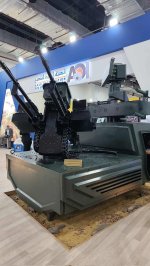
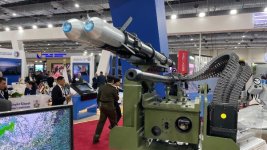
Egypt has already developed an air defense system similar to the Turkish one and showcased parts of it. A multi-purpose 23mm launcher equipped with ten 70mm guided missiles, including an AESA radar, is mounted on the Tesmah 4 armored vehicle and the locally produced Czech Patriot vehicle. At the EDEX exhibition, another system to counter drones, presented by the Arab Organization for Industrialization, is a multi-purpose 23mm launcher. It consists of a radar, a remote control platform with two 23mm cannons, an electro-optical detection system, and a jamming system. The system is also supported by artificial intelligence technologies and operates fully automatically. The same applies to the Arab International Optics Company, which presented a new anti-drone system for Egypt.
6231252060561202512021046444644.jpg

The Arab International Optics Company also unveiled a new anti-drone system for drones, helicopters, speedboats, and other targets. This system, the Thales LMM (Martlet), is produced by the Arab International Optics Company in partnership with the French company Thales. It has a range of over 6 kilometers and a speed of up to Mach 1.5. Some people don't understand that we are practicing medicine and treating the mental illnesses of some dwarfs. Simply put, this proves that the Turks came to exploit Egypt's comparative advantages in weapons production, while Egypt has readily available alternatives.


The fact that Egypt has attracted Turkish factories to become a manufacturing hub Clearly, we are causing some discomfort to the Turkish youth, who believe they have gained something.
Egypt uses any talks with a supplier as leverage against other suppliers. China and South Korea have restrictions on technology transfer, so Egypt opened avenues with the Turks when Italy imposed restrictions, particularly on FREMM frigates, and Germany restricted arms exports. We used SPAM for F-110 frigates with entirely Egyptian-made munitions. Egypt has aimed for 40 years to be a manufacturer of both Western and Eastern weapons. Financial constraints, or more accurately, mismanagement and corruption, have hindered this. When we were manufacturing the M1A1, we partnered with Iraq to produce the T-72. When we produced the F-6 and F-7, we aimed to produce Western fighters like the Mirage 2000 or F-20. The only obstacle at the time was the billion dollars needed to finance fighter production. When the Koreans wanted to impose their conditions for the FA-50, the Chinese alternative was ready.

Didn't we say from the beginning that if the Turks wanted to sell weapons to Egypt, they should establish production lines in Egypt, not just make sales deals? When what we said comes true, it doesn't anger us because it proves our vision correct. Some people have a certain mentality. Never abandon a child or teenager
 
View attachment 177384

To clarify the presence of manufactured products in Egypt, independent of Turkish weapons, the following article will be rewritten more professionally by an experienced and qualified arms expert with years of expertise. This expert can provide sound assessments, offer alternatives, and highlight the fact that Egypt has attracted Turkish manufacturers to become a manufacturing hub.
View attachment 177511
The main target is the Korean guided munitions, not the Turkish ones.


It's clear we are causing some discomfort to the Turkish youth, who believe they have gained something.

Clarification: Egypt's Ammunition Production
Regarding 155mm ammunition, it is already produced in Egypt in more than one factory. We also have better contracts with German and South Korean manufacturers.

The matter is, of course, purely commercial. Egypt already produces K9 artillery ammunition locally, under a 2017 contract with South Korea, including K307 and K310 ammunition, as stated on the Egyptian Ministry of Military Production website. Egypt has been producing 155mm and 39mm ammunition for the M109/39 artillery since the 1980s. In addition to another factory, Egypt also acquired a completely new plant, built by Rheinmetall Defence, South Africa, between 2021 and 2023. The third Turkish plant is a joint venture with AOI and is dedicated entirely to export. European stocks of 155mm ammunition have been depleted, and there is high demand for this caliber. Egypt produced 73 million rounds of ammunition in previous years. It is believed that new production lines and machinery were added to the plant; according to reports published two years ago, 300 new machines were added as part of the plant's modernization and increased production capacity. Cooperation with South Korea is broader and more comprehensive, particularly in the area of long-range guided munitions (155mm and above), as well as 20mm and 40mm ammunition supplied to Egyptian naval vessels. The Turks seek to capitalize on Egypt's lower labor costs, which are around $160 per worker, compared to the minimum wage in Turkey of $800. Energy is also more readily available and less expensive in Egypt. Furthermore, Egypt manufactures Turkish-made weapons for Saudi Arabia, Sudan, Somalia, and other African countries. Egyptian military production is diverse, encompassing both Eastern and Western weaponry. In the 1980s, Egypt collaborated with the United States on the production of the M1A1 tank and, simultaneously, with Iraq, the T-72 tank. It also assembled F-6 and F-7 fighter jets with China and aspired to produce Mirage 2000 and F-20 Tiger Shark aircraft. Production of Western fighter jets, including the F-16, ceased in the 1980s, primarily due to funding shortages. For example, Turkey received $4 billion from the Gulf states to establish a Turkish Aerospace Industries (TAI) factory to produce F-16 fighter jets, while Egypt was unable to secure $1 billion to produce 120 F-20 fighter jets. Announcing cooperation with Turkey in the military industries is an effective means of exerting pressure on all parties. The United States is seeking to develop an AESA radar for the F-16 fighter jet, while the Koreans are pushing for the best possible manufacturing deal for the FA-50 using the latest available technologies. For example, the Koreans believe they are exerting pressure in the KALCM missile market simply by competing with the Russians, who offered to produce the Kh-69 missile for Egypt. The Chinese and Pakistanis are facing similar pressure. The same applies to the F-110 frigate deals with Spain. Egypt forced the Spanish to equip the frigates entirely with Egyptian-made munitions due to competitive offers from the Koreans and Turks, as well as price pressure exerted by Egypt on the Spanish to purchase the frigates and patrol boats, and even due to the level of technology available to Egypt. At the same time, the Italians were excluded from the Egyptian frigate and missile boat deals, and the Dutch took their place. This shows that Egypt is exploiting all available resources to achieve its military objectives. The Turks' involvement in purely commercial deals is, in itself, a capitulation to the Egyptian vision, as we mentioned earlier: produce weapons in Egypt, and we might buy from you.
View attachment 177510
The alleged Turkish investment in drones: Egypt, of course, has drone manufacturing companies such as AMESTON, which produces the 6OCT, EJUNE-30SW, AHMOS, and Jabar families. The Chinese have established a drone manufacturing plant with a weekly production capacity of 12 aircraft to meet the needs of African countries on the Red Sea coast, according to what we have previously reported from Chinese sources in recent months. We find that the Turks want us to invest in a drone factory in Egypt, in an industrial city on the Mediterranean coast. In short, we are forcing all parties to invest in Egypt. The Chinese thought they were pressuring the Egyptians to transfer fighter jet technology. We put them in competition with the Koreans and the Turks, and the result was that the Chinese made better offers. Even when Sudan bought six Akanji drones, which were deployed at Egypt's Al-Uwaynat East Airport to carry out raids against the Rapid Support Forces (RSF), Egypt advised the Sudanese to have the Turks manage the airport's ground control stations. As a result, when the RSF shot down about four Akanji drones, the Turks were forced to compensate Sudan with replacements, as happened with Mali. Algeria shot down an Akanji drone. Consequently, the Turks sold six Akanji drones to Sudan for $120 million. Sudan received ten, meaning the Turks lost the deal.

Regarding the Turkish system, it's also essentially a commercial and industrial deal in Saudi Arabia's favor. Egypt has used this to attract the Turks by establishing joint domestic routes. In reality, Egypt produces a single Turkish drone called the BAHA, which competes with Cypriot versions like the H12 and the Chinese version called the HAMZA-3. Even the Amiston company has offered another new VTOL version, for which a contract has been signed. This means that at least three versions are actually being produced.

FOR TOLGA EGYPT HAVE ALTERNATIVE LOCAL SOLUTION
View attachment 177507

Egypt has already developed an air defense system similar to the Turkish one and showcased parts of it. A multi-purpose 23mm launcher equipped with ten 70mm guided missiles, including an AESA radar, is mounted on the Tesmah 4 armored vehicle and the locally produced Czech Patriot vehicle. At the EDEX exhibition, another system to counter drones, presented by the Arab Organization for Industrialization, is a multi-purpose 23mm launcher. It consists of a radar, a remote control platform with two 23mm cannons, an electro-optical detection system, and a jamming system. The system is also supported by artificial intelligence technologies and operates fully automatically. The same applies to the Arab International Optics Company, which presented a new anti-drone system for Egypt.
View attachment 177508

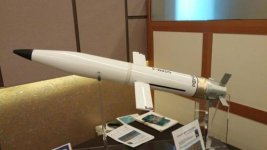
The Arab International Optics Company also unveiled a new anti-drone system for drones, helicopters, speedboats, and other targets. This system, the Thales LMM (Martlet), is produced by the Arab International Optics Company in partnership with the French company Thales. It has a range of over 6 kilometers and a speed of up to Mach 1.5. Some people don't understand that we are practicing medicine and treating the mental illnesses of some dwarfs. Simply put, this proves that the Turks came to exploit Egypt's comparative advantages in weapons production, while Egypt has readily available alternatives.


The fact that Egypt has attracted Turkish factories to become a manufacturing hub Clearly, we are causing some discomfort to the Turkish youth, who believe they have gained something.
Egypt uses any talks with a supplier as leverage against other suppliers. China and South Korea have restrictions on technology transfer, so Egypt opened avenues with the Turks when Italy imposed restrictions, particularly on FREMM frigates, and Germany restricted arms exports. We used SPAM for F-110 frigates with entirely Egyptian-made munitions. Egypt has aimed for 40 years to be a manufacturer of both Western and Eastern weapons. Financial constraints, or more accurately, mismanagement and corruption, have hindered this. When we were manufacturing the M1A1, we partnered with Iraq to produce the T-72. When we produced the F-6 and F-7, we aimed to produce Western fighters like the Mirage 2000 or F-20. The only obstacle at the time was the billion dollars needed to finance fighter production. When the Koreans wanted to impose their conditions for the FA-50, the Chinese alternative was ready.

Didn't we say from the beginning that if the Turks wanted to sell weapons to Egypt, they should establish production lines in Egypt, not just make sales deals? When what we said comes true, it doesn't anger us because it proves our vision correct. Some people have a certain mentality. Never abandon a child or teenager

If we ask whats your source, that will be your fantasy...:ROFLMAO:

1770543139142.png
 
The Sudanese conflict has served as a stark, real-world audit for Turkish combat drones. Their persistently high loss rates—with units being shot down on a near-daily or weekly basis—directly contradict the exaggerated and often fabricated claims of invulnerability that surrounded their initial promotion. This glaring performance gap reveals a troubling disconnect: the drones are sold at premium prices based on a myth of battlefield dominance they consistently fail to achieve. Consequently, analysts are increasingly viewing these systems not as force multipliers, but as cautionary tales of overpriced, overstated technology that delivers poor tactical value for the investment, raising serious questions about their role in modern, contested warfare.

View attachment 176145

The purpose of drones is precisely that. They are low cost disposable platforms that can take on risker missions where they have a higher risk of being shot down, but where the risk is worth the reward for the military outcome you want to achieve.

You really seem to be having problems in understanding drones, and their use case.

Türkiye right now is the global leader in drone technology. They have both the products and pedigree to go with it and they are globally known for it.

Their products are soo good that the UK is developing/gettting technology from Turkiye


UK standards on technology, quality and military effectiveness standards for procurement are far higher than Egypts...
 
Last edited:
Egypt advised the Sudanese to have the Turks manage the airport's ground control stations. As a result, when the RSF shot down about four Akanji drones, the Turks were forced to compensate Sudan with replacements, as happened with Mali.
why Turkey has to pay someone elses lose? are you real? what is your source?
 
View attachment 177384

To clarify the presence of manufactured products in Egypt, independent of Turkish weapons, the following article will be rewritten more professionally by an experienced and qualified arms expert with years of expertise. This expert can provide sound assessments, offer alternatives, and highlight the fact that Egypt has attracted Turkish manufacturers to become a manufacturing hub.
View attachment 177511
The main target is the Korean guided munitions, not the Turkish ones.


It's clear we are causing some discomfort to the Turkish youth, who believe they have gained something.

Clarification: Egypt's Ammunition Production
Regarding 155mm ammunition, it is already produced in Egypt in more than one factory. We also have better contracts with German and South Korean manufacturers.

The matter is, of course, purely commercial. Egypt already produces K9 artillery ammunition locally, under a 2017 contract with South Korea, including K307 and K310 ammunition, as stated on the Egyptian Ministry of Military Production website. Egypt has been producing 155mm and 39mm ammunition for the M109/39 artillery since the 1980s. In addition to another factory, Egypt also acquired a completely new plant, built by Rheinmetall Defence, South Africa, between 2021 and 2023. The third Turkish plant is a joint venture with AOI and is dedicated entirely to export. European stocks of 155mm ammunition have been depleted, and there is high demand for this caliber. Egypt produced 73 million rounds of ammunition in previous years. It is believed that new production lines and machinery were added to the plant; according to reports published two years ago, 300 new machines were added as part of the plant's modernization and increased production capacity. Cooperation with South Korea is broader and more comprehensive, particularly in the area of long-range guided munitions (155mm and above), as well as 20mm and 40mm ammunition supplied to Egyptian naval vessels. The Turks seek to capitalize on Egypt's lower labor costs, which are around $160 per worker, compared to the minimum wage in Turkey of $800. Energy is also more readily available and less expensive in Egypt. Furthermore, Egypt manufactures Turkish-made weapons for Saudi Arabia, Sudan, Somalia, and other African countries. Egyptian military production is diverse, encompassing both Eastern and Western weaponry. In the 1980s, Egypt collaborated with the United States on the production of the M1A1 tank and, simultaneously, with Iraq, the T-72 tank. It also assembled F-6 and F-7 fighter jets with China and aspired to produce Mirage 2000 and F-20 Tiger Shark aircraft. Production of Western fighter jets, including the F-16, ceased in the 1980s, primarily due to funding shortages. For example, Turkey received $4 billion from the Gulf states to establish a Turkish Aerospace Industries (TAI) factory to produce F-16 fighter jets, while Egypt was unable to secure $1 billion to produce 120 F-20 fighter jets. Announcing cooperation with Turkey in the military industries is an effective means of exerting pressure on all parties. The United States is seeking to develop an AESA radar for the F-16 fighter jet, while the Koreans are pushing for the best possible manufacturing deal for the FA-50 using the latest available technologies. For example, the Koreans believe they are exerting pressure in the KALCM missile market simply by competing with the Russians, who offered to produce the Kh-69 missile for Egypt. The Chinese and Pakistanis are facing similar pressure. The same applies to the F-110 frigate deals with Spain. Egypt forced the Spanish to equip the frigates entirely with Egyptian-made munitions due to competitive offers from the Koreans and Turks, as well as price pressure exerted by Egypt on the Spanish to purchase the frigates and patrol boats, and even due to the level of technology available to Egypt. At the same time, the Italians were excluded from the Egyptian frigate and missile boat deals, and the Dutch took their place. This shows that Egypt is exploiting all available resources to achieve its military objectives. The Turks' involvement in purely commercial deals is, in itself, a capitulation to the Egyptian vision, as we mentioned earlier: produce weapons in Egypt, and we might buy from you.
View attachment 177510
The alleged Turkish investment in drones: Egypt, of course, has drone manufacturing companies such as AMESTON, which produces the 6OCT, EJUNE-30SW, AHMOS, and Jabar families. The Chinese have established a drone manufacturing plant with a weekly production capacity of 12 aircraft to meet the needs of African countries on the Red Sea coast, according to what we have previously reported from Chinese sources in recent months. We find that the Turks want us to invest in a drone factory in Egypt, in an industrial city on the Mediterranean coast. In short, we are forcing all parties to invest in Egypt. The Chinese thought they were pressuring the Egyptians to transfer fighter jet technology. We put them in competition with the Koreans and the Turks, and the result was that the Chinese made better offers. Even when Sudan bought six Akanji drones, which were deployed at Egypt's Al-Uwaynat East Airport to carry out raids against the Rapid Support Forces (RSF), Egypt advised the Sudanese to have the Turks manage the airport's ground control stations. As a result, when the RSF shot down about four Akanji drones, the Turks were forced to compensate Sudan with replacements, as happened with Mali. Algeria shot down an Akanji drone. Consequently, the Turks sold six Akanji drones to Sudan for $120 million. Sudan received ten, meaning the Turks lost the deal.

Regarding the Turkish system, it's also essentially a commercial and industrial deal in Saudi Arabia's favor. Egypt has used this to attract the Turks by establishing joint domestic routes. In reality, Egypt produces a single Turkish drone called the BAHA, which competes with Cypriot versions like the H12 and the Chinese version called the HAMZA-3. Even the Amiston company has offered another new VTOL version, for which a contract has been signed. This means that at least three versions are actually being produced.

FOR TOLGA EGYPT HAVE ALTERNATIVE LOCAL SOLUTION
View attachment 177507

Egypt has already developed an air defense system similar to the Turkish one and showcased parts of it. A multi-purpose 23mm launcher equipped with ten 70mm guided missiles, including an AESA radar, is mounted on the Tesmah 4 armored vehicle and the locally produced Czech Patriot vehicle. At the EDEX exhibition, another system to counter drones, presented by the Arab Organization for Industrialization, is a multi-purpose 23mm launcher. It consists of a radar, a remote control platform with two 23mm cannons, an electro-optical detection system, and a jamming system. The system is also supported by artificial intelligence technologies and operates fully automatically. The same applies to the Arab International Optics Company, which presented a new anti-drone system for Egypt.
View attachment 177508

The Arab International Optics Company also unveiled a new anti-drone system for drones, helicopters, speedboats, and other targets. This system, the Thales LMM (Martlet), is produced by the Arab International Optics Company in partnership with the French company Thales. It has a range of over 6 kilometers and a speed of up to Mach 1.5. Some people don't understand that we are practicing medicine and treating the mental illnesses of some dwarfs. Simply put, this proves that the Turks came to exploit Egypt's comparative advantages in weapons production, while Egypt has readily available alternatives.


The fact that Egypt has attracted Turkish factories to become a manufacturing hub Clearly, we are causing some discomfort to the Turkish youth, who believe they have gained something.
Egypt uses any talks with a supplier as leverage against other suppliers. China and South Korea have restrictions on technology transfer, so Egypt opened avenues with the Turks when Italy imposed restrictions, particularly on FREMM frigates, and Germany restricted arms exports. We used SPAM for F-110 frigates with entirely Egyptian-made munitions. Egypt has aimed for 40 years to be a manufacturer of both Western and Eastern weapons. Financial constraints, or more accurately, mismanagement and corruption, have hindered this. When we were manufacturing the M1A1, we partnered with Iraq to produce the T-72. When we produced the F-6 and F-7, we aimed to produce Western fighters like the Mirage 2000 or F-20. The only obstacle at the time was the billion dollars needed to finance fighter production. When the Koreans wanted to impose their conditions for the FA-50, the Chinese alternative was ready.

Didn't we say from the beginning that if the Turks wanted to sell weapons to Egypt, they should establish production lines in Egypt, not just make sales deals? When what we said comes true, it doesn't anger us because it proves our vision correct. Some people have a certain mentality. Never abandon a child or teenager
My dude you are getting more and more unhinged with your takes, i'm lowkey in aww with the things you can come up with.
 
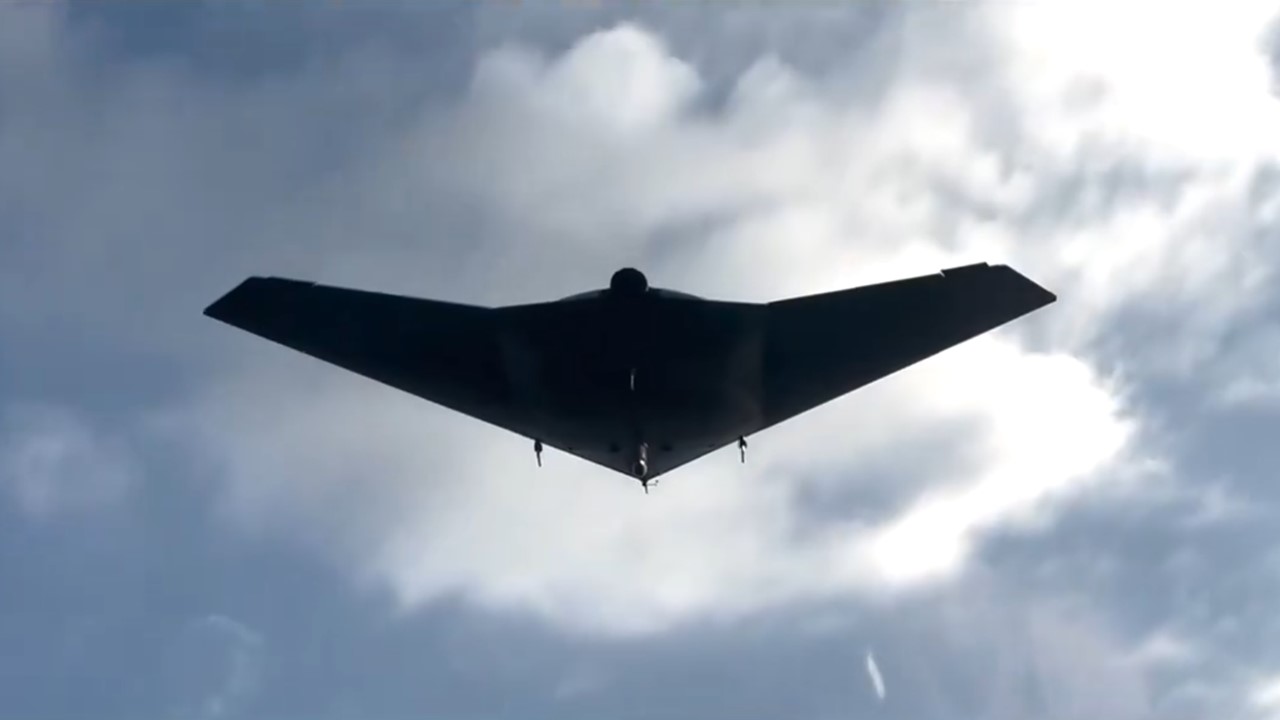
Lets make fun off that SAMI troll, look what the Turkish weapons achieved. So i remember that this troll is every time telling us Turkish drones trash blablabla. Now Chinese airdefence systems are destroyed by Turkish Akinci. Are the Chinese Airdefence system trash? apdásmi fldm,o;bm fod;lm ahahahah

To view this content we will need your consent to set third party cookies.
For more detailed information, see our cookies page.


Just don't fak with us......
 
Sami_1. This breach occurred on October 1, 2023
Passwords were leaked or stolen from this website since you last updated your login details. Change your password to protect your account. Go to www.facebook.com
 
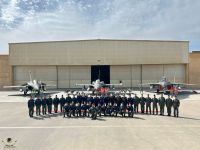
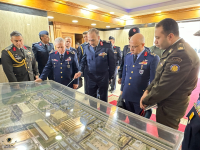
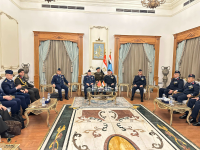
The Commander of the Turkish Air Force visits Egypt

1771104838250.png

1771104869982.png

1771104893335.png

@tcsavunma

There is talk about manufacturing Inca 3, establishing a testing area for aerospace industries, and establishing facilities at the Alexandria Arsenal to produce electronic systems and Turkish fire control managers with an early Dutch early warning system for frigates that will be manufactured in Egypt later on..
 
If we ask whats your source, that will be your fantasy...:ROFLMAO:

View attachment 177547


1771108214482.png
Sources are available for artillery ammunition.

I sent a screenshot from the Ministry of Military Production website showing that Korean ammunition is indeed being manufactured, meaning the source is available.

Sources for German production lines are available and can be found below my reply.

Regarding the Egyptian air defense systems, we have attached photos of them. They have been under testing for months, and the integration of 70mm guided missiles with them is also being carried out in cooperation with a Taiwanese company.

78153839_2340845659361223_63606429839261696_n.jpg

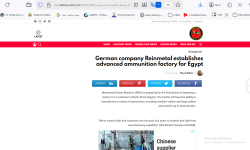
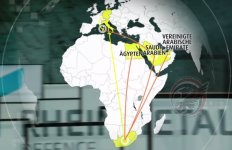
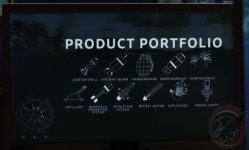
وفقا لعدة تقارير و مواقع ألمانية وجنوب أفريقية فإن شركة Rheinmetall Denel Munition قد أنتهت من إنشاء مصنع لتعبئة وتجميع قنابل الطائرات و ذخائر المدفعية ذات الأعيرة الكبيرة والمتوسطة في مصر ، وبذلك تصبح مصر ثالث دولة في الشرق الأوسط بعد الإمارات والسعودية امتلاكا لمثل تلك المصانع.
يذكر أن الرئيس التنفيذي لشركة Rheinmetall Denel Munition قد أعلن منذ العام 2017 أن شركته بصدد بناء مصنع عالمي لتعبئة وتجميع الذخائر لأحد الدول في شمال أفريقيا ، وأن المفاوضات مع هذه الدولة استغرقت 4 سنوات .
(صورة من أحد التقارير الإعلامية الألمانية التي تكلمت عن الصفقة)
Rheinmetall announced that it had delivered another ammunition filling plant to Egypt via RDM.
https://emrawi.org/?Rheinmetall-Geg...YgKmljc8HexSSBE86EcWY86DfAS_ldQO-XHgiVaLylQJ0

78130126_10156578660211990_8526514898748833792_o.jpg
AND MORE

https://army-tech.net/forum/index.p...-munition-تنهي-انشاء-مصنع-ذخيرة-في-مصر.17392/

https://www.defense-arabic.com/2019/12/08/شركة-راينميتال-الألمانية-تنشئ-مصنع-ذخ/

To view this content we will need your consent to set third party cookies.
For more detailed information, see our cookies page.


You always love it when I expose your true nature, revealing your reality. Everyone is now certain that your minds are certified bullshit.

images546646.jpg
 

Users who are viewing this thread

Country Watch Latest

Latest Posts

Back
Top