@Corax , I'm going to give it a shot adding to
@Ghostkiller 's answer to your question(s) but just a heads up, there is way too much information about the topic you've questioned that I cannot articulate the appropriate answer in just 2 or 3 sentences. So just FYI, this will be a long post if you or others still wish to read it.
Well, no. We knew this was the case as soon as the AMRAAM was invented and put into operation with the USAF & USN back in 1991 after Operation Desert Storm and the end of the Gulf War.
But as you well know, Egypt had to deal with A LOT of adversity that superseded its need for advanced BVR missiles for its F-16s. Those included things like the availability of other options (at the time, not now) as well as the signing of the CISMOA treaty and just a small little thing that got in the way like a "revolution" lol. There was a lot that were considered as obstacles or matters of greater importance.
In many ways, Egypt was told the CISMOA treaty had to be signed before the US would even consider supplying the AIM-120, in particular the section of non-transferable technology to 3rd party members which was a major issue the US had and still has with Egypt since we have a very close relationship with Russia and even China. As a matter of fact, China was one of the major reasons for that mistrust blowing up in our faces because for some reason, we gave a Chinese delegation a rather intimate "tour" of one of our F-16s and got caught like a bunch of idiots. Why we did that? I have no idea but it happened and when Killary Klinton found out about it, she flipped out to congress and that made matters even worse.
The concept of advanced medium range air to air & BVR missiles was to give an edge to the aerial battle using the concept of first see first kill, determined by greater distances. Based on that philosophy, it's only an
edge or
advantage but not a
sure thing by any means. It's amazing to me how some people (not you, just many out there and here) don't understand that and think that it's almost a guaranteed win. It's not, not even close especially against a knowledgeable, well-trained and well-experienced opponent.
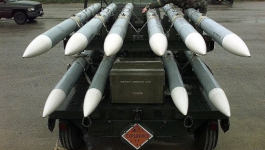
There are many variables in that concept and the other aspect of that misconception is that this single item right here...
View attachment 45405
...does not determine whether a fighter jet is "useless" or not.
That's the biggest hoax perpetrated on the "unknowledgeable" of combat aircraft aviation and tactics along with the unfamiliarity of network-centric warfare and many other variables that determine a loss or a win. People only use that as an excuse to undermine others that might not have access to that specific technology. But for those who are quite familiar with combat aviation and many of the involved scenarios and tactics realize that while it's a great plus to have, it's not the end-all, be-all by any stretch of the imagination.
An acquaintance -- not a friend; I don't consider our relationship that of a 'friendship' (we're not that close) -- but an acquaintance whom I've had many discussions with about the concept of BVR in general as a war tactic passed some fascinatingly interesting information about that advantage and how it's only that, and advantage. He's a retired USAF F-15 pilot who flew the C model (which as we all know is strictly an Air-to-Air/Interceptor platform) and flew it as a USAF/NATO participant out of West Germany from the late 1980's through most of the 1990's against MiG-21s & MiG-29s of Soviet bloc countries in Europe, so was quite familiar with A2A concepts and missiles. At the time, the US had the Pheonix missile, and he and his other pilot comrades knew the US was developing an advanced, medium range A2A missile to essentially replace the Pheonix since it was just too bulky and heavy and the only platform that could carry & fire it was the F-14 Tomcat. They wanted to have an advanced BVR missile that was compatible to ALL USAF AND USN/Marine Corps air assets, not just 1 naval aircraft.
So he knew it was coming and he was telling us that they were being prepped about the new missile and how it was going to change their already established mission-planning & tactical training scenarios to make the most usage out of this new missile. Along with many of those tactical training scenarios was a slew of methods to circumvent the effectiveness of the missile. In other words, they were also trained on ways the enemy can counter or circumvent it by understanding its shortcomings (such as the timing of its initial propellant burnout stage) and how that could be used as an advantage to the enemy as well as other OPSEC information. But also, other ways to circumvent of even defeat it either by EW or certain tactics such as altitude differentials and what he called "vector options" (which meant what would be the best heading to take knowing you've been locked on & targeted, and a missile is headed your way) and several other really great things he talked about. He obviously stopped short of revealing any actual OPSEC information of course. But some of that stuff was fascinating and particularly the evasive tactics. He reiterated that a pilot would need EXTENSIVE knowledge of the specific weapon itself, its kill zone & its probability of kill and be able to apply those during a highly stressful situation. That concept really applies to almost all weapons if you think about it. A perfect example is the Trophy system vs RPGs. We've seen the perfect example with Hamas' methods of understanding the weapon system, adjusting and learning its shortcomings and applying ways to defeat it.
Bottom line, there are ways to circumvent and evade BVR missiles and actually use the distance to your advantage with several tactics and most of all, having the knowledge and training which is #1. Without that yes, they would be sitting ducks.
The EXACT reason why the Su-35S is struggling in the Ukraine. Russian pilots don't get nearly the proper amount of training hours as US or even European fighter pilots and don't have enough specific training in particular defensive tactics such as SEAD missions. Most of their Su-35 losses have been to SAMs (actually all of the kills) and that's exactly the same concept my "friend" was talking about. Russians also made the mistake of not using dedicated SEAD aircraft (Su-34) for those particular missions and when they did, that specific training (or lack-thereof) showed and they've lost many of those jets when they could've avoided that.
That's another huge reason why calling the EAF F-16s or any other platform that doesn't have AMRAAMs as useless is ridiculous.
EAF F-16s are very capable of performing a myriad of missions from recon to interception to patrolling to interdiction to SEAD missions to ground attack to air-air and everything in-between. How is that even close to anything remotely called "useless"? It's crazy silly/foolish.
Despite all that, even today we're still dealing with the real reason the US doesn't want to supply Egypt with AMRAAMs and that's the BS ZIONIST QME. It's so bad that it's reached other suppliers including the French, German, British and others who are persuasively sympathetic to the zionist. And when one actually puts it in perspective, how the AIM-120 has been supplied to almost everyone else from Turkey, Pakistan, Saudi Arabia, UAE, Bahrain, Oman, Morocco, EVEN JORDAN but not Egypt, what does that tell you and everyone else about how frightened the zionist are of Egypt and its military as a whole? Think about that for a minute. We've had a major peace treaty with those criminals for 45 years! And Egypt has abided by it much more than the zionist have and they're still afraid of us. Even the US & France and all of Europe think that in the hands of the EAF, that would be a detrimental factor to the zionist but it's ok for all those other countries to obtain it even when some of them don't even have diplomatic relations with the entity, let alone recognize it! Meaning they're actually in a greater state of belligerence to the zionist than Egypt. That tells a lot about the situation as it stands.