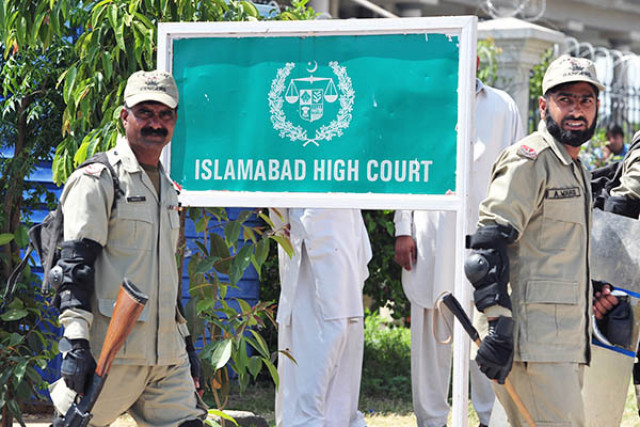
Federal Constitutional Court/ Supreme Court / High Courts of Pakistan, News

27th Amendment and its impact on judiciary​

The 27th Amendment, besides bringing changes in other domains, alters the judiciary’s functioning in two areas — constitutional matters and the transfer of judges.

The legislation empowers the Judicial Commission of Pakistan to transfer high court judges without their consent — a provision that has raised concerns within sections of the judiciary.

The most notable decision made by the ruling coalition is the formation of the Federal Constitutional Court (FCC), which experts say has dethroned the Supreme Court as the country’s highest judicial forum.

The reason for those concerns is that the FCC will now deal with crucial constitutional matters and its decisions would be binding on all courts, including the SC itself. Under the new Article 189, the SC would be downgraded to the apex court for civil.
 

Two IHC judges signal exit after 27th Amendment

The Newspaper's Staff Reporter
November 14, 2025

ISLAMABAD: At least two judges of the Islamabad High Court (IHC) have hinted they might not be available to hear cases in the federal capital from next month, amid speculation about possible transfers following the passage of the 27th Constitutional Amendment.

Justices Mohsin Akhtar Kayani and Saman Rafat Imtiaz made these remarks while hearing separate cases on Thursday and Wednesday, respectively.

During the hearing of a case related to a private company before Justice Kayani on Thursday, a lawyer requested that the final arguments be scheduled for the first week of December.

However, Justice Kayani responded: “In the first week of December, another judge will be sitting here to hear this case.”

The lawyer expressed his concern, saying, “Sir, don’t say things like this that make us uncomfortable.”

Justice Kayani replied with a smile, “No problem. I am happy about it.”

When the lawyer said, “Sir, you will leave… we have a lot to learn from you”, Justice Kayani reiterated, “No problem, I am happy.”

A day earlier, Justice Imtiaz had made similar remarks during the hearing of another case, saying that her bench might not be available from December, when a counsel sought an adjournment for the following week.
 
To view this content we will need your consent to set third party cookies.
For more detailed information, see our cookies page.
 

New court operational: First FCC chief justice, six judges appointed​


SHC Justice KK Agha is expected to be sworn in today, talks of bench strength increasing to 13

Our Correspondent
November 15, 2025


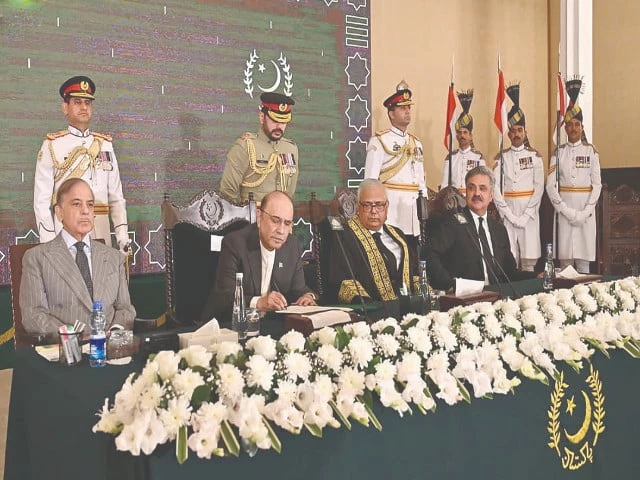
president asif ali zardari signs the documents after administering oath to justice aminuddin khan as the first chief justice of the federal constitutional court at the aiwan e sadr photo inp


President Asif Ali Zardari signs the documents after administering oath to Justice Aminuddin Khan as the first chief justice of the Federal Constitutional Court at the Aiwan-e-Sadr. Photo: INP


ISLAMABAD: Soon after the Senate on Friday passed four bills related to the recently approved 27th Constitutional Amendment, with a majority voice vote, the government moved fast to begin shaping the new judicial framework.

Justice Aminuddin Khan was sworn in as the first chief justice of the Federal Constitutional Court.

President Asif Ali Zardari administered the oath to the newly appointed chief justice of the FCC in a ceremony at Aiwan-e-Sadr.

In a related development, the president accepted the resignations of Supreme Court judges – Mansoor Ali Shah and Athar Minallah. It was announced on a post on the president's official X account.

The two justices hung up their robes on Thursday, describing the legislation as an affront to the judiciary and the 1973 Constitution.

The oath-taking ceremony of the first FCC chief justice started with the recitation of the Holy Quran.

In his oath, Justice Aminuddin vowed to discharge his duties in accordance with the Constitution and the law, while also abiding by the code of conduct issued by the Supreme Judicial Council.
 
His appointment was made by the president under Clause 3 of Article 175A, read with Article 175C, of the Constitution.

Meanwhile, the president also appointed six judges to the FCC. A notification issued by the law ministry said that the president made the appointments under Clause 3 of Article 175-A, read with Article 175-C of the Constitution.
 
Justice Syed Hasan Azhar Rizvi, Justice Aamer Farooq and Justice Ali Baqar Najafi of the Supreme Court, Justice KK Agha of the Sindh High Court and Balochistan High Court Chief Justice Rozi Khan Barrech were appointed to the FCC.

Justice (retd) Arshad Hussain Shah has also been appointed. He was appointed as Justice Musarrat Hilali was not willing to join the FCC.

Sindh High Court's Justice Karim Khan Agha is expected to be sworn in today, completing the seven-member bench.

The initial strength of the FCC was determined through a presidential order, while any future increase in the number of judges will require parliamentary approval through an act of parliament.

Of the judges appointed to the FCC, Justices Rizvi, Farooq and Najafi were administered the oath by Justice Aminuddin at the Islamabad High Court.

Sources said the government has decided to increase the FCC strength to 13.
 

Federal Constitutional Court releases first cause list​


By Web Desk
November 16, 2025


Federal Constitutional Court releases first cause list


Islamabad (November 16, 2025): The first cause list of the Federal Constitutional Court has been released. Three benches will hear cases next week.

According to the released cause list, Chief Justice of the Federal Constitutional Court Aminuddin Khan will hear the cases, Justice Hassan Azhar Rizvi will also hear the cases, while a two-member bench comprising Justice Amir Farooq and Justice KK Agha will hear the cases.

This court was recently established through the 27th Constitutional Amendment, while previously there was a constitutional bench in the Supreme Court.

Two days ago, President Asif Ali Zardari issued a presidential order for the judges of the new court, under which the court will consist of 13 judges, including the Chief Justice, and will be established on the top floor of the Islamabad High Court.

The list of judges includes Justice Ali Baqir Najafi, Justice Hassan Azhar Rizvi, Justice Rozi Khan, Justice KK Agha and Justice Aamir Farooq. All the judges will participate in the regular decisions of the Constitutional Court and the court proceedings are expected to begin in the coming days
 

SC rules state has duty to uphold women's inheritance rights​


Former judge Minallah writes seven-page judgement

Hasnaat Malik
November 16, 2025


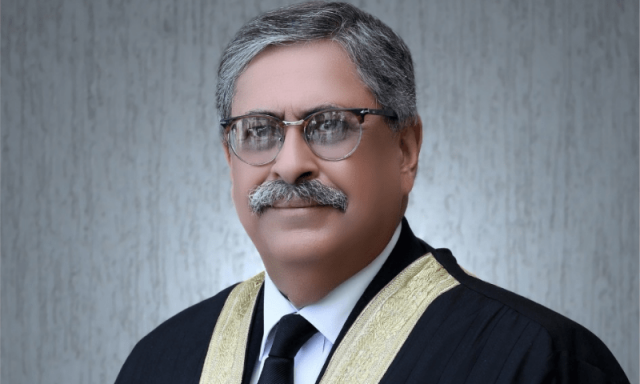
athar minallah supreme court judge photo file


Athar Minallah, Supreme Court Judge.

ISLAMABAD: The Supreme Court has ruled that a state that fails to safeguard the inheritance rights to its women fails in its duty to uphold the principles of equity, faith and justice.

"It is incumbent upon the State under the Constitution and the clear injunctions of Islam, to ensure the effective and unfettered realization of women's right to inheritance.

This right is not a concession granted by human law but a divinely ordained command, explicitly declared in the Holy Quran," says a seven-page judgement authored by Justice Athar Minallah while hearing a case related to the inheritance rights of women.

The division bench, while dismissing the petition with cost of Rs500,000, has noted that the petitioner had no case on merits and yet persisted in litigation, thereby prolonging the depravation of his siblings of their lawful inheritance which devolved upon them on 1.1.2002, the date of their father's demise.

"The challenge before this Court was nothing more than an attempt to delay and frustrate the rights of the other legal heirs, amounting to a mere abuse of process," the judgement read.

Justice Minallah states that it is incumbent upon the state under the constitution and the clear injunctions of Islam, to ensure the effective and unfettered realization of women's right to inheritance.

"This right is not a concession granted by human law but a divinely ordained command, explicitly declared in the Holy Quran. Any denial or obstruction of this right is, therefore, not merely unlawful but transgression against Divine Will. Cultural or societal practices that deprive women of their rightful inheritance are rooted neither in faith nor in justice, they are remnants of ignorance which the message of Islam came to abolish."

"The State bears a sacred constitutional duty to uproot such practices by ensuring that every woman is informed of, and enabled to claim, her rightful share in inheritance without delay, fear or dependence on lengthy litigation."

"It must establish a proactive and accessible mechanism through which women can be identified, reached out to, and assisting in securing their lawful entitlements."

"Furthermore, those who, through coercion, deceit, or undue influence deprive women of this divinely bestowed right must be held accountable under the law and made answerable.

"A society, that turns a blind eye to deprivation of inheritance rights to its women defies the spirit of Constitution and express Command of Almighty Allah. The strength of a nation lies in the protection of its most vulnerable classes. A State that fails to safeguard the inheritance rights to its women fails in its duty to uphold the principles of equity, faith and justice," says the order.

facebook twitter whatsup linkded email
 

Senior LHC judge decides to hang up the robe​

Senior LHC judge decides to hang up the robe

Our Correspondent
November 16, 2025


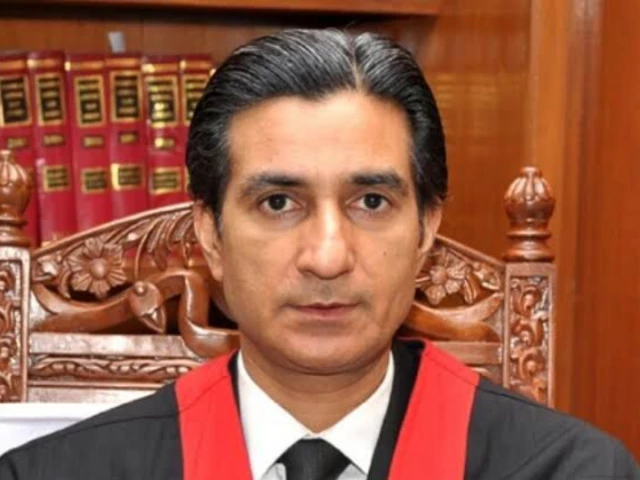
justice shams mehmood mirza


Justice Shams Mehmood Mirza

LAHORE: In a significant development for the country's judicial landscape, Lahore High Court's (LHC) Justice Shams Mehmood Mirza has tendered his resignation, reportedly in protest against the 27th Constitutional Amendment.

According to the reports, Justice Mirza has sent his resignation to President Asif Ali Zardari and has vacated his chamber at the high court.

His departure marks the first high-profile judicial resignation linked to the controversial constitutional amendment, which has sparked debate across legal and political circles.

Justice Mirza's resignation comes amid rumours of his transfer to some other high court under the new amendment, a possibility that has generated considerable concern within judicial quarters.

The judge was a member of the LHC's administrative committee, a role that placed him among the key decision-makers within the high court. He was appointed as an additional judge of the LHC on March 22, 2014, and was later confirmed as a permanent judge.

Justice Mirza was due to retire in 2028, making his early exit particularly noteworthy.
 
Last week, President Asif Ali Zardari signed the 27th Constitutional Amendment Bill into law, following its approval by both houses of the parliament. With the president's assent, the Bill has now formally become part of the Constitution of Pakistan. Following the approval of the amendment, senior-most judges of the Supreme Court, Justices Mansoor Ali Shah and Athar Minallah, tendered their resignations.

In his 13-page resignation letter, Supreme Court Justice Mansoor Ali Shah stated that the 27th Constitutional Amendment is a serious attack on the Constitution of Pakistan. He further remarked that the amendment has fragmented the Supreme Court of Pakistan.

Justice Athar Minallah, in his resignation letter, stated, "It has been my greatest honour and privilege to serve the people of Pakistan as part of its judiciary, and I have, to the best of my ability, endeavoured to discharge my duties in accordance with my oath. Today, it is the very same oath that compels me to tender my formal resignation."
 

Constitutional court begins hearings​

Three benches hear cases in IHC building as FCC expands to seven judges

JEHANZEB ABBASI
November 18, 2025


tribune


ISLAMABAD: The newly constituted Federal Constitutional Court (FCC) on Monday began hearing cases at the Islamabad High Court (IHC) building, with the chief justice’s courtroom previously used by IHC Justice Mohsin Akhtar Kayani.

The court, formed under the 27th Constitutional Amendment, also expanded to seven judges with the induction of Justice Syed Arshad Hussain Shah and Justice Rozi Khan Barrech.

Justice Shah served as the chief judge of the Gilgit-Baltistan Supreme Appellate Court from 2019 to 2022 while Justice Barrech was elevated to the FCC from the Balochistan High Court (BHC) where he had been serving as the chief justice since June this year.

According to sources, the FCC will be permanently established in the IHC building located on Islamabad’s Constitution Avenue, while the IHC itself will be shifted back to its old building in the G-10 sector of the federal capital and the relocation process is expected to be completed by January.

Items from the third floor of the current IHC building have already been moved to the G-10 premises. Assistant Registrar Mohammad Asad had been appointed supervisor for the transfer of records.

At IHC’s Courtroom No 2—formerly Justice Kayani’s courtroom—a simple handwritten slip reading “Chief Justice, Federal Constitutional Court of Pakistan” was pasted at the entrance.
 
On Monday, the FCC formally commenced proceedings after notifying three benches. The first bench, headed by FCC Chief Justice Amin-ud-Din Khan, included Justice Ali Baqar Najafi and Justice Syed Arshad Hussain Shah.

The second bench comprised Justice Hassan Azhar Rizvi and Justice K K Agha while the third bench included Justice Aamer Farooq and Justice Rozi Khan Barrech.

Proceedings in the courtroom of Justice Amin-ud-Din Khan began with the recitation of the Holy Quran. During roughly half an hour of proceedings, the bench heard all five cases, though lawyers did not appear in two of them.

The bench took up the Karachi Metropolitan Corporation’s (KMC) appeal against the Sindh High Court decision regarding the use of public parks in Karachi for commercial sports activities.

KMC’s counsel argued that the matter related to KMC’s powers and that the corporation had approved the use of public parks for sports activities through a resolution. The SHC had held that KMC lacked such authority, prompting the appeal.

The bench remarked that the matter involved public interest and issued a stay order against the SHC judgment. It also issued notices to all parties and adjourned the hearing until 27 November 27.

The petitioner’s lawyer stated that contempt petitions had also been filed against them. The bench directed the SHC not to proceed with contempt proceedings.

The bench also heard a case related to the availability of life-saving medicines.

During the hearing, Additional Attorney General Aamir Rehman appeared before the bench on the court’s call. The chief justice remarked that this was a public-interest case and the government must review the availability of medicines.

The bench sought a report from DRAP regarding the availability of medicines and adjourned the hearing for an indefinite period.
 
To view this content we will need your consent to set third party cookies.
For more detailed information, see our cookies page.
 

Reserved seats case: Justice Mandokhail says ROs rightly showed 41 candidates as independents


Nasir Iqbal
November 19, 2025

Supreme Court’s Justice Jamal Khan Mandokhail has observed that returning officers (ROs) correctly prepared lists of 41 candidates during the 2024 general elections, as it was PTI’s decision-makers who compelled them to contest independently.

Justice Mandokhail, a member of the now-defunct Constitutional Bench (CB), made the observation in his additional note in the reserved seats review case. In its June 27 ruling, the CB, by a majority of seven judges, had overturned the earlier SC judgment of July 12, 2024 that had granted reserved seats to the PTI.

While seven judges had accepted all review petitions filed by the ruling coalition parties, three others — including Justice Mandokhail — had partially allowed them, and two had rejected the pleas outright on the first day of the hearing.

Justice Mandokhail had maintained his original July 2024 order of giving 39 seats to PTI, but reviewed the majority judgment to the extent of 41 seats. In his note uploaded on the SC website on Tuesday, the judge detailed the reasoning for his ruling and how the CB could not include all judges who were part of the original bench due to the post-26th Amendment scenario.

“Apparently, it was the PTI’s decision-makers’ decision, which compelled the 41 candidates and others to submit their nomination papers independently,” Justice Mandokhail wrote, adding that the majority of the original SC bench did not “consider this important aspect of the case”.
 

Users who are viewing this thread

Back
Top