Indonesian Defense Industry

Hariff Defense has successfully developed a 10-layer printed circuit board (PCB) design for an FPGA-based system, marking a significant achievement that demonstrates the company's advancing engineering expertise in the development of high-complexity electronic systems.

To view this content we will need your consent to set third party cookies.
For more detailed information, see our cookies page.


To view this content we will need your consent to set third party cookies.
For more detailed information, see our cookies page.
 

PT PAL to launch third Philippine LPD as programme gets back on track​


By Ridzwan Rahmat | 11 June 2026

1781868413508.png

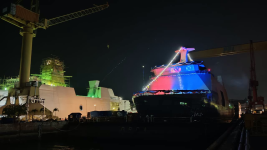
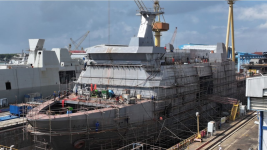
Indonesia's PT PAL will launch the Philippine Navy's third landing platform dock (LPD)-like strategic sealift vessel (SSV) on 30 June, with the programme now back on track following earlier delays and revised contractual milestones.

Speaking to Janes during a recent visit to the company's facilities in Surabaya, CEO Kaharuddin Djenod said earlier schedule disruptions have been resolved through mutually agreed adjustments with the Philippine government.

These adjustments have enabled construction to proceed on an accelerated timeline, with the ship progressing from hull block erection to its planned launch within six months, Djenod said.
The vessel, the first of two ordered under a 2022 follow-on contract, is expected to move through launch and outfitting ahead of delivery in 2027.

The contract previously encountered delays first reported by Janes in August 2025. At the time, documents indicated PT PAL had missed four key milestones, including launch and delivery dates for both ships.

Under the original schedule, the third ship was to be launched on 22 August 2024 and delivered on 22 January 2025, while the fourth was scheduled for launch on 22 February 2025 and delivery on 22 July 2025.

In a statement issued in September 2025, PT PAL acknowledged schedule slippages. The company attributed the delays to global geopolitical conditions affecting supply chains and production, including disruption to the availability of raw materials, compounded by tariff-related distortions and port congestions.

The follow-on contract for the third and fourth SSVs repeats an earlier USD92 million order awarded in 2014. The two SSVs from that contract were commissioned as BRP Tarlac in June 2016 and BRP Davao del Sur in May 2017.
 

Indonesia eyes missile integration for follow-on Scorpene submarines​


By Ridzwan Rahmat | 17 June 2026


To view this content we will need your consent to set third party cookies.
For more detailed information, see our cookies page.


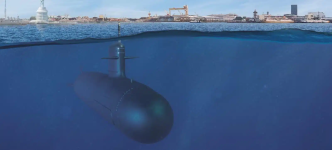
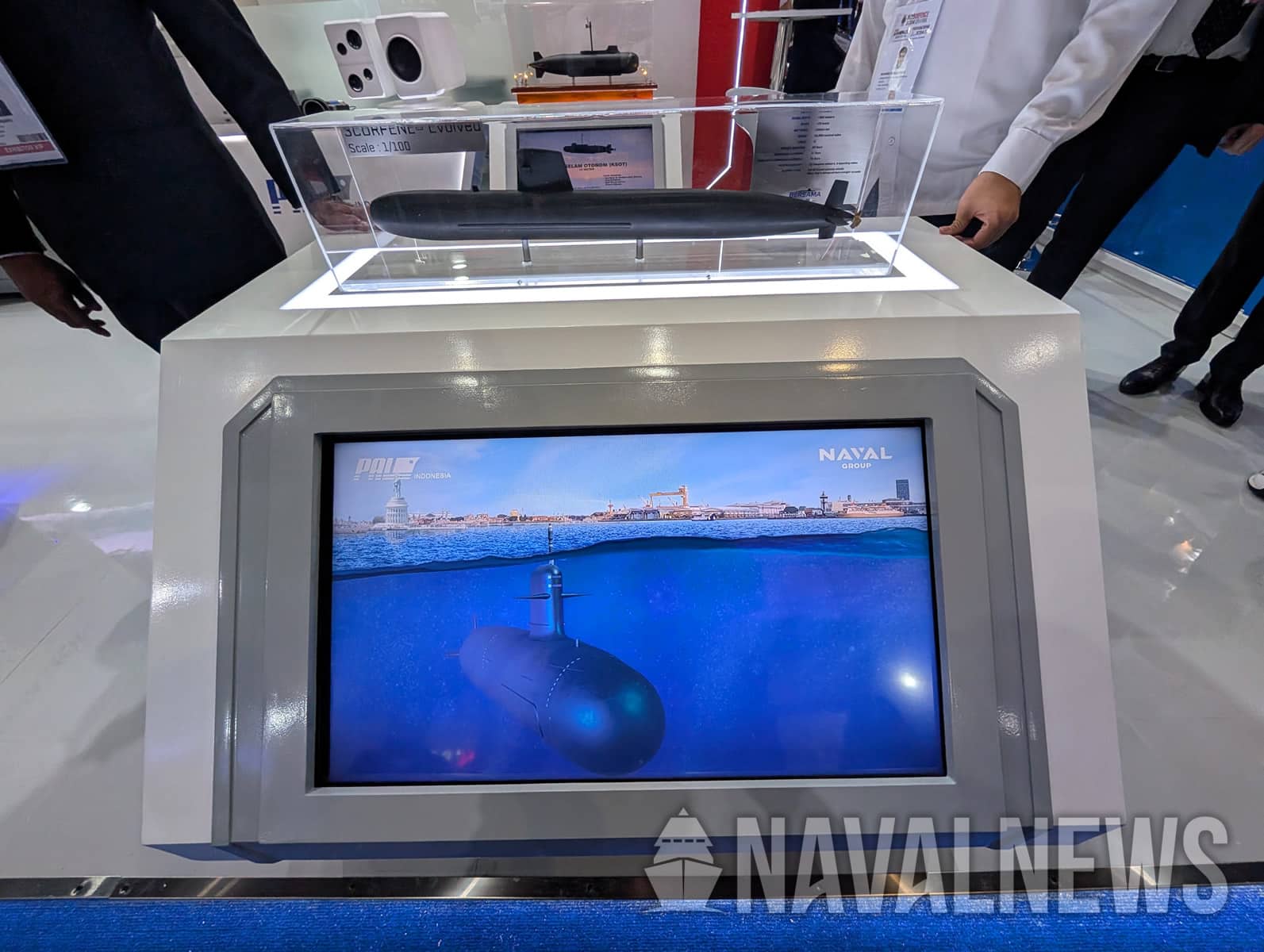
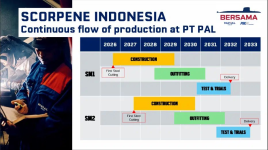
Indonesia's prospective third and fourth Scorpene submarines could be delivered with torpedo-tube-launched missile capability fully integrated from the outset, supported by PT PAL's expanding submarine systems integration capabilities.

Speaking to Janes during a recent interview in Surabaya, PT PAL CEO Kaharuddin Djenod said this would give Jakarta the option of incorporating missile integration into the construction and baseline configuration of follow-on boats, rather than treating it as a latent or deferred capability.

Such a capability is not new to the Scorpene family, which has long been designed to deploy tube-launched anti-ship missiles such as MBDA's SM39 Exocet in addition to 533 mm torpedoes.

However, current and past export programmes – including Indonesia's contract for two Evolved Scorpene submarines – have not always included full missile integration and certification within the base contract.

Against this backdrop, Djenod's comments suggest that the Indonesian Navy may seek to ensure that the third and fourth submarines are delivered with missile capability fully integrated into the combat system architecture from the outset, including the required fire control, software, and certification work.

Djenod said PT PAL's growing systems integration capabilities would support this approach.

The company has progressively expanded its role in combat system integration, including work to incorporate indigenous torpedo systems onto an autonomous submarine platform.

Building on these competencies, PT PAL expects to further strengthen its integration capabilities under future submarine programmes, potentially enabling more advanced weapon integration requirements to be addressed domestically.

This would allow future submarines to field such capabilities on entry into service, rather than relying on follow-on upgrades or separate weapons procurement decisions, Djenod added.


Alhamdulillah

---------

Indonesian Ambassador: KF-21 Prototype Fully Paid and Ready for Delivery​


10 Juni 2026


To view this content we will need your consent to set third party cookies.
For more detailed information, see our cookies page.

KF21 5th prototype for Indonesian Aerospace as test bed plane for home grown IFX development.


SEOUL
— Indonesia has fully settled its financial obligations for the KF-21 Boramae development program, and the prototype aircraft designated for Indonesia is now ready for delivery, according to Indonesian Ambassador to South Korea Cecep Herawan.

Speaking during the Indonesian Next-Generation Journalist Network program hosted by the Korea Foundation and the Foreign Policy Community of Indonesia at the Indonesian Embassy in Seoul on June 10, 2026, Cecep confirmed that Indonesia's contribution related to the prototype aircraft has been fully paid.

“It has been agreed that one of the six KF-21 prototype aircraft will be handed over to Indonesia. Hopefully, this can be realized in the near future,” Cecep said.
The KF-21 Boramae is a next-generation fighter aircraft jointly developed by South Korea and Indonesia under a long-running defense cooperation program. The project has been one of Indonesia's largest international aerospace collaborations and includes technology transfer and industrial participation components.

To view this content we will need your consent to set third party cookies.
For more detailed information, see our cookies page.


According to Cecep, the transfer of the prototype aircraft was previously agreed upon as part of the settlement arrangement between the two countries. Indonesia is expected to receive one of the six KF-21 prototypes produced during the aircraft's development and testing phase.

The prototype earmarked for Indonesia is a single-seat KF-21 aircraft that has been used in various flight-test and verification activities, including aerial refueling trials.

To view this content we will need your consent to set third party cookies.
For more detailed information, see our cookies page.


The ambassador's remarks indicate that the financial issues surrounding Indonesia's participation in the program have been resolved, paving the way for the delivery process.

The KF-21 joint development program, which has run for more than a decade, is expected to formally conclude in June 2026, after which discussions will focus on future cooperation and the utilization of technologies generated through the project.

The transfer of the prototype aircraft is expected to provide Indonesia with additional opportunities for aerospace technology development, testing, training, and future defense-industrial cooperation with South Korea.

Source: ANTARA
 
1781922974155.png

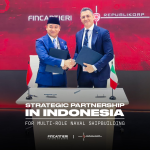
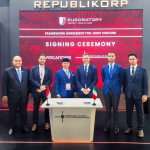
We are proud to announce the signing of a Memorandum of Understanding with REPUBLIKORP, Indonesia’s largest privately owned defense industrial holding company, through its subsidiary PT Republik Palindo Internasional (RPAL), establishing a strategic partnership between the two groups.

The MoU, signed at Eurosatory in Paris by our General Manager Naval Vessels Division, Eugenio Santagata, and Norman Joesoef, group Chairman and Founder REPUBLIKORP on behalf of RPAL, provides for the creation of a joint venture, aimed at supporting Indonesia’s domestic shipbuilding capabilities and fostering a long-term industrial cooperation.

1781922998135.png

A decisive step in enhancing Indonesia’s national mandate for defense self-reliance by leveraging our industrial expertise through engineering cooperation, training programs and the progressive strengthening of design, system integration and production competencies.

We are proud to support the integration of Indonesia into the global shipbuilding value chain, through the sharing of our cutting‑edge expertise and cooperation, to bring on board a safer and more innovative future.

To view this content we will need your consent to set third party cookies.
For more detailed information, see our cookies page.
 

Indonesia expands its Red White Frigate project​


By Gordon Arthur

January 22, 2026

To view this content we will need your consent to set third party cookies.
For more detailed information, see our cookies page.


According to a new letter of intent, the Indonesian Navy (TNI-AL) plans to construct another two Red White Frigates. An associated licensing agreement was struck with Babcock, whose Arrowhead 140 design forms the basis for the Indonesian warship.

The letter was signed on behalf of Indonesian President Prabowo Subianto, who was visiting the UK on a state visit at the time, and David Lockwood, CEO of Babcock.

Babcock said in a press release issued on 21 January: “A letter of intent outlining Indonesian procurement aims for the Maritime Partnership Programme (MPP) has been signed, alongside an initial agreement for the two licenses, to be delivered in the next few months.”

The MMP project created in November 2025 is worth some £4 billion (US$5.4 billion), and this is the first agreement under its auspices.

The MMP will “jointly develop maritime capability for Indonesia’s navy, fishing industry and, in turn, food security,” the British company stated. Babcock also noted that the letter “paves the way for further agreements,” plus it “underpins the growing momentum of Babcock’s frigate exports”.

Subianto said, “We’re pleased to proceed with the maritime partnership. I think this is very important and strategic for Indonesia. This is a vital part of our maritime economic development.” He envisages major investment in Indonesian shipbuilding, naval modernisation, revitalising fishing communities and enhancing defence and maritime security.

Lockwood added, “As the lead industrial partner in this programme, we’re creating a strong and enduring alliance that will not only support Indonesia’s maritime goals but will sustain and grow jobs in both countries. This first work order, within this landmark framework, signals the importance of the pace and progress needed to deliver President Prabowo Subianto’s maritime transformation and underpins the growing success of our Arrowhead 140 export design.”

Indonesian shipbuilder PT PAL is already constructing a first pair of Red White Frigates (known locally as the Fregat Merah Putih). After that contract was signed in 2021, the first vessel (the future KRI Balaputradewa) was launched on 18 December 2025.

1781924462867.png
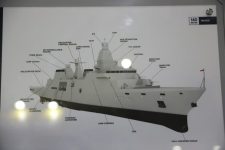
PT PAL displayed this graphic of the Red White Frigate (Fregat Merah Putih) at Indo Defence 2025. (Gordon Arthur)


While the overall ship design is British – the Arrowhead 140 design also forms the basis of the Royal Navy’s future Type 31 frigate – these Fregat Merah Putih heavily utilise Turkish systems and weapons.

PT PAL told Asian Military Review that it changed about 60% of Babcock’s reference design in order to meet TNI-AL requirements. For example, there are two Leonardo Super Rapid 76mm naval guns, a 64-cell Roketsan MİDLAS universal vertical launch system amidships, and Indonesia sought a higher top speed of 28kt.

Other armaments include a Rheinmetall Millennium 35mm close-in weapon system at the stern, four Leonardo Lionfish 12.7mm remote weapon stations, two Leonardo B515/3 triple torpedo launchers, and Aselsan Kartaca-N six-tube 130mm decoy launching systems.

According to PT PAL, the frigate measures 140m long, has a 19.75m beam and 4.96m draught. It displaces 5,996 tonnes, a figure that rises to 6,626 tonnes at full load. The vessel has a complement of 177, and the frigate has a range of 7,560nm and 21-day endurance at its cruising speed of 15kt.

Sensors to be installed are Aselsan’s Cenk 400-N S-band active electronically scanned array radar, Aselsan Mete Han X-band multifunction radar, Aselsan Mar-D helicopter control radar, Havelsan Advent combat management system, Aselsan Fersah 100-N/MF hull-mounted sonar, Aselsan Akrep fire control radar, Aselsan target designation sights and an ELT Group electronic warfare suite.

The second frigate is expected to be launched this year. These are the most sophisticated warships that PT PAL has ever attempted to build.

by Gordon Arthur


PT PAL secures contract for KSOT autonomous submarine​

By Ridzwan Rahmat | 11 June 2026

1781926252505.png
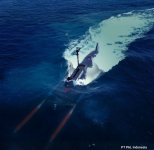
Photo from PT PAL Indonesia shows an Kapal Selam OTonom (KSOT) launching two Piranha torpedoes simultaneously.


Indonesia's PT PAL has secured a contract from the Indonesian Ministry of Defence (MoD) for an undisclosed number of Kapal Selam Otonom (KSOT) autonomous submarines, the company's CEO Kaharuddin Djenod told Janes.

Djenod disclosed the contract during a recent interview at the company's premises in Surabaya. His comments mark the first confirmation that the KSOT has moved beyond prototype and demonstration phases to evaluation procurement.

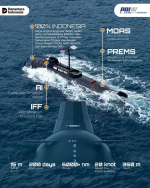
Details remain limited, but Djenod said the contracted variant will be significantly larger than the prototype demonstrated in October 2025 and will carry eight lightweight torpedoes.

1781926466446.png

Additional details about the contract and the submarine to be supplied will be revealed in October 2026 in line with events marking the 81st anniversary of the Indonesian Armed Forces, Djenod said.

Indonesia's KSOT programme was unveiled by PT PAL at Indo Defence 2022 as part of efforts to develop an indigenous underwater warfare capability.

Early concepts centred on an artificial intelligence-enabled platform designed to conduct missions including surveillance, reconnaissance, and strike, while reducing risk to personnel.

The system has since been framed as an underwater-based asymmetric warfare capability, enabling the Indonesian Navy to engage larger adversaries with a lower-cost platform capable of deploying torpedoes at stand-off distances.

A KSOT variant measuring about 15 m in length, with a displacement of roughly 37 tonnes, has been used in recent trials, including a torpedo firing carried out at Indonesian Navy facilities in Surabaya in October 2025.

That demonstration involved the launch of a lightweight torpedo from what appeared to be an externally mounted tube.

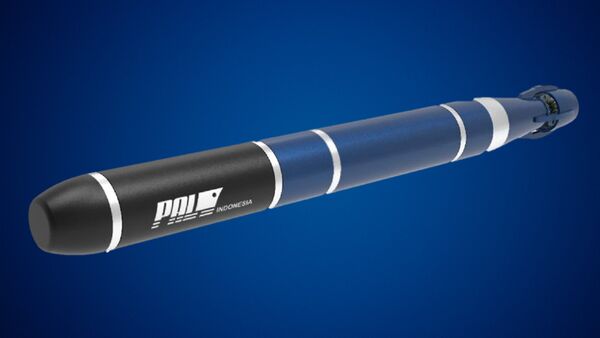
Djenod said PT PAL is also anticipating separate contracts for its domestically developed Piranha lightweight torpedo.

 
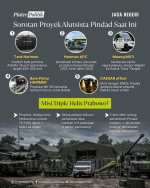
Pindad Projects

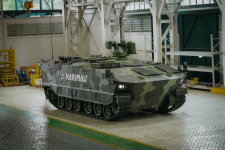
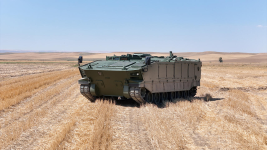
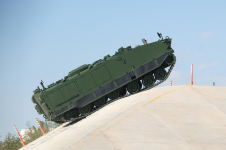
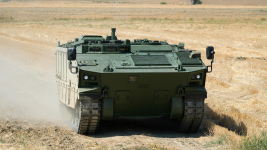
1. Target 200-400 unit MT Harimau
2. Harimau APC produce and delivery the end 2026
3. Export Maung MV3
4. Produce Hammer for Rafale
5. Produce 155 mm ammunition for Caesar

1781926743765.png
1781927224879.png

1781927158817.png


-------------

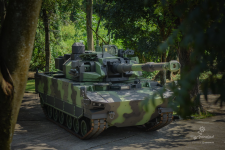
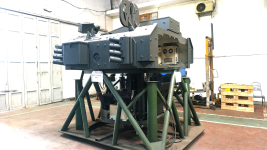
Locally made tank turret by local private sector (PT SAS Aero Sishan)

105 mm tank turret prototypes made by local companies. The prototype has been ready for testing this year. The turret is primarily intended to replace Belgian turret on Harimau Medium Tank for new production units.


1781927330785.png
 
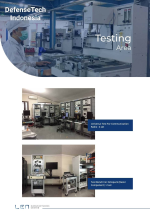
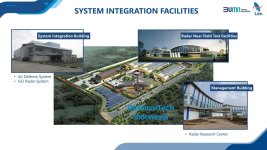
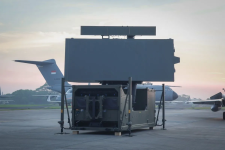
LEN’s facilities include testing and integration facilities, as well as a possible management building for the GCI GM-403 radar factory.

1781927614195.png
1781927639373.png

---------------

1781927792517.png
 

Users who are viewing this thread

Back
Top