Anadolu Agency
August 26, 2025
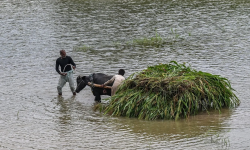
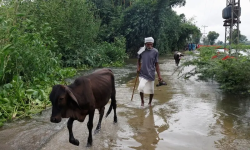
Farmers transport crops on a buffalo cart in the flood-affected area after heavy rainfall in Punjab’s Kasur district, August 24. — AFP
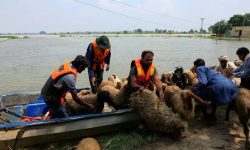
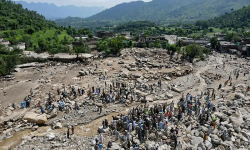
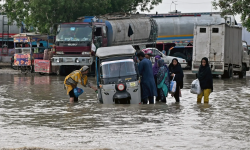
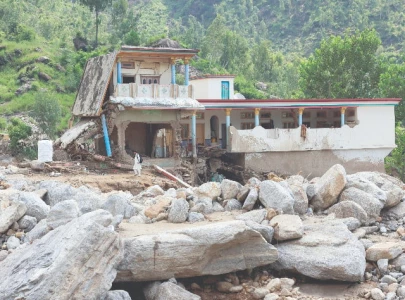
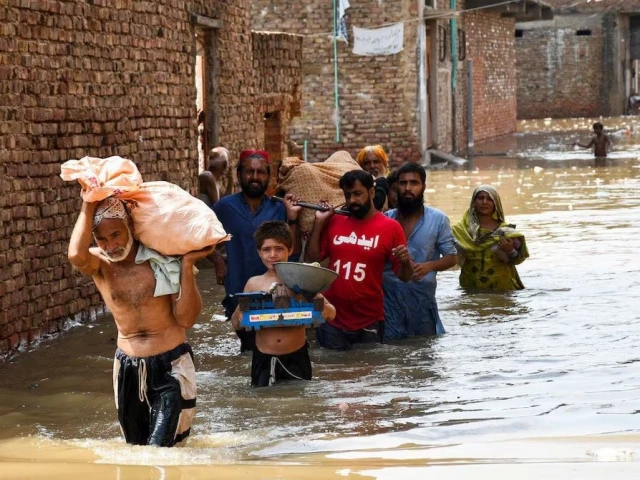
Northern areas are reeling from devastating climate-induced flash floods that killed hundreds earlier this month, destroying homes, infrastructure and livelihoods in scenes many compared to the catastrophic 2022 deluges.
Pakistan ranks among the world’s 10 most climate-vulnerable countries, despite contributing less than 1 per cent of global greenhouse gas emissions.
Experts warn that such floods and other calamities are no longer “rare disasters” and are becoming routine shocks in a country ill-prepared to withstand them.
The focus, according to these experts, must now be on adaptation, not emissions cuts.
“Floods are no longer rare disasters in Pakistan. They are becoming routine shocks that people brace for every monsoon. Calling them the ‘new normal’ is not an exaggeration,” said Karachi-based ecologist Rafi-ul-Haq.
Since mid-August, torrential rains, flash floods and cloudbursts have killed more than 460 people across the country, including in Azad Jammu and Kashmir and the Gilgit-Baltistan region.
Khyber Pakhtunkhwa has been the
worst-hit, where swollen rivers, mudslides and collapsing homes have buried entire families. Nationwide, almost 800 people have died in rain-triggered floods and landslides since late June.
Haq said the intensity of rains and floods is accelerating due to climate change, global warming and melting glaciers. But human actions — unplanned urbanisation, deforestation, blocked waterways, lax governance and weak emergency responses — account for as much as 60pc of the destruction.
“Pakistan cannot stop the rain, but it can prevent much of the suffering by fixing manmade vulnerabilities,” he said. “Floods will happen, but disasters don’t have to.”
Ahmed Kamal, an Islamabad-based flood management expert, described the current flooding as a “new normal”. Shifting monsoon patterns, he said, have intensified rainfall and created new hotspots of devastation.
The Gilgit-Baltistan region, home to towering glaciers, has experienced
alarming changes. Temperatures have risen steadily, accelerating glacier melt and causing glacial lake outburst floods. In May, Chilas district recorded an unprecedented 49°C (120F).
“We have our glaciers melting very fast, while winters are shrinking,” Kamal said. “Snowfall was almost 50pc below average last year.”
He also pointed out the dangers of intensifying cyclone threats in Pakistan, saying that rising sea surface temperatures in the Arabian Sea have shifted storm activity westward, with cyclones increasingly striking the coast since 2007.
At the same time, decades of deforestation — driven by demand for farmland and housing — have stripped the country of natural flood buffers. “This has multiplied the frequency and intensity of floods,” Kamal said.