Navigation
Install the app
How to install the app on iOS
Follow along with the video below to see how to install our site as a web app on your home screen.
Note: This feature may not be available in some browsers.
More options
Style variation
You are using an out of date browser. It may not display this or other websites correctly.
You should upgrade or use an alternative browser.
You should upgrade or use an alternative browser.
Pakistan Weather News / Updates
- Thread starter ghazi52
- Start date
More options
Who Replied?


ghazi52
THINK TANK: CONSULTANT
- Thread starter
- #872
51 degrees and counting: Surviving heat in Jacobabad
Pakistan's heat future is already here.Soha Macktoom Muhammed Toheed
June 22, 2026
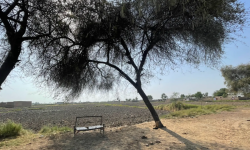
Three days without electricity. A fan barely larger than a dinner plate. A daughter tracking the movement of the sun across a courtyard so that the solar panel powering it does not lose charge. This is how Shabana, 42, survives June 2026 in Jacobabad.
On the afternoon we met her, the heat index touched 51°C
“It used to be hot before as well,” she says. “But electricity did not disappear this often, and water was always available. There has been no electricity at my house for the last three days. It is very hot. We feel very hot. But what can we do? Mujhe tou lagta he me garmi ki wajah se sookh gayi hoon (I feel as though I have dried up because of the heat).”
The Pakistan Meteorological Department has once again warned of intense heatwave conditions across Sindh. Yet for Jacobabad, often described as one of the hottest places on Earth, extreme heat is not an exceptional event. It is a lived reality. What is changing, however, is the intensity of that reality and the growing cost of surviving it.
As part of ongoing fieldwork under the project “Reducing Global Catastrophic Risk from Unseen Climate Extremes”, conducted jointly by the Karachi Urban Lab-IBA and the King’s College London, we have spent time speaking to residents across Jacobabad’s informal settlements, and its surrounding villages. Their stories reveal something that temperature records alone cannot capture: the struggle against heat is no longer simply about discomfort. It is increasingly about survival.
The conversation in Jacobabad has already moved beyond questions of liveability. It is becoming a question of survivability.
Prolonged exposures to heat can be deadly — regardless of fitness, levels of hydration, or access to fans. Yet, the precise risks to the body, and its organs are not well understood, while the potential societal impacts are completely unknown.
A city with a population of 219,315 (PBS, 2023), heat is a part of the lived reality of residents in Jacobabad. However, for many residents, heat itself is not the only threat. Heat combined with failing infrastructure, prolonged power outages, water insecurity and deepening poverty creates a far more dangerous reality.
Across neighbourhoods in Jacobabad, residents reported enduring between 14 and 16 hours of daily load-shedding. In some peripheral settlements, households remain disconnected from the electricity grid altogether. For these communities, even a ceiling fan represents a luxury.
ghazi52
THINK TANK: CONSULTANT
- Thread starter
- #873
NDMA issues nationwide severe weather alert
Our Correspondent
June 22, 2026
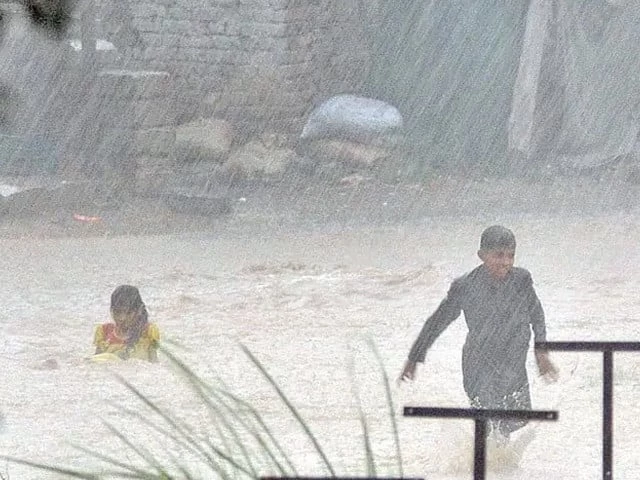
ISLAMABAD: The National Disaster Management Authority (NDMA) on Sunday issued a nationwide weather alert, warning that thunderstorms, strong winds, heavy rainfall, urban flooding, and glacier-related flood risks could affect several parts of Pakistan over the next 12 to 24 hours, with vulnerable mountainous regions facing an elevated threat of flash floods, landslides, and Glacial Lake Outburst Floods (GLOFs).
According to the National Emergencies Operation Centre (NEOC), the forecast weather pattern is consistent with the seasonal outlook issued three to four months ago.
The NDMA said it has been continuously providing advance warnings and risk assessments to relevant federal, provincial, and district authorities.
ghazi52
THINK TANK: CONSULTANT
- Thread starter
- #874
PMD issues Glof alert for GB, KP amid soaring temperatures
News DeskJune 27, 2026
A view of Badsuwat area of Ishkoman Valley of the Ghizer District in Gilgit-Baltistan after being hit by the glacial lake outburst flood. — Dawn
The Pakistan Meteorological Department (PMD) has issued an alert for glacial lake outburst floods (Glofs) for Gilgit-Baltistan and Khyber Pakhtunkhwa, predicting that soaring temperatures are likely to persist until the first week of July.
“This significant warming will substantially accelerate snow and ice melt in the glaciated valleys of these regions,” the Met Office said in the alert issued late on Friday.
It said that consequently, the water level in the river streams was likely to remain high, existing glacial lakes may rapidly expand with an increase in their water levels, and new glacial lakes were likely to form due to the high volume of melted water.
Meanwhile, vulnerable downstream locations and low-lying areas adjacent to riverbeds may face a high risk of sudden inundation with chances of flash flooding in vulnerable locations, it added.
The Met Office further said that the rapid expansion of glacial lakes could destabilise their natural ice or moraine dams, potentially triggering Glof incidents.
The weather conditions can trigger heavy mud and debris flows down mountain slopes, with an increase in the likelihood of landslides in steep terrains, the PMD said.
It advised residents and visitors: to stay away from riverbanks, stream beds, and local nullahs; to refrain from camping, trekking, or staying near riverbanks, streams, glacial lakes and narrow mountain valleys; and avoid steep slopes and unstable terrain where melting snow could trigger landslides or debris flows.
ghazi52
THINK TANK: CONSULTANT
- Thread starter
- #875
Three injured as 5.2-magnitude quake jolts Balochistan's Barkhan, surrounding areas
Epicentre was located 58 kilometres northeast of Barkhan, with tremors felt also in Kohlu, Rakhni and Musa Khel areas
Sardar Hameed Khan
June 27, 2026
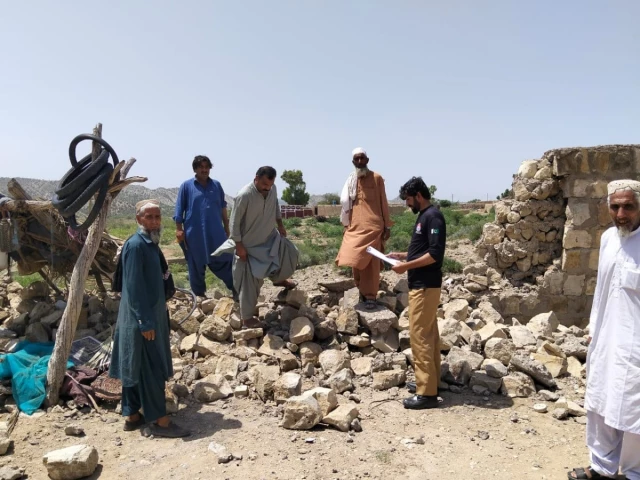
Photo: Express
QUETTA: Three people were injured on Saturday as earthquake tremors were felt in Balochistan's Barkhan district and adjoining areas, spreading fear and panic among residents.
According to the National Seismic Monitoring Centre, the earthquake measured 5.2 in magnitude and occurred at a depth of 19 kilometres. Its epicentre was located 58 kilometres northeast of Barkhan, with tremors felt also in Kohlu, Rakhni and Musa Khel areas.
ghazi52
THINK TANK: CONSULTANT
- Thread starter
- #876
Met Office forecasts nationwide monsoon rains, warns of flash floods
- Currents from Bay of Bengal expected to reach upper regions by July 2
The Pakistan Meteorological Department (PMD) has issued a nationwide alert, predicting the onset of the monsoon season during the first week of July 2026.
A weather system, driven by a westerly wave entering the country’s upper regions on the night of June 30, is expected to bring widespread rain, windstorms, and thundershowers, the Met Office said.
According to the PMD, moisture-laden currents from the Arabian Sea are currently penetrating the eastern and central parts of the country, while similar currents from the Bay of Bengal are expected to reach the upper regions by July 2.
This weather system is projected to significantly subside the prevailing hot and humid conditions nationwide.
ghazi52
THINK TANK: CONSULTANT
- Thread starter
- #877
Scattered rain, windstorms, and thundershowers, with isolated heavy falls, are expected in Kashmir from July 1 to 6. Similarly, Khyber Pakhtunkhwa will experience thundershowers from July 1 to July 5 in districts including Dir, Swat, Peshawar, Kohat, and Bannu, among others.
The northern and central districts of Punjab, including Islamabad, Rawalpindi, Lahore, and Sialkot, are forecast to receive rain from July 1 to July 6. Southern districts, including Bahawalpur, D.G. Khan, and Multan, are expected to see intermittent rainfall from July 3 to July 5.
Rain and thundershowers are predicted for Gilgit-Baltistan from July 1 to July 5. In Balochistan, the north and northeastern regions, including Zhob, Sibbi, and Naseerabad, are likely to receive precipitation from July 1 to July 4.
Northern Sindh districts, including Sukkur, Larkana, Dadu, and Jacobabad, are expected to experience windstorms and thundershowers on July 3 and 4.
The PMD has highlighted several critical risks associated with this weather system. Windstorms and lightning may damage weak infrastructure, including solar panels, billboards, and electric poles.
The northern and central districts of Punjab, including Islamabad, Rawalpindi, Lahore, and Sialkot, are forecast to receive rain from July 1 to July 6. Southern districts, including Bahawalpur, D.G. Khan, and Multan, are expected to see intermittent rainfall from July 3 to July 5.
Rain and thundershowers are predicted for Gilgit-Baltistan from July 1 to July 5. In Balochistan, the north and northeastern regions, including Zhob, Sibbi, and Naseerabad, are likely to receive precipitation from July 1 to July 4.
Northern Sindh districts, including Sukkur, Larkana, Dadu, and Jacobabad, are expected to experience windstorms and thundershowers on July 3 and 4.
The PMD has highlighted several critical risks associated with this weather system. Windstorms and lightning may damage weak infrastructure, including solar panels, billboards, and electric poles.

Blueishere
Registered Member
Interesting video, applies to Pakistan aswell. Not necessarily about weather, but how Urban planning can be used to tackle it and the disproportionate weather for elites in South Asian cities at large.
ghazi52
THINK TANK: CONSULTANT
- Thread starter
- #879
Melting mountains and returning floods — Swat’s climate emergency
Fazal KhaliqJune 30, 2026
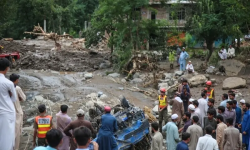
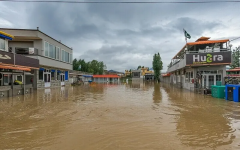
SWAT: On June 27, authorities issued a Glacial Lake Outburst Flood (Glof) alert for the northern districts of Khyber Pakhtunkhwa, including Swat, warning that soaring temperatures were expected to accelerate snow and glacier melt across mountain valleys and increase the risk of flash flooding, landslides and sudden inundation downstream.
Authorities urged monitoring of vulnerable sites, evacuation preparedness and public awareness in communities living along rivers and streams.
For the residents of Swat, however, the warning did not sound theoretical.
It reopened memories of a crisis that has unfolded over more than a decade, one measured not only in damaged roads and collapsed bridges, but also in disrupted identities, broken landscapes and communities learning to live with uncertainty.
The Swat River has always been dynamic. Its channels shift, widen and reclaim floodplains during periods of high discharge. Yet in recent years, changing climate patterns combined with expanding development have altered the relationship between people and the river.
Satellite-based information published through Space4Climate, powered by the Pakistan Space and Upper Atmosphere Research Commission (Suparco), has highlighted how urban expansion into active floodplains at Bahrain increased exposure to flood damage.
Comparative imagery published for 2010–2022 shows substantial construction along sections of the river corridor, narrowing natural water pathways before the destructive floods of August 2022.
ghazi52
THINK TANK: CONSULTANT
- Thread starter
- #880
According to the Emergency Events Database (EM-DAT), the country has faced 89 flood events in the last 25 years, with impacts becoming more severe due to increasing urban expansion and development within active riverbeds and floodplains.
Using satellite-based monitoring, Suparco provides continuous assessments of river behaviour and surrounding land use, supporting informed decision-making for flood risk reduction and climate-resilient development.
Normal river water as of May 2022 appears light blue in this satellite image of River Swat and its tributary. — via Space4ClimateRiver water during the August 2022 floods appears muddy in the channels in this satellite image of River Swat and its tributary. The image highlights the risks to the settlements (outlined in yellow). — via Space4Climate
The implication extends beyond one town: climate hazards become more destructive when natural river systems lose space to absorb extreme flows.
Long before flood damage became international news, communities in Upper Swat had already begun documenting change. From Gabral to Mankiyal, from Matiltan to Daral, repeated floods and climate-linked extremes since around 2010 have reshaped everyday life.
Yet physical destruction tells only part of the story.
Using satellite-based monitoring, Suparco provides continuous assessments of river behaviour and surrounding land use, supporting informed decision-making for flood risk reduction and climate-resilient development.
Normal river water as of May 2022 appears light blue in this satellite image of River Swat and its tributary. — via Space4ClimateRiver water during the August 2022 floods appears muddy in the channels in this satellite image of River Swat and its tributary. The image highlights the risks to the settlements (outlined in yellow). — via Space4Climate
The implication extends beyond one town: climate hazards become more destructive when natural river systems lose space to absorb extreme flows.
Long before flood damage became international news, communities in Upper Swat had already begun documenting change. From Gabral to Mankiyal, from Matiltan to Daral, repeated floods and climate-linked extremes since around 2010 have reshaped everyday life.
Yet physical destruction tells only part of the story.
ghazi52
THINK TANK: CONSULTANT
- Thread starter
- #881
Water is ‘not a tool of coercion’
During his briefing, the FO spokesperson also assailed India’s attempt to treat the Indus river system as a “strategic asset that can be controlled”.Andrabi declared that Pakistan rejected “India’s attempt to invoke baseless allegations of terrorism as a pretext for placing the Indus Waters Treaty (IWT) in abeyance and obstructing the lawful flow of the Pakistani shares” of the waters.
“Let this be very clear: the real issue is not terrorism. The real issue is the growing disposition within the indian leadership to treat a shared international river system as a strategic asset that can be controlled, withheld or diverted at will,” he asserted.
“This mindset of unilateral appropriation is fundamentally incompatible with the letter and spirit of not just the international law but also the IWT,” Andrabi said.
Maintaining that water was “not a tool of coercion or political pressure”, he warned that any attempt to deny Pakistan its legitimate share of the Indus waters constituted a clear violation of the international legal obligations undertaken by India and “undermined India’s credibility of its commitment to a treaty-based relationship”.
He noted that a summit, titled “International Seminar on Indus Waters Treaty: An Instrument of Peace and Regional Stability”, was held in Islamabad on Tuesday, where participants called for upholding the IWT and “rejected weaponisation of water”.
ghazi52
THINK TANK: CONSULTANT
- Thread starter
- #882
2 killed, 9 injured in rain-related incidents across Punjab
Deaths reported in Attock due to a wall collapse; 7 lives lost in past three days in KP; flash floods occur in Lower and Upper Chitral, Haripur, Shangla.
ghazi52
THINK TANK: CONSULTANT
- Thread starter
- #883
Chenab erosion washes away swathes of farmland
According to the farmers, the recent spell of heavy rains has further raised the river’s water level, accelerating the erosion.
ghazi52
THINK TANK: CONSULTANT
- Thread starter
- #884
Four killed, 36 injured as first monsoon spell hits KP
Dawn ReportJuly 2, 2026
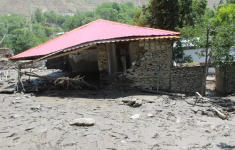
A house damaged in a flash flood in Seen Kurum village, Lower Chitral. — Dawn
PESHAWAR: As the first spell of monsoon rains hit several parts of Khyber Pakhtunkhwa on Wednesday, four people were killed and 36 injured in downpour-related incidents.
The casualties were reported in Upper Dir, Khyber, Shangla, Mardan and Bajaur districts.
At least 21 female students were injured in a stampede as lightning struck near their Upper Dir seminary during heavy rain. Besides, separate rain-related incidents and road accidents in the district also left one child dead and several people injured.
According to Wari DSP Fakhar Alam, around 250 students were present at the Jamia Hafsa Lil-Banat in the Osorai Dara area at the time of the incident.
The lightning strike triggered panic, causing a stampede that injured 21 students. The rescue teams shifted the injured to the Wari Hospital, where doctors said they all were out of danger.
ghazi52
THINK TANK: CONSULTANT
- Thread starter
- #885
2 killed in rain-related incidents in KP, taking two-day tally to 9: PDMA
Punjab reports 2 deaths in last 24 hours; flash floods occur in Lower and Upper Chitral, Haripur, Shangla.Users who are viewing this thread
Total: 3 (members: 0, guests: 3)
Pakistan Defence Latest
-
 Federal cabinet gives nod to imposition of emergency in KP; summary sent to president (76 Viewers)
- Latest: hydrabadi_arab
-

-
PTI Murad Saeed in Afghanistan, was 'controlling KP govt' from there: Rana Sanaullah (7 Viewers)
- Latest: Blain2
-

-
Country Watch Latest


Latest Posts
-

-
-

-

-
 Why all countries especially small Muslim states flocking to Pakistan for defense. A debate (18 Viewers)
- Latest: hussain0216