Pakistan Weather News / Updates

Kalabagh Dam isnt happening for multiple reasons. One of them is the usual poor treatment of KPK where hydel payments are always 10 years behind schedule. But biggest problem with the dams is the canals that are taken out of them for irrigation , overwhelmingly in Punjab. This means Sindh loses the water that it was originally getting in the rivers.

This is why for electrical generation and some flood control, alternative dams are being built in KPK, Azad Kashmir and Northern Areas, but whose water cannot be used for irrigation canals.

1) What do the down stream canals have to do with an upstream dam?
2) Because payments are delayed you want the dam not to be built? Effectively eliminating all hydel payments from the project.... along with water storage, water security, and power generation?
3) The blame on Punjab for taking "Sindh's water" was settled once and for all back in 1991 under the Water Apportionment Accord.
4) Why cant the water from these other dams be used for irrigation canals?

There are those on the forum who justify the shabby treatment of smaller provinces in various ways, such as claiming better ROI from Punjab rather allegedly "backward barbaric vile" people living in the smaller provinces, but that is the wrong approach and an example of what's wrong with Pakistan in the first place.

You say this while contesting billions of dollars worth of investment in KPK for the Kalabagh project by the federal government.
 

Pakistan floods death toll nears 280​


NDMA urges provincial governments to remain on alert, prepared for emergency responses

Web Desk
July 28, 2025

tribune


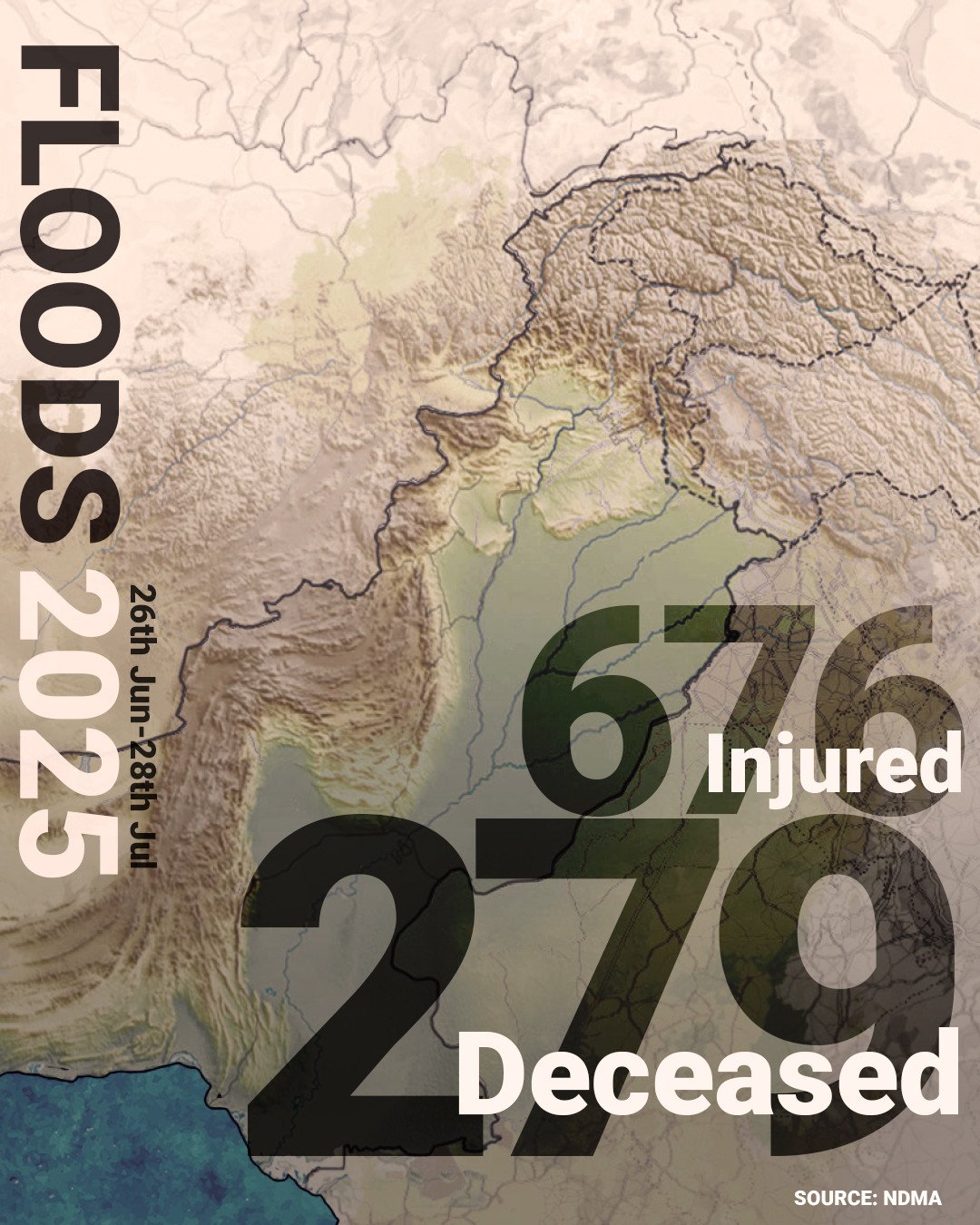
At least 279 people have died and 676 others have been injured as a result of monsoon floods that swept across Pakistan from June 26 to July 25, 2025, according to the National Disaster Management Authority (NDMA).

011753697379-0.jpg


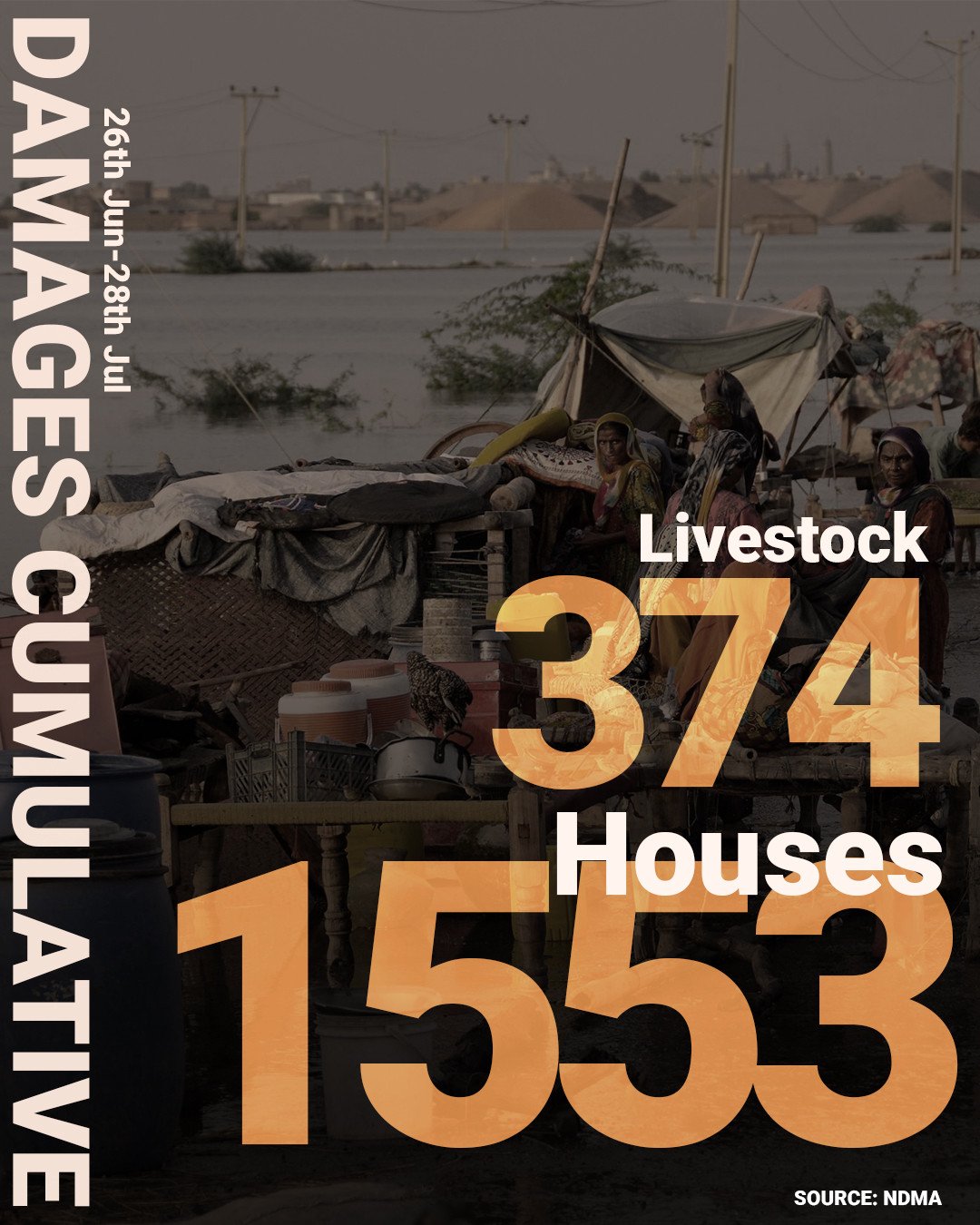
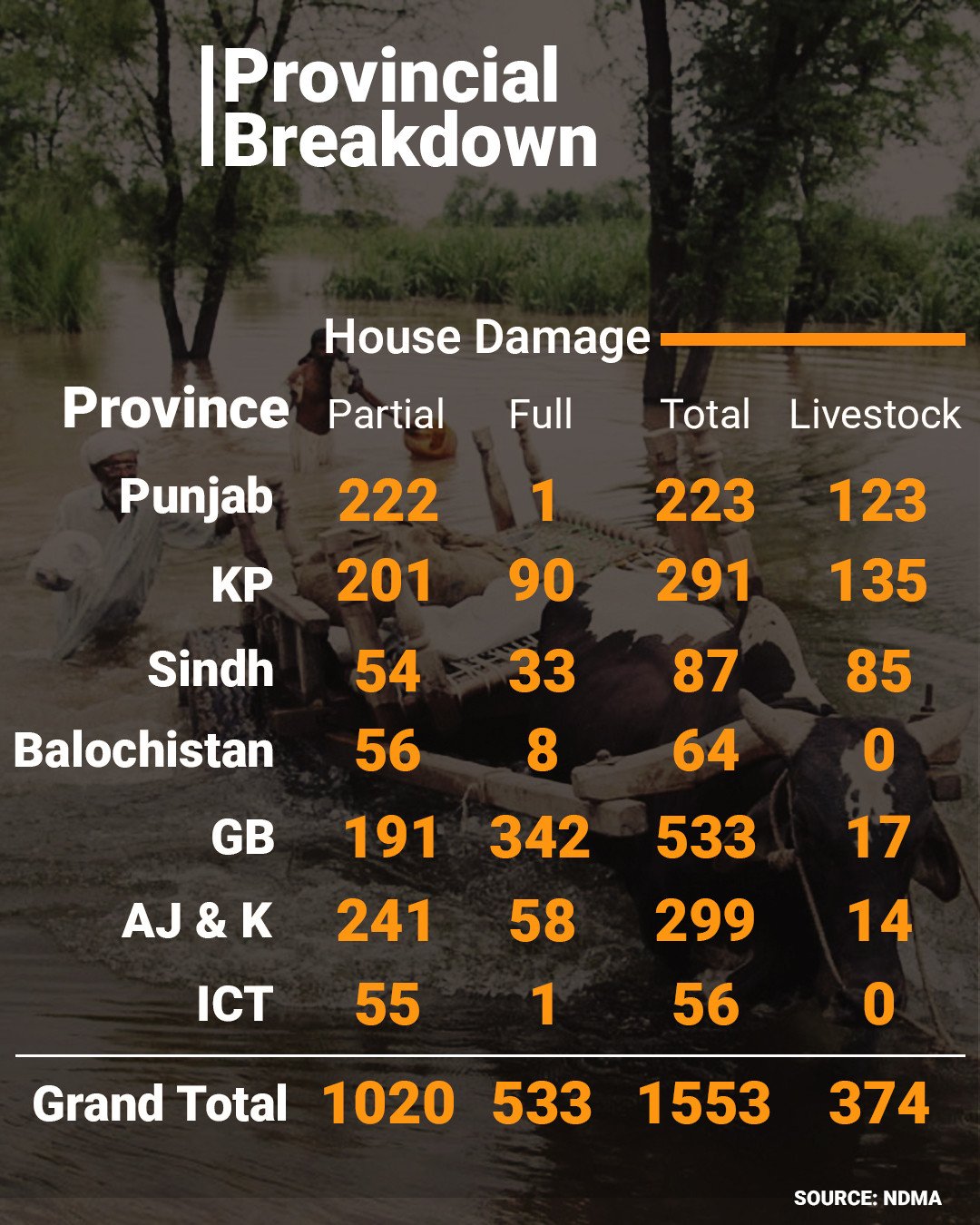
The flooding, triggered by seasonal rains, also destroyed 1,553 houses and led to the death of 374 livestock.

031753697379-2.jpg


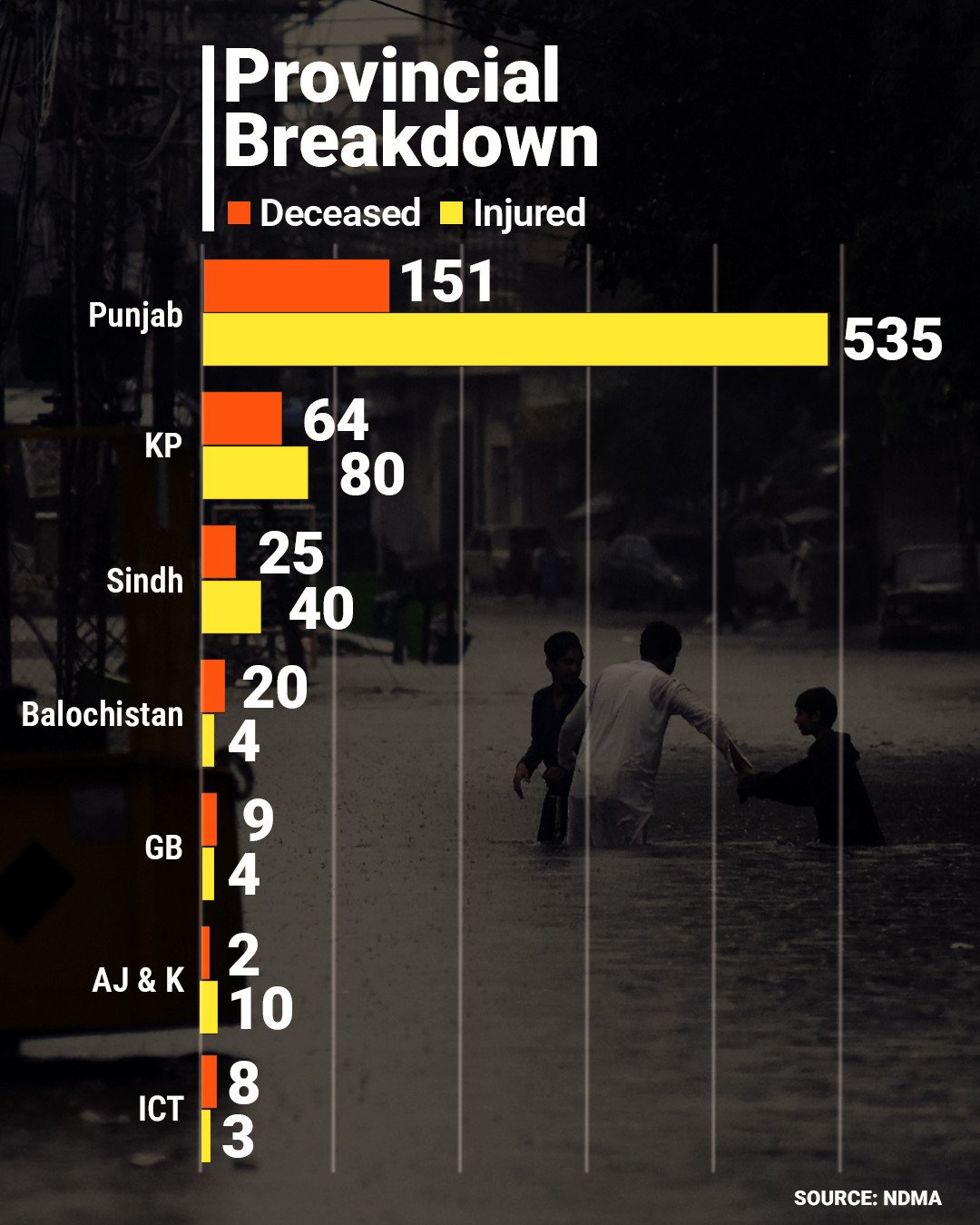
Punjab was the hardest-hit province, with 151 fatalities and 535 injuries. Khyber-Pakhtunkhwa (K-P) followed with 64 deaths and 80 injured, while Sindh recorded 25 deaths and 40 injuries.

021753697378-1.jpg
 
Gilgit-Baltistan suffered the most extensive property damage, with 533 houses impacted — 342 of them destroyed.

Azad Jammu and Kashmir (AJ&K) reported 299 damaged homes, K-P 291, and Punjab 223.

041753697379-3.jpg


The largest livestock losses were recorded in K-P (135) and Punjab (123).

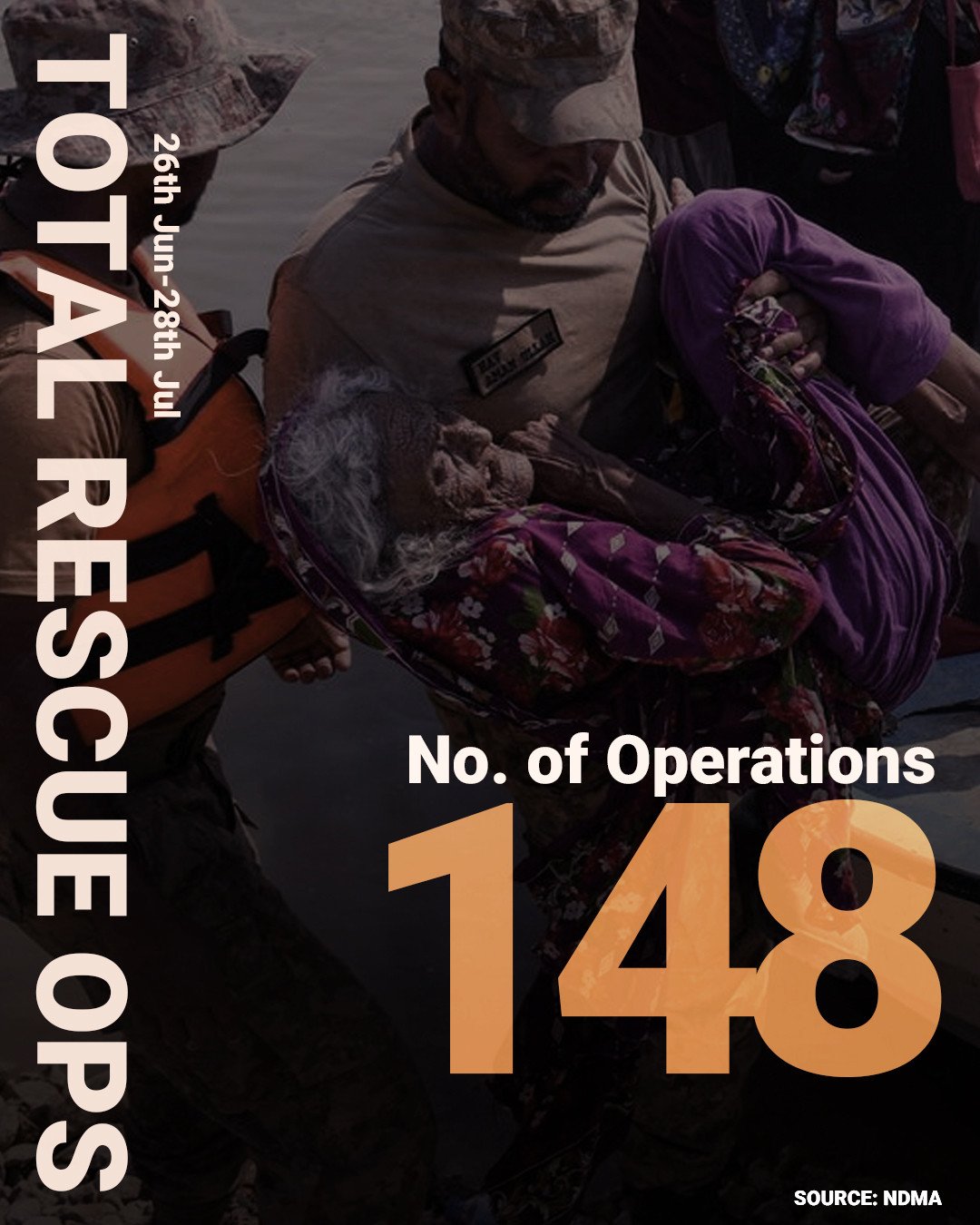
Rescue efforts have been ongoing, with 148 operations carried out across the country.

051753697378-4.jpg


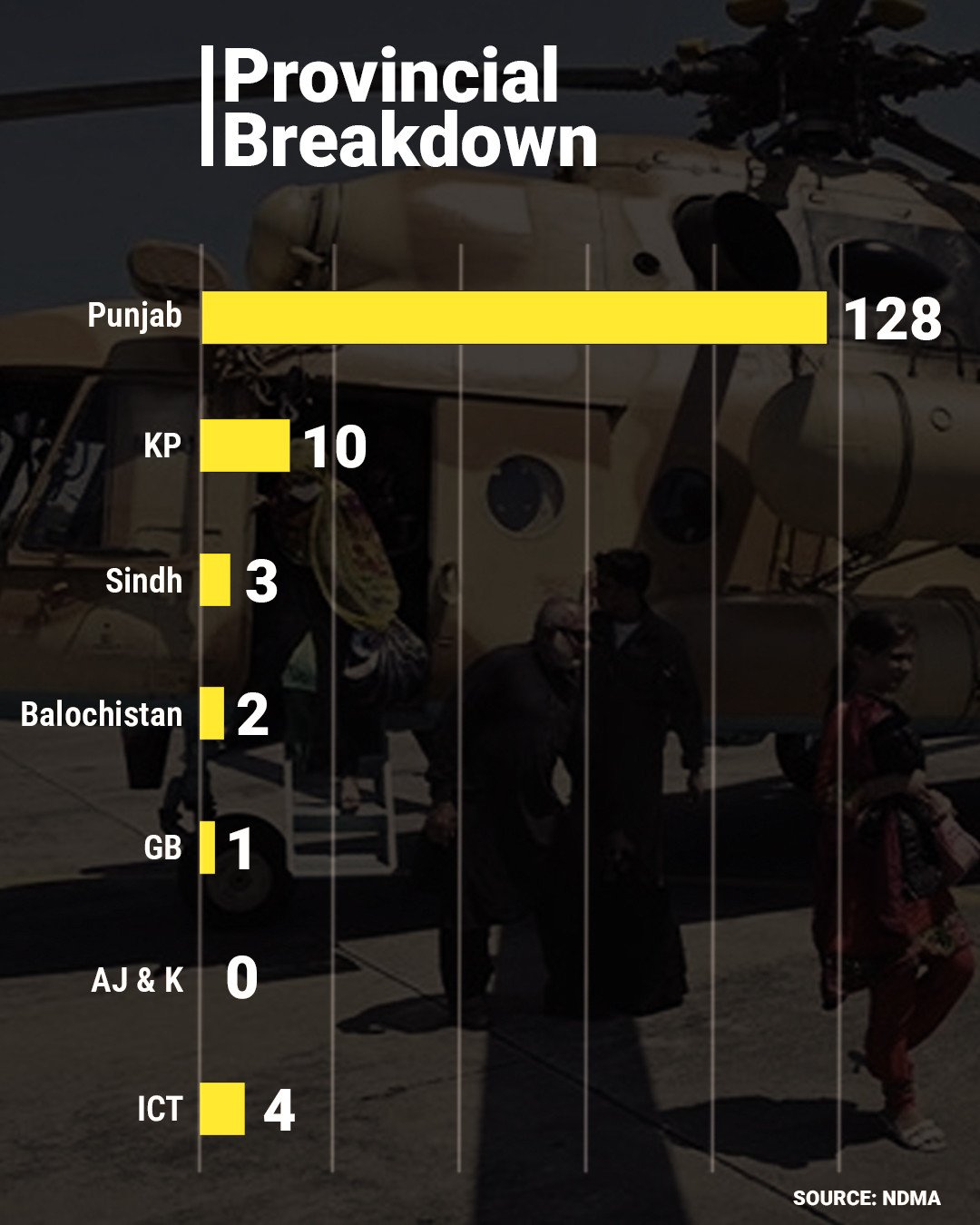
Punjab saw the bulk of these operations with 128 missions, while K-P, Sindh, and other regions accounted for the remainder.

061753697377-5.jpg


No rescue operations were reported in AJ&K.

On the other hand, the National Disaster Management Authority (NDMA) has issued flood alerts for several areas of Gilgit-Baltistan and Azad Jammu & Kashmir (AJK) due to expected monsoon rains from today through Thursday.

Rainfall is forecast in Gilgit, Skardu, Hunza, and Shigar in Gilgit-Baltistan, and Muzaffarabad, Neelum Valley, and Bagh in AJK during the period.

Authorities have warned that the rains may cause flooding, with the possibility of landslides in hilly regions following heavy downpours.

In Chitral Valley — including Buni and Reshun — rain combined with glacial melt may lead to increased flow in the River Chitral.

Urban flooding is also likely in Muzaffarabad and Bagh.

The NDMA has directed all concerned departments and agencies to take proactive measures, ensure the readiness of personnel, machinery, and rescue teams, and remain alert to respond to any emergency.

Provincial Disaster Management Authorities (PDMAs) and local administrations have also been instructed to take timely preventive action.
 

Rescue 1122 saves 160 tourists stranded due to flash floods in KP’s Naran: spokesperson


Umar Bacha
July 30, 2025

Rescue teams evacuated 160 stranded tourists from Naran in Khyber Pakhtunkhwa’s Mansehra district after flash floods, triggered by heavy rainfall, swept through parts of the region on Wednesday, according to a Rescue 1122 spokesperson.

Monsoon rains, which fall across the region from June to September, are crucial to the livelihoods of millions of farmers and food security. However, they also wreak havoc by triggering deadly floods, landslides and displacement, particularly in vulnerable, poorly drained, or densely populated areas.

This year’s monsoon rains continue to lash many parts of the country, prompting authorities to release an urban flooding warning for several cities.

Mansehra’s Rescue 1122 spokesperson, Amir Khadam Khan, told Dawn.com that 160 tourists were stranded after floods hit Naran, Jalkhad, Barwai and Besar.


“Rescue 1122 personnel crossed the flood drain on foot near Besar to access more than 160 stranded tourists and vehicles,” he said. “All the people were safely evacuated and accommodated in nearby hotels.”

He added that the Naran Road was also blocked in multiple locations. However, after “tireless” efforts of 12 consecutive hours, it was cleared for all traffic by the National Highway Authority, with the support of the police and the Kaghan Development Authority.

The spokesperson said that the rescue operation still continued in the area, and the stranded tourists’ vehicles were also successfully recovered.

He added that during the operation, Rescue 1122 provided first aid to seven or eight people with minor injuries, severe body pain, hypoglycemia, vomiting and other ailments. Fresh water was also provided to the tourists.

“Fortunately, no serious casualties were reported,” Khadam said.

Meanwhile, flash floods triggered by heavy rain caused the deaths of two children due to a house collapse in the Hazara Division in the early hours of Wednesday morning.

The Abbottabad police spokesperson, Azam Khan, told Dawn.com that two children were killed after a house collapsed in Bakot, Abbottabad, on Tuesday night.

“The bodies were recovered by locals, adding that the girls were between two and three years old,” he said.

Last week, 250 tourists and passengers stranded at the Babusar Highway were rescued by the Diamer district administration, volunteers, police, Rescue 1122 and the army, according to a spokesperson.

However, at the same time, the national death toll from monsoon-related casualties surged to 234 since late June, according to the National Disaster Management Authority. Of the 234 deaths, 79 were men, 42 women and 113 — nearly half of the total — were children.
 

Thousands more leave flooded villages of Taunsa and Layyah


Imran Gabol
July 30, 2025

1753886835443.png

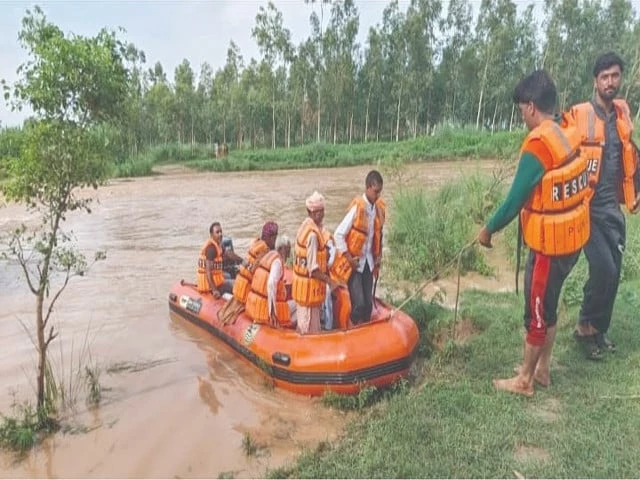
NAROWAL: People trapped due to a torrential flood in the Baein rainwater drain being rescued. — Dawn

LAHORE: Thousands of people from more villages of Taunsa and Layyah had to leave their homes to find safer places on Tuesday due to medium level flood in the Sindh river.

The people had to leave different villages in Taunsa, including Mauza Moor Jhangi, Bait Kachhela, Panj Darain, Bait Channar, Bait Ashraf, Jarh Leghari and Mouza Baloch Khan.

In Layyah, the people were evacuated from Mouza Lohaj, Thori, Samra Jhok Khan, Basti Kanjo Mohana, Darkhan Khokhar, Panwar, Alliyani Basti, and Rakhwan. A double-storey police check post built in Rakhwan was also submerged completely by floodwater and all its structure demolished. A high school in Basti Alliyani also submerged by water and cracks appeared in its building.

In Karor Lal Esan, Bait Mongar was also flooded and all its houses and mosque were also destroyed. The floodwater entered cultivated lands, making it a part of the river in Layyah and Karor Lal Esan.


In Dera Ghazi Khan, several villages were submerged by floodwater including Jhok Utra, Kot Chuta, Malkani Kalan.

DG Khan residents protest turning of river for new Layyah-Taunsa Bridge

The residents of the area protested against poor management of a bund built to turn the river to construct Layyah-Taunsa Bridge. They said that the river had changed its way and started flowing in another direction, engulfing thousands of agriculture land where different crops, including cotton, were destroyed by the medium level flood.
 
“A high level flood in the past would easily pass from Layyah but the poor design of the newly-constructed Layyah-Taunsa bridge changed the flow of the river and it started flooding old localities and villages. Thousands of acres of crops also come under water in both districts,” the locals said.

The crack emerged in the bank of the river to protect the Layyah-Taunsa Bridge also could not be filled after two days due to poor management of the authorities.

A resident of Layyah Khurrum Khar told Dawn that out of their 450 acres, only 175 acres was left dry and all their land had been swallowed up by the Sindh river.

He also said the government had changed the way of the river to construct the Layyah-Taunsa Bridge and it resulted in catastrophe for their land.

“We only can demand the government to fix the problem otherwise we would become landless and the river will also swallow our villages permanently,” the man decried.

Earlier, the Punjab Disaster Management Authority (PDMA) issued a flood alert for several regions as the province braces for rising water levels in major rivers and urban flooding due to more heavy monsoon rains.

According to the Pakistan Met Department (PMD), scattered to widespread thunderstorms with isolated heavy falls are expected over the upper catchments of the Indus, Jhelum, Chenab, and Ravi rivers, as well as in Islamabad, Peshawar, Rawalpindi, Gujranwala, and Lahore divisions over the next 48 hours.

The Flood Forecasting Division (FFD) has reported that the Indus river is currently at medium flood level at Guddu, while low flood conditions persist at Tarbela, Kalabagh, Chashma, Taunsa, and Sukkur.

Meanwhile, the Jhelum and Chenab rivers are experiencing low to medium-level flows and more flow is expected due to an incoming weather system from July 30 to 31. The FFD also warned of moderate flooding in the nullahs of the Ravi river and tributaries of the Kabul river, with increased flows expected in the Sutlej river at Ganda Singhwala after 24 hours. Urban flooding is likely in Islamabad, Peshawar, Rawalpindi, Gujranwala and Lahore.

PDMA Punjab issued alerts to commissioners and deputy commissioners of multiple divisions, including Rawalpindi, Sargodha, Faisalabad, and Bahawalpur.
 
Reservoir levels remain under watch, with Tarbela Dam at 87.08% live storage and Mangla Dam at 57.36%. Historical data indicates the potential for significant peaks, though current forecasts suggest manageable conditions.

The Punjab government has assured citizens of comprehensive support, including food, clean water, and medical aid at relief camps.
 
Reservoir levels remain under watch, with Tarbela Dam at 87.08% live storage and Mangla Dam at 57.36%. Historical data indicates the potential for significant peaks, though current forecasts suggest manageable conditions.

The Punjab government has assured citizens of comprehensive support, including food, clean water, and medical aid at relief camps.

Mangla is only at 57% after so much rain? That means India's really shut off Chenab's water and it was near dead level. If all this rain has only taken it up to 57%!

What we need immediately is a massive drive to plant TREES. Not plants, not fancy grass, but TALL TREES. So that in next 5-7 years these can offset the environment effects to a major degree.
 
To view this content we will need your consent to set third party cookies.
For more detailed information, see our cookies page.
 

Glacier burst kills one in GB’s Bagrot: govt spokesperson


Imtiaz Ali Taj
August 1, 2025

1754056118665.png

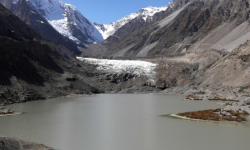
The Gamoo Bhr glacial lake pools in front of the Darkut glacier in Darkut village, Yasin valley, in the Gilgit-Baltistan region of Pakistan, October 11, 2023. —Reuters /Akhtar Soomro

A glacier burst in Gilgit-Baltistan’s Bagrot Valley caused the death of one person on Friday, while his father was injured, according to the regional government’s spokesperson.

A glacial burst, or glacial lake outburst flood (Glof), refers to an outburst of water from a glacial lake which could lead to severe flooding downstream. Pakistan is home to over 13,032 glaciers, the largest reservoir of glaciers outside of the polar regions. However, experts have warned that about 10,000 glaciers in Chitral and GB have been reported to be receding due to climate change–induced temperature rise.

GB’s government spokesperson, Faizullah Faraq, said that the father and son had fallen into a ravine and been buried under the debris of the Bagrot glacier as it burst, injuring both.

“Locals and Rescue 1122 saved the father while the son was killed,” he said.
 
According to Faraq, new flash floods had “wreaked havoc in every direction” in the Khanbari area of Diamer district.


“Floods in Khanbari have destroyed people’s standing crops, lands and water channels,” he said, adding that floods were continuing across the province.

The Bagrot Valley has been a victim of climate change for the past several years, with many Glofs affecting the population.

According to non-governmental organisations (NGOs), several glacial lakes have formed in the valley.

To reduce the risks of these glacial lakes, NGOs have planted hundreds of trees in the Bagrot Valley and built protective walls with foreign aid. Early warning systems have been installed at several places in GB to inform the population about the flood situation due to climate change.

Safdar Ali, who is in charge of the information department of the Glof project, said that 200 early warning stations had been established in 16 valleys to protect the human population from flood waves due to climate change, of which 147 stations were active.

According to him, the early warning system had reported the danger in the Hassanabad nullah, but “since there was no major threat to the population, the practice of repeatedly sounding the siren did not continue”.

Ali said that the data of the early warning system was being transferred to the meteorological department, based on which weather alerts were being issued.

In June, the National Disaster Management Authority’s National Emergencies Operation Centre issued a Glof alert for northern areas, including GB, citing a dangerous combination of persistent high temperatures, intensified monsoon currents and a prevailing westerly wave.
 

Thousands forced out of homes as floods hit Layyah, Taunsa


Imran Gabol
August 1, 2025

LAHORE: Thousands of people in Layyah and Taunsa are forced to live under the sky as their houses and crops have been flooded after a breach in a dyke on the newly-constructed Layyah-Taunsa bridge on the Indus River.

Several villages in Layyah were flooded after a guide embankment on the Layyah-Taunsa bridge could not bear the pressure of 300000 cusecs of river water. The water entered into several villages and devastated hundred of homes and crops. The floodwater still surround the area even after the passage of six days.

In Layyah, people were evacuated from several villages with floodwater entering cultivated lands. The same situation was observed in Dera Ghazi Khan where several villages were also submerged by water.

A resident of Alliyani village, Maqbool Elahi, told Dawn that around 800,000 to 1,000,000 cusecs of water crossed these villages in the 2010 flood. That flood did not cause any harm here, but only 300,000 cusec water submerged the villages, he added.

PDMA issues another flood alert as rains continue

He claimed that the guide embankment of the bridge was constructed with substandard material, and it could not bear the water pressure and washed away.

He said the government should launch an inquiry into the matter and take action against those responsible for not ensuring the safety of the embankment.

He said that thousand of acres of crops and hundreds of houses were damaged and people were forced to live under the sky. “If the flow of the river, which subsided two days ago, would again increase, then it would cause another flood as the embankment could not bear the water pressure,” he said.
 

Rain-induced disasters claim hundreds in Punjab​


Over 2,500 electrocutions, 300 structural collapses reported in July

Our Correspondent
August 02, 2025


rescue officials ferry stranded villagers to safety as floodwaters engulf low lying areas near narowal amid relentless monsoon rains sweeping across punjab photo online


Rescue officials ferry stranded villagers to safety as floodwaters engulf low-lying areas near Narowal amid relentless monsoon rains sweeping across Punjab. PHOTO: ONLINE

LAHORE: The Emergency Services Department (ESD) of Punjab has revealed alarming statistics for the month of July 2025, reporting a sharp rise in rain-related emergencies including 2,586 electrocution cases, 306 structural collapses and 170 incidents of drowning.

These figures were shared during an operational review meeting chaired by Punjab Secretary Emergency Services Department, Dr Rizwan Naseer, at Rescue 1122 Headquarters.

The meeting was attended by divisional emergency officers and departmental heads, while district emergency officers joined via video link to discuss their performance, major emergencies and lessons learned.

Dr Rizwan Naseer was informed that Rescue 1122 responded to 225,842 emergencies and rescued 278,756 people across Punjab last month.

The emergencies included 150,179 medical cases, 38,877 road traffic crashes, 6,711 fall incidents, 6,382 childbirth emergencies, 4,383 crime cases, 2,372 occupational injuries, 1,962 animal rescues, 1,538 fire incidents, 327 burn cases, 306 building collapses, 170 drowning cases, and 10,049 miscellaneous operations.

Expressing concern over the surge in weather-related incidents, Dr Rizwan urged the public to avoid unnecessary travel during heavy rains, particularly in low-lying and hilly areas.

He also warned citizens to stay away from electric poles, open wires, and appliances during downpours and to inspect rooftops and drainage systems to avoid accidents.

The report further disclosed that 387 people died in 38,877 road traffic crashes during the month.

Lahore witnessed the highest number of traffic accidents with 7,213 cases resulting in 36 deaths, followed by Faisalabad (2,588), Multan (2,530), Gujranwala (1,942), Sheikhupura (1,368), and Rawalpindi (1,318).

The remaining 21,981 accidents occurred across other districts of the province.

In terms of fire emergencies, Lahore once again topped the list with 396 incidents, followed by Faisalabad (188), Multan (102), Rawalpindi (84), Rahim Yar Khan (72), and Gujranwala (53).

Dr Rizwan also acknowledged the bravery and performance of fire and rescue teams, especially in major operations during July. He praised Fire Rescue Service Lahore for its timely response that saved Hafeez Centre from a major blaze. However, he expressed deep sorrow over the martyrdom of two rescuers who lost their lives during a challenging fire operation in a congested residential area.
facebook twitter whatsup linkded email
 

Monsoon rains, flooding worsen plastic waste crisis​


WWF-Pakistan says plastic waste clogs drainage systems, leading to waterlogging

Zulfiqar Baig
August 02, 2025


a man washes waste plastic sheets collected for recycling in the polluted waters on world environment day in karachi pakistan june 5 2023 photo reuters


A man washes waste plastic sheets, collected for recycling, in the polluted waters on World Environment Day in Karachi, Pakistan June 5, 2023. PHOTO: REUTERS

ISLAMABAD: Widespread monsoon rains followed by flooding in parts of Pakistan have claimed more than 280 lives and caused extensive damage to the economy, infrastructure, and critical ecosystems. The situation has been further worsened in major cities by floating plastic waste and poor waste management systems, which have blocked drainage and intensified urban flooding.

During the plastic-free July campaign, WWF-Pakistan issued a press release, stating that floating plastics are a huge menace in cities amid the current monsoon season. These plastics choke the drainage system and cause prolonged waterlogging that damages roads, bridges, buildings, and other infrastructure. The plastic waste also poses serious health risks, resulting in the outbreak of waterborne diseases in areas with weak waste management systems.


WWF-Pakistan Director General, Hammad Naqi Khan, said that plastics threaten biodiversity and create serious health hazards. They break down into microplastics and contaminate the freshwater resources, and affect the soil fertility. He mentioned that plastic production significantly contributes to carbon emissions, which need to be addressed through concerted efforts and robust waste management.

A large part of the plastic waste in the upper riparian regions pollutes the Indus River and further travels downstream to the Kotri Barrage, reaching the Arabian Sea, he said. "This not only harms the freshwater ecosystem but also endangers coastal and marine biodiversity."

There are also increasing concerns over microplastics as they find their way into everything we consume and breathe, through air, water, and food systems. According to some studies, microplastics have been found in various human organs, and even in the placenta of newborn babies. To address the challenge of plastics, WWF-Pakistan is closely working with relevant organisations and government agencies and has launched advocacy campaigns, cleanup drives, and beach cleaning activities along the Pakistan coast. It has also initiated projects that help mitigate plastic pollution and improve local lives.

To promote sustainable livelihoods and reduce plastic waste, WWF-Pakistan has trained over 50 local women in Karachi and Islamabad.
 

New monsoon spell expected in Punjab from August 5​


PDMA reports 162 people dead, 571 others injured in monsoon-related incidents in the province this year

Our Correspondent
August 02, 2025

a view of vehicle passing through flooded road during heavy monsoon rains in rawalpindi on july 17 photo inp


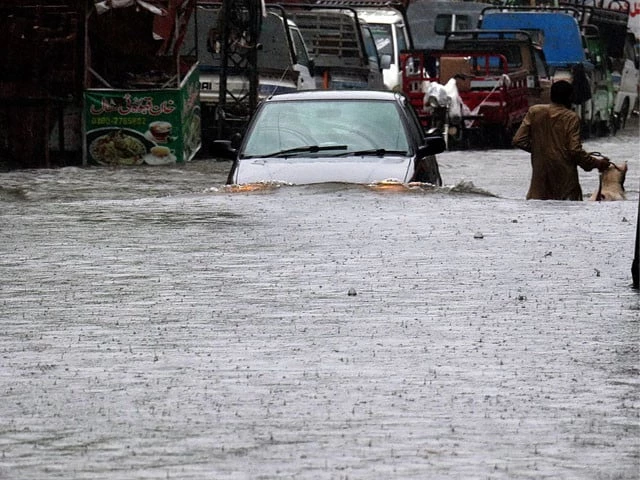
A view of vehicle passing through flooded road during heavy monsoon rains in Rawalpindi on July 17. Photo: INP

LAHORE: The Punjab Provincial Disaster Management Authority (PDMA) has warned that the sixth spell of monsoon rains is forecast to begin on August 5, raising concerns over potential flooding across the province.

In a fact sheet issued on the instructions of Chief Minister Maryam Nawaz, the PDMA confirmed rainfall was recorded in several districts over the past 24 hours, including Rawalpindi, Bahawalnagar, Murree, Chakwal, Sahiwal, Narowal, Okara, Attock, and Lahore. Further rain is expected in most districts in the coming 24 hours.

PDMA Director General Irfan Ali Kathia directed local administrations to remain on alert, stressing the need for precautionary measures. He said water flow remains normal in major rivers, including Jhelum, Ravi, and Sutlej, as well as in hill torrents and connecting streams.

Low-level floods were reported in the Chenab River at Khanki and in the Indus River at Kalabagh, Chashma, and Taunsa. Tarbela and Mangla Dams are currently 89% and 61% full, respectively. Water storage in Indian dams stands at 43%, the fact sheet added.

The PDMA reported that 162 people have died and 571 others have been injured in monsoon-related incidents in the province this year. A total of 214 homes were affected, and 121 livestock animals perished.

Financial assistance is being provided to the affected families on the chief minister’s orders. The public has been urged to stay cautious, avoid water channels during rains, and keep children away from low-lying areas and canals.
 

Users who are viewing this thread

Country Watch Latest

Back
Top