Chinese Economy: General News, Updates and Discussions

Last edited:
China creates new 'bone-free' fish for the dinner table
Science17:50, 23-Dec-2025
CGTN
Updated 20:41, 23-Dec-2025
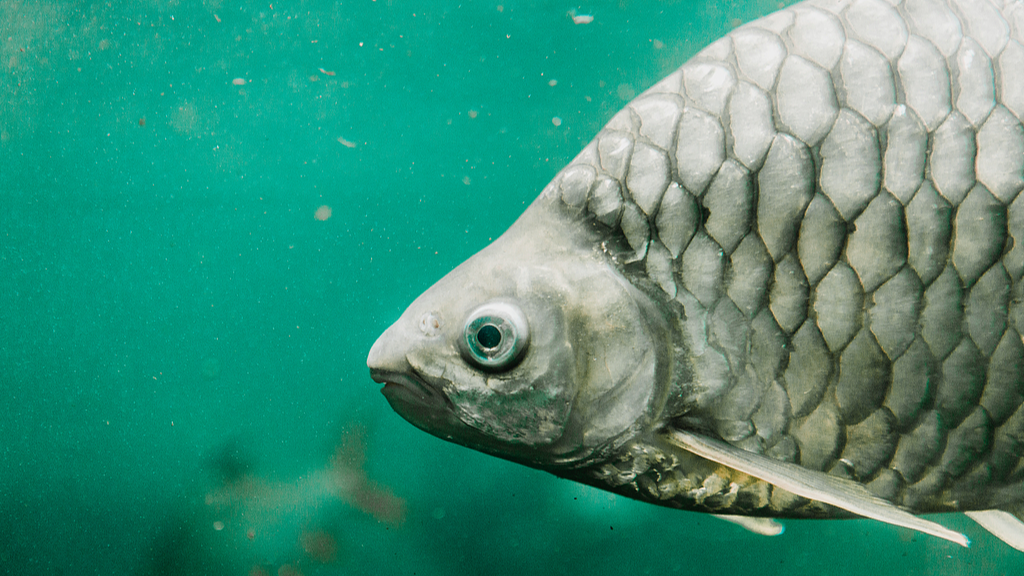
A gibel carp. /VCG

A gibel carp. /VCG

For fish lovers, carp presents a classic culinary paradox: a prized dish for its tender in texture and nutritious, rich in protein, profile, yet notoriously difficult to eat due to more than 80 tiny, Y-shaped intermuscular bones (IBs).

The hassle of feasting on the freshwater fish is now a thing of the past, as Chinese scientists have created a new variety of the Gibel carp (Carassius gibelio) that is not only entirely free of troublesome IBs but also engineered to grow faster, stronger and in a more sustainable way.

Led by Academician Gui Jianfang, a research team from the Chinese Academy of Sciences (CAS) announced on Tuesday that they have successfully gene edited the "Zhongke No. 6" breed – a robust candidate variety designed for the dinner table.

To achieve this, Chinese scientists first mapped the fish's complex genetic map to identify runx2b, the specific "architect" gene that tells the body to grow these tiny bones. Since the Gibel carp has multiple sets of chromosomes, the team used a technique called CRISPR/Cas9, acting as "molecular scissors," to perform a surgical strike.

By cutting this specific code at the embryonic stage, they effectively deleted the instructions for bone growth. This ensures that while the fish's main skeleton develops normally, the biological pathway for those 80 some troublesome spines is never activated.

The "Zhongke No. 6" has been optimized for three superior traits, including its high yield, disease resistance in dense aquaculture environments, and lower feed requirements to produce the same amount of high-quality protein.

This achievement is the result of a six-year systematic effort under a CAS strategic research program called "Precision Seed Design and Creation."
 
China creates new 'bone-free' fish for the dinner table
Science17:50, 23-Dec-2025
CGTN
Updated 20:41, 23-Dec-2025
A gibel carp. /VCG

A gibel carp. /VCG

For fish lovers, carp presents a classic culinary paradox: a prized dish for its tender in texture and nutritious, rich in protein, profile, yet notoriously difficult to eat due to more than 80 tiny, Y-shaped intermuscular bones (IBs).

The hassle of feasting on the freshwater fish is now a thing of the past, as Chinese scientists have created a new variety of the Gibel carp (Carassius gibelio) that is not only entirely free of troublesome IBs but also engineered to grow faster, stronger and in a more sustainable way.

Led by Academician Gui Jianfang, a research team from the Chinese Academy of Sciences (CAS) announced on Tuesday that they have successfully gene edited the "Zhongke No. 6" breed – a robust candidate variety designed for the dinner table.

To achieve this, Chinese scientists first mapped the fish's complex genetic map to identify runx2b, the specific "architect" gene that tells the body to grow these tiny bones. Since the Gibel carp has multiple sets of chromosomes, the team used a technique called CRISPR/Cas9, acting as "molecular scissors," to perform a surgical strike.

By cutting this specific code at the embryonic stage, they effectively deleted the instructions for bone growth. This ensures that while the fish's main skeleton develops normally, the biological pathway for those 80 some troublesome spines is never activated.

The "Zhongke No. 6" has been optimized for three superior traits, including its high yield, disease resistance in dense aquaculture environments, and lower feed requirements to produce the same amount of high-quality protein.

This achievement is the result of a six-year systematic effort under a CAS strategic research program called "Precision Seed Design and Creation."
Hmmm must be delicious!
Remember Brundlefly.
 

Attachments

  • brundleflyclose.jpg
    brundleflyclose.jpg
    155.4 KB · Views: 2
Caviar and foie gras? China is becoming a luxury food powerhouse

  • China is the world's top exporter of caviar from sturgeon, accounting for 44% of global sales in 2024, with its caviar increasingly finding its way into high-end restaurants worldwide.
  • The country has growing production of ingredients not traditionally associated with Chinese cuisine, including foie gras, truffles and wagyu-style beef, with government policies aimed at shifting China's reputation to a purveyor of pricey specialty goods.
  • Chinese producers are lowering prices and creating new products to boost domestic interest, but others criticize the industry for disregarding animal welfare and posing a threat to producers abroad, with some producers embracing their Chinese origin and others using marketing materials that describe exotic-sounding flavors and names.

On the 19th floor of a glass tower overlooking Singapore’s Marina Bay, dozens of food writers and social media influencers are gathered at Vue, a restaurant known for charcuterie, ceviche and steaks served with exhilarating skyline vistas. The event is intended to introduce a new caviar lineup, but it doesn’t come from places around the Caspian Sea or any other traditional source of prestigious sturgeon roe. Instead the cans of Kaluga Queen piled on the tables proudly say “Made in China.” The chef’s team calls the salty black fish eggs “an icon of refinement that offers a fragrant aroma and a burst of rich, oceanic flavor with every bite.”
 
Caviar , truffles and vintage wine won't be exclusive/ high-end thing anymore.... Chinese are taking away my bragging rights.
 
China creates new 'bone-free' fish for the dinner table
Science17:50, 23-Dec-2025
CGTN
Updated 20:41, 23-Dec-2025
A gibel carp. /VCG

A gibel carp. /VCG

For fish lovers, carp presents a classic culinary paradox: a prized dish for its tender in texture and nutritious, rich in protein, profile, yet notoriously difficult to eat due to more than 80 tiny, Y-shaped intermuscular bones (IBs).

The hassle of feasting on the freshwater fish is now a thing of the past, as Chinese scientists have created a new variety of the Gibel carp (Carassius gibelio) that is not only entirely free of troublesome IBs but also engineered to grow faster, stronger and in a more sustainable way.

Led by Academician Gui Jianfang, a research team from the Chinese Academy of Sciences (CAS) announced on Tuesday that they have successfully gene edited the "Zhongke No. 6" breed – a robust candidate variety designed for the dinner table.

To achieve this, Chinese scientists first mapped the fish's complex genetic map to identify runx2b, the specific "architect" gene that tells the body to grow these tiny bones. Since the Gibel carp has multiple sets of chromosomes, the team used a technique called CRISPR/Cas9, acting as "molecular scissors," to perform a surgical strike.

By cutting this specific code at the embryonic stage, they effectively deleted the instructions for bone growth. This ensures that while the fish's main skeleton develops normally, the biological pathway for those 80 some troublesome spines is never activated.

The "Zhongke No. 6" has been optimized for three superior traits, including its high yield, disease resistance in dense aquaculture environments, and lower feed requirements to produce the same amount of high-quality protein.

This achievement is the result of a six-year systematic effort under a CAS strategic research program called "Precision Seed Design and Creation."


No way - No thanks!!!!!
 
China creates new 'bone-free' fish for the dinner table
Science17:50, 23-Dec-2025
CGTN
Updated 20:41, 23-Dec-2025
A gibel carp. /VCG

A gibel carp. /VCG

For fish lovers, carp presents a classic culinary paradox: a prized dish for its tender in texture and nutritious, rich in protein, profile, yet notoriously difficult to eat due to more than 80 tiny, Y-shaped intermuscular bones (IBs).

The hassle of feasting on the freshwater fish is now a thing of the past, as Chinese scientists have created a new variety of the Gibel carp (Carassius gibelio) that is not only entirely free of troublesome IBs but also engineered to grow faster, stronger and in a more sustainable way.

Led by Academician Gui Jianfang, a research team from the Chinese Academy of Sciences (CAS) announced on Tuesday that they have successfully gene edited the "Zhongke No. 6" breed – a robust candidate variety designed for the dinner table.

To achieve this, Chinese scientists first mapped the fish's complex genetic map to identify runx2b, the specific "architect" gene that tells the body to grow these tiny bones. Since the Gibel carp has multiple sets of chromosomes, the team used a technique called CRISPR/Cas9, acting as "molecular scissors," to perform a surgical strike.

By cutting this specific code at the embryonic stage, they effectively deleted the instructions for bone growth. This ensures that while the fish's main skeleton develops normally, the biological pathway for those 80 some troublesome spines is never activated.

The "Zhongke No. 6" has been optimized for three superior traits, including its high yield, disease resistance in dense aquaculture environments, and lower feed requirements to produce the same amount of high-quality protein.

This achievement is the result of a six-year systematic effort under a CAS strategic research program called "Precision Seed Design and Creation."

Coming next :
chicken with 4 legs !
All meat Sheep/ Goat/ Beef with zero waste products such as : Blood, gut, stomach etc..
 
1766645008113.png
This video is 31 seconds long, and I’ve put a screenshot here.

China welcomes the goodwill of any country and is willing to engage in mutually beneficial cooperation with all friendly nations.

We welcome the United States to hold talks with China in an equal and open manner.

However, America’s problems need to be resolved by the U.S. government itself; China does not interfere in the internal affairs of other countries.
 

Published: 12:59, December 24, 2025

Power use rose 6.2 percent year on year in November to 835.6 billion kilowatt-hours, according to the National Energy Administration.

Power consumed by the primary and secondary industries rose 7.9 percent and 4.4 percent year on year, respectively, while the tertiary sector saw a 10.3 percent increase.

Residents’ electricity consumption totaled 105.7 billion kilowatt-hours, up 9.8 percent year on year.

During the first 11 months of the year, China’s total power use climbed 5.2 percent to about 9.46 trillion kilowatt-hours.
 
It's all chinese
Hahaha, my friend, this is what I just sent.

I think I posted it in the wrong place; I should have put it in the discussion on 'Stupidity and Fun Around the World.' Because the American Democrats actually hope that China will help them fight against the American Republicans.

The thinking of Americans is very different from ours Asians. For example, Trump said that China's purchase of American soybeans and China providing rare earths to the U.S. is a good cooperation for both countries.

The Chinese internet's evaluation of this is that Trump is dreaming; he thinks things are too perfect. China's soybean purchases from Brazil and Argentina this year already meet its demand, and next year Trump will need to ask China in advance. As for the rare earth issue, it is suggested that Trump go to China and fill out an application for rare earth use.
 

Users who are viewing this thread

Back
Top