Vi-va
Trusted Member


Higher standard than those designed and manufactured earlier, such as F-22, F-35, J-20.More stealthy compared to what?
And by the way, Su-57 is not stealth fighter jet at all.
Follow along with the video below to see how to install our site as a web app on your home screen.
Note: This feature may not be available in some browsers.
Higher standard than those designed and manufactured earlier, such as F-22, F-35, J-20.More stealthy compared to what?

Is he also the chief designer of J50?The man in the video is 中航工业沈阳所首席专家王永庆
The house is probably the home of 顾诵芬
View attachment 103888
J-35 is more stealthy.
【首席专家:歼-35A研发基于更高隐身目标 突破多个关键技术】 https://www.bilibili.com/video/BV1v8DKY5E27/

As a general rule, he won't be the real chief designer of the J-50.Is he also the chief designer of J50?
The full video of this program is now on Youtube.com.Program Preview:
Tonight at 10:30 p.m. (CST). SAC Chief Expert Wang Yongqing will give a public talk about the J-35A on CCTV.
View attachment 103285

Higher standard than those designed and manufactured earlier, such as F-22, F-35, J-20.
And by the way, Su-57 is not stealth fighter jet at all.

The man in the video is 中航工业沈阳所首席专家王永庆
The house is probably the home of 顾诵芬
View attachment 103888
J-35 is more stealthy.
【首席专家:歼-35A研发基于更高隐身目标 突破多个关键技术】 https://www.bilibili.com/video/BV1v8DKY5E27/
Oh.Just a request, Please always share the translated words in English as well, since we don't understand this language (likely Chinese), and translation software can often give incorrect results.
Too old to be.Is he also the chief designer of J50?
Very old design and technology developed back in Cold War.The F-22 is a VERY HIGH BAR to cross as far as the stealth profile goes. It is the smallest of all so far. Lets see if this is true, or not..

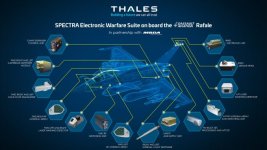
It must be exactly that, but with a different term in China.DRFM / ECM ie like the Spectra system on thte Rafale?
Oh.
If you want to know more about the Chinese military and weaponry, you have to know some Chinese.
It's not nationalism, but, a lot of our thoughts and content, English can't express. At least, when it is translated, it is not at all what we want to express. Even the best translators have a hard time expressing in English the full range of ideas that Chinese wants to express.
If we want to know more about the Arab world, we must learn some Arabic.
If we want to understand India in depth, we must learn some Hindi.
If we want to know more about Pakistan, we must learn some Urdu.
Even Chinese people must learn ancient Chinese if they want to gain a deeper understanding of traditional Chinese culture.
============================
The Chinese in what he posted are names of people and his posts, nothing important.

Although language is certainly important, it is only one of the carriers of a nation's cultural heritage. One can still learn much about it through another's history via translation. Therefore, I wouldn't say language is the main barrier to understand each other. It is likely to be either the willingness or the opportunity to learn another nation's history, with the former being even more likely.Dear I understand your perspective, and I appreciate you sharing it. While I see the value in understanding different languages, I'm not sure learning a whole language, even just the basics, is the most efficient way to engage on this forum (or others). It could lead to quite a few languages to learn, and that might be a very time-consuming endeavor for everyone. Perhaps a more manageable approach would be for those posting in other languages to also include a translation or at least a brief summary in English? Since English is the forum's official language, that might be the most accessible way for everyone to participate fully.
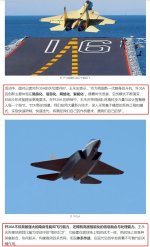
J-35 is a F35 in best, that means without all the penalties coming from a STOVL variant, and dual engine for safety.From nationalinterest.org
====================================================
China’s J-35A Fighter: A Wake-Up Call For The U.S. Air Force?
The J-35A stealth fighter essentially scrambles the U.S. military’s air dominance strategy in the increasingly contested Indo-Pacific theater of operations.
China has caught up to the United States in terms of airpower. They have demonstrated through repeated iterations that the Chengdu J-20 “Mighty Dragon” fifth-generation warplane is generally competitive—albeit not as technically advanced—as the U.S. Air Force’s F-22A Raptor. Now, the J-35A, China’s answer to America’s F-35 Lightning II, has come on the scene, and it impresses many observers as well.
What’s more, unlike here in the United States, where it takes years to develop a warplane, the Chinese defense industrial base has become so refined that it can churn even the most advanced systems out like sausages.
And that is China’s true threat. It is their ability to fund and achieve scale on almost any advanced platform. While many in the West lambast China for merely being imitators rather than innovators, that paradigm has changed over the last decade. In certain key strategic domains, China has not only mass-produced systems that can imitate the capabilities of American technology, but has started to innovate unique capabilities of their own.
The J-35A
This is where the J-35A comes in—and essentially scrambles the air dominance strategy for the U.S. military in the increasingly contested Indo-Pacific theater of operations. United States Air Force General G. Michael Hostage III put it best in 2013 when he described air dominance as simply being “the ability to operate unchallenged or at least unprohibited” from the air. Between China’s J-20 and J-35A, as well as their mass production capacity, matched against the lack of America’s production capabilities and its sclerotic defense acquisitions system, U.S. air dominance is truly over in the Indo-Pacific.
Just as with the American F-35 program, the J-35 program—as developed by the Shenyang Aircraft Corporation (SAC), itself a subsidiary of the state-owned Aviation Industry Corporation of China (AVIC)—is meant to serve multiple branches of the Chinese military. In this case, the J-35 is meant to serve the People’s Liberation Army Navy (PLAN), and the J-35A is designed to serve the People’s Liberation Army Air Force (PLAAF) as a land-based fifth-generation stealth fighter.
J-35A made its monumental debut at the Zhuhai Air Show in November 2024. That air show was notable for several headlines to have originated there about various capabilities, both of the Chinese as well as the Russian air forces. In the case of the J-35A, it was apparent that the Chinese had caught up to the Americans in terms of stealth warplane technology (although Washington, understandably, is remiss to admit this). The J-35A is a medium-sized, twin-engine stealth fighter that is meant to augment the aforementioned J-20 “Mighty Dragon” in combat (the J-20 is much heavier than is the J-35).
The J-35A has low-observable features to minimize the radar cross-section, including edge-aligned control surfaces, diverter-less supersonic inlets (DSI) with serpentine S-ducts to shield engine blades from radar, and a seamless, conformal surface finish. In this way, most independent analysts have confirmed that the J-35 matches the stealth profile of the F-35. Of course, there remains much debate as to whether the J-35 truly matches the F-22; it is unlikely that this will truly be known, absent an armed conflict.
The J-35A’s two Guizhou WS-19 “Huangshan” engines offer a thrust exceeding 10 tons each with potential for omnidirectional thrust vectoring for enhanced maneuverability. Thus, the plane is different from the F-35’s single-engine design, which might give the J-35A greater maneuverability. Further, it is estimated that the J-35A has a maximum speed of around Mach 1.8, with a combat radius of about 750 miles before needing to refuel.
As for the payload, a J-35A has an internal weapons bay capable of carrying up to 4,400 pounds and external hardpoints supporting 13,000 pounds, including PL-10 short-range and PL-15 long-range air-to-air missiles. Of course, placing weapons on the outside on those hardpoints will decrease the J-35A’s stealthiness. But sometimes it is necessary to risk reducing a plane’s stealth in order to maximize firepower.
The J-35A is a Key Pillar in China’s System of Systems
Just as with the F-35, the J-35A is designed to coordinate with other Chinese military assets, such as drones or the J-20, to form a cloud chain of killing in the sky.
There are plenty of critics in the West, and China has maintained a high degree of secrecy around the true capabilities of their J-35A. One thing is clear, though: whether this bird is on par with the American F-35 fleet, the fact that any conflict with the United States will be fought nearer to China, giving Beijing a decisive advantage. And quantity has a quality of its own: China apparently has the ability to mass-produce these planes, meaning that the Americans are at a decisive disadvantage.
An F-35 pilot based out of Luke Air Force Base once told me that, “The very last thing any American should want is for their Air Force to engage in a fair fight.” At the very least, China seems to be laying the groundwork for a fair fight in the Indo-Pacific. And as China prepares to attack Taiwan, the J-35A could be one of a handful of Chinese systems that, when paired with their comprehensive anti-access/area-denial (A2/AD) in the Indo-Pacific, could prove decisive in defeating the once-unbeatable U.S. military.
How do you know? Just guessing?J-35 is a F35 in best, that means without all the penalties coming from a STOVL variant, and dual engine for safety.